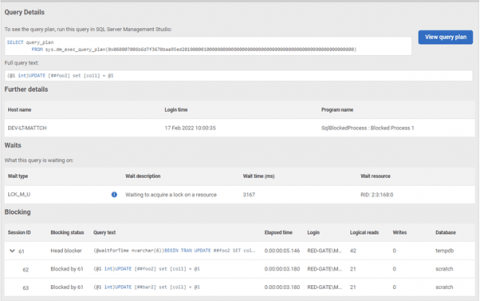
SQL Monitor's new Current Activity page
We recently released a minor version of SQL Monitor, v12.1, that includes Tagging and a new ‘Current Activity’ page. This blog post will outline the latter feature.


The latest News and Information on DevOps, CI/CD, Automation and related technologies.
Gone are the days where software development was slowed down by the top-down, water-fall approach for getting work done. The rigidity of this methodology made for a longer development lifecycle, and it affected the way software was created and deployed.
We wrote this article in response to a question asked in our Slack Community. Click here to join hundreds of technology leaders discussing best practices for incident response! ✨ We know a thing or two about incident response. As such, we're often asked to advise when companies are designing their incident response processes. A common question is "How do you design your incident severity levels?". It's a great question given how central they are to incident response!
We covered the what, when and why of Service Mesh in a previous post. Now I’d like to talk about why they are critical in Kubernetes. To understand the importance of using service meshes when working with microservices-based applications, let’s start with a story. Suppose that you are working on a big microservices-based banking application, where any mistake can have serious impacts. One day the development team receives a feature request to add a rating functionality to the application.
When business is growing rapidly, the necessity to scale the processes is obvious. If your initial infrastructure hasn’t been thought through with scalability in mind, growing your infrastructure may be quite painful. The common tactic, in this case, is to transition to cloud native architecture. In this post, we will talk about what you need to know when you’re scaling up with the cloud so that you can weigh the pros and cons and make an informed decision.