Operations | Monitoring | ITSM | DevOps | Cloud

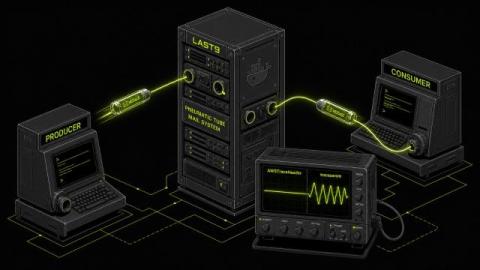
How to Test SQS Workflows Locally with LocalStack and OpenTelemetry

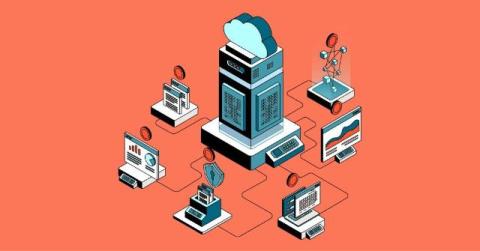
LocalStack lets you run SQS, Lambda, and S3 locally in Docker — but there's a hidden trap: OpenTelemetry's default AWS propagator doesn't work with free LocalStack. Here's how to set up end-to-end local testing with working trace propagation. Prathamesh works as an evangelist at Last9, runs SRE stories - where SRE and DevOps folks share their stories, and maintains o11y.wiki - a glossary of all terms related to observability.

7 best AI deployment platforms for production Kubernetes workloads in 2026

Training a model in a notebook is easy. What breaks teams is the step after, serving it reliably without haemorrhaging cloud budget or burying your SREs in YAML. The common trap: picking a platform that handles the model but not the surrounding stack. An AI deployment platform should orchestrate the full application graph (inference endpoints, vector databases, caching layers, and frontends) inside a single VPC, with GPU autoscaling that doesn't require a dedicated platform engineer to babysit.

#056 - Cloud Contradictions and Cautionary Tales with Corey Quinn (The Duckbill Group)

In this episode of the Kubernetes for Humans podcast, Itiel sits down with the internet's favorite cloud contrarian, Corey Quinn of the Duckbill Group. Corey shares his unconventional career path as a "cautionary tale," explaining why his knack for fixing horrifying AWS bills makes him a terrible employee, and why he absolutely refuses to touch Kubernetes in production.

Context Engineering: How to Manage AI Context at Scale

Context engineering is the practice of managing the information an AI model sees (documents, tool outputs, memory, and structured metadata about the systems it reasons over) so it can make accurate decisions inside a real engineering organization. Most engineering teams have access to the same AI coding agents: Claude, GPT, Gemini, the major variants everyone is shipping. The model is no longer the differentiator.

What happens when you delete everything? Three minutes, or thirty hours.

Last year, at the annual conference for an open source framework you've definitely heard of, I walked up to the founder in a room outside the main stage. He was hunched over his laptop, frantic. We've known each other for a few years. "What's going on? Is everything okay?" He looked up with the specific shade of white people only get when they realize they've made a big mistake.

DORA Metrics in the AI Era: Why Deployment Isn't Faster

DORA metrics in the AI era reveal a paradox: PR volume is climbing, but deployment frequency is staying flat. In this talk, GitKraken's Director of Product Jeff Schinella breaks down why AI-accelerated code generation is creating a review bottleneck that your DORA metrics can't fully explain on their own. Jeff walks through how PR metrics (cycle time, first response time, code churn, and PR size) serve as the leading indicators behind your DORA data. If your deployment frequency is flat while PR counts go up, the bottleneck isn't your devs. It's your review capacity.

Rightsizing Nightmares: When Your Cloud Cost Tool Degrades Performance

This is what production teams see happening. A vertical pod autoscaler recommendation gets applied automatically. Resource requests come down a notch across a namespace. The cost dashboard registers a small cost savings win. A few minutes later, health checks start failing. Pods enter crash loops.

The cloud optionality blueprint: standardizing the stack to end vendor lock-in

Key takeaway: Real cloud strategy isn't about running the same workload everywhere at once; it’s about the freedom to move when you need to. By standardizing the unified configuration file, Upsun enables true cloud optionality, moving provider migration from a re-architect project to a data move project.

AI writes the code. Who delivers it safely? | Harness Blog

The question for enterprise AI in 2026 is no longer just which model. It’s which harness. An agent harness is the system around the model. It decides what the agent remembers, what context it sees, what tools it can call, what it is allowed to do, and what happens when it is wrong. The model provides intelligence. The harness provides control. This is where the real engineering is happening.

From PR to Production Without Leaving Your Cursor IDE | Harness Blog

TLDR: Today, Harness is introducing the Harness Cursor Plugin, bringing the power of the Harness AI-native software delivery platform directly into Cursor. This integration, along with the Harness Secure AI Coding hook for Cursor, allows developers and AI agents to move from code changes to vulnerability detection, CI/CD execution, security validation, approvals, deployments, and operational insight without leaving the editor. AI has completely changed how we write code.

Four types of incident alerts every team should know

Not every incident alert needs the same kind of response. One incident may need to wake someone up right away. Another may simply need to be picked up when the team starts work in the morning. Without a clear way to tell them apart, every incident feels equally urgent. That usually adds noise and makes incident response decisions harder than they need to be. This is where two questions help: In this guide, we’ll discuss what those questions mean and the four combinations that follow.

Five questions your platform evaluation is missing

Years back I sat in on a platform evaluation with a customer who spent forty-five minutes of the meeting focusing on one thing: their custom PHP content management system. They had opinions about the CMS. Strong opinions. They had benchmarks, a migration plan, a proof of concept. They had a diagram. They had questions about the deployment pipeline for this CMS that were, for a single application, more thoroughly considered than most organizations' entire infrastructure strategies.

Why do you need incident alerting? (And why monitoring alone isn't enough)

Monitoring tools track what’s happening across your systems and send a Slack message or email when something looks off. But they don’t call anyone and they don’t escalate the incident. If that Slack message goes unseen at 3 AM on a Saturday, the incident just sits there until someone opens their dashboard. Incident alerting fills this gap. When an incident triggers, it contacts the right person directly through a phone call or their preferred channel.

Inclusive AI vs. centralized AI: Can India avoid big tech concentration?

At the 2026 India AI Impact Summit in February 2026, 92 countries and international organizations (including the US, China, and the UK) signed a preliminary agreement that positions AI as both a development tool and a shared global responsibility. “India will not be a mere consumer in the AI age. We will be the creators, the builders, and the exporters of intelligence and we are proud to be able to participate in that future.” Gautam Adani, chairman of the Adani Group.

GitKraken Desktop in 6 Minutes: Open a Repo, Run an Agent, Ship the Change

The fastest way to get up and running in GitKraken Desktop. In this tutorial, you'll open a repo, start an AI coding agent in its own worktree, review the agent's changes against your own work, and ship a pull request without leaving the app. What you'll learn: Chapters Help Center: help.gitkraken.com.

Share artifacts between parent and child pipelines | Bitbucket Blitz | Atlassian

Bitbucket Pipelines lets you build reusable pipelines and share them across repositories. These reusable, shared pipelines need a way to share artifacts. Otherwise, we’ll have to repeat expensive steps such as downloading and installing dependencies and building the application code. You can now specify an artifacts section for child pipelines, with upload and download keywords. Artifacts listed under upload will be moved from the parent pipeline into the child pipeline, where they can be used and potentially modified.

Harness Cursor Plugin Demo: AI for Software Delivery from Your IDE

Stop context-switching between your IDE and your CI/CD dashboards. In this video, we demonstrate the new Harness Cursor Plugin, a native integration that brings the full power of the Harness AI Software Delivery Platform directly into Cursor. Using the Cursor Agent window and the new Harness Model Context Protocol (MCP) server, you can now manage your entire software delivery lifecycle through natural language. From triggering pipelines to governing deployments, this plugin ensures you stay in your flow while maintaining enterprise-grade security and control.

Inside Atlassian's Merge Queues: How we ship faster with fewer incidents

At Atlassian, we use Merge Queues to ship frequent changes with confidence and streamline pull request merges. Across some of our busiest codebases, Merge Queues have sharply reduced incident frequency and turned merging from a stressful bottleneck into a background task. Today, most of our largest repositories rely on Merge Queues—over 70 large repos across products like Jira, Rovo, Trello, and others—having safely landed 30,000 pull requests since adopting Merge Queues Beta last quarter.

End-to-End Trace Propagation Across SQS and Lambda with OpenTelemetry

SQS doesn't propagate trace context automatically. You instrument both sides, deploy, and get two disconnected traces. This post shows how to wire them into one waterfall — and the ESM format gotcha that silently breaks it every time. Prathamesh works as an evangelist at Last9, runs SRE stories - where SRE and DevOps folks share their stories, and maintains o11y.wiki - a glossary of all terms related to observability.
How to run a proof of concept that de-risks your monitoring decision

Part 3, key insights from a fireside chat with Chris Yates. Read part 1 here, and part 2 here. Most database monitoring proof of concepts (POCs) answer the wrong questions. Here's how to structure a proof of concept that genuinely de-risks your vendor decision with the questions to ask during the process. A POC is often treated as the final hurdle in vendor evaluation, but too often, it becomes theatre. A guided tour of the flashiest features, run by one person, under unrealistic conditions.

Building for Resilience: An Engineering Guide to the Mythos Era | Harness Blog

The release of Anthropic Mythos and Project Glasswing marks an exciting and pivotal new chapter in software development. As the industry advances, the speed and economics of vulnerability exploitation have fundamentally shifted. What once took weeks of manual reconnaissance can now be scaled rapidly through automated models. However, this is not just a security problem to solve. It is a massive engineering opportunity to build cleaner, more robust systems.

Infrastructure as Code Management: Terragrunt & Multi-IaC | Harness Blog

What happens when your Infrastructure as Code management strategy works perfectly in dev, scales reasonably well in staging, and then quietly fractures across seventeen production workspaces because nobody documented which Terragrunt wrapper goes with which AWS account? You spend Friday afternoon reverse-engineering DRY patterns that made sense six months ago, wondering why your team is managing three different IaC execution engines with four incompatible workflow philosophies.

Todd's Tenth Rule of certificate automation

I’m an old engineer at heart. Many of my ideals were formed by Joel’s Things You Should Never Do, Fred’s No Silver Bullet, and Brian’s Big Ball of Mud. One of my favorites was Greenspun’s Tenth Rule: The joke isn’t really about programming languages. It’s about a pattern: certain problems have a shape, and no matter how you approach them, you end up building the same solution, in the same order, until you arrive at the same messy place.

The 2026 software supply chain security gap

AI-generated code is now nearly universal. Enforcement is not. That gap is where your software supply chain is most exposed. Cloudsmith's CEO Glenn Weinstein, Co-Founder & CTO Lee Skillen, and VP of Product Alison Sickelka join Product Marketing Manager Meghan McGowan to unpack the 2026 State of Artifact Management report – a survey-based look at how AI development is reshaping the threat landscape, what organizations are getting wrong, and what the highest-leverage fix actually looks like.

Split your Bitbucket Pipelines workflows across multiple files | Bitbucket Blitz | Atlassian

Building and maintaining a 2000+ line bitbucket-pipelines.yml can be a lot of work. Now you can split large bitbucket-pipelines.yml files into multiple, smaller pipelines.yml files. These smaller files can be composed via shared pipeline syntax to replicate the functionality of the original bitbucket-pipelines.yml file. They can also be shared with and reused in other repositories.

Accelerating AI Agent Development on Google Cloud with JFrog MCP Registry

Developers building agentic AI on Google Cloud have powerful infrastructure at their fingertips: Gemini 3 for reasoning, Google’s Agent Development Kit (ADK) for orchestration, and a rapidly expanding ecosystem of Model Context Protocol (MCP) servers that connect agents to data and tools. So why are so many teams still waiting weeks to ship their first agent to production?

Why GitOps for MongoDB Matters: A Case for Harness DB DevOps | Harness Blog

Most development teams today build everything around Git, and deploy with GitOps principles. Code sits in version controlled environments, changes go through PRs, and deployments are handled through modern CI/CD. That part is pretty standard at this point, especially when using a modern DevOps platform like Harness.

ShipTalk Season 4 Finale: Engineering Excellence at AWS re:Invent

Welcome to the Season 4 finale of the Ship Talk podcast! Join special host Thomas Dockstader and several industry leaders at AWS re:Invent to discuss the intersection of AI and software delivery. The following is a series of interviews with partners, customers, and engineering leaders on the front lines of AI transformation. Don't miss the "Ship It or Skip It" segment, where our guests give their rapid-fire takes on everything from AI code reviews to the four-day work week.

Now in Harness DB DevOps: Percona Toolkit for safer MySQL schema changes | Harness Blog

If you've ever run an ALTER TABLE on a busy MySQL table in production, you know the feeling. The change is small. The risk isn't. Long-running table locks, queued writes, application timeouts, replication lag, a five-minute migration that turns into a half-hour incident review. We're shipping an integration that takes that anxiety out of the loop. Harness Database DevOps now supports Percona Toolkit for MySQL as part of Liquibase-based schema management.

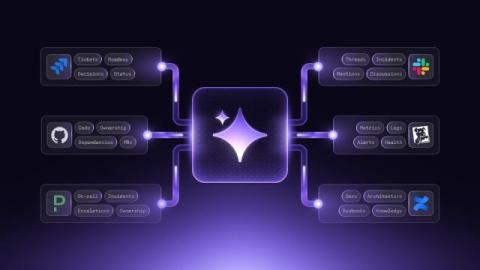
Ask Cortex anything, right from Slack

The Monday morning thread. Someone asks who owns checkout-service. Someone else asks what changed in the Production Readiness Scorecard last week. A third person wants to know if the Kubernetes migration is blocking the launch next Thursday. The answers exist. They live in Cortex. But getting them into the thread means someone stops what they're doing, opens a tab, finds the data, and pastes it back. By the time they do, the conversation has moved on.

Misconfigured Alert Detection: Find the Alerts That Need Tuning

Netdata ships with hundreds of stock alerts. They cover a wide range of infrastructure conditions and they’re designed with sensible defaults. But “sensible defaults” and “correct for your environment” are not the same thing. A CPU threshold that’s perfectly reasonable for a build server might generate constant noise on a machine running batch jobs.

Who's on call? How Claude helped us calculate this 2,500x faster

Schedules are a core part of any on-call system. In ours, they define who to page and when. But people use them in lots of other ways too: checking their next shift, asking for cover while at the gym, keeping a Slack user group up to date, or updating a Linear triage responsibility. For many of our customers, they’re one of the main ways they interact with our product, and as they’re such a foundational part of On-call, it’s very important they work well.

Stop watching the looms: why the AI era belongs to infrastructure

I live in Manchester, England now. I moved here from Texas last summer (which is its own story), but the thing I wasn't prepared for is how the Industrial Revolution isn't history here. It's the city itself. And if you're American like me, you might need to hear this: the Industrial Revolution didn't start in the US. It started here. Manchester is where the modern world was born. You see it everywhere. The old cotton mills converted into apartments.

Poland's KSC Act Is Now in Force: Why NIS2 Compliance Starts with Infrastructure Automation

Poland’s implementation of the EU’s NIS2 Directive marks a decisive shift in how organisations think about cybersecurity, resilience, and operational risk. With amendments to the Act on the National Cybersecurity System (KSC Act) entering into force on 3 April 2026, enforcement expectations are now real, national, and significantly stricter than many organisations anticipated – including obligations for security controls, incident response, and supply‑chain governance.

Disaster Recovery Testing in Harness | Resilience Testing

In this video, we introduce Harness Resilience Testing and show you how to move beyond once-a-year DR drills to a continuously validated, pipeline-driven process. You'll see how Harness lets you validate regional failovers, check database replication lag under pressure, and confirm your hot standbys genuinely take over live traffic, all in one place. We also walk through a live DR test execution, showing exactly how Harness triggers the full failover sequence, runs every validation step automatically, and gives you a clear pass or fail result in real time.

Your AWS Kiro Agent Can Now Query CloudZero. Here's What To Ask It

CloudZero's new AWS Kiro integration puts cost intelligence directly in your agentic IDE. Ask plain-language questions about spend, attribution, and cost-per-serve without leaving your development workflow. We see a similar pattern playing out across engineering teams running agentic development tools: code gets shipped fast, something moves in the cost data, and understanding why still requires leaving your environment entirely.

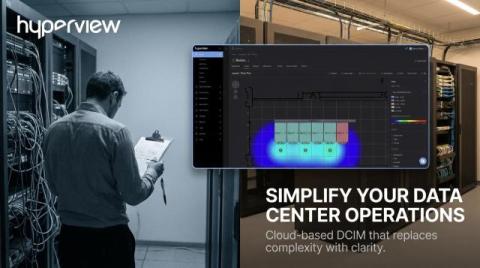
Solving Data Center Complexity: How Hyperview's Cloud-Based DCIM Simplifies Operations and Cuts Costs

Managing a data center shouldn’t be a daunting task. Hyperview’s AI-powered DCIM makes it easier by providing intelligent solutions that streamline operations, offering relief from the chaos of traditional management systems.

Your CEO Wants You To Ramp AI Usage Without Breaking Budgets. Here's How You Can Do It

Notes from a finance leader whose job this is. A few weeks ago, I traveled to Philadelphia for a conversation with a prospective CloudZero customer. We’d been working with the prospect’s engineering team for some weeks, demoing our platform in view of the RFP they’d drawn up. This stage had gone well, and so the next step was talking it over with the prospect’s CFO. We expected a conversation centered around the key criteria in the RFP.

LogicMonitor Advances Autonomous IT with No Blind Spots, Trusted AI, and Closed-Loop Action

LogicMonitor is advancing Autonomous IT with one platform that brings together complete visibility, AI with context, and governed action across the digital environment. In this announcement video, Andrew Keating shares how LogicMonitor is helping enterprises reduce blind spots, trust AI more, and move from detection to action. Modern IT teams are managing more complexity, more tools, and more noise than ever. That’s why LogicMonitor is bringing infrastructure observability, Internet performance, digital experience, and AI-driven operations together in one platform.

Optical Freedom as a Design Principle: How Ribbon Enables Choice and Supply Chain Resiliency

Pandemic-era shortages are still fresh in many minds. As consumers, we remember empty shelves and long lines driven by panic buying and stockpiling. In telecom, the story played out differently but with the same root cause: factory shutdowns interrupted chip fabrication just as demand for networking and optical equipment surged.

last9-genai: Closing the Conversation Gap in LLM Observability

OpenTelemetry's GenAI instrumentation gives you spans and token counts. It does not give you conversations, workflow cost rollups, or prompts visible in your dashboard. last9-genai is an OTel extension that fills those three gaps — without replacing your existing observability stack. Prathamesh works as an evangelist at Last9, runs SRE stories - where SRE and DevOps folks share their stories, and maintains o11y.wiki - a glossary of all terms related to observability.

How to Exclude Health Check Endpoints from Python OTel Traces

Health check endpoints generate thousands of identical, useless spans per day. Here are two production-ready approaches to filter them from your Python OTel traces — and the correctness trap most implementations miss. Prathamesh works as an evangelist at Last9, runs SRE stories - where SRE and DevOps folks share their stories, and maintains o11y.wiki - a glossary of all terms related to observability.

15: Optimizing AI Workloads: Balancing Cost, Performance, and Scalability with Bijit Ghosh

In this episode, Andrew Hillier and Bijit Ghosh discuss the evolving landscape of AI, discussing the growing prominence of inference over training, hybrid cloud strategies, balancing cost with performance, and the orchestration of complex hardware environments. The conversation also touches on emerging concepts like AI factories, the challenges of sovereign cloud, and how enterprises are navigating data gravity and regulatory constraints. It's a deep dive into optimizing AI infrastructure, managing costs, and the disruptive changes that are transforming both technology and business outcomes.

Introducing the Cortex AI Assistant (now in Slack)!

Mention @Cortex in any Slack channel the Assistant has been invited to, public or private, and get grounded answers pulled from your Cortex data. Questions can be as simple as "who owns payments-api?" or as analytical as "what's driving our incident trends this quarter?" The Assistant pulls context from all across Cortex, including ownership, Scorecards, Initiatives, on-call, dependencies, and Eng Intelligence metrics, and holds context across a threaded conversation.

What Every IT Operations Team Should Know About Managing IPv4 in 2026

IPv4 was supposed to be a temporary problem. Address exhaustion was meant to push the entire internet toward IPv6 within a decade, and operations teams could simply manage the transition and move on. That hasn't happened. Most enterprise networks still run dual-stack configurations, customer-facing services still depend heavily on IPv4, and the secondary market for addresses has become a permanent fixture of modern infrastructure planning.

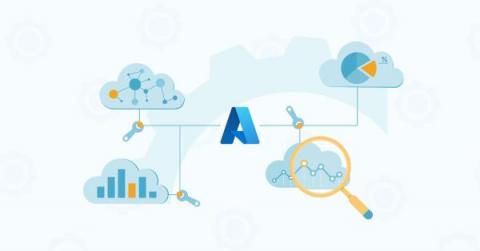
2026 Guide To Understanding Azure Storage Costs

This guide will help you understand Azure Storage costs – including tips and best practices to optimize your storage pricing. If you have trouble understanding Microsoft Azure Storage costs, you’re not alone. Azure Storage options can feel like a multi-layered maze of storage account types, tiers, pricing pages, specs — and then some. Yet, understanding your cloud cost drivers begins with looking at where your money goes. Only then can you tell if you are getting value for your money.

Argo Rollouts Canary Monitoring: Metrics, Gotchas, and Automated Gates with Last9

Argo Rollouts exposes Prometheus metrics on port 8090 — but the docs lie about which labels exist. Here's how to scrape them into Last9, build a canary dashboard, and use Last9 as an automated AnalysisTemplate gate, including the auth and base64 gotchas. Prathamesh works as an evangelist at Last9, runs SRE stories - where SRE and DevOps folks share their stories, and maintains o11y.wiki - a glossary of all terms related to observability.

All You Need to Know About CrashLoopBackOff Error

Kubernetes is an open-source container orchestration engine that is used to automate containerized application deployment, scaling, and administration. It is an open-source management platform that can be used to manage containerized workloads and services, as well as declarative configuration and automation. Kubernetes is a framework for running distributed systems in a resilient manner. It handles scaling and failover for your application and provides deployment patterns and other features.

Eliminate Manual Authentication Configuration for Fast & Effective API Security Scanning | Harness Blog

Application security testing tools promise coverage and accuracy, but teams often struggle just to get started. One of the biggest friction points in dynamic application security testing is configuring authentication correctly so a scanner can even access a target application, let alone API endpoints that power the functionality. Whether it’s API keys, bearer tokens, or custom auth flows, setting up authentication for scans frequently requires trial-and-error and engineering support.

Understanding disaggregated GenAI model serving with llm-d

llm-d is an open source solution for managing high-scale, high-performance Large Language Model (LLM) deployments. LLMs are at the heart of generative AI – so when you chat with ChatGPT or Gemini, you’re talking to an LLM. Simple LLM deployments – where an LLM is deployed to a single server – can suffer from latency issues, even with just one user. This can be because of lack of memory-bandwidth on the server, or because of KV cache pressure on system memory.

Jira GitHub Integration: The Complete Guide

Most teams use Jira to plan work and GitHub to build it. The problem is those two tools don’t talk to each other by default. Developers end up manually copying commit references into tickets, project managers hunt through GitHub to answer basic status questions, and sprint reviews become archaeology expeditions through two disconnected systems. Git Integration for Jira closes that gap.

90% AI Adoption. Still Failing. DORA Explains Why.

AI adoption is nearly universal. So why are most teams still struggling? In this session from GitKon, Nathen Harvey, head of DORA at Google Cloud, shares findings from the 2025 DORA State of AI-Assisted Software Development report, drawing on data from nearly 5,000 developers worldwide. The answer isn't more AI. It's what surrounds it.

Azure Monitor Collector: Monitor Your Entire Azure Infrastructure From Netdata

If you’re running infrastructure on Azure, you’ve probably dealt with the split between your Azure-native monitoring and the rest of your stack. Your VMs, databases, and Kubernetes clusters generate platform metrics through Azure Monitor, but those metrics live in a separate world from the OS-level, application, and on-prem metrics you’re already watching in Netdata.

What is AI SRE? The Complete Guide to AI-Assisted Site Reliability Engineering

It's 2:47 AM. PagerDuty fires. You open a Slack alert and see: p99 latency spike on checkout-service. You SSH into the host, check dashboards in four tabs, grep logs for the last 20 minutes, and eventually find a slow query introduced in a deploy six hours ago. It took 34 minutes. You resolved it, w Prathamesh works as an evangelist at Last9, runs SRE stories - where SRE and DevOps folks share their stories, and maintains o11y.wiki - a glossary of all terms related to observability.

Capturing HTTP Request and Response Bodies in .NET Traces with PHI Redaction

> Standard OTel.NET instrumentation captures headers, status codes, and timing — not request or response bodies. Here's how to add body capture to your traces while keeping PHI out of your observability backend. Prathamesh works as an evangelist at Last9, runs SRE stories - where SRE and DevOps folks share their stories, and maintains o11y.wiki - a glossary of all terms related to observability.

Fixing Broken Traces in GCP Cloud Run: A Custom OpenTelemetry Propagator

GCP's load balancer silently rewrites your traceparent header, orphaning spans in any OTLP backend. Here's the custom propagator that fixes it. Prathamesh works as an evangelist at Last9, runs SRE stories - where SRE and DevOps folks share their stories, and maintains o11y.wiki - a glossary of all terms related to observability.
Kubex Named a 2026 Leader by GigaOm

Industry analyst recognition means something different from an award. GigaOm does not hand out trophies. They evaluate products against a defined capability framework and tell the market where vendors actually stand. By that measure, Kubex has been named a Leader in two of GigaOm’s 2026 Radar Reports: Kubernetes Resource Management and Cloud Resource Optimization. In the Kubernetes report, we are positioned as an Outperformer. In Cloud Resource Optimization, a Fast Mover.

Shipping trustworthy code with Chunk CLI

AI coding agents are fast. They generate functions, refactor modules, and wire up boilerplate faster than any human. What they don’t do by default is enforce the conventions a specific team has agreed on: the lint rules, the review patterns that senior engineers flag on every PR. A generated diff looks clean until someone runs CI or reads it carefully.

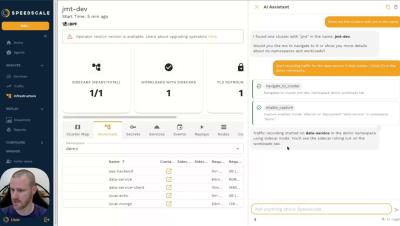
The Claude Bill is Too Damn High #speedscale #claude #aiagents #aicoding #devops #llms

Stop overpaying for AI reasoning by trading expensive GPU cycles for efficient, deterministic testing. This video explores how tools like linters and traffic replay can complement Claude, helping you fix bugs more accurately while cutting token usage by up to 50%. Visit: speedscale.com to learn more.

Database Performance Monitoring: Query-Level Visibility Across 14+ Databases

Netdata has always collected database metrics: connections, throughput, replication lag, buffer cache hit ratios, and so on. These tell you that something is wrong, but they don’t tell you why. When your PostgreSQL response time spikes, the metric alone doesn’t tell you which query is responsible. For that, you’ve traditionally needed to SSH into the box, connect to the database, and run diagnostic queries manually. Or set up a separate database monitoring tool entirely.

How is Agentic AI fundamentally different from earlier automation?

Autonomous operations has been the goal for years. But most “automation” never got us there—it just helped teams keep up. Now that’s changing. Agentic AI introduces a fundamentally different model:– Purpose-built agents, not static workflows– Real-time decisioning, not predefined rules– Collaboration across agents, not isolated tasks Instead of automating steps, agentic AI enables systems to **reason, adapt, and act**—at a speed and scale humans simply can’t match. That’s what turns autonomous operations from a long-standing ambition into something actually achievable.

The Hidden Cost of DIY DevOps: Why Growing Companies Bring in the Experts

Companies are scaling faster than ever, but infrastructure rarely keeps up with the product. When developers take on operational work on top of everything else, it feels like a smart way to cut costs. In practice, it's one of the most expensive mistakes a growing software team can make. This article breaks down what DIY DevOps actually costs and how a structured approach changes the equation.

Run Local LLMs on Mac to Cut Claude Costs

Part of the motivation for this post is how cloud API economics are shifting: Anthropic is moving large enterprise customers toward per-token, usage-based billing (unbundled from flat seat fees), which makes “always call the API” a moving cost line for teams at scale. A hybrid or local layer is one way to keep spend bounded while you still use premium models where they matter.

Why Mandating AI Tools Backfires on Engineering Teams

Responsible AI adoption for engineering teams starts with culture, not compliance. In this GitKon talk, Rizel Scarlett (Tech Lead of Open Source DevRel at Block) shares how Block helped thousands of engineers actually want to use AI tools, including Goose, Cursor, Claude Code, and more, without mandates, vibe coding disasters, or security gaps.

Rootly's Dan Sadler: why AI coding tools are driving more incidents + why reliability is the product

Cortex co-founder and CTO Ganesh Datta sits down with Dan Sadler, VP of Engineering at Rootly. Dan explains how Rootly treats reliability as a product feature rather than just a technical metric, and why culture might be the most impactful element of building reliable systems.

Cloudsmith raises $72M Series C to secure the AI software supply chain

Cloudsmith raised $72 million in Series C funding, led by TCV and Insight Partners, to build the operating system for the modern software supply chain. AI agents are writing code faster than teams can secure it. That shifts the risk calculus because more software, built faster, means more attack surface. Artifact management is the control point between every software producer and consumer, and it's where Cloudsmith sits.

The job is not to write code. It's to produce business value.

Most engineers can tell you exactly how many PRs they merged last quarter. Far fewer can tell you what any of it did for the business. The best engineering leaders can. They draw a straight line from their team's work to ARR: which reliability investment protected revenue, which migration unblocked a strategic customer, which operational improvement reduced churn. They lead with outcomes, not story points.

Human First, AI Second: Cycle's Approach to AI Coding in 2026

It is easier than ever to launch a product from scratch. Today, AI can make your team of two feel like a team of ten almost overnight. Enterprises across the tech industry are completely restructuring engineering teams to double down on AI coding, often incentivizing engineers for the sheer amount of code they push. The AI revolution is incredible. So, you would be crazy not to hop on the vibe coding train right? Well it depends on what exactly you are building.

What does using AI for post-mortems actually mean?

Everyone is using AI to help with post-mortems now. The pitch is obvious: post-mortems are time-consuming, the blank page is brutal, and AI is very good at producing structured, confident-sounding documents quickly. We're not here to push back on that. We've built AI into our own post-mortem experience, pulling your Slack thread, timeline, PRs, and custom fields together and giving your team a meaningful starting point in seconds. We think that's genuinely valuable, and the teams using it agree.

How it feels to run an incident with AI SRE

We've been building the broader incident.io platform for several years now, and one thing we've learned is that UX matters more here than almost anywhere else. When an incident fires, there's no room for poorly designed interfaces or fumbling through features you haven't touched in a while. The product has to be ergonomic: easy to pick up, easy to navigate, with the right things at your fingertips at exactly the right moment. We've put a lot of effort into this over the last 5 years.

Why Your PromQL Availability Query Returns Nothing When Services Are Healthy

Your SLI query shows 100% availability as No Data. Here's why PromQL returns empty results instead of zero — and the label-preserving fix. Prathamesh works as an evangelist at Last9, runs SRE stories - where SRE and DevOps folks share their stories, and maintains o11y.wiki - a glossary of all terms related to observability.

Canonical releases Ubuntu 26.04 LTS Resolute Raccoon

Today Canonical announced the release of Ubuntu 26.04 LTS, codenamed “Resolute Raccoon,” available to download and install from ubuntu.com/download. Resolute Raccoon builds on the resilience-focused improvements introduced in interim releases, with TPM-backed full-disk encryption, improved support for application permission prompting, Livepatch updates for Arm– based servers, and Rust-based utilities for enhanced memory safety.

AI for Incident Response: Should You Build or Buy?

SREs and platform teams are overwhelmed by the effort of manually troubleshooting ever-more complex cloud-native environments. This pain is driving a breakneck adoption of AI SRE solutions that promise to automate core reliability practices, from root cause analysis to capacity planning. For teams with strong engineering talent, creating a DIY AI SRE seems like a straightforward challenge.

What to expect from a database monitoring vendor: looking beyond the tool

Part 2: Key insights from a fireside chat with Chris Yates. Read part 1 here. Choosing a database monitoring vendor isn't just about features. Once you’re confident that it’s time to reassess your database monitoring strategy, the natural instinct is to start comparing products. However, it’s vital to know how to assess vendor relationships, support quality, and product innovation before you sign anything.

UK Cyber Essentials is Raising the Bar. Governance is How Teams Keep It There.

The April 2026 update to UK Cyber Essentials marks an important shift. Not because it introduces radically new security concepts, but because it removes tolerance for inconsistency. With the effective date quickly approaching, many UK organizations are focused on meeting the immediate requirements. That matters. But the more durable story is what these changes reveal about how security and compliance are now expected to operate in real world environments.

Test network paths with TCP, UDP, and ICMP in Datadog

When developers and SREs design application tests, they often prioritize user workflows and API availability. Extending that suite with network tests that match your app’s traffic protocols can reveal whether issues originate in the network or application layer. In this post, we’ll explore how you can design effective network tests using the Transmission Control Protocol (TCP), User Datagram Protocol (UDP), or Internet Control Message Protocol (ICMP), including.

Introducing Ubuntu 26.04 LTS | Resolute Raccoon

Ubuntu 26.04 LTS, codenamed, is now available to download. Resolute Raccoon builds on the resilience-focused improvements introduced in interim releases, with TPM-backed full-disk encryption, improved support for application permission prompting, Livepatch updates for Arm-based servers, and Rust-based utilities for enhanced memory safety. This release also brings native support for industry-leading AI/ML toolkits like NVIDIA CUDA and AMD ROCm, making Ubuntu 26.04 LTS the ideal platform for AI development and production workloads.

Professional Data Connectivity: Top Airtable ODBC Drivers for 2026

For businesses that need to bridge the gap between Airtable's cloud-based flexibility and the analytical power of tools like SQL Server, Power BI, or Excel, a professional ODBC (Open Database Connectivity) driver is a fundamental requirement. Selecting a high-performance driver ensures that your Airtable "bases" are treated like a traditional relational database, providing a structured SQL layer over your CRM and project data.

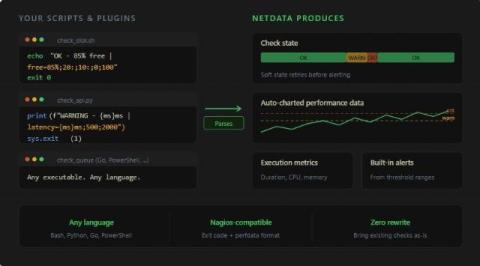
Nagios Plugins Collector: Run Your Existing Checks and Custom Scripts Inside Netdata

A lot of teams have a collection of Nagios plugins and custom monitoring scripts that have been running reliably for years. Some are standard community plugins for checking disk health or SSL certificate expiry. Others are homegrown Bash or Python scripts that check something very specific to the business: whether an API endpoint returns the right payload, whether a batch job completed on time, whether a queue depth is within bounds.

Share artifacts between parent and child pipelines

As part of an initiative to increase the flexibility and power of child pipelines, we are happy to announce that Bitbucket Pipelines will now allow you to share artifacts between parent and child pipelines. This feature extends the use-cases for child pipelines, allowing a greater degree of coordination between parent and child and the use of child-pipelines as modular pieces of processing for larger operations with artifacts. Here’s how it works.

Under the Hood: Engineering JFrog Premium Availability

In the modern software factory, 99.9% uptime is no longer the gold standard. A standard 99.9% SLA translates to approximately 43 minutes of unexpected downtime per month. While industry data shows that a single minute of downtime costs an average of $9,000, for large global enterprises, that figure can easily be 5x higher. At tens of thousands of dollars per minute, those 43 minutes quickly compound into a catastrophic financial and operational risk.

What Is LLM Observability? For CFOs And Engineers, The Missing Layer Is Cost

You probably have Datadog. Maybe New Relic, maybe Dynatrace. Your observability stack has been solid for years — and you're still flying blind on AI cost. Here's why LLM observability needs a fourth pillar most tools skip, and how to build one that actually tells you what your models are costing you per request, per feature, per customer.

Blind Tokenmaxxing Is The New Cloud Waste. Focus on Outcome-Maxxing Instead

Meta's internal token leaderboard sparked a frenzy — and a reckoning. Tokenmaxxing without attribution is just cloud waste 2.0. Companies like Hudl and Duolingo use cost intelligence to connect every AI dollar to a business outcome.

Announcing Kosli's brand new docs

Good docs are how developers work with a product, from first look to daily use. That’s been true for a long time, and it’s becoming more true as developers increasingly hand that work to agents on their behalf. During the last quarter, we’ve been migrating docs.kosli.com from a static Hugo site to Mintlify, and now it’s finally live. Early reactions from our customers: “A marked improvement over the old docs in layout and usability.” “Looking sharp!”

An Introduction to Disaster Recovery Testing: What You Need to Know in 2026 | Harness Blog

Businesses today run on computers, cloud systems, and digital tools. One big failure can stop everything. A cyber attack, a power outage, or a software glitch can shut down operations for hours or days. Disaster recovery testing is how you prove you can restore critical services when the unexpected happens. 
 In 2026, with hybrid and multi-cloud estates, distributed data, and tighter oversight, this is not a once-a-year fire drill.

How to Install Terraform for Secure and Scalable Infrastructure Automation | Harness Blog

If your Terraform install is insecure or inconsistent, it can quickly slow down your delivery. A single compromised file or a misconfigured backend can stop deployments for many services. Teams that set up Terraform correctly from the start can scale easily and avoid compliance issues.

Beyond the Big Bang: De-risking Cloud Migrations with Progressive Delivery | Harness Blog

At 2 am, your migration goes live. By 2:07, error rates spike, and rollback isn’t an option. Cloud migrations, API rewrites, and architecture transformations rarely fail because of bad code. They fail because of how that code is released. Most teams still rely on a “big bang” cutover where infrastructure, services, and user-facing changes go live at once. This concentrates risk into a single moment.

Geopatriation in India: Why data residency is a boardroom illusion

In 2026, a new term has infiltrated Indian boardroom discussions: Geopatriation. Coined by Gartner as a top strategic technology trend for 2026, geopatriation is the deliberate relocation of workloads and applications from global cloud hyperscalers to regional or sovereign alternatives in response to geopolitical risk. While the previous decade was defined by a cloud-first approach, the current landscape is defined by the need for sovereignty.

Anything but that cloud

"Anything but that cloud." I asked why. "Our biggest customer is a giant retailer," he said. "That hyperscaler's parent company is the retailer's biggest competitor. So our customer refuses to do business with anyone who uses that cloud. We use that cloud, we lose our biggest customer. Full stop." That was the entire conversation about cloud choice. It wasn't a technical preference. It wasn't a pricing optimization. It wasn't a sovereignty concern.

From Jammy to Resolute: how Ubuntu's toolchains have evolved

The evolution of Ubuntu’s toolchains story goes beyond just providing up-to-date GCC, LLVM, and Python. It is also about opinionated openJDK variants, task-focused devpacks, FIPS compliant toolchains, and snaps, like the new.NET snap and Snapcraft plugin. These are enhancements that collapse half a day of setup into a single command or two, demonstrating what a frictionless developer experience means in practice for framework and application developers on Ubuntu.

Terminal dependencies for CircleCI workflows: Always run what matters

When a job fails, gets canceled, or never runs, the work that still needs to happen afterward (cleanup, notifications, teardown) has no clean way to trigger. There is no easy way to express “run this no matter what” in your pipeline config without duplicating jobs or adding fragile workaround branches. Terminal jobs change that.

Android Remote Management: The Future of Business Device Management

One Android device going offline in your store or warehouse can throw off your whole day. In this video, we'll show you how to manage all your Android devices remotely from a single dashboard, without running around on-site. You'll learn how remote monitoring tracks device health in real time, from battery levels to network status. We'll also walk through remote troubleshooting, app deployment, and how to enforce security policies across your fleet. Then we'll look at how teams in retail, logistics, and healthcare use these tools to keep operations running smoothly.

AI SRE Summit 2026 Brings Together Engineering Leaders From AWS, Salesforce, Man Group, Smarsh, Honeycomb and More

Virtual event will explore what it takes to use AI in production SRE, from incident response and observability to platform design, cost control and self-healing operations TEL AVIV and SAN FRANCISCO, April 22, 2026 — Komodor, the autonomous AI SRE company, today announced it will host AI SRE Summit 2026, a free live virtual event on Tuesday, May 12, 2026, bringing together site reliability, platform engineering and cloud-native leaders to discuss how AI is changing production operations, and where i

Resolve's Agents of IT podcast - Ep. 17 - Agentic Workflows to Performance Intelligence

In this episode of Agents of IT, Ari Stowe sits down with Geoff McQueen, four-time founder and CEO of Ascendius, to unpack what it takes to navigate AI-driven disruption. Geoff shares a clear framework for where automation is headed, from individual AI use to agent-driven workflows to AI embedded across the business. Most organizations are still early. The real opportunity is in making AI work at the business level.

Introducing on-demand Pipelines: run pipelines via API

Your CI/CD pipeline doesn’t have to live in a YAML file anymore. With on-demand pipelines, you can generate pipeline definitions programmatically, from scripts, services, or automation tools – and execute them instantly via the Pipelines API. No commit. No pull request. No static configuration to modify. Just build the YAML your situation demands and run it.

How to Align CloudOps and FinOps for Better Azure Cost Management

The rapid migration to the cloud has brought unprecedented agility to modern enterprises, but it has also introduced a significant challenge in the form of cloud sprawl. As engineering teams provision resources at breakneck speed to support new applications and AI-driven workloads, financial departments often struggle to keep track of the escalating costs. This disconnect between operational execution and financial oversight is a primary driver of wasted cloud spend. To truly harness the power of scalable infrastructure without breaking the budget, organisations must bridge the gap between CloudOps and FinOps. Aligning these two disciplines ensures that technical performance and financial accountability work hand in hand to deliver sustainable business value. For companies heavily invested in Microsoft ecosystems, this alignment is even more crucial. Unchecked deployment can lead to massive end-of-month bill surprises, turning what should be a strategic advantage into a financial burden.

The Regional Data Centre Revolution Powered by AI Demand

London still hosts the biggest concentration of UK data centre capacity, but the centre of gravity is starting to move. AI workloads are changing the infrastructure maths, pushing power, space and planning considerations up the decision list. That is exactly where regional locations start to look like the sensible option. Government data shows how concentrated the market remains: as of autumn 2024, London is estimated at 1,048MW of colocation IT load. Compare that with 44MW in the East of England, 17MW in the North East and 30MW in Scotland. The gap is huge, yet it is not a permanent advantage.

Moving Beyond SolarWinds: Building a Modern Observability Strategy

For years, platforms like SolarWinds have been a standard in IT environments. They helped teams answer a fundamental question: are systems up or down? That approach worked well when environments were more contained and predictable. The challenge is that most environments no longer operate that way. Hybrid infrastructure, cloud services, and tightly interconnected applications have changed what “visibility” needs to mean.

Identify and fix code issues faster with Datadog's Azure DevOps Source Code integration

Developers and SREs who rely on Microsoft Azure DevOps often face fragmented workflows when investigating issues or reviewing code quality. Troubleshooting an error can require jumping between observability tools and source code repositories as you manually connect traces, stack frames, and commits. At the same time, security vulnerabilities, misconfigurations, and flaky tests may go undetected until later stages of the software delivery life cycle (SDLC), where they are more costly to fix.

How to automate environment sleeping and stop paying for idle Kubernetes resources

Scaling your deployments to zero is only half the battle. If your cluster autoscaler does not aggressively bin-pack and terminate the underlying worker nodes, you are still paying for idle metal. True environment sleeping requires tight integration between your ingress layer and your node provisioner to actually realize FinOps savings.

Beyond the frontend: choosing between Vercel and Upsun for full-stack applications in 2026

If you're building a modern web application in 2026, Vercel is almost certainly on your shortlist, and probably near the top of it. The developer experience Vercel pioneered for Next.js and the frontend ecosystem around it is a real achievement. Push a branch, get a preview URL, ship. It works, it's fast, and an entire generation of frontend teams have built their workflow around it. This article is not here to argue with any of that.

From Deployment to Confidence: Why Continuous Verification Is the Missing Piece in Modern CD Pipelines | Harness Blog

Modern engineering teams have become exceptionally good at shipping software quickly. With modern CI/CD platforms, what once required careful coordination, late-night release windows, and layers of approvals now happens almost invisibly. Pipelines execute in minutes. Releases flow continuously. The friction that once slowed everything down has been engineered away. From the outside, it looks like progress in its purest form. Automation removed bottlenecks. Cloud infrastructure removed limits.

Building for the Agentic Era: Engineering Excellence at Harness | Harness Blog

As AI agents become ubiquitous across the software development lifecycle, engineering teams must do more than adopt new tools; they must redesign how they build, verify, and operate software. This post distills the vision, priorities, and best practices that guide engineering excellence at Harness. Different products sit at the heart of the Harness platform.

What is Terragrunt and how does it simplify Terraform Workflows? | Harness Blog

Managing Terraform across dozens of AWS accounts becomes a maintenance nightmare fast. Teams end up copy-pasting the same backend configurations, provider blocks, and variable definitions hundreds of times. Terragrunt acts as an orchestrator above Terraform, eliminating this duplication through shared configuration inheritance and dependency management. When financial services teams manage 200+ microservices across multiple environments, these DRY patterns become essential for governance and consistency.

What EMEA Infrastructure Leaders Are Saying About Security, Compliance, & Hybrid IT

Over the past few months, Puppet has partnered with Bryxx to host a series of leadership lunches across Europe, bringing together infrastructure, operations, and security leaders for candid, peer‑to‑peer conversations. These sessions weren’t marketing briefings. They were grounded discussions about what teams are facing right now: tighter regulation, rising security pressure, shifting cloud strategies, and the practical realities of automation and AI.

Chaos Engineering vs. Traditional Testing: What's the Difference? | Resilience Testing | Harness

Stop treating system outages like surprises and start preparing for them. While traditional software testing is the bedrock of development, using unit, integration, and regression tests to verify that code meets specific requirements, it only accounts for what we expect to happen. Chaos Engineering takes a different approach by shifting the focus from bug prevention to system resilience. Instead of asking "does this work?", Chaos Engineering asks "how does this survive?" by injecting real-world turbulence like network latency or pod failures directly into production-like environments.

RTO and RPO in Disaster Recovery Explained | Resilience Testing | Harness

Struggling with disaster recovery planning? Learn the simple difference between RTO and RPO, the two most important metrics every developer, DevOps engineer, and SRE must understand. RTO (Recovery Time Objective) tells you exactly how long your systems can stay down before it hurts your business. RPO (Recovery Point Objective) shows how much recent data you can afford to lose in an outage.

What Does Load Testing Measure? (Top 5 Performance Metrics) | Resilience Testing | Harness

Before you deploy, you need to know if your application can handle real-world traffic. In this video, we break down the 5 essential load testing metrics: Response Time (latency), Throughput (requests per second), Error Rates (system stability), Resource Utilization (CPU/Memory bottlenecks), and User Concurrency. Whether you're into Software Engineering, DevOps, or SRE, understanding these System Design fundamentals is the only way to prevent server crashes and ensure Software Scalability.

8 Signs Your Service Desk Automation Tool Has Become the Bottleneck

Most service desk automation problems get misdiagnosed. You see the ticket backlog, the manual work, and the slow incident response, and assume the issue is due to process, adoption, or staffing. But at some point, the math stops working. You’ve invested in a service desk automation tool, given it time to mature, built workflows around it, and the results still don’t match what was promised.

Seeing the Bigger Picture: What technical leaders can learn from evolving monitoring needs

A preview of leadership insights shaped by real-world experience Estate-wide clarity for leaders who still need technical depth As data estates grow, the role of technical leaders changes. Visibility becomes harder. Communication becomes more important. Decisions have broader consequences. Many leaders start their careers focused on the technical details.

Instrumenting WordPress with OpenTelemetry: PHP Tracing, Browser RUM, and Error Capture in Production

WordPress powers 40% of the web but has no native observability story. Here's how to instrument it end-to-end with OpenTelemetry - PHP, browser RUM, and errors. Prathamesh works as an evangelist at Last9, runs SRE stories - where SRE and DevOps folks share their stories, and maintains o11y.wiki - a glossary of all terms related to observability.

Release v2.10: Secrets Management, Nagios Plugin Collector, Azure Monitor, and more

What’s New in Netdata v2.10 In this release, Netdata brings powerful new capabilities to help you monitor, troubleshoot, and understand your infrastructure faster without complexity. In this video, we walk through the key updates: Secrets Management – Securely manage sensitive configuration data Nagios Plugins Collector – Extend monitoring using existing Nagios plugins Azure Monitor – Bring Azure metrics into Netdata for unified visibility.

How Any FinOps Practitioner Can Use AI Right Now To Save 3-4 Hours/Week Of Tedium

Make AI do the dirty work while you focus your energy on strategy. CloudZero's Ryland Bowles shows you how. Every FinOps engineer is worried that AI is going to steal their job. I’ve worried about it. But I’ve also experimented extensively with AI, and I’ve got a pretty clear sense of what it can and can’t do in a FinOps context.

Claude Opus 4.7 Pricing In 2026: What It Actually Costs (And Whether It's Worth It)

Claude Opus 4.7 holds at $5/$25 per million tokens — but a new tokenizer inflates costs up to 35% on identical text. Here's what Opus 4.7 actually costs at production scale, how it compares to Sonnet 4.6, and the six levers that determine where your bill lands.

Why Your CI/CD Pipeline Needs Deterministic Test Automation

Most CI/CD pipelines have a testing problem that nobody talks about enough. The pipeline runs. The tests pass. The build deploys. And then something breaks in production that the test suite had no business missing. Not a flaky test, not an infrastructure issue. A real gap in coverage that existed quietly for weeks before it mattered. Here's the thing: the pipeline itself is usually fine. The problem is what's feeding into it.

Diff-erent Perspectives: How Specialized LLM Personas Catch More Bugs

We’ve built a multi-LLM PR reviewer that runs on every pull request in a couple of our own repos. Two independent models look at each change in parallel, each wearing a set of “persona hats” tuned to a specific area of the codebase. They compare notes, duplicates get stripped out, and the PR author ends up with a single review comment rather than a wall of noise.

Qovery Q1 2026 Demo Day

See our latest retrospective and live updates. We're showcasing Event-Based Autoscaling via KEDA, allowing you to scale on business metrics that actually matter. We’ll also debut Copilot Troubleshoot to solve complex deployment failures instantly, demonstrate how MCP Agents are setting a new standard for your workflow, and share more about NGINX migration. Qovery is the Kubernetes management platform built for the AI era.

Ansible Conditionals: Complete Guide to when Statements [2026]

Last updated: April 2026 Playbooks that run every task every time aren't really automation. They're scripts. Real playbooks make decisions: only restart a service when its config changed, only install a package on Debian hosts, only send an alert when a prior task failed. That decision-making comes from Ansible conditionals.

An introduction to the GitOps Catalog

One of the challenges teams face as their platforms grow is how to standardize what gets deployed without slowing teams down. The GitOps Catalog from Konstruct is designed to solve this by providing a consistent way to distribute reusable infrastructure modules, application components, and full environment stacks across clusters. At a glance, it looks like a templating system.

Why your ecommerce dev team ships slower than your competitors (and how to fix it)

Key takeaway: Development velocity in e-commerce is often throttled not by headcount, but by invisible infrastructure friction that forces developers to spend time on environment management and deployment pipelines instead of shipping revenue-generating features. Ecommerce teams rarely think they have an infrastructure problem.

AppSignal x Hatchbox: Affordable Hosting, Full Visibility

Affordable hosting has always been a puzzle. Heroku made deploying Rails apps simple, but with Salesforce at the helm, active development has stalled. Many developers are left wondering what comes next, locked into a platform that is no longer moving forward. Chris, the founder of GoRails, felt that same frustration. That is why he built Hatchbox. Hatchbox handles your deployments, runs on servers you own, and keeps costs predictable. No dyno management, no add-on sprawl.

Secrets Management: Get Credentials Out of Your Netdata Configuration Files

If you’re running Netdata collectors that connect to databases, APIs, or other authenticated services, there’s a good chance you have passwords sitting in plain-text configuration files right now. It works, but it’s the kind of thing that makes security teams nervous and makes credential rotation painful. Every password change means editing config files and restarting collectors.

From GIGO to Digital Twin: How DCIM G2 Cleans Up Your Data Center Data Quality

“Garbage in, garbage out.” Everyone who has ever worked in computing or other data-adjacent fields has heard this adage at least once. This phrase or acronym (GIGO) reflects the fundamental concept in both computing and data governance that the quality of your data is the critical determinant of successful results in any system, regardless of whether your focus is IT or OT.

"Deployment Visibility for Platform Teams | ENV Zero Topic Talk"

Welcome to another ENV Zero Topic Talk! Today, we discuss the importance of deployment visibility for platform teams. In today's fast-paced development environment, real-time insights into the deployment pipeline are crucial to ensure smooth operations, manage risks, and maintain control. ENV Zero provides comprehensive deployment visibility, allowing teams to track every stage from code commit to post-deployment monitoring. With our intuitive dashboard, platform teams can identify bottlenecks, resolve issues faster, and optimize resource management for quicker, more stable deployments.

Balancing DevOps Speed and Cybersecurity: Where Risks Arise

In modern development, speed is one of the primary competitive advantages. Teams release new versions daily, infrastructure is deployed in minutes, and the pipeline from commit to production keeps getting shorter. This creates real business value - but it is also an area where security risks quietly accumulate. The problem is not that DevOps teams ignore security. More often, they are forced to choose between speed and thorough validation. And this choice, made dozens of times each week, gradually builds up security technical debt that sooner or later turns into a real incident.

Replace API Synthetics with Traffic Replay

The alert fires at 2 AM. Your observability platform’s synthetic test just failed. Login is broken. So you open your laptop, pull up the dashboard, and stare at a single red dot: the browser test. You know the problem is somewhere in the stack, but not where. Is it the auth service? The token validator? The user profile API? The API gateway timing out? You’re now about to spend the next 45 minutes correlating traces, tailing logs, and manually hitting endpoints until you find it.

Why public sector teams are moving to sovereign cloud providers

Public sector organizations have long relied on global cloud providers to modernize infrastructure and scale digital services. However, priorities are shifting. Today, decisions are shaped not just by cost or performance, but by where data is stored, who controls it, and how it is governed. Increasing regulatory pressure, geopolitical uncertainty, and rising expectations around data privacy are all driving this change.

Dark Code: The AI-Generated Software Nobody Understands

The biggest risk to your product isn’t AI-generated code that doesn’t work. It’s generated code that seems fine. AI doesn’t optimize for correctness. It creates something passable. Something that passes the smell test. And when everybody in the industry is pushed to move faster and do more with less, you end up shipping software that looks correct. It passed your quick visual check. It passed all the tests. But no one ever fully understood it.

What makes a cloud provider trusted? Beyond uptime and pricing

Trust in a cloud provider used to come down to two metrics: uptime and cost. If services stayed online and pricing looked competitive, that was often enough. That is no longer the case. Modern development teams expect far more from their infrastructure. Speed, usability, transparency, and flexibility now shape how developers evaluate cloud platforms. A provider may meet uptime guarantees and still frustrate teams with slow provisioning, unclear billing, or rigid tooling.

The Complete Guide to Feature Testing for Modern DevOps Teams | Harness Blog

Today’s teams are challenged to ship fast without breaking things. Traditional deployment strategies tie every code change directly to user exposure, forcing teams to trade velocity for safety and live with stressful, all-or-nothing releases. Feature testing changes that. In modern DevOps, you don't have to cross your fingers during a big-bang rollout.

Understanding Environment Drift in Enterprise Delivery | ENV Zero Topic Talk

Welcome to another ENV Zero Topic Talk! In today’s episode, we explore the concept of environment drift in enterprise delivery and why it’s crucial to manage it. Over time, configurations across your environments can deviate, leading to errors and inconsistencies. ENV Zero helps detect and automatically correct these discrepancies, ensuring that your environments stay in sync. Discover how proactive drift management can improve stability, reliability, and predictability in your delivery process.

7 Types of Load Testing Explained: Load, Stress, Spike, Soak & More | Harness

Discover the 7 most important types of load testing that every developer, DevOps engineer, and QA team should know in 2026. Whether you're building scalable applications, preparing for traffic surges, or ensuring system reliability, understanding these load testing types is essential for modern software performance testing. In this quick video from Harness, we break down.

Beyond AI Vibes: Deterministic Foundations for Agentic Coding

Every week there is another model drop, another agent framework, and another workflow tweak you are supposed to evaluate. Meanwhile, the largest companies, the ones operating at the highest scale and leaning hardest on AI, are also the ones making headlines for reliability strain: capacity limits, outages, and services that buckle under load.

Major Update to ODBC Drivers: Expanded Compatibility, New Authentication Options, and Enhanced Data Type Support

We are excited to announce a significant update to our ODBC Drivers product line. This release delivers broader compatibility across modern data platforms, improved integration with third-party tools, and extended support for advanced data types and authentication methods.

A/B Testing Tools: The CTO's Guide to Safe and Measurable Change | Harness Blog

Picture this: It's 2 a.m. Your phone is buzzing. A new feature just went out to your entire user base, and conversion rates are tanking. Your on-call engineer is digging through logs, your Slack channels are on fire, and you’re left wondering, Why didn't we just test this first? Every CTO has a version of this story. And most of them have quietly vowed never to repeat it.

How Engineers Get Leadership Buy-In for Technical Initiatives

Getting leadership to greenlight your technical work isn't about having the right answer, it's about speaking the right language. CircleCI CTO Rob Zuber shares the frameworks he's developed over 12 years for translating engineering priorities into business impact, navigating organizational dynamics, and building the relationships that make buy-in happen before you ever enter the room.

Agent Skills move too fast for git

Last month I was making a change to sx, our CLI. I updated a core flow, adding external catalogs as a source for sx add. Small change. Then came the testing. I knew I was messing with a core flow and wanted to be sure I hadn't broken anything. I spent about forty-five minutes setting up an isolated environment. Spinning up Docker. Fighting with tmux. Getting a clean install state I could run through the TUI a few times. Forty-five minutes of my afternoon that produced zero code. I complained in Slack.

Autonomous AI for Cloud-Native Cost Optimization: Balancing FinOps and Performance SLAs

Platform Engineering leaders are caught between two competing imperatives. You’re under pressure to flatten cloud spend but your team is still provisioning defensively because nobody wants to be the person who causes a production incident. You try to optimize, but six months later, when someone pulls a report, nothing has changed.

How to set up rolling deployments with CircleCI

A rolling deployment updates running application instances in batches, replacing old instances with new ones while the application keeps serving traffic. The concept applies to any system that can run multiple instances of an application, but Kubernetes has it built in as the default deployment strategy. Kubernetes terminates an old pod only after its replacement passes the configured readiness check, so no requests land on an unready instance.

10 best practices for optimizing Kubernetes on AWS

Optimizing Kubernetes on AWS is less about raw compute and more about surviving Day-2 operations. A standard failure mode occurs when teams scale the control plane while ignoring Amazon VPC IP exhaustion. When the cluster autoscaler triggers, nodes provision but pods fail to schedule due to IP depletion. Effective scaling requires network foresight before compute allocation.

Choosing GPU cloud platforms for developers

For developers building AI applications, training models, or running inference pipelines, the GPU cloud market in 2026 has never offered more choice - or more complexity. Picking the wrong platform means overpaying, dealing with availability problems, or battling infrastructure that slows you down rather than accelerating your work.

How to define your monitoring requirements (before you talk to a vendor)

This is a guest post from Laura Copeland. Key insights from a fireside chat with Chris Yates. Part 1. Choosing the right database monitoring vendor isn’t just a technical decision, it’s a strategic one that affects your teams, your estate, your growth plans, and the culture of your organisation. It’s also a personal one if you’re a DBA. Something as critical as your monitoring system will shape your day‑to‑day work, and, in many cases, how well you sleep at night.

Preparing Web and Mobile Cloud Infrastructure for Massive Advertising Traffic Spikes

When a digital marketing team launches an aggressive display network campaign, they measure success in clicks, impressions, and conversions. However, for IT operations and DevOps teams, that same success manifests as a massive, often unpredictable surge in server requests. A sudden influx of users can be a triumph for brand visibility, but it quickly becomes a nightmare if the underlying web and mobile cloud infrastructure is not equipped to handle the heavy load. Bridging the gap between marketing ambition and technical reality requires robust planning, dynamic resource provisioning, and intelligent system monitoring. Without these elements, a successful ad campaign can accidentally execute a self-inflicted denial of service attack on a company's own platforms. Modern businesses cannot afford the disconnect that often exists between the departments generating traffic and the teams responsible for keeping the lights on. Aligning these two functions ensures that the digital infrastructure is primed and ready long before the first advertisement goes live.

CircleCI is now available as a Codex plugin

CircleCI is part of the latest wave of Codex plugin integrations, joining the directory alongside other popular development tools like Vercel, Cloudflare, Figma, Notion, Sentry, Hugging Face, Linear, and more. If you’re using Codex, you already know that writing code is rarely the hardest part of your job. It’s the delays, interruptions, and context switching that start when that code breaks on its way to production. The CircleCI Codex plugin closes that gap.

What is Kubernetes? The reality of Day-2 enterprise fleet orchestration

Kubernetes is an open-source container orchestration engine. At enterprise scale, it abstracts infrastructure to automate deployment, scaling, and networking. However, managing hundreds of clusters introduces severe Day-2 operational toil, requiring agentic control planes to enforce global governance, security policies, and cost optimizations across multi-cloud fleets.

Your Developers Feel More Productive. Your Codebase Disagrees.

AI adoption is up. Developer confidence is up. So why is code duplication up 10x since 2022? GitKraken VP of Developer Research Jeremy Castile shares the frameworks we built after analyzing 211 million lines of code and talking to hundreds of engineering teams. This is the playbook version of the research — practical, not theoretical. In this session, you'll learn: The gap between how productive developers feel and what's actually happening in the codebase is real. If you can't measure it, you're just guessing. Nobody wants to be guessing with this stuff.

A Prototype's Worth 1,000 Minutes: How Claude Prototypes Accelerate The Product Planning Process

The relationship between product managers (PMs) and engineers is due for an upgrade. The division between these personas is responsible for a healthy, if laborious, collaboration when envisioning and building new products. A PM generates the vision; engineers translate it into an architectural approach, raising the technical questions that sharpen it along the way. This back-and-forth eventually produces tight alignment, a solid PRD, and functional code.

How Approval Pipelines Prevent Deployment Errors | ENV Zero Topic Talk

Welcome to another ENV Zero Topic Talk! Today, we explore how approval pipelines can help prevent costly deployment errors. Even with automation, errors in deployment can cause downtime, lost revenue, and security risks. Approval pipelines ensure that only properly reviewed and validated changes are pushed live, minimizing human error and improving deployment accuracy. Learn how ENV Zero's approval pipelines can streamline your deployment process and protect your business from potential risks. Ready to improve your deployment process? Visit ENV Zero to get started today!

Ecommerce replatforming without a revenue freeze: how preview environments reduce migration risk

Key takeaway: Upsun eliminates the need for code freezes during ecommerce migrations by using instant, data-complete preview environments to validate replatforming efforts against production-grade data without interrupting the live store. Ecommerce replatforming is one of the highest-stakes decisions an online retailer makes, and for most, the biggest risk is what happens to revenue during the migration.

Faster code doesn't mean faster delivery

Software development has never moved this fast. JetBrains' 2026 AI Pulse Survey found that 90% of developers now use at least one AI tool at work. CircleCI's 2026 State of Software Delivery report, covering 28 million workflows across 22,000 organizations, found that daily CI workflow runs jumped 59% year over year, the largest single increase they've ever recorded. In that same period, CI success rates dropped to a five-year low.

Women in Tech: Journeys, Grit, and the Future We're Building | Harness Blog

Technology evolves rapidly — but progress in tech isn’t driven by tools alone. It’s driven by people. By curiosity. By courage. By individuals who choose to step into complex systems and shape how they function. As an engineering leader driving application and API security, I have always believed that our industry is at its best when complex concepts are made accessible and practical for everyone.

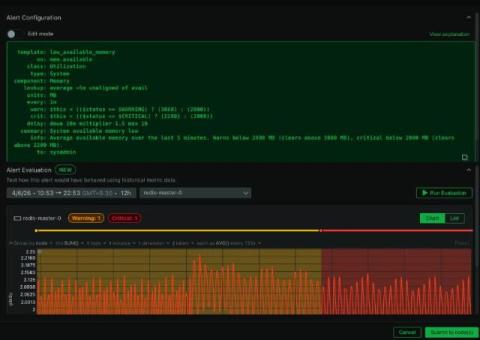
Smarter Alert Management: Test on Historical Data, Review Transitions, and Preview Silencing Schedules

Alert fatigue usually isn’t caused by one thing. It’s the accumulation of thresholds that are slightly too sensitive, alerts that fire during known maintenance windows, and historical patterns that nobody has the tools to review easily. Fixing it requires better visibility into how alerts actually behave over time, and a way to test changes before they hit production. We’ve shipped three improvements to alerting in Netdata that address different parts of this problem.

Cloud Cost Visibility at Scale: Why It Fails & How to Fix It | Harness Blog

Why does your cloud cost visibility break down the moment someone spins up a Kubernetes cluster in a new region without telling anyone? You get the alert three weeks later when the bill arrives — and by then, nobody remembers which experiment justified the spend, or which team should own it. This scenario repeats constantly across platform teams managing multi-cloud environments at scale. Cloud cost visibility works fine when you have five services and one AWS account.

An introduction to Konstruct: Production-ready IDP in minutes

What if you could own your platform and deploy it anywhere, without months of GitOps setup or vendor lock-in? Konstruct is an Internal Developer Platform that gives you a production-grade platform-as-a-service, deployed in minutes. It delivers a GitOps-powered experience that is fully owned and operated by you, distributing consistent, self-service control planes to development teams so they can ship without friction.

Why post-mortem action items die

You can run the best debrief of your life. Honest timeline, blameless tone, real insights. People leave the room nodding. And then nothing happens. This is the last mile problem of post-mortems - and it's an easy trap to fall into. When you've just been through a stressful incident, getting it back up is the priority. Once it's over, the post-mortem itself can feel like the finish line. You've documented what happened, been honest about it, identified what went wrong. It feels like the work is done.

Why Release Management Is Broken and How to Fix It

Are you tired of slow, expensive, and ineffective Change Advisory Board (CAB) meetings? In this video, Eric Minick from Harness explores the evolution of release management and how to transition from traditional manual approvals to a streamlined, automated DevOps approach. What You'll Learn: Whether you are a release manager or a DevOps engineer, learn how to build a reliable audit trail while accelerating your software delivery.

You're Running Agents. Your Tooling Is Still Catching Up.

Introducing GitKraken Desktop 12.0. At some point in the last year, the question shifted. It stopped being “should I use AI coding agents?” and became “how do I run more than one at a time without losing my mind?” If you’ve been there, you know what the management layer looks like. A terminal per agent. A worktree created by hand before each session.

Auto-Generate Tests for Your Codebase with AI (CircleCI Chunk Tutorial)

AI coding tools help you ship features faster than ever, but test coverage often can't keep up. In this video, we show you how CircleCI's Chunk autonomous CI/CD agent finds untested code in your codebase, writes tests to cover it, and opens a pull request for your review. What you'll learn: Chunk works directly inside your CI/CD pipeline, giving it access to your build history, test results, and coverage reports. That means smarter tests, not just more tests.

In the Age of AI, Taste Isn't About Aesthetics

AI can generate a UI in seconds. So what do designers actually bring to the table? Marcela, Principal Product Designer at Rootly and former Founding Designer at Ramp, has spent 20 years in design. Her answer: taste isn't about aesthetics or crafting pleasant interactions. It's about asking the uncomfortable questions, and choosing the right problem, not the easiest one.

From Rollouts to Results: Unlocking the Value of Feature Management and Experimentation

Recorded at @DevOpsLive In today’s fast-paced software landscape, releasing new features is no longer just about speed - it’s about control, confidence, and measurable impact. Combining Feature Flag Management and Experimentation enables teams to deliver innovation safely, experiment in real time, and understand what truly resonates with users. Whether you’re scaling a platform, launching a new product, or simply looking to innovate faster, FME offers a proven way to ship with confidence and learn continuously from your users.

AI for Everything After Code: Ship Fast, Stay Safe

Recorded at @DevOpsLive Most teams have “done DevOps” and “built a platform,” but still wrestle with the same core problems: platforms that developers dodge, AI that accelerates coding while quietly degrading delivery performance, security and compliance that can’t keep up, cloud bills that keep climbing, and incident response that hasn’t caught up with cloud‑native complexity.

How Automation Can Eliminate Tax Season Chaos for SaaS and DevOps Teams

The arrival of tax season often feels like a scheduled system crash. For SaaS founders and DevOps teams, the transition from building and scaling to hunting down receipts and categorizing cloud spend is a jarring shift. It is a period defined by context switching and administrative friction. However, the same principles that govern high-performing engineering teams, efficiency, scalability, and automation, can be applied to financial workflows. By moving away from manual data entry and toward automated systems, teams can eliminate the seasonal panic and maintain their focus on innovation.

Virtual Dedicated Servers vs. Public Cloud: Cost Breakdown

Infrastructure costs can spiral fast when you pick the wrong hosting model. Many teams lock into public cloud contracts only to face unpredictable bills month after month. The choice between a virtual dedicated server and public cloud comes down to one thing: predictability. VDS gives you fixed costs. Public cloud gives you flexibility, but at a price that fluctuates with usage. Cloud infrastructure spending crossed $675 billion globally in 2025, with 27% of it wasted. Most of it traced back to idle resources and poor tier selection.

Infrastructure Cost Visibility: The Missing Link in Modern IT Decision-Making

The expectations placed on infrastructure leaders have shifted in a way that is subtle on the surface but significant in practice, and much of that shift comes down to infrastructure cost visibility. Reliability and performance still matter, but they are no longer the differentiators they once were. Most enterprise environments are stable by design, and uptime is assumed. What has changed is the level of scrutiny around cost and decision-making.

Introducing the CloudZero AI Prompt Catalog: 46 Ready-to-Use Prompts for Cost Intelligence

In early March, we launched the CloudZero AI Hub and the CloudZero Claude Code plugin, giving customers a direct line to their cloud and AI cost data through natural language. Early adopters and power users have already jumped in, using the plugin to investigate cost spikes, close commitment gaps, and get to cost-per unit metrics that used to take days to pull together. What we’ve noticed over the past few weeks is pretty consistent (and predictable).

Webinar recap: Cost Intelligence for the AI Era

CloudZero’s Umesh Rao and Larry Advey showed what it actually looks like to connect AI to real cloud cost data, and the results are hard to unsee. On April 9, 2026, CloudZero hosted a live webinar, Cost Intelligence for the AI Era, featuring Umesh Rao, Director of Enablement, and Larry “Fred FinOps” Advey, Director of Cloud Platform & FinOps.

Beyond the pull request: why code review is not infrastructure validation

Code review and infrastructure validation are distinct problems. While AI can review syntax, only an active, data-complete environment can validate system-wide state. Upsun provides the unified configuration file needed to turn "looks good to me" into verified production-readiness.

AI vs. Hype: Redefining Engineering Excellence with Ron Miller

In this episode of "ShipTalk: Engineering Excellence," host Thomas Dockstader sits down with Ron Miller, editor at Fast Forward, to discuss the real-world impact of AI on software development. They dive deep into the maturity of AI-driven code, the rise of the "citizen developer," and why traditional writing and communication skills are becoming the new must-have for modern engineers.

Site Reliability Engineering (SRE) 101: Everything You Need to Know | Harness Blog

A single second of latency can cost e-commerce sites millions in revenue, while just minutes of downtime trigger customer churn that takes months to recover. Modern users expect instant responses and seamless experiences, making reliability a competitive feature that directly impacts business outcomes. Site Reliability Engineering treats operations as a software problem rather than a manual discipline. SRE applies engineering principles to achieve measurable reliability through automation.

Your "clean code" is costing the company millions #speedscale #darkcode #coding #aiagents #claude

If it passes the tests, it’s not my problem. If you’re still manually checking every line of code in 2026, you’re just wasting company time. Let the AI cook and go touch some grass. Check out: speedscale.com.

Merge Queues for Bitbucket Cloud, now in open beta

Teams are shipping more code, faster than ever, as they increasingly automate their processes with CI/CD and AI. But high-velocity pull-request workflows and large monorepos, where many PRs are merged continuously, are feeling the pain as they grow: pull requests race to merge before the branch changes again, “green” builds still break due to semantic merge conflicts, and developers are stuck babysitting merges instead of building features.

GitKraken Desktop 12.0 Release: Agent Sessions, Terminal Performance Boosts, and More!

If you're running Claude Code, Codex, or Gemini, managing multiple sessions means one terminal per agent, status checks by window-switching, and worktree setup from scratch every time. GitKraken Desktop 12.0 adds structure to that workflow. What's new: Works with Claude Code, Codex CLI, Copilot CLI, Gemini CLI, and OpenCode.

Building an agentic content production system with Claude Code

This post by an engineer explains how his team uses the.claude folder in Claude Code. The folder is the hidden directory where you store context files, behavioral rules, and automated workflows so Claude understands how to operate in a specific project. He’d set up coding conventions, tool configs, CI integrations. Very engineering-brained. The tool is called Claude Code, so fair enough. I run a web and content team. We write blog posts, tutorials, and technical guides for a living.

The leadership transitions nobody warns you about

Most engineering career advice treats the leadership track as a ladder where each step is a slightly bigger version of the one before it. That metaphor is the reason so many career transitions go sideways. IC, manager, director, and VP are four different jobs. Each has its own failure modes, its own definition of what counts as your work, and its own relationship to the code. The skills that earn a promotion to one level are rarely the skills that make someone effective at the next.

The AI Zero-Day Wave Is Here. Is Your Logging Infrastructure Ready?

Last week, the cybersecurity industry received a signal it cannot afford to ignore. Anthropic announced Claude Mythos Preview: a general-purpose frontier AI model that, without any explicit training for the task, autonomously discovered and fully exploited zero-day vulnerabilities across every major operating system and web browser. Not theoretical capabilities.

Your Cloud Economics Pulse For April 2026

Welcome to April’s Cloud Economics Pulse, CloudZero’s monthly look at cloud spend as AI moves from cost problem to strategic commitment. March’s Pulse called 4.01% a record. It lasted all of 31 days. Why? February’s billing data came in at 4.84% aggregate AI/ML share. That’s another high, another acceleration. You’ve heard it before and it’s getting a bit boring now, but the story isn’t in the numbers; it’s now in the behavior.

What is Sovereign Cloud? What Engineers and IT Leaders Need to Know

A sovereign cloud is a cloud environment that keeps data, infrastructure, and access under the control of a specific country or region. It lets organizations meet strict data residency and privacy laws without giving up cloud speed, automation, or modern DevOps practices. As regulations tighten and AI adoption grows, sovereign cloud is becoming the go‑to model for governments, regulated industries, and global enterprises that need both compliance and agility.

The 5 Types of Service Desk Automation Platforms and What Each One Actually Does

Shopping for a service desk automation platform feels like it should be straightforward. It isn't, and the reason is that the language vendors use masks how differently these platforms actually behave once they're live. Every platform claims that they automate more, resolve faster, and reduce ticket volume. That’s a given.

Stopping Kubernetes cloud waste: agentic automation for enterprise fleets

Agentic Kubernetes resource reclamation is the practice of using an autonomous control plane to continuously identify, suspend, and delete idle infrastructure across a multi-cloud Kubernetes fleet. It replaces manual cleanup and reactive autoscaling with intent-based policies that act on business state, eliminating the configuration drift and cloud waste typical of unmanaged fleets.

TV Mode: Put Your Dashboards on the Big Screen

One of the most common requests we’ve gotten since launching custom dashboards is deceptively simple: “How do I put this on a TV?” Teams want their dashboards on wall-mounted screens in NOCs, war rooms, and open office spaces. The dashboard is already built. The data is already there. They just need a way to display it on a screen that nobody is logged into, without exposing the full Netdata Cloud interface. TV mode does exactly this.

Introducing Agentic Pipelines: AI automation for chores devs don't want to do

Bitbucket Pipelines has always been an engine for automating more than just CI/CD, but today, Pipelines takes a first step towards a full agentic automation platform for all the manual, tedious, repetitive work that happens before and after code creation. You’ve probably seen the stat: Development teams spend 84% of their day doing things other than building features. A lot of this work is: This work matters, but it’s not very fun.

AI Factories Will Be Won on Efficiency: Why the Kubex + Rafay Partnership Matters

The early era for AI was defined by experimentation, standing up isolated environments, and finding the first practical use cases. Today, the conversation is different. Enterprises are no longer asking whether AI matters. They are asking how to scale it sustainably, securely, and economically. That shift is giving rise to the AI factory: a repeatable, governed, production-ready environment where data scientists, platform teams, and application teams can build, train, deploy, and operate AI at scale.

Kubernetes GPU Resource Optimization: Top 10 Solutions in 2026

TL;DR: Most Kubernetes clusters waste GPU compute through over-provisioned pod requests and suboptimal node selection. This guide covers 10 tools that fix this across four layers: resource lifecycle (Kubex, ScaleOps, Cast.ai), hardware partitioning (GPU Operator, MIG, time-slicing), inference serving (Triton, KServe), and observability (DCGM Exporter, NFD). For most teams, the biggest gains are at the resource lifecycle layer: no model changes required.

The hidden cost of scaling ecommerce on hyperscalers

Key takeaway: Hyperscaler pricing models often penalize e-commerce growth due to unpredictable egress fees and unbounded auto-scaling, but moving to a resource-based allocation model allows teams to treat infrastructure costs as a deliberate business decision rather than a post-campaign surprise. Ecommerce traffic doesn't grow linearly. It spikes, and every spike rewrites your cloud bill.

Why Rollbacks Matter in Infrastructure Automation | ENV Zero Topic Talk

Welcome to another ENV Zero Topic Talk! Today, we dive into why rollbacks are crucial in infrastructure automation. Discover how ENV Zero’s rollback feature ensures your systems remain stable by enabling you to quickly revert to a known good state during deployment failures. Minimize downtime, protect your services, and improve recovery times. Learn how rollbacks can improve your deployment process and safeguard your business today.

Your AI Agents Are Only As Good As Your Data | Harness Blog

Every agent demo follows the same arc. The agent calls an API. A deployment triggers. A ticket gets created. The audience is impressed. Then someone asks a real question: "Which regions had the highest order failure rate this quarter, and are any of them linked to vendor SLA breaches?" That question crosses four entity types — orders, fulfillment records, vendors, SLA contracts.

Building Governance, Auditability, and Visibility into Database DevOps | Harness Blog

Database changes are inherently complex: coordinating schema updates, managing risk, and avoiding downtime all require care. Even when teams improve how they deliver those changes, governance often remains inconsistent, manual, and reactive. In many environments, governance is treated as a separate layer around deployment. Policies are applied unevenly, approvals become bottlenecks, and audit evidence is assembled after the fact, creating gaps in enforcement and increasing operational risk.

Carbon emissions data at your fingertips

This post is also available in German and in French. Tracking environmental impact can be fragmented, time-consuming, and disconnected from operational data. Beyond simply checking ESG reporting boxes or making sure your company is CSRD compliant, actively monitoring environmental impact is the foundation for building an effective sustainability strategy. At Upsun, we know that measuring progress is the first step toward improvement.

The quiet problem underneath modern software delivery: database change at scale

Application delivery has accelerated over the last decade. Modern CI/CD pipelines, automated testing, and cloud infrastructure have already raised the baseline. Now AI-assisted coding tools are compressing timelines further still - developers are writing and shipping code faster than ever.

Without RBAC for Agent Skills and MCP, your entire organization basically has root access to your company

Let me paint a picture. Your company has rolled out Claude or ChatGPT as the standard AI tool. You've connected MCPs to Stripe, your HRIS, Datadog, your CRM, and Slack. A senior engineer set this up because they needed to answer hard cross-system questions and it works beautifully. Now a marketing intern sits down, opens the same LLM harness with the same MCP config, and types "show me revenue by customer for the last 12 months." They get it.

(AusBiz) JFrog teams up with Nvidia to manage AI agents

AI agents are making real-time decisions inside enterprises right now; pulling code, accessing tools, executing tasks. But most businesses have zero visibility into what those agents are actually using. In this interview on @ausbizTV, Sunny Rao, SVP APAC at JFrog, explains why the governance gap is one of the biggest risks facing enterprises today; and how JFrog and NVIDIA are building the trust layer to fix it.

Hosted vs. self-hosted control planes

One of the first decisions teams face when adopting Konstruct is whether to run the control plane themselves or have it managed for them. While this can look like a simple deployment choice, it is really a question of operational responsibility, control, and how your platform needs to evolve over time. Both models exist to solve the same underlying problem: providing a consistent, GitOps-driven platform across teams and environments.

Introducing Code Repositories in Kosli

Kosli gives your organization a complete picture of software delivery - every build, scan, deployment, and compliance event tracked. Until now that picture was most useful to the people managing governance. However, developers shipping code had to ask someone else what versions of their code were running, how long it was taking to get to production, or what their deployment frequency was. Repositories change that.

New Custom Dashboards: Metrics, Logs, Live Commands, and More in a Single View

Custom dashboards in Netdata have always let you pull charts together on-the-fly into a single view. That’s useful, but it’s also limited. In practice, when you’re running an incident or reviewing a service, you don’t just want charts. You want to see the output of top alongside your CPU metrics. You want slow query logs next to your database latency charts.

UK sovereign cloud security standards to watch in 2026

The regulatory landscape governing UK sovereign cloud security has shifted more dramatically in the past 12 months than in the preceding decade. New legislation, tightened procurement frameworks, and an intensifying cyber threat environment are collectively raising the compliance floor for organizations running cloud workloads in the UK.

Getting more out of Playwright CLI: a practical guide for QA and DevOps teams

If your team runs Playwright tests in CI, you already know the npx playwright test drill. It works fine until your suite crosses a few hundred tests. Then things get messy. Flaky reruns stack up. Debugging means downloading trace zip files and opening them on your laptop. Reports? Static HTML files that people stop checking after day 3.

From One Month to One Day: How CloudZero Builds Cloud Cost Connectors at the Speed of AI Adoption

Not long ago, adding a new cost connector to CloudZero was a serious undertaking. We’d task multiple engineers, build in extended review cycles, run a private preview period. But a single connector could take up to two months from kickoff to customer hands. For the major cloud providers, that timeline was acceptable. The size of the investment matched the scale of the integration. But the tools landscape has changed. Our customers’ teams don’t just run on AWS and Azure.

Unlocking Security Potential for AI: Introducing the Harness WAAP MCP Server | Harness Blog

Security teams face overwhelming amounts of data and complex interfaces, making it hard to access critical insights. AI tools promise solutions, but integration remains difficult as time ticks away and leadership wants the latest data to inform risk decisions. Most security platforms lack seamless integration, slowing access to important data and hindering AI-powered workflows.

Alert Acknowledgement: Mark It as Seen, Keep Working

If you’ve ever opened the alerts tab during a busy period, you know the problem. There are alerts you’ve already looked at, alerts someone on your team is handling, and alerts that fired on a known issue that’s being worked on. They all sit together in the same list alongside the new ones you haven’t seen yet.

What Is Snowflake? A Beginner-Friendly Guide

Imagine if you had a magic box where you could keep all your business information — sales numbers, customer feedback, everything — safe and sound, but also easy to look at whenever you needed. That’s kind of what Snowflake does, but for big organizations and using the cloud. It’s a new way for companies to store and use their data without getting bogged down by the techy details.

Manage Hyperping with Terraform: Community Provider by Develeap

If you manage more than a handful of monitors, you have probably wanted to define them in code rather than clicking through a dashboard. Terraform is the standard tool for that in the infrastructure world, and now there is a Terraform provider for Hyperping. Develeap, a DevOps consultancy, built this provider while managing monitoring for 57 tenants at scale. They needed infrastructure as code for monitors, status pages, and incidents, so they built it, tested it in production, and open-sourced it.

How PayPal hyperscaled Kubernetes routing with HAProxy Fusion

PayPal runs six data centers, each with around 60,000 containers. Their 30,000 employees spin up nearly 10,000 test environments every day — roughly 6 to 10 every minute. Each environment requires three config updates: one to create the virtual service, and additional calls to configure and deploy the applications. Do the math and you get a staggering 30,000 config updates per day.

Why DR Testing Can No Longer Be an Afterthought | Harness Blog

Regular DR testing is no longer a compliance checkbox — it is a critical engineering discipline that determines whether an organisation can survive a real cloud outage with its services and revenue intact. As the AWS Middle East incident demonstrated, regional cloud failures can strike without warning and defeat standard redundancy models, making untested DR plans dangerously unreliable.

VMware Fusion vs. Parallels Desktop: Which Performs Better

Choosing the best virtual machine tool for a computer might enhance productivity and add some efficiency. Among them, two popular names tend to rise above the rest: VMware Fusion and Parallels Desktop. They both come with their individual offerings, but most of the time, it is performance that defines which one will cater to the users better. This article will help users to set meaningful priorities and make comparisons without unnecessary confusion.

When Your Observability Literally Stops Traffic

Last week, a fleet of autonomous robotaxis in China suddenly stopped working—at scale. Over a hundred vehicles stalled across a city, stranding passengers in traffic and raising immediate concerns about safety, reliability, and trust in autonomous systems. This wasn’t just a bad day for self-driving cars. It was a distributed systems failure, one that happened in the physical world, not just in dashboards.

OpenTelemetry Trace Testing for CI Release Gates

OpenTelemetry is great at answering one question: “what just broke?” The problem is that most teams need a different answer first: “what is about to break in this release?” That is where trace-based testing comes in, especially for teams running a vendor-neutral OTel stack (Collector + Tempo/Jaeger + Prometheus) and needing deterministic release gates.

Every engineering org is taking an AI readiness test right now

Tamar Bercovici has been at Box for 15 years. She leads the core platform, the backend layer that storage, search, metadata, and AI capabilities all run on. When her systems go down, Box goes down. On a recent episode of the Braintrust podcast, she said the debate around AI-generated code tends to focus on whether the models will write clean code and/or introduce bugs. Tamar's focus is somewhere else entirely.

Building a single pane of glass for enterprise Kubernetes fleets

A Kubernetes single pane of glass is a centralized management layer that unifies visibility, access control, cost allocation, and policy enforcement across § cluster in an enterprise fleet for all cloud providers. It replaces the fragmented practice of switching between AWS, GCP, and Azure consoles to govern infrastructure, giving platform teams a single source of truth for multi-cloud Kubernetes operations.

Load Testing Vs Stress Testing | Resilience Testing | Harness

Load testing and stress testing are two important parts of performance testing, but they serve very different purposes. Load testing checks how your application behaves when many users access it at the same time under normal or expected conditions. It helps you understand if your system can handle real-world traffic smoothly without slowing down.

Peak traffic without the panic: auto-scaling infrastructure for ecommerce flash sales

Key takeaway: Upsun replaces manual, high-stress peak traffic prep with automatic scaling, keeping your e-commerce site fast and available during flash sales while you only pay for the resources you consume. For every e-commerce team, an outage means lost revenue, failed checkouts, and a flood of support tickets. For most stores, this gets worse during peak events like Black Friday and flash sales.

RalphCI: The Self-Healing AI Coding Loop That Automatically Fixes CI Failures

RalphCI is an open-source, CI-enabled agentic coding loop built by the Loop Lab at CircleCI. You write a spec, and the agent breaks it down into tasks, builds your application step by step, commits to GitHub, and runs your full CI pipeline on every iteration. If anything fails—linting, tests, security scans, missing files—a CI Doctor sub-agent detects the failure, reads the stack trace, and fixes it automatically. In this video, Ryan Hamilton demos RalphCI by building a classic Snake game end-to-end with zero manual coding.

Testing AI with AI: Why Deterministic Frameworks Fail at Chatbot Validation and What Actually Works | Harness Blog

Chatbots are becoming ubiquitous. Customer support, internal knowledge bases, developer tools, healthcare portals - if it has a user interface, someone is shipping a conversational AI layer on top of it. And the pace is only accelerating. But here's the problem nobody wants to talk about: we still don’t have a reliable way to test these chatbots at scale. Not because testing is new to us. We've been testing software for decades.

AI Didn't Change the Game, It Just Exposed Your Bottlenecks w/ Ganesh Datta (CTO, Cortex)

Every engineering org says they want to improve reliability — but most can't even agree on what "good" looks like. Ganesh Datta, Co-Founder and CTO of Cortex, has spent the better part of a decade helping companies confront that gap.

Why Connected Platforms Will Power the Next Generation of AI in Engineering | Harness Blog

AI is quickly becoming part of the engineering workflow. Teams are experimenting with assistants and agents that can answer questions, investigate incidents, suggest changes, and automate parts of software delivery. But there is a problem hiding underneath all of that momentum. Most engineering environments were not built to give AI the context it needs. In many organizations, the service catalog lives in one place. Deployment data lives in another. Incident history sits in a separate system.

VirtualMetric DataStream - Turn Chaos Into Clarity

Security teams lose time and detection quality to the same root cause: inconsistent, noisy, poorly structured data. VirtualMetric DataStream is a security data pipeline platform that fixes the data layer — so your SIEM, data lake, and analytics tools get clean, normalized, actionable telemetry. What DataStream delivers: The result: reliable security telemetry, faster threat correlation, and stronger detections across your entire stack.

SAS Enhances Security and Compliance with the JFrog Platform

This video features Brett Smith, a distinguished software developer at SAS Institute, discussing how the company secures its software production pipelines for its flagship AI and machine learning platform, SAS Viya 4. SAS initially utilized JFrog Artifactory for managing Java-based Maven and Ivy artifacts. To address the increasing need for robust security and compliance with global regulations, the company expanded its partnership with JFrog by integrating additional security tools to protect their delivery pipelines.

VirtualMetric DataStream: Full setup from scratch in 14 minutes (v1.8.0)

From free trial signup to live security telemetry flowing into Microsoft Sentinel — this demo covers the full DataStream setup end to end, in under 14 minutes. No pre-built environment, no shortcuts. Watch the step-by-step tutorials.

Komodor Provides Autonomous AI SRE Troubleshooting for ClusterAPI

Cluster API (CAPI) is transforming how organizations deploy and manage fleets of Kubernetes clusters by introducing declarative, Kubernetes-style APIs to automate cluster provisioning and lifecycle management. While CAPI excels at creating consistent and repeatable cluster deployments across different infrastructure providers, operating it at a massive scale introduces unique day-to-day challenges.

Export env0 Log Data to SIEM and Monitoring Platforms [2026]

Every time Terraform runs a plan, every time an environment is deployed, every time a variable is changed, env zero generates a record. env zero log forwarding sends that record to your existing SIEM or observability platform automatically. For most teams without it configured, that record lives inside env zero and nowhere else.

7 AI productivity lessons from the CTO of Superhuman

Most companies have built AI into their product by now, and many consider it the central feature of what they’re building. But plenty of those same companies are still figuring out how to get their own engineering teams to actually use AI tools day to day. When Loïc Houssier joined Superhuman as CTO in early 2025, his team was in that exact spot. The company had been shipping AI email features for years, but internal adoption of AI dev tools was still early.

IT Cost Reduction Strategies: A CTO & CFO Guide (2026)

Quick answer: IT cost reduction strategies target waste across three categories — cloud infrastructure, SaaS applications, and software licensing — without cutting the investments that drive business value. The highest-impact tactics are auditing unused SaaS licenses, rightsizing overprovisioned cloud resources, automating non-production environment shutdowns, extending commitment coverage on stable workloads, and building cost accountability into engineering workflows.

Platform engineering metrics: What to measure and what to ignore

Platform engineering teams have access to hundreds of metrics, yet over 40% of platform initiatives cannot demonstrate measurable value within the first year. Teams that cannot quantify their impact fail to obtain executive sponsorship, risk being defunded, and ultimately, face deprecation. To accurately calculate a platform’s ROI, platform engineering teams need to differentiate between signals that measure platform effectiveness and those that should be used solely for investigative purposes.

From IC to VP: Engineering Leadership at Every Level, with Box's Tamar Bercovici

Cortex co-founder and CTO Ganesh Datta sits down with Tamar Bercovici, VP of Engineering at Box, who spent 15 years at the company growing from senior IC to leading its core platform organization, to talk about what engineering leadership looks like at each level of the org.

AI Enablement for Dev Teams: The 6-Pillar Flywheel

AI adoption is already happening on your team, whether you have a strategy or not. Tracy Lee (CEO of This Dot Labs, Microsoft MVP, Google Developer Expert) breaks down the AI Enablement Flywheel — a 6-pillar framework used by successful engineering organizations to move from scattered experimentation to scalable, ROI-positive AI workflows.

Rovo Chat in Bitbucket now understands your Pipelines

Why did your build fail? Ask Rovo, get a clear answer, and even a way to fix it, from anywhere in Bitbucket Pipeline debugging is one of the most common and most painful parts of the development workflow. In our Atlassian research: AI adoption is rising, but friction persists, over 50% of developers reported losing more than 10 hours each week searching for information, onboarding to new code, or toggling between apps.

Drastic RAMifications: how UK businesses can weather the global memory shortage

In recent days, the headlines of most technology titles have been dominated by the perfect storm that has led to a global shortage of Random Access Memory (RAM). As the short-term, temporary memory that handles data for processing and applications, RAM - and specifically Dynamic Random Access Memory (DRAM) - is a foundational business technology.

Resolving Mystery Performance Drops: A Guide to SQL Server Query Optimization

Short Summary: This guide shows how to find and fix slow search queries when performance drops for no clear reason. It covers how to use dbForge tools to check execution plans, look at index fragmentation, and understand “warm-up” behavior so things stay consistent as your data grows.

Best Oracle ODBC Drivers in 2026 for Windows and Enterprise Use

Even when APIs, cloud connectors, and native integrations dominate the conversation in 2026, Oracle ODBC drivers remain the bedrock of enterprise data flow. They quietly power the BI dashboards you rely on, the Excel reports you trust, and the legacy systems you still depend on. But not all Oracle ODBC drivers deliver the same results. Some are built for speed, stability, and modern analytics workloads, while others struggle to keep up with today’s enterprise demands.

Top 5 Salesforce ADO.NET Providers for 2026

Choosing your Salesforce ADO.NET provider is more than ticking boxes; it’s the foundation of how your.NET apps interact with Salesforce data. That’s why this decision requires careful consideration of critical features, like ORM support, Entity Framework compatibility, query flexibility, and security. However, this process is far from simple; many providers don’t provide enough concrete details upfront.

Top 5 Oracle ADO.NET Providers for 2026

When you build a.NET app that runs on Oracle, think of your Oracle ADO.NET provider as the engine under the hood. It powers how efficiently your connections run, determining speed, stability, and how smoothly your app deploys. Pick the right provider, and your app hums: fast and reliable. Choose the wrong one? That’s when you hit sluggish performance, driver incompatibilities, deployment headaches, or lack of advanced ORM support. To avoid that, we’ve broken down what works.

A Guide to NAT Gateway

What it is, how it works, when to use it, and how to optimize it. Table of Contents Network Address Translation (NAT) has been around for a long time, playing a critical role in extending the lifespan of IPv4 as well as providing breathing room for deploying IPv6. Enterprises have been using it for decades in their corporate and data center networks as an integral part of their network management and security portfolio.

What is Chaos Engineering? Explained in 60 seconds | Resilience Testing | Harness

Discover how leading engineering teams proactively build rock-solid applications using Chaos Engineering. Learn why waiting for real outages is risky and how intentionally injecting controlled failures like pod crashes, network latency, and node restarts helps uncover hidden weaknesses before they impact your users. In this short, explore the simple yet powerful practice that turns fragile systems into resilient ones and how Harness makes running chaos experiments effortless and safe with its intuitive Resilience Testing module.

How to Implement Self-Service Infrastructure Without Losing Control | Harness Blog

Self-service infrastructure replaces ticket queues with controlled, automated workflows so developers can get what they need safely and on demand. Policy-as-code, standardized templates, and an Internal Developer Portal (IDP) provide guardrails that maintain security, compliance, and cost control. You can demonstrate ROI in 90 days by starting with a single golden path and measuring adoption, speed, and policy outcomes. If platform teams are buried in tickets, they are not operating a control plane.

How to Build a Developer Self-Service Platform That Actually Works | Harness Blog

Your developers are buried under tickets for environments, pipelines, and infra tweaks, while a small platform team tries to keep up. That is not developer self-service. That is managed frustration. If 200 developers depend on five platform engineers for every change, you do not have a platform; you have a bottleneck. Velocity drops, burnout rises, and shadow tooling appears. Developer self-service fixes this, but only when it is treated as a product, not a portal skin.

The Atlassian Rovo MCP Server now supports Bitbucket Cloud

The Atlassian Rovo Model Context Protocol MCP Server now supports Bitbucket Cloud. AI clients like Claude, ChatGPT, Cursor, and VS Code can now browse repositories, create commits, open pull requests, and check pipeline results, all through the same secure MCP connection that already works with Jira and Confluence.

Resolve's Agents of IT podcast - Ep. 16 - Can AI Fix Broken Work Without Breaking Security?

In this episode of Agents of IT, host Ari Stowe sits down with producer Ian Coppock for a fast-paced, no-filter discussion on one of the hottest topics in enterprise tech: AI, security, and the reality of modern work. Is AI introducing new security risks, or just exposing the ones that were already there? The answer is both. From overprivileged access to machine identities, Ari and Ian break down what’s actually changing and what isn’t. They challenge the idea that AI alone will fix broken workflows and explore why intentional design, guardrails, and orchestration matter more than ever.

Expanded Chart View: Investigate Without Leaving the Chart

Charts in Netdata have always been interactive. You can zoom, pan, select time ranges, and see per-second granularity across thousands of metrics. But when you spotted something interesting, the next steps usually meant leaving the chart: opening another tab to check a related metric, navigating to the correlation tool, or pulling up a different time range for comparison. The investigation workflow lived outside the chart, even though the chart was where the investigation started.

Enable self-service environments with Harness Internal Developer Portal

Learn how to enable self-service environments with an internal developer portal (IDP) and CI/CD automation. You’ve automated deployments with Harness CD, but what about the environments those deployments run on? In this quick demo, see how Harness Environment Management completes the picture by making environments self-service, standardized, and fully lifecycle-managed. Together, CD + Environment Management close the loop on modern software delivery.

Full Deployment Lifecycle Automation with ENV Zero | Infrastructure Automation Solution

Welcome to another ENV Zero Topic Talk! In today’s session, we dive into Full Deployment Lifecycle Automation. Discover how ENV Zero automates every step of your deployment—from code commit, to testing, and post-deployment validation, all within a unified pipeline. Learn how this solution improves productivity, reduces errors, and ensures faster, more reliable delivery. Ready to streamline your deployment process?

Why Autonomous AI Agents Can't Run on SaaS Infrastructure

The era of the “copilot” is ending. We are moving rapidly toward the era of the autonomous software factory, where autonomous agents don’t just autocomplete our code—they investigate, plan, test, and merge entire features while we sleep. But this shift has exposed a critical flaw in how we consume AI. For the past decade, the default motion for enterprise software has been SaaS. It’s easy, frictionless, and managed by someone else.

CertKit is out of beta

CertKit is officially out of beta. We started building CertKit a year ago, and since then over 600 people signed up, issued certificates, and deployed to their infrastructure. Several are running it as their production certificate management platform right now. We built a lot during the beta. Some of it we planned: SSO, team management, alerting. Other things, users had to beat into us. The Keystore came from enterprise security requirements to keep private keys in house.

How to Evaluate Enterprise Service Desk Automation Platforms (Before You Buy)

The market for enterprise service desk automation platforms has matured, but the way most enterprises evaluate them hasn’t. A lot of teams still start in the same place. They pull a shortlist from a review site, they compare pricing tiers, and sit through a few polished demos. Then, somewhere down the line, they realize they still haven’t answered the real questions that matter for their organization. What happens when the environment gets complicated and messy?

How instant environment cloning reduces the "Triage Tax"

The most expensive hour in software engineering is the hour spent trying to figure out why a bug exists in production that doesn’t exist anywhere else. For many teams, the first 70% of a debugging cycle isn't spent fixing code; it is spent on "plumbing." This is the time lost to reproducing the issue, wrestling with environment drift, and sanitizing datasets just to get to a starting line.

Using Open Policy Agent (OPA) with Terraform: Tutorial and Examples [2026]

Infrastructure as Code (IaC) solves the provisioning problem. It doesn't solve the governance problem. You can version your Terraform configuration, run it in a pipeline, review every pull request — and still deploy an S3 bucket with public access, a VM with no encryption, or a resource that exceeds your cost budget. Nothing in the standard IaC workflow checks for those things. The reviewer has to know what to look for. And they won't catch it every time. Policy as Code changes that.

Deterministic by Design: How Harness Grounds AI Agents in Structured Data | Harness Blog

When AI agents operate across a multi-module platform like Harness (from CI/CD to DevSecOps to FinOps), the number one goal is to give you answers that are correct, consistent, and grounded in real data. Getting there requires a deliberate architectural choice: when a question can be answered from structured platform data, the agent should use a schema-driven Knowledge Graph rather than raw API calls via MCP. The principle is simple: if the data is modeled, retrieval should be deterministic.

Phil Christianson on Balancing Innovation and Reliability in Modern Product Teams | Harness Blog

At SREday NYC 2026, the ShipTalk podcast spoke with Phil Christianson, Chief Product Officer at Xurrent, for a leadership perspective on the intersection of product strategy, engineering investment, and platform reliability. While many of the conversations at the conference focused on tools, automation, and incident response, Phil offered a view from the C-suite level, where decisions about engineering priorities and R&D investment ultimately shape how reliability practices evolve.

Kosli and Adaptavist Partner to Automate Governance for AI driven Software Delivery

Today, Kosli and Adaptavist announce a strategic partnership to help regulated enterprises automate governance for AI driven software delivery - making it automated, continuous, and evidence-driven rather than a manual checkpoint that sits apart from DevOps and CI/CD. Adaptavist brings deep enterprise DevOps transformation expertise: assessment and strategy, DevSecOps integration, developer experience, and implementation across Atlassian, GitLab, and AWS.

How to Catch AI Code Mistakes Before They Reach Production

AI can write code fast, but it makes mistakes humans often don't. In this session from Ole Lensmar, CTO of Testkube, breaks down the real quality risks of AI-generated code and how engineering teams can build guardrails before those bugs hit production. What you'll learn: Common mistakes LLMs make (and which ones are unique to AI) Whether you're a developer leaning on AI to ship faster or a QA lead trying to keep up with the pace of AI-generated code, this talk gives you a practical framework for staying ahead of quality issues.

7 reasons Civo's UK sovereign cloud secures regulated workloads

Sovereignty is one of those words that gets stretched until it means almost nothing. Vendors apply it to any infrastructure with a UK data center, regardless of who owns the parent company or which jurisdiction's courts govern the contract. For a developer running a personal project, that ambiguity is probably fine. For a fintech under FCA oversight, an NHS trust processing patient data, or a legal firm handling privileged communications, it isn't.

From Datadog to CI Tests: Catch Regressions Before Deploy

I worked in observability for years, and the same pattern showed up across teams. An alert fired, the on-call rotation scrambled, and everyone did what they had to do to stabilize production. Then came the retrospective. Once the immediate pressure was gone, the conversation shifted to one question: how do we make sure this never happens again? My friend Jade Rubick coined a name for that principle: DRI, “don’t repeat the incident”.

New Release: SecureBridge, EntityDAC, and dbExpress Drivers Get Support for Latest IDEs, Databases, and the Arm64EC Target Platform

We are excited to announce the latest release of SecureBridge, EntityDAC, and the full family of dbExpress drivers. This update delivers expanded IDE compatibility, support for the latest database versions, new security components, and platform improvements that benefit developers across the Delphi and Lazarus ecosystem.

How Will We Hold AI Accountable For Risky Investments?

The word “Trillion” never fails to set the tech world on fire. Foundation Capital’s Jaya Gupta and Ashu Garg are two of the most recent firestarters. Late in December, they co-wrote “AI’s trillion-dollar opportunity: Context graphs,” outlining how AI will transition from organizational knowledge to organizational comprehension.

Cloud Cost Optimization Framework: Build Your FinOps Practice (2026)

Quick answer: A cloud cost optimization framework is a structured, repeatable system for managing cloud spend across people, processes, and tools. It defines how teams gain cost visibility, allocate spend to the right owners, optimize resources and rates, and measure whether spend is generating business value. The FinOps Foundation organizes this around three phases: Inform, Optimize, and Operate — and the Crawl, Walk, Run maturity model maps directly to how organizations progress through them.

AI Demos Are Easy. Enterprise AI Is Not. | Harness Blog

‍Why 90% of AI prototypes never make it to production, and what to do about it. Every week, someone on my team shows me a demo that looks incredible. An agent that writes deployment pipelines. A chatbot that triages incidents. A copilot that generates test cases from Jira tickets. The demo takes 20 minutes. The audience claps. Everyone leaves convinced we're six weeks from shipping it. We're not.

Ansible vs Terraform Explained: Key Differences for Modern Infrastructure Automation | Harness Blog

If DevOps teams mix up the roles of Ansible and Terraform, deployment pipelines can become unreliable. Manual handoffs slow down changes, and audits may find gaps where responsibilities overlap. Each tool solves different problems, so using them correctly avoids delays and compliance risks. Are you dealing with scattered provisioning and configuration workflows?

AI for GitOps: Tame your Argo Sprawl | Harness Blog

Innovation is moving faster than ever, but software delivery has become the ultimate chokepoint. While AI coding assistants have flooded our repositories with an unprecedented volume of code, the teams responsible for actually delivering that code, our Platform and DevOps engineers, are often left drowning in manual toil. If you’re managing Argo CD at an enterprise scale, you’re painfully familiar with the "Day 2" reality.

End to End Reliability for all your Workloads

Delivering great products to your customers requires a mix of evolution and consistency. To really land with users your product has to be ready to adapt and scale, prioritizing across a mix of customer and business needs. Join experts in reliability, systems engineering, and DevOps as they share real-world examples, true stories of pitfalls, and astounding impact from the experiments they have run. Learn how experienced practitioners handle failure, adapt to scale, and bridge gaps between teams to improve software performance and customer outcomes.

HAProxy at KubeCon Amsterdam 2026: the standard, by popular demand

KubeCon + CloudNativeCon Europe 2026 brought thousands of cloud-native practitioners to Amsterdam for four days of talks, demos, and hallway conversations about where Kubernetes is heading. HAProxy Technologies came as a Diamond Sponsor, and by the time the exhibition floor closed on Thursday, it was clear that the market had reached the same conclusion we had. HAProxy is the standard — and this year, more people than ever were ready to say so out loud.

Resolve Reels - Ep. 2 - Scheduled Jobs Dashboard LI

Episode 2 of Resolve Reels is here. In this walkthrough, we introduce the new Scheduled Workflows Dashboard in Resolve Actions. Get a centralized view of every scheduled automation across your environment. Track execution status, monitor success and failure rates, and quickly drill into workflow performance. See how teams can: This is how modern IT teams move from reactive oversight to proactive control. With Resolve, automation is not just executed. It is continuously monitored, optimized, and scaled.

The reproduction problem: why you can't recreate the investigative gap

In the modern dev stack, we have mastered the art of the deploy. We have CI/CD pipelines that ship code in minutes and observability dashboards that track every millisecond of latency. Yet, when a P0 incident strikes, the most common phrase in Slack isn’t a solution; it’s "I can’t reproduce this locally." This is the Reproduction Gap. Most engineering teams are world-class at building and monitoring, but they are remarkably fragile at recreating runtime behaviour.

Why Cloud and DevOps Practices Matter to Prop Trading Firms

The financial industry has always been driven by speed, precision, and the ability to act on information faster than anyone else. In recent years, prop trading firms have found themselves at a crossroads where traditional infrastructure simply cannot keep up with the demands of modern markets. Cloud computing and DevOps practices have emerged as two of the most transformative forces reshaping how trading operations are built, managed, and scaled. Understanding why these technologies matter is not just useful for tech teams, it is essential knowledge for anyone involved in or curious about the future of high-performance trading.

That production incident cost more than downtime

Every developer knows the sudden, cold spike of adrenaline that comes with a P0 alert. The site is down, the Slack channel is overwhelmed with notifications, and the "war room" is officially open. In the immediate aftermath, leadership looks at one metric: downtime. They calculate the lost revenue per minute and the hit to brand reputation. But for the engineering team, the official resolution of the incident is only the beginning.

Debugging the black box: why LLM hallucinations require production-state branching

The most frustrating sentence in modern engineering is no longer "it works on my machine." It is: "It worked in the playground." When an LLM-powered feature, such as a RAG-based search, an autonomous agent, or a dynamic prompt engine, fails in production, it doesn’t throw a standard stack trace. It returns "slop," hallucinations, or silent retrieval failures. Standard debugging workflows fail during triage because LLM hallucinations cannot be reproduced using static mocks or clean seed data.

Paris | Observability Unleashed - Boostez vos opérations IT, DevOps & SRE

La complexité des environnements IT ne cesse de croître. La visibilité en temps réel n'est plus une option. Le 14 avril 2026, Stéphane Estevez , EMEA Observability Market Advisor chez Splunk, vous invite chez Cisco à Paris pour un événement dédié à l'observabilité, avec les équipes Splunk & Cisco. Au programme : Observabilité assistée par l'IA Stratégies de données intégrées OpenTelemetry simplifié De la donnée à l'action, avec des cas concrets et démos live Observabilité pour l'IA et par l'IA.

Ubuntu Summit 26.04 is coming: Save the date and share your story!

Following the incredible success of Ubuntu Summit 25.10, we are thrilled to announce that Ubuntu Summit 26.04 is officially on the horizon. If you are new to the Ubuntu community, every new release of Ubuntu comes with an Ubuntu Summit – an event that takes place twice a year and serves as a showcase of the absolute best in open source innovation from around the world. Our hub in London hosts the talks, which are then streamed live, across the world.

Authentication vs Authorization: What's the Difference and Why It Matters | Harness Blog

‍ Let's get something out of the way: authentication and authorization are not the same thing. We know, we know. People swap the two terms constantly. And honestly, it's easy to see why. They both start with "auth," they both deal with security, and they often show up in the same conversations on access control. But if you build or secure software, blurring the line between authentication and authorization is how you end up with a system where everyone is logged in and everyone is an admin.

When we say "Observability AI Reckoning," what are we actually talking about?

We’ve spent the last decade collecting more telemetry. Now AI is analyzing it. Here’s the catch: AI needs the full dependency chain to reason correctly. If it sees spans but not storage contention… Services but not Kubernetes scheduling… Frontend metrics but not downstream providers… It will confidently optimize the wrong thing. AI doesn’t lower the need for observability. It raises the standard.

FinOps Roles And Responsibilities: Building Your Cloud FinOps Team (2026)

Quick answer: FinOps roles and responsibilities typically span four core functions: FinOps analyst (hands-on cost analysis and anomaly detection), FinOps engineer (resource tagging, automation, and rightsizing), FinOps architect (process design and optimization frameworks), and FinOps lead (program ownership, C-suite alignment, and cross-team accountability).

Architecture deep dive: What makes a bug reproducible?

The most difficult bugs to solve aren't those with the most complex code, but those with the most complex state. For a bug to be "reproducible," it must be deterministic, meaning the same set of inputs always yields the same failure. In a modern cloud environment, those "inputs" include more than just your code; they include the specific version of your database, the latency of your service mesh, and the exact configuration of your underlying infrastructure.

Performance Testing vs Load Testing: Simple Difference

Learn the clear difference between performance testing and load testing in this quick video. Performance testing checks how well your software works under different conditions like speed, stability, and scalability. Load testing focuses only on how the system handles expected user traffic. If you want to build reliable applications, knowing these two helps you test smarter. Perfect for developers, testers, and QA teams.

Implementing Robust Virtualized Environments for 24/7 Mission-Critical Systems

Infrastructure resilience is no longer a luxury in a digital environment where "five nines" (99.999% uptime) has moved from a premium goal to a baseline requirement. We have moved past the era of the "server in a closet," vulnerable to a single power supply failure.

Your Most Expensive Kubernetes Costs Have Been Hiding In The Wrong Bucket

If your organization is running AI or machine learning workloads on Kubernetes, the bill is real. GPU instances are among the most expensive resources in cloud infrastructure, where a single high-end node can run $30 to $40 per hour, and a multi-day training job on a cluster can cost tens of thousands before anyone looks up from their terminal. What most engineering and FinOps teams haven’t been able to do (until now) is connect that spend to the workloads that caused it.

Ending the Chaos of CLI Version Drift: Introducing the JFrog CLI Control Manager

In a large-scale DevOps environment, small discrepancies lead to massive headaches. You’ve likely experienced it: a script runs perfectly on a developer’s laptop but fails in the production pipeline. You spend hours hunting for the cause, only to discover a mismatch in CLI versions. At JFrog, we know the JFrog CLI is vital to your automation, but managing it manually across thousands of users and pipelines is a hurdle that slows you down.

How Finance Leaders Can Use AI To Stay On Top Of Cloud Costs

There’s always been a bit of a communication breakdown between finance and engineering when it comes to cloud costs. Cloud costs are driven by technical factors expressed in esoteric terms, and so speaking the language of finance does not guarantee that you’ll speak the language of cloud cost. But AI is changing that. Fast. With the right AI tools, finance leaders can now ask natural-language questions about their cost data and get fast, accurate answers.

What fast debugging actually looks like on Upsun

Debugging a broken deployment can take hours, especially when the cause is unclear. Recently, a customer ran into this exact situation: their AI agent produced a Drupal site with broken composer scripts and mismatched database credentials, and nothing they tried got it running. This video shows how debugging works in practice on Upsun.

AWS Direct Connect Pricing: A Complete Guide

AWS Direct Connect pricing looks simple until you’re staring at an unexpected bill. Understanding how AWS Direct Connect costs work, such as port hours, data transfer, and the charges that don’t appear on the AWS pricing page, is the first step to managing them. The model has no setup charges and no minimums, but it has enough moving parts that costs can compound quickly if you’re not watching closely.

Why You Should Stop Buying SaaS and Start Building It

The "Buy vs. Build" rule is dead. Generic CRMs are too slow for lean startups, so we built our own. In this video, Ken breaks down "Radar," the custom AI dashboard we use at Speedscale to automate prospecting and outreach. Stop fighting bloated SaaS and start building the exact tools you need to solve your distribution problem. Learn more: speedscale.com.

Data centre security checklist: executive oversight for compliance and continuity

Data centre security must meet strict compliance and risk standards, giving regulators, insurers, and clients confidence that critical data is protected. Without it, organisations risk audit failure, downtime, and reputational damage. For executives and auditors, data centre security is part of wider governance and risk management. Oversight means confirming that physical safeguards, environmental systems, and compliance frameworks are in place and can be trusted.

KubeCon Europe 2026 | Universal Mesh: Connect and Secure Everything

Service mesh was a good start. But the industry needs something more comprehensive. At KubeCon + CloudNativeCon Europe 2026, HAProxy's Baptiste Assmann presents a new architectural vision: Universal Mesh — a boundary-first approach that unifies North-South and East-West traffic management into a single platform, without sidecar overhead.

Introducing: Final Steps in Bitbucket Pipelines

If you’ve ever run a pipeline, you’ve certainly encountered the following situation: The pipeline fails halfway through, and the cleanup script you needed at the end to tear down test infrastructure or archive the logs never gets to run. Until now, there was no built-in way in Bitbucket Pipelines to guarantee that a step always executes at the end of your pipeline, regardless of what happened before it. Today, we’re fixing that.

Managing Kubernetes deployment YAML across multi-cloud enterprise fleets

At enterprise scale, managing provider-specific Kubernetes YAML across multiple clouds creates crippling configuration drift and operational toil. By adopting an agentic Kubernetes management platform, infrastructure teams abstract cloud-specific configurations (like ingress controllers and storage classes) into a single, declarative intent that automatically reconciles across 1,000+ clusters.

90% AI Adoption. Still Failing. DORA Explains Why.

AI adoption is nearly universal. So why are most teams still struggling? In this session from GitKon, Nathen Harvey, head of DORA at Google Cloud, shares findings from the 2025 DORA State of AI-Assisted Software Development report, drawing on data from nearly 5,000 developers worldwide. The answer isn't more AI. It's what surrounds it.

npm axios attack - What happened and how to protect your supply chain

100M+ weekly downloads. One compromised maintainer account. A remote access trojan in two active release branches. This is a 30-minute breakdown of the Axios npm supply chain attack – how it happened, why it was hard to detect, and what any engineering team can do right now to reduce exposure. Nigel Douglas, Head of Developer Relations at Cloudsmith, is joined by Jenn Gile, co-founder of Open Source Malware, a community-driven threat intelligence platform focused on malicious open source packages.

Konstruct product updates: Hosted control planes and multi-cloud

March signified a very important period for the Konstruct team, where we were able to focus on something we’ve heard consistently from teams: reduce the time to value without compromising control. In the previous post, we walked through how Konstruct 0.1–0.3 established the core platform model, introduced templates, and expanded GitOps into something that can represent both infrastructure and applications. With 0.4, we’re taking a more opinionated step forward.

Meet Cortex: The Engineering Operations Platform

Standardize. Visualize. Drive Change. Cortex is the leading Engineering Operations Platform that helps organizations define what "good" looks like and empowers teams to reach those standards. From tracking DORA metrics to driving large-scale migrations, Cortex provides the visibility and tools necessary to maintain a high-performing engineering culture. In this video, you’ll see how to: Set the Standards: Create custom Scorecards (like Operational Maturity or DORA Metrics) with automated rules integrated directly from tools like PagerDuty, Incident.io, and GitHub.

Conversations: Ask Netdata About Anything You're Looking At

Netdata AI can already troubleshoot your alerts and generate Insights reports. What it couldn’t do, until now, was have a back-and-forth conversation. You could get a one-shot analysis, but you couldn’t ask follow-up questions, pull in additional context, or go from a quick question to a full investigation without starting over. We’ve added a conversational layer to Netdata AI.

The pipeline that never reached production | Harness Blog

Modern CI/CD platforms allow engineering teams to ship software faster than ever before. Pipelines complete in minutes. Deployments that once required carefully coordinated release windows now happen dozens of times per day. Platform engineering teams have succeeded in giving developers unprecedented autonomy, enabling them to build, test, and deploy their services with remarkable speed. Yet in highly regulated environments-especially in the financial services sector-speed alone cannot be the objective.

How to deploy PostgresSQL on Kubernetes

Kubernetes is a container orchestration platform that automates the deployment, scaling, and management of containerized applications, abstracting many of the manual steps of rolling upgrades and scaling. When building cloud-native applications in a Kubernetes environment, you’ll often need to deploy database applications like a PostgreSQL database so that your applications can leverage their features within the cluster.

Introducing Zero Trust Architecture for Software Delivery | Harness Blog

For the world’s largest financial institutions, places like Citi and National Australia Bank, shipping code fast is just part of the job. But at that scale, speed is nothing without a rock-solid security foundation. It’s the non-negotiable starting point for every release. Most Harness users believe they are fully covered by our fine-grained Role-Based Access Control (RBAC) and Open Policy Agent (OPA).

What is an EngOps platform? Key Features, Benefits, and Use Cases

Though AI tools have made individual developers dramatically more productive at writing code, most engineering organizations report moving only about 20% faster than before. As Honeycomb CTO Charity Majors recently wrote, "AI came for code generation first because it was the easiest problem to solve, but it was never the thing holding developers back.".

Free vs Commercial ORM Tools: Best Picks Compared

When you’re building.NET applications, the choice between free ORM tools and commercial ones can make or break your project’s future. It’s not about one side winning, both have standout strengths. Free tools like Entity Framework Core or Dapper offer flexibility without the price tag. However, as projects grow, teams need commercial tools to deal with larger schemas, more complex mappings, and multiple developers working on the same data layer.

Bridging the Gap: Keeping On-Premises SQL Server Competitive in a Cloud-First World

Short Summary: Many companies evaluate cloud platforms when they reach scalability limits on existing infrastructure, with migration decisions typically driven by a broader mix of factors: cost optimization, availability, security, and access to managed services. However, despite this shift, a lot of teams still run SQL Server on their own servers. Keeping these systems running well requires good monitoring, performance tuning, and regular maintenance.

In the Mind of a CXO | Where Did the BEAD Funds Go!?

Cliff Johnson, Broadband Initiative Director at NRECA, and Ribbon’s Marketing & Product Director, Mitch Simcoe, cut through the noise to clarify where BEAD funding truly stands—what has been allocated, where significant dollars remain, and how emerging middle‑mile opportunities are reshaping the competitive landscape.

Resolve Webinar: ITSM is Not Your Orchestration Platform

Is your ITSM platform quietly limiting your automation strategy? In this webinar, Resolve breaks down a critical misconception in modern IT operations: why ITSM systems were never designed to serve as orchestration engines, and what it’s costing your organization when they do. You’ll learn.

Introducing kosli evaluate: Rego Policy Evaluation for Your Compliance Data

If you’re evaluating compliance controls against your Kosli trail data today, there’s a good chance you’ve written some glue code to make it work. A script that pulls trail data from the API. Another that downloads attestations one by one. Something that mangles the JSON together into a shape that your chosen compliance engine can evaluate. And then that engine itself, whether it’s OPA, a custom Python script, or something else, installed and configured in your pipeline.

2026 CMA investigation: What it means for the cloud industry

The UK’s Competition and Markets Authority (CMA) has now set out its latest actions under the Digital Markets Competition Regime (DMCR), following its multi-year Cloud Services Market Investigation. While the regulator has now expanded its focus into business software ecosystems, we must not lose sight of the core issue: the entrenched dominance within the UK's cloud infrastructure.

How to Measure & Improve Engineering Ops (with Cortex)

Is your engineering org actually getting better, or just shipping more? In this overview, we dive into how leadership and platform teams use Cortex to move beyond manual audits and spreadsheets. Learn how to transform "tribal knowledge" into a data-driven culture of engineering excellence by centralizing visibility and automating operational standards. Key Highlights: Mission Control: Using the Service Catalog to map dependencies and ownership without the Slack-pinging or Wiki-hunting.

Secure and Compliant DevOps in an AI-Enabled World

Is Your DevOps Strategy Ready for the AI Era? AI is accelerating modern software delivery—but it’s also raising the stakes for security, compliance, and auditability. As AI-driven change increases, many organizations are discovering that incomplete DevOps practices are creating new risk. Based on insights from 800+ global IT professionals, the 2026 State of DevOps Report reveals why vendor‑backed, enterprise‑grade DevOps platforms are becoming critical for managing AI‑driven risk and meeting evolving regulatory demands.
The reality check: why manual debugging setups are a hidden factory

The first 70% of a debugging cycle is usually spent on "plumbing", the undocumented toil of syncing databases, matching service versions, and aligning networking to mimic a production failure. This manual setup is a hidden factory that consumes senior engineering capacity and delays recovery. True velocity is found by eliminating the infrastructure variables that make bugs hard to reproduce.

How To Reduce Cloud Costs in 2026: Proven Strategies That Actually Work

To reduce cloud costs, organizations need to address three root causes: over-provisioned resources, shared infrastructure without clear owners, and cloud bills that can’t be explained at the feature or customer level. The most effective programs combine rightsizing, commitment-based discounts, idle resource elimination, and unit economics — and deliver 20–30% reductions in monthly spend without impacting performance. CloudZero customers average 22% savings in year one.

Node Groups: Organize Your Infrastructure Into Reusable Views

When you’re managing a handful of nodes, the flat list in the nodes tab works fine. When you’re managing hundreds or thousands, it becomes a wall of hostnames. You end up applying the same filters repeatedly: all the production database servers, all the nodes in eu-west, all the Kubernetes workers in the staging cluster. The filters work, but they don’t persist, and there’s no way to share them with the rest of your team. Node groups solve this.

Open Source Cloud Cost Management Tools: OpenCost, Kubecost, and More

Open source software is an essential component of business operations. According to Harvard Business School, 96% of commercial software includes open source code. If companies were to build these tools from scratch, it would cost an estimated $8.8 trillion — roughly 3.5 times what companies currently spend on software. That’s not great for the bottom line. Many open source solutions are also available as standalone tools. Consider Kubernetes.

#055 - From Enterprise Java to Kubernetes and AI-Driven Infrastructure with Dan Hicks (Boomi)

Dan breaks down the fundamental similarities and stark differences between application development and platform engineering. He shares the unexpected hurdles he faced during his transition, from complex networking and CoreDNS latency to the harsh realities exposed by chaos testing in cloud environments.

Why Are Leading Data Center Managers Expanding into IDF Closets?

A growing number of data center managers are extending their DCIM deployments beyond the data center to cover remote IDF closets, telecom rooms, and other distributed sites. Organizations like the World Bank and Erie Insurance have already made the move, and the results include better asset visibility across the enterprise, more informed capacity planning, significant cost savings, and better collaboration across teams.

Your Cloud Architecture Has a Personality - Mastering Cloud Cost Profiles & FinOps

Most teams treat cloud cost like something to clean up later. In reality, it is already baked into how your system behaves. Every workload has a personality. Some spike with concurrency. Some quietly run all day and never shut off. Some look efficient until scale hits and then costs accelerate. And some charge you every time they run, every query, every scan, every execution. This episode is about recognizing those patterns early. Once you understand how your architecture behaves under load and over time, you stop reacting to cost and start shaping it.

AI Is an Amplifier, Not a Shortcut

There’s a version of the AI story that engineering leaders want to hear. It goes like this: adopt AI coding tools, watch output multiply, ship faster, do more with less. Clean. Simple. Boardroom-ready. The data tells a different story. Not a worse one. Just a more honest one. We recently analyzed 2,172 developer-weeks of real coding activity across teams using GitHub Copilot, Cursor, and Claude Code. The headline numbers are striking: power users show 4-14x higher activity than non-users.

Cost Optimization vs. Value Optimization: Shifting the Mindset

In this session, we explore how organizations can move beyond basic cloud cost reporting to truly understand the business value of their IT investments. Using the T2Bv (Technology-to-Business Value) meta-framework alongside FinOps practices, we explain how to connect IT resources, including Azure environments, to measurable business outcomes.

Cost Awareness in CI/CD Pipelines: A FinOps Guide | Harness Blog

This guide walks through practical ways to embed cost awareness directly into CI/CD workflows so development teams can make cost-informed decisions before deployment. You’ll learn how to implement automated cost feedback loops, introduce pipeline budget guardrails, and use Harness Cloud Cost Management to align DevOps velocity with FinOps accountability.

Defeating Context Rot: Mastering the Flow of AI Sessions | Harness Blog

In Part 1, we argued that most dev teams start in the wrong place. They obsess over prompts, when the real problem is structural: agents are dropped into repositories that were never designed for them. The solution was to make the repository itself agent-native through a standardized instruction layer like AGENTS.md. But even after you fix the environment, something still breaks. The agent starts strong.
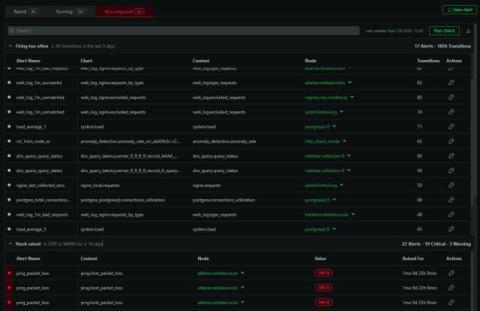
Why SaaS is Dying (and what's next) #speedscale #saas #data #datasecurity #devops #technews

Traditional SaaS is a data trap. It’s time to stop sending your most valuable asset to third parties. Enter BYOC (Bring Your Own Cloud): the future of data sovereignty, where the software comes to you. Visit: speedscale.com.

Why True Operational Security Requires an Unmanaged Cloud VPS

When deploying infrastructure for sensitive communications, penetration testing, or privacy-centric applications, your threat model must account for the human element. Handing over the root access of your server to a "managed" hosting provider fundamentally breaks that model. In 2026, serious security practitioners know that true OPSEC cannot exist in an environment where support staff have administrative backdoors into your operating system.