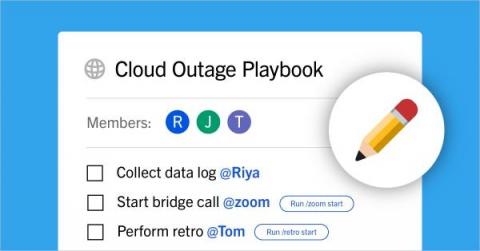
It’s 2022: You’re good at your job, you’re maintaining modern systems, now you want to level up your team based on a solid foundation of their collective expertise. You want to standardize and centralize process documentation and make execution as easy and effective as possible so that everything runs smoothly, every time.
When Ticketmaster started their Kubernetes migration, they had to address a huge problem: whenever ticket sales opened for a popular event, as many as 150 million visitors flooded their website, effectively causing distributed denial of service (DDoS) attacks. With new events happening every 20 minutes and $7.6 billion in revenue at stake, outages could mean hundreds of thousands in lost sales.
We are really excited today at Shipa to release version 1.6 of Shipa. If you are using Shipa Cloud, you will notice that your version of the SaaS product has incremented. Let’s dig into what is new with Shipa 1.6.0 and how you can get your hands on Shipa.
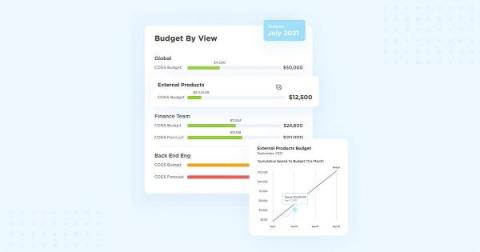
This is the fifth and final part of this FinOps series, The Operate Phase. If you have missed any of my previous blogs, here is a list of posts in the series: Note: I am ex-AWS, so you will notice a lot more focus on AWS tools and services as examples here, however we are cloud agnostic and all cloud providers have similar services and tools.
Let’s face it – Kubernetes can (and is) oftentimes very complex. This means that you’re bound to make a cluster configuration mistake along the way – apart from it impacting your cluster’s performance and security, it can also heavily affect your ability to enforce visibility and troubleshooting. There is, however, a light at the end of the tunnel.
When I first started out as an engineer I really leant in to the idea of what’s often called “being a hero”; I would get to the office a bit early to make sure I could fix anything that had gone wrong overnight. I loved the camaraderie of someone outside engineering bringing their laptop over with a critical process broken for me to fix (even if I’d been the one to break it!). Being a hero feels really good for a while, but over time, it loses its shine.
Do you know what your power density per rack is? How about what it costs to power each individual rack for a year? Or all your racks combined? The fact is that most data center managers don’t know this information, which can be incredibly valuable when it comes to power capacity planning, energy management, and maximizing the utilization of existing resources. That’s why we created a simple and free tool to make it easy for you to understand your power density and data center energy costs.
Will your software perform well during peak hours? Can it handle the load during sales periods? Is your infrastructure valid if you double your sales by the end of the year? These are just some of the questions that scalability testing can help you answer. Scalability testing evaluates the activity level of your application by upscaling and downscaling the number of users.
On January 25, 2022, Qualys announced the discovery of a local privilege escalation vulnerability that it identified as PwnKit. The PwnKit vulnerability affects PolicyKit’s pkexec, a SUID-root program installed by default on many Linux distributions. The same day of the announcement, a proof of concept (PoC) exploit was built and published by the security research community.
Today, we’re announcing that one of our most popular feature requests, IP ranges, is now generally available for CircleCI Cloud customers. This feature enables teams to meet compliance requirements by limiting the connections that communicate with their infrastructure. No company wants to give the entire internet access to their artifact repositories or other sensitive environments. With IP ranges, teams are able to open up their IP-based firewalls to only CircleCI.
At Cloudsmith, our core mission is to be THE universal package repository. That is why we support so many different packages, artifacts, and image formats and constantly improve the functionality and support we provide. With this in mind, we are happy to announce the latest improvements to our support for Dart packages.
Multipass exists to bring Ubuntu-based development to the operating system of your choice. Whether you prefer the GUI of macOS (even on M1), Windows or any other Linux, the unmatched experience of developing software on Ubuntu is there at your fingertips, just one “multipass launch” away. Today, the Multipass team is delighted to enhance this experience for developers working with containerised applications!
A core challenge for threat detection engineering is reproducing common attacker behavior. Several open source and commercial projects exist for traditional endpoint and on-premise security, but there is a clear need for a cloud-native tool built with cloud providers and infrastructure in mind. To meet this growing demand, we’re happy to announce Stratus Red Team, an open source project created to emulate common attack techniques directly in your cloud environment.
Content delivery networks (CDNs) reduce latency by delivering cached data (e.g., JavaScript files, stylesheets, images, and videos) from a network of linked proxy servers to end users around the globe. CDNs help reduce the load on your origin servers and shorten the distance that data needs to travel, thus improving the end-user experience.
Bare metal Kubernetes is a powerful set of technologies that builds on the best ideas behind the public and private cloud, yet abstracts away some toilsome aspects related to virtualisation management and networking. For operators and users, it provides significant benefits, making it easier and faster to ship and maintain complex, distributed applications.
It's the middle of the night when your phone goes off. You rub your eyes and unlock the screen to see a SEV 1 alert from your incident management tool. The application is down, multiple cloud server instances are offline, and the remaining instances are being overwhelmed by the sudden increase in demand. You jump out of bed and start trying to troubleshoot. You log into your cloud provider and try to provision systems manually, only to find out you can't.
An analysis of SRE job descriptions from 4 companies highlights what businesses actually expect SREs to do.
In the second half of 2021, eG Innovations partnered with the DevOps Institute to conduct an online survey of more than 900+ individuals from Sys Admin, DevOps, SREs, and other IT backgrounds. We asked questions about: Some of the results included: You can download the full survey results here: Cloud Technology Adoption Trends | eG Innovations If surveys and statistics on technology adoption are of interest, we have some other recent ones available, conducted in the last 12 months,.
If you are a software engineer like myself, two areas that I am not well versed in are networking and storage. Yes, my application has to communicate and yes my application needs to be deployed and requires some storage. Though that is usually the extent of my knowledge. Thanks to using elastic compute from cloud vendors in the last several years, the answer I usually give is “yes, attach 100gb of standard block storage per instance”.
Continuous integration (CI) has become the mainstream approach to software development as it enables organizations to iterate quickly while minimizing the risk of releasing faulty code. To implement CI, many organizations rely on Jenkins—one of the most mature and widely used automation servers on the market. Jenkins comes with hundreds of community-backed plugins to help you easily integrate it with other tools in your development workflow.
We are happy to announce the 1.0.0 release of Rancher Desktop. This release has been months in the making since development on Rancher Desktop began. After starting small and learning what users needed, we were able to adjust its path and develop the features needed for a 1.0.0 stable community release. But wait – what is Rancher Desktop again? It’s an open source app for desktop Kubernetes and container management on Mac, Windows and Linux.
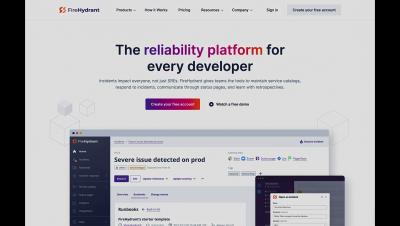
Using FireHydrant’s Runbooks, incident and retro data can be automatically sent to Confluence at any point in the incident lifecycle. For example, the moment you’ve resolved an incident FireHydrant can create a fresh Confluence page with all of the critical incident information stored in FireHydrant. When utilizing Runbook conditions, you can choose the perfect moment to send your FireHydrant retro to a Confluence workspace.
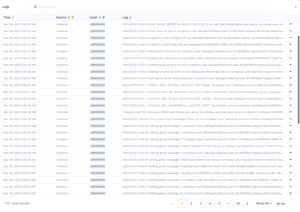
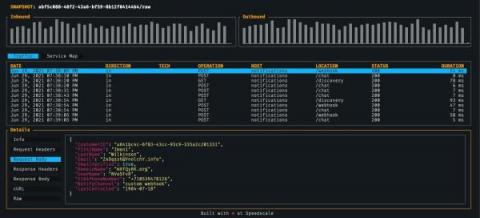
Speedscale is proud to announce its Centralized Log Collection capability. When diagnosing the source of problems in your API, more information is better. For most engineers, the diagnosis process usually starts with the application logs. Unfortunately, logs are usually either discarded or stored in Observability systems that engineers don’t have direct access to. Compounding this issue is that the log information is typically not correlated to what calls were made against the API.
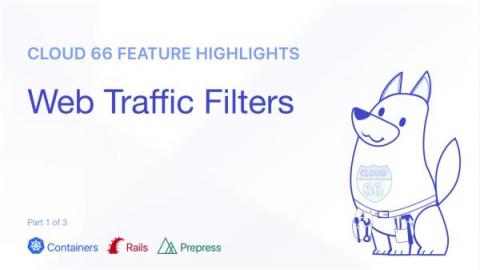
The web traffic filters allow you to black and white-list traffic based on source IP and/or country of origin.
Adopting a public cloud platform like AWS has many benefits, but the process of moving your existing automation capabilities between on-prem and the cloud can present challenges and make it difficult to take full advantage of cloud. In fact, in a recent survey conducted by Puppet, we learned that many Puppet users are significantly influencing their organizations’ cloud migration planning, indicating that Puppet can play a key role in cloud migration.
Businesses in today’s world use networks for almost all their operations. As businesses grow and expand with time, so do their needs. As a result, their networks can become increasingly complex and sophisticated. This can result in network administrators having a harder time monitoring devices and identifying faults. These bottlenecks can be circumvented with network visualization.
Reliability is a team game. More the collaboration between Developers and SREs, greater will be the success of the product. In this blog, we have listed down the five best practices that developers can adopt, to make the SRE's life easier. It is not easy to be a site reliability engineer. Monitoring system infrastructure and aligning them with the key reliability metrics is quite a daunting task. Whereas, a software engineer's job is to deliver high-quality software.
As modern data centers grow increasingly complex and distributed, data center technology and infrastructure can become more difficult to manage, and it becomes harder for IT decision-makers to find qualified candidates. According to Uptime Institute, 50% of data center owners and operators are struggling to find qualified candidates. In recent years, the COVID-19 pandemic has accelerated industry trends such as remote data center management, deepening the already severe data center skills gap.
Episode 2 of Mooving to… dives into a new tool called Remix, a framework to help create front-end code, you’ll love. This episode focuses on a new web framework that helps streamline your processes and eliminate downtime to the best of your ability. Thom Duran and Andrew Leonard of Moogsoft are joined by Kent C. Dodds, Director of Developer Experience at Remix.
The year is over, and the word ‘Observability’ has been one of the buzzwords that kept everyone checking throughout the year for deserving reasons. The organizations do not want to leave any stone unturned to maintain performance and offer robust services from ‘monitoring’ practices to ‘observability’, ‘telemetry’, and visibility capacities. So let’s get into the meaning of each term and understand how they are vital for business growth.
You can subscribe to Break Things on Purpose wherever you get your podcasts. In this episode of the Break Things on Purpose podcast, we speak with Sam Rossoff, Principal Software Engineer at Gremlin.
Mattermost Playbooks help software engineering teams orchestrate their work across all tools and teams to plan projects and hit milestones by uniting your tech stack through a single point of collaboration. We want to see how our community is leveraging Playbooks in their own tech stack and share your creations with everyone so the whole community benefits. We’re doing this by launching a new effort to commission original blog articles that show Playbooks in action.
Container technology is considered one of the most rapidly evolving in the software industry's recent history. There has been a seismic shift towards more and more organizations adopting containerization for their applications. Containers offer a lightweight, portable, and more efficient alternative to virtual machines and help us run software securely and reliably across different server environments.
Serverless has become an increasingly popular paradigm among organizations looking to modernize their applications as it allows them to increase agility while reducing their operational overhead and costs. But the highly distributed nature of serverless architectures requires developers to rethink their approach to application design and development. AWS-based serverless applications hinge on AWS Lambda functions, which are stateless and ephemeral by design.
In part 1 of this series, we looked at common design principles and patterns for assembling microservices in serverless environments. But when it comes to building serverless applications, designing your architecture is only part of the challenge. You also have to ensure that each of your individual functions and services are secure, reliable, and highly performant—without incurring enormous costs.
There is a lot of the art of the possible between the GitOps Engine, Argo CD, and the Application-as-Code platform, Shipa. In a recent blog post, we outlined the power of a one-line developer experience. Though if you are unfamiliar with ArgoCD, here is a guide to get you started with Argo CD and leveraging Shipa for your first deployment.
In my prior blog, Continuous Service Virtualization, Part 1: Introduction and Best Practices, we offered an introduction to continuous service virtualization (SV) and discussed some key best practices. In this, the second and final post in the series, we will discuss the continuous SV lifecycle and how it helps to optimize DevOps and the continuous integration/continuous delivery (CI/CD) pipeline.
Service virtualization (SV) has evolved as a popular technique and technology over the last decade. Traditionally, SV has primarily been used by testers to simulate other application components that the application under test interacts with. Typically, virtual services have been created and maintained by center of excellence (COE) teams.
Not all cloud cost management tools are equal. Whether you’re in the process of evaluating cloud cost management vendors or already have a tool in place, here are 19 questions you should ask to ensure you have all the capabilities needed to maximize performance and minimize cost of your hybrid cloud deployment across the following.
With rising awareness and increasing calls for action, the pressure is on to improve your organization’s energy sustainability. While frequently overlooked, moving your IT workloads to the cloud is one of the quickest ways to achieve a material reduction in your carbon footprint. Organizations typically look to the cloud to improve agility, scalability, and reduce costs.
I recently started working at SUSE. Before joining SUSE, my Kubernetes experience included vanilla Kubernetes, AKS and EKS but mostly OpenShift and Red Hat Advanced Cluster Management. I worked in technical pre-sales, so I knew about Rancher, K3s and RKE and their key features but I never spent time with them. When I joined SUSE, I started testing Rancher, Rancher Desktop, K3s, k3d and RKE2 and I had a great time with them. First things first, I will
When someone says a website is available, they mean that they can access that website. The application they’re trying to reach is up and working properly. High availability means that the website is up most of the time throughout the year. Companies can even put a percentage on this, striving for 100% availability, but typically getting somewhere a bit less, such as 99.9% or 99.99%.
Security is a vital part of application development, yet it may be neglected until an attacker takes advantage of a vulnerability in the system. The consequences of a security breach can damage an application’s integrity as well as a company’s reputation and revenue. Software architects and engineers need to pay special attention to securing the systems they work on.
There is huge scope required when building video games. They are not just computer programs; they’re audio-visual artistic works. It’s a collaborative effort between software engineers, animators, scriptwriters, graphic designers, photographers and sound engineers. Working with these collaborators and assets leads to a different software pipeline than the average software project.
Many of the concepts SREs take for granted about incident management originated with efforts to fight fires in California in the 1970s.
Consul is a service networking platform from HashiCorp that helps you manage and secure communication between microservices. You can use Consul with Kubernetes, and it supports on-prem, hybrid, and multi-cloud architectures. Consul service mesh provides a control plane which allows you to automate the management of traffic between your services via features like service discovery, DNS, load balancing, and routing.
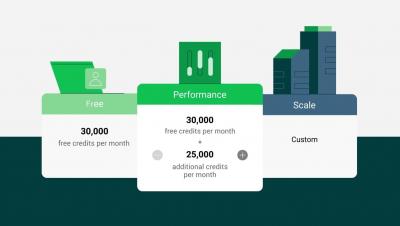
To learn more about pricing plans and credits visit: https://circleci.com/pricing/
Unlike traditional IT Ops, the role of the SRE isn’t simply focused on finding and solving technical problems. The big win for today’s SREs is supporting the organization’s strategic innovation initiatives. With the appropriate observability capabilities, it’s possible to quantify the value that software infrastructure contributes to this innovation effort.
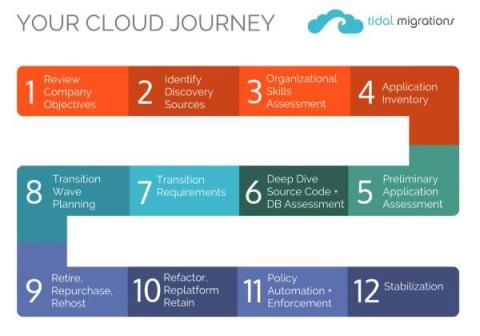
Ever wonder how best to plan for a successful cloud migration? I sat down with David Colebatch, CEO / Chief Migration Hacker at Tidal Migrations to better understand what it takes to approach a cloud migration with confidence. David will help to demystify cloud migration planning and further change our perceptions of the cloud.
For many years, system uptime was the primary measure of reliability, especially when the most popular method of running software was on bare metal, on-premises servers. If a server was shutdown, rebooted, or otherwise became unavailable, downtime was expected until a system administrator could manually restart it.
With hybrid work environments on the rise, enterprise networks are dealing with multiple remote connections, increasing the risk of breaches and other attacks. One way to mitigate these risks is by implementing Zero Trust Architecture (ZTA) into the enterprise network. Unfortunately however this does not address the full set of threats to the enterprise, as many of the zero-trust service providers and on-premises network solutions do not address the voice network.
Toward the end of each year, tens of thousands make the journey to Las Vegas to participate in AWS re:Invent. AWS re:Invent has been the seminal conference for cloud-focused engineers since 2012, offering a space where the global cloud computing community can share and learn the latest insights and solutions.
The goal of Mattermost Playbooks is to help teams consistently orchestrate any and all recurring workflows. A Playbook is a prescribed, repeatable process that a team has agreed on and formalized as a collaborative checklist saved on their Mattermost server. We at Mattermost use Playbooks for incident collaboration, customer onboarding, and product releases, along with many other complex processes.
One of the most important phrases of DevOps practices is “Test early, test often.” It’s crucial to perform functional testing early with unit tests and integration tests. But it’s equally important to perform non-functional testing. That means you should have performance tests. As markets become more saturated with each passing day, you no longer have the luxury to postpone performance testing until all features are developed.
The promise of robots integrating into our everyday lives has long been on the minds of forward-thinkers and visionaries. Perhaps none were quite as bold in their future predictions as American chemist and Nobel Laureate Glenn T. Seaborg, who envisioned a 21st century in which every home would not only have its own robot, but also an intelligent species of animals that could help with household chores.
Learn more about how Bolt helps engineers own and optimize build pipelines with CircleCI: https://circleci.com/case-studies/bolt/
Performance testing measures how well systems perform when subjected to various workloads. The key qualities being tested are stability and responsiveness. Performance testing shows the robustness and reliability of systems in general, along with the specific potential breaking points. In this tutorial, you will use k6 to do load testing on a simple API hosted on the Heroku platform. Then you will learn how to interpret the results obtained from the tests.
Our goal has always been to automate and standardize the management of infrastructure and deployment of applications across user infrastructure. Today, we are excited to announce that we've launched support for Google Cloud (GCP), expanding our natively supported providers list and further expanding the choice, flexibility, and reach the platform offers to current and new users. With this new integration, users can deploy, manage, and scale their containerized workloads to GCP compute infrastructure.
Dell EMC Isilon is a petabyte-scale network attached storage (NAS) system that allows you to archive unstructured data. Isilon operates in a cluster to provide high availability, and you can scale up its throughput, IOPS, and storage space by adding nodes to your cluster. Isilon automatically replicates your data throughout the cluster to ensure durability and provides caching to minimize data retrieval latency.
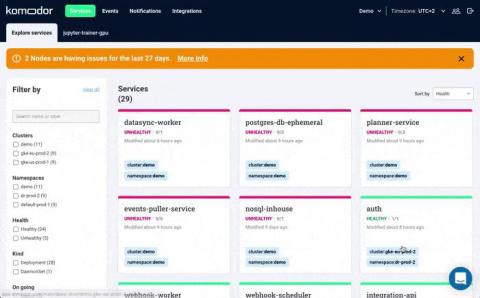
More than anything else, Kubernetes troubleshooting relies on the ability to quickly contextualize the problem with what’s happening in the rest of the cluster. As complicated as this may sound, SPEED is really the name of the game. After all, more often than not, you will be conducting your investigation under the glow of fires burning bright in production. Getting relevant context quickly and seeing things holistically is exactly what Komodor was created for.
So you finally are ready to try out some of Azure’s most common and loved technologies.Well the cheap storage they provide is definitely one of them that we do. Whether you want to store your own personal files and photos, or you have a requirement from your business to quickly expand some storage, with Azure its quick and easy to setup, access and use. In this quick tutorial I will run you through just how easy it is to setup an Azure Storage Account.
Many development teams start their CI/CD journey with a local build box (or six) that run their tests. In several mobile teams I worked on, for example, we had a few Mac Mini boxes with physical devices plugged in that we used for running local UI and unit tests. Eventually we migrated to a cloud-based solution, which brought us much greater stability and many new features. But moving to the cloud also meant our local hardware was obsolete.


The lockc project provides mandatory access controls (MAC) for container workloads. Its goal is to improve the current state of container/host isolation. The lockc team believes that container engines and runtimes do not provide enough isolation from the host, which I describe later in the “Why do we need it?” Section. In this blog post, I’ll provide an introduction to lockc, discuss why you need it and show you how to try it out for yourself.
As a software engineer, leveraging GitHub is one of those tools that transcend your personal and professional development activities. Bringing open source to the masses, GitHub is a familiar platform for many. A newer addition to the GitHub Platform is GitHub Actions which was originally a workflow engine, now expanding into CI/CD.
The CIS benchmark has hundreds of configuration recommendations, so hardening and auditing a Linux system manually can be very tedious. Every administrator of systems that need to comply with that benchmark would wish that this process is easily usable and automatable. Why is that? Manual configuration of such a large number of rules leads to mistakes – mistakes that cause not only functional problems, but may also cause security breaches.
January 17th: London, UK – Canonical, the company behind Ubuntu, the world’s most popular operating system across private and public clouds, now offers the Ubuntu Security Guide tooling for compliance with the DISA Security Technical Implementation Guide (STIG) in Ubuntu 20.04 LTS. The new automated tooling builds on Canonical’s track record of designing Ubuntu for high security and regulated workloads, powering U.S. government agencies, prime contractors, and service providers.
Nick Durkin is the Field CTO and VP of Field Engineering at Harness, where he focuses on solving the technical challenges that are standing in the way of true innovation. Today, we're talking about how Harness uses AI and ML to remove the most annoying parts of your job so that you can focus on what you do best.
It's 2022 and time to predict a few things for the coming year in the cloud native ecosystem.
Load balancing means splitting up network traffic so that you can distribute it evenly across a group of backend servers. For example, if you run two web servers, both hosting a copy of the same website, then you can balance the traffic across them, sending half to one and half to the other. The goal of load balancing is to increase the availability of your website or web-based application by routing a portion of requests to each server.
In a survey we conducted last year, we discovered that many enterprises overestimate their ability to optimize their hybrid cloud infrastructures. More than three-quarters of respondents gave themselves high marks for a range of capabilities. Here’s the exact breakdown of the number who rated their abilities a 4 or 5 out of 5: This sounds like great news, except there’s a problem. When we asked about how easy it is to get a global view of cloud costs, 42% said that it takes some effort.
Adopting a container-first approach represents an unrivalled opportunity for financial institutions to increase system efficiency and resource utilisation, improve security, introduce automation, and accelerate innovation. Containers offer a logical packaging tool in which applications can be decoupled from the underlying infrastructure on which they run.
For our Rails/Rack customers, the latest Ruby release v3.1.0 is now available. This is brand new, and Gems are still catching up, so please ensure your application works with this version locally before upgrading. For more information, see the official release notes.
Mattermost v6.3 (Extended Support Release) is generally available today and includes the following new features (see changelog for more details).
An overview of major IT incidents and outages in 2021
In this post, we’ll examine a way to create a Workplace Wellness program that can be used within Mattermost. This program consists of four distinct apps which are meant to help companies that are embracing a remote work culture.
The world revolves around DevOps tools. DevOps engineers go insane when they have too many tools. The first statement is correct. Also, the second one. Tooling that helps in the automation of software development and infrastructure provisioning workflows and pipelines is critical for both the engineers who create the automations and the developers who use the automated workflows on a daily basis.
Using CircleCI’s orbs is a great way to share CI/CD configuration across projects. Public orbs work well for wide adoption, but private orbs have been helpful for organizations needing to share common internal configuration in a secure, non-public way. Private orbs work only within the organization that publishes them. We recently opened up private orbs access to all CircleCI customers, including those on the Free plan.
Does this combination of words sound somewhat new to you as well? It may be just me, but having the opportunity to work on both sides, software development and system administration, the combination above seemed somewhat new or different to me. I always saw Oracle as something that would be managed and owned by the System Administrators. Technologies such as the database, ERPs, finance systems, and more which would take quite a lot of effort and cost to implement and maintain.
Nest.js is a scalable and efficient server-side Node.js framework built with TypeScript. Nest.js was created to provide a structural design pattern to the Node.js development world. It was inspired by Angular.js and uses Express.js under the hood. Nest.js is compatible with the majority of Express.js middleware. In this tutorial, I will lead you through building a RESTful API with Nest.js. The tutorial will familiarize you with the fundamental principles and building blocks of Nest.js.
For all intents and purposes, 2021 was a jam-packed year for Mattermost, our contributors, employees, customers, and extended community. We broke through the muck that was a challenging 2020, and shared in celebration as we delivered the first open source collaboration platform to feature messaging, project and workflow management all in one convenient suite. But 2021 was about more than just our major platform 6.0 announcement in October.
Site Reliability Engineering (SRE) and Operations teams responsible for operating virtual machines (VMs) are always looking for ways to provide a more reliable, more scalable environment for their development partners. Part of providing that stable experience is having telemetry data (metrics, logs and traces) from systems and applications so you can monitor and troubleshoot effectively. Many Google Cloud services, including Google Compute Engine, provide basic system metrics out of the box.
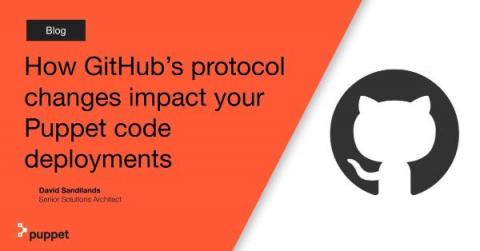
GitHub is in the process of improving Git protocol security by removing insecure DSA keys and legacy ciphers, updating requirements on RSA keys, and adding more secure key signature algorithms ECDSA and ED25519. On January 11, GitHub ran a planned brownout event day to shake out affected clients. Our team at Puppet discovered that many users of Code Manager and r10k were affected by this change.
I recently had a cloud migration client who was at the beginning stage of their discovery phase and looking to jump straight to “which database platforms should I be using in the cloud?” - a tall ask you might say, but following the three steps below they were able to discover and analyze all of their database servers in just two weeks.
Let’s face it: Creating the optimal CI/CD workflow is not always a simple task. In fact, writing effective and efficient configuration code is the biggest hurdle that many developers face in their DevOps journey. But you don’t need to be an expert to set up a fast, reliable testing and deployment infrastructure. With a few straightforward techniques, you can optimize your config.yml file and unleash the full potential of your CI/CD pipelines.
If you are not familiar with CloudFormation, an easy way to define it is AWS CloudFormation is an AWS service that uses template files to automate the setup of resources. It can also be described as an infrastructure automation or Infrastructure-as-Code (IaC) tool. You can use CloudFormation to automate the configuration of workloads that run on the most popular AWS services, including their managed Kubernetes offering, the Elastic Kubernetes Service, or EKS.
The majority of engineers know that a minor misconfiguration might lead to some big troubles. Usually, we tend to forget the importance of that tense when we are configuring a new tool or a new service, as our focus is initially to make the tool functional and to evaluate if it fits our needs. Mattermost Cloud hosts thousands of workspaces which each one needs to have a different database backend, as in Mattermost we think that isolation is one very important aspect in our security guidelines.
TL;DR: Our free plan is newly re-launched, giving teams access to more build minutes, larger resource classes, and our most popular features formerly only available on paid plans. Visit our sign up page to get started today. Our mission has always been to help teams deliver software faster and better, and today marks a huge milestone for development teams everywhere: we are proud to now offer the most feature-rich and most generous free tier for CI/CD on the market.
Freemium plans are a great way for companies to introduce developers to their products and offer a hands-on demonstration of the value they provide. But it can be extremely frustrating for developers when a free tier limits access to key features or doesn’t provide enough capacity to evaluate how the product performs in real-world development scenarios.
Time for a bit of a review! Join Jason as he looks back on some previous guests who have shared some opinions that range from the idiosyncratic to down right unpopular. Pulling from a handful of “Breaking Things” interviews, Jason covers death to VPNs, to the validity of “AI Ops,” check out the litany!
Microsoft Azure SQL Database is a platform-as-a-service (PaaS) database offering for modern cloud applications. It’s a fully managed service that runs on the latest version of the SQL Server database engine, enabling you to create highly available and performant database instances without needing to maintain hardware upgrades, patches, or backups.
In Part 1 of this series, we discussed key metrics for monitoring Microsoft Azure SQL databases. We also looked at how your database resource and audit logs complement metrics to provide more insight into database performance, activity, and security. In this post, we’ll show you how to collect metrics and logs from your database instances and monitor them with Azure’s monitoring and reporting tools.
In Part 2 of this series, we showed you how to monitor Azure SQL Database metrics and logs using the Azure platform. In this post, we will look at how you can use Datadog to monitor your Azure SQL databases alongside other technologies in your infrastructure. Datadog provides turn-key integrations for Azure along with more than 500 other technologies, enabling you to track long-term performance trends across all systems in your infrastructure, not just your SQL databases.
gRPC is a remote procedure call framework that has been widely adopted among cloud native applications. It is an attractive choice for engineers needing more capabilities than what REST APIs provide. However, observability and testing tools for gRPC are few and far between. Because of this, triaging or understanding application behavior is potentially time-consuming and overly burdensome.
Unless you are one of the 1% of enterprises that have zero workloads running in the publice cloud, you need a cloud cost optimization tool. Yes, you do. And if you have workloads running in multiple public clouds—which somewhere in the neighborhood of 85% of enterprises do—you really need a cloud cost optimization tool. If I’m preaching to the choir, feel free to skip to the end of this article where you’ll find a link to try Virtana Optimize for free.
The global health crisis has accelerated the digital transformation within the financial services industry.
We’ve all been there. After countless hours of development, you’re ready to take that app that works awesome on “localhost” live to production, but production services will only interface over https. Or maybe, your DNS is managed on Cycle, but some third-party app you want under the same domain requires a TLS certificate.
Welcome to the very first Civo Update of 2022! On behalf of everyone here at Civo we wish you happiness and prosperity for the year ahead. With lots on our roadmap for 2022, it's certainly going to be another exciting year for us at Civo. We recently launched our "Write for Civo" initiative where you can share your cloud native expertise and get paid for doing so. Check out the tutorial for more information.
Five worthy reads is a regular column on five noteworthy items we’ve discovered while researching trending and timeless topics. In this edition, we’ll learn what hyperautomation is all about, why it is a growing trend, and much more. Illustrated by Derrick Deepak Roy Digital transformation has been accelerating at a pace so fast that organizations all over the globe are making frantic changes to their infrastructures to keep up.
Modern-day applications aim to cover a wide range of users’ needs in a flexible and scalable manner. The software development landscape is moving at a fast pace, and the competition is so fierce that a business simply can’t afford to offer a low-quality product. Thorough testing of both functional and non-functional aspects of a software application has become an essential step in the software development process. It ensures that users get the best version of your product.
A summary of the Log4j vulnerability, and key takeaways for SREs.
Data visualization is the process of translating large data sets and metrics into charts, graphs, and other visuals. The resulting visual representation of data makes it easier to identify and share real-time trends, outliers, and new insights about the information represented in the data. Using CircleCI webhooks, we can gather data on workflow and job events. In this tutorial, I will lead you through the steps to create a React-based dashboard to visualize this data.
Software applications consist of interconnected systems - each providing a specialized service towards the common goal of meeting a business need. As with any network, an efficient data exchange mechanism is key to its functionality, effectiveness, and responsiveness. In the past, data exchange was performed using polling requests. At regular intervals, a system would make a request to get the latest information or find out if there is an update to deal with.
CircleCI’s scheduled pipelines let you run pipelines at regular intervals; hourly, daily, or weekly. If you have used scheduled workflows, you will find that replacing them with scheduled pipelines gives you much more power, control, and flexibility. In this tutorial, I will guide you through how scheduled pipelines work, describe some of their cool use cases, and show you how to get started setting up scheduled pipelines for your team.
The database/sql package in the Go standard library maintains a pool of connections so that all queries going through a single *sql.DB instance will reuse the same pool. This is great because you get a connection pool out of the box. But what if you need to share the same connection pool across processes? How do you use the same API in different processes but still reuse the same pool?
Rancher Desktop has been in development for just over a year with the open question: when do we have a 1.0.0 stable release? Along the way the scope has expanded, it was ported to run in more places and the development team has grown. All of this happened as we worked out if Rancher Desktop would be useful for people, what features people want to use and what are good ways to build it. We are finally ready to answer that 1.0.0 question.
Log4j, the popular open-source logging library, had a rough December and closed out the year with an impressive streak of four critical vulnerabilities so far. Many are calling this the worst cybersecurity event in history. Again, so far.
DigitalOcean, or DO, brands itself as the “developer cloud,” and it’s no secret that it has a strong mind-share among developers, especially because of factors such as simple UI, performance, structured documentation, a robust community ecosystem, and last but not least, the affordable pricing. As developers started adopting microservices as the architecture of choice for their applications, DO responded quickly and launched their Managed Kubernetes offering, labeled DOKS.
If you’re like most organizations, you’re leveraging Jenkins for all sorts of things. Deployment pipelines, automated API tests, even glorified CRON jobs just to name a few.
Happy New Year 2022! The fireworks are all fired, the champagne is over. It is time to get back to work. We are glad to see you here though. 2021 was a good year for OpenStack and its Ubuntu-based community. First, we all have seen Ubuntu becoming the number one operating system (OS) for OpenStack deployment. Then, the Open Infrastructure Foundation (OIF) reported explosive growth in the number of production OpenStack clouds. The community grew and settled on the most convenient platform.
The previous blog post talked about the composability of applications. The key element for composing applications is defining the relations between application elements. And supporting relations is one of the advantages of the Charmed Operator Framework – including its runtime, the Charmed Operator Lifecycle Manager.
SD-WAN is one of the fastest-growing segments of the network infrastructure market. Designed correctly, it will deliver unique advantages, enabling true digital transformation while reducing costs and management time and increasing application performance, availability, visibility and user experience. While the benefits of SD-WAN are obvious, we know it can often be a challenge to select the appropriate approach to design, implementation, and ongoing management.
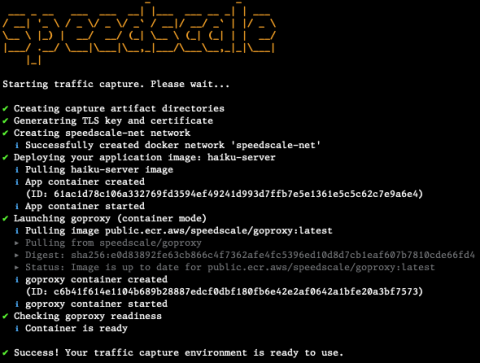
We are excited to announce the launch of Speedscale CLI, a free observability tool that inspects, detects and maps API calls on local applications or containers. The offering underscores the importance of continued and proactive API testing to quickly detect and debug defects within a shifting array of upstream and downstream interdependencies.
Hiring a DevOps engineer is a common practice at most IT companies. Having a DevOps developer in your team usually results in making releases more often, faster and better than competitors not implementing a DevOps strategy. Today hiring a DevOps engineer is also relevant for industries other than those from the IT world. Businesses from startups to large enterprises are increasingly thinking: Why not introduce DevOps?
Let’s remember the time in the 2000s when companies introduced their cloud computing offerings at a large scale. New services were put into the popular IaaS, PaaS, and SaaS categories. New kinds of storage and messaging technologies were promoted. Also, novel approaches were discussed, such as designing applications for horizontal scalability and eventual consistency.
According to the U.S. Bureau of Labor Statistics, employers are losing more than four million workers every single month. That, coupled with the record number of 11 million open jobs, has left businesses across the board scrambling to crack the code and find a way to not only attract top talent – but, more importantly – keep them from jumping ship at the next best opportunity.
Many of the multi-faceted applications development teams deploy every day are loosely coupled and every service exists to power another service. Most teams developing fullstack applications know that testing the communication between these services essential. Part of the process is testing HTTP request endpoints, and this tutorial focuses on exactly that. I will lead you through learning how to extend the k6 framework to test our HTTP endpoints.
Ask any software engineer about the best way to do something and they’ll likely tell you “it depends.” Every project and team works differently and has specific concerns, requirements, and opinions, adding complexity on top of the technical and operational complexity of software development. The challenge lies in managing the work and emergent complexity while staying abreast of industry best practices in a way that fits our teams’ particular processes and environments.
Continuous integration (CI) and continuous delivery or deployment (CD) cover the process of automatically merging, building, and testing code changes ready for release, and – in the case of continuous deployment – releasing those changes to users. If you’re developing software for others to use, you’ll need to go through some form of build and test process before you make your latest changes available.
Recently, I remembered a situation when I was in elementary school and visited a friend at his house. At some point, his mother wanted us to go to a neighbour and ask to borrow some eggs. We went a few houses down, opened the garden gate, entered through the door to the house, and arrived in the kitchen calling out for the person. But no one was at home, so we left and returned without eggs.
As we kick off the new year and our release of Shipa 1.5.0, dabbling in the art of the possible, what if it was possible to provide your developers with a single line of configuration to get their ideas into production. Shipa is an application and policy abstraction layer which easily integrates with your DevOps toolchains.
The success of your enterprise’s digital transformation relies in no small part on your hybrid cloud infrastructure, which SearchCloud Computing defines as “a cloud computing environment that uses a mix of on-premises, private cloud and third-party, public cloud services with orchestration between these platforms.” Because this infrastructure is not a homogeneous environment, migration, management, and optimization can be an ongoing challenge.
To celebrate this new year, Qovery's blog highlights some of the top blog posts Qovery's engineers wrote during 2021 that you should read for 2022. Take a look at the top 10 posts published in 2021.