Operations | Monitoring | ITSM | DevOps | Cloud


The latest News and Information on DevOps, CI/CD, Automation and related technologies.

5 Best RMM Software Tools to Use in 2022
As the world has shifted towards remote work in the wake of Covid-19, the need for remote management and monitoring tools has increased. Managed service providers (MSPs) use RMMs to provide off-site, automated and streamlined support to their clients for their IT needs. Having an efficient RMM can reduce workload and give MSPs a competitive edge over adversaries. So let’s take a more detailed look at what an RMM software can do and then a look at the best RMM software tools for MSPs in 2022.
Kubernetes - HTTPS ingress controller with your own TLS certificate
Continuous Build and Deployment of Go Applications with Google Cloud Build
We've gone through many iterations of ways to build, deploy and distribute applications written in Go at Cloud 66. Unlike Rails, Go applications can be web applications, daemons or CLIs and therefore have different requirements. I'll share some of what we've learned with you in this post.
Get powerful insights across your infrastructure with new data filters
Would your organization benefit from having powerful, yet easy-to-use filters to inspect your nodes? With our latest Continuous Delivery for Puppet Enterprise release, we’ve updated the filters in the user interface to support more advanced queries. SysAdmins, developers, DataOps, and IT managers will all benefit from having access to these powerful filters.
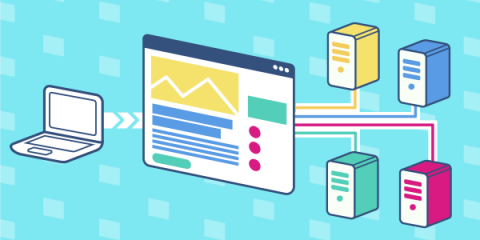
How Load Balancing Improves the Performance of Your Applications
Load balancing is an indispensable technique for improving a website’s performance. I’ll explain why. With Firefox’s Web Developer Tools open, I visited a popular retailer’s website to see how many HTTP requests my browser made when loading the site. In this case, I counted 119 requests needed to render the landing page.
Getting Started with Skaffold for Kubernetes Deployments
Kubernetes has experienced rapid growth over the years, with a recent post from the Cloud Native Computing Foundation reporting a userbase increase of about 67% in just the past year. Kubernetes is a container orchestration platform that automates how containers are deployed, how they communicate, and how traffic is routed between them; it also scales configurations for both the containerized workloads and the underlying infrastructure that comprises the cluster.
Why Edge Computing Will Overtake the Cloud
Compared to the previous generation, today’s generation of startups are increasingly cloud-centric. The previous generation of dotcoms had to suffer the economics and complexities of deploying, managing, and scaling their own servers, networks, and data centers. In contrast, today’s generation grew up in the just-in-time, pay-for-what-you-need, and scale-up-on-demand world that is cloud native.