Operations | Monitoring | ITSM | DevOps | Cloud

Understanding GPU cloud instance types: How to read a spec sheet for real-world ML performance

A GPU spec sheet is a confidence trick. It looks like an objective document - numbers, units, comparable rows - but most of the numbers on it don't map cleanly to the performance a real workload will see. Teams that pick GPUs by reading the headline figures usually find out the gap between spec and reality somewhere around the first production run. This is a working guide to reading GPU cloud instance specifications against actual ML workloads. The goal isn't to recommend a card.

The Lovable Experience. Enterprise Governance. Your Infrastructure. We Built It.

Introducing the AI Builder Portal - the governed alternative to Lovable and Bolt.new for enterprise. Same one-click builder experience, running on your Kubernetes cluster, under your governance. Romaric founded Qovery to make Kubernetes accessible to every engineering team. He writes about platform strategy, developer experience, and the future of cloud infrastructure.

High-cardinality metrics at scale: why the standard playbook is wrong

The “high cardinality is expensive” sentence has become observability’s version of “in this economy” — said so often that nobody questions whether it’s true. Every vendor pricing page invokes it. Every glossary article repeats it. Every architecture diagram shows aggregation buffers placed before the storage layer.

BigQuery CI/CD and Database DevOps with Harness | Harness Blog

Modern data platforms are evolving rapidly, and Google Cloud BigQuery has become a core part of analytics, AI, and large-scale reporting architectures. Teams (including Harness) rely on BigQuery to process and analyze massive datasets, but managing schema changes in a secure, repeatable way can still be challenging.

Keep ArgoCD. Get Qovery. ArgoCD Integration Is Here.

Moving to a new platform shouldn't mean weeks of migration work before you see any value. Qovery now lets you connect your ArgoCD server and manage your existing applications directly alongside your Terraform modules, lifecycle jobs, and Qovery-native services, from a single control plane. Alessandro leads product at Qovery. He drives the changelog, roadmap, and product strategy - turning customer feedback into platform capabilities.

Stop pushing broken code to CI: Wire Chunk sidecars into agent hooks

AI agents can write code faster than any developer. But for most teams, the feedback loop hasn’t kept pace. The agent generates code, pushes it to CI, and minutes later a full pipeline run catches a simple linting error or a failing unit test. By then the agent has moved on. Getting back to a working state means rebuilding context from scratch and burning tokens just to fix something that should never have shipped in the first place.

Cortex | Workflows Run API

Cortex Workflows can now be triggered externally via the Workflows Run API (beta). In this video, Solutions Architect Jeff Schnitter walks through how to trigger a workflow from the Cortex CLI, pass context via a JSON file, and run synchronously or asynchronously. Requires CLI v1.15.0+ and the "runnable via API" toggle enabled on the workflow. To enable the Workflows Run API in your workspace, contact your CSM.

Can DevOps work in regulated industries?

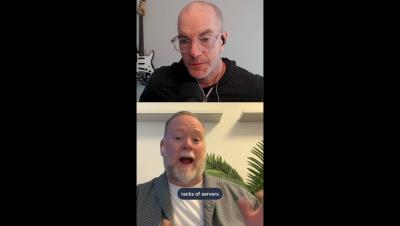
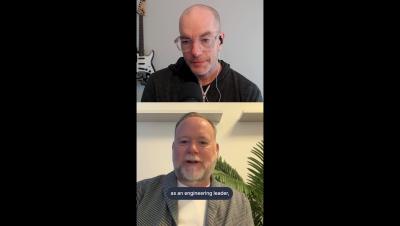
Cortex co-founder and CTO Ganesh Datta sits down with Matt Bailey, DevOps consultant and founder of Merge Ready. Matt shares lessons from helping large regulated organizations in finance, healthcare, and government transform their DevOps practices, and explains why DevOps is an outcome rather than a toolchain.

How a unified data model improves feature flag rollout decisions

Consolidation is reshaping the experimentation and feature management landscape. Tools are merging, and partnerships are being repackaged as platforms. But marketing a unified experience is not the same as building one. Right now, engineering leaders and product managers are reassessing whether the tools they depend on are built for the long term. It’s irrelevant which vendor has the most products.

I thought I invented this. Then I opened TikTok

The video was a product manager who claimed she worked at Netflix. (Her claim, not mine. I have no way of verifying it, and I can’t find the video now.) She was talking about how Netflix now requires every PM to vibe code a working prototype before presenting an idea to engineering. Show, don't spec. Build the thing first. I sat there for about ten seconds being mildly annoyed.

Uber blew its annual AI budget in 4 months

Uber burned through its entire annual AI budget in under 4 months. Here's what went wrong — and what every engineering org should be doing instead. The data: 80% more code is getting pushed with AI… but only 18% of AI-written code actually ships to production. That's not a productivity story. That's a spend problem. If you're scaling AI tooling without real-time monitoring and guardrails, you're Uber.

Konstruct product updates: Global resources, MCP support, and smarter permissions

May has been one of our busiest months yet for Konstruct. Across three releases, 0.5, 0.5.1, and 0.5.2, we've shipped some of the most requested platform-level changes since we launched: a unified model for sharing resources across organizations, native support for AI-driven workflows via MCP, a completely redesigned API keys experience, and a cleanup to how permissions actually work in multi-org environments. Let's walk through what shipped and why it matters.

How PCCW Global is powering connectivity across the Belt and Road

The Belt and Road Initiative (BRI) is reshaping connectivity across Asia, Africa and Europe, creating new opportunities for trade, innovation and digital growth. Last year saw record BRI engagement, with USD128.4 billion in construction contracts and around USD85.2 billion in investments.

Test Data Management Demo | Compliance without Compromise

Compliance Without Compromise: Test Data Management That Finally Fits You know you shouldn't have sensitive production data in test environments. But every time you look at fixing it, the options feel impossible: enterprise tools that cost six figures and take months to implement, or DIY scripts that sort of work until they don't. So, it stays on the backlog.

Anthropic's Mythos, Glasswing, and how the industry must move forward | Harness Blog

When Anthropic broke the news of Mythos and Project Glasswing, the security community did what it always does. It published a flurry of papers asking "What does this mean for security?" It's a reasonable instinct, but it's the wrong question. The real question is who actually owns the problem?

Feature Flag Tools Compared: 10 Best Platforms for Safer Releases | Harness Blog

Releasing new software used to be a big deal. You would set aside a Saturday night, wake up the on-call engineer, push the code, and hope that nothing broke before Monday morning. Then came feature flags, which changed everything without anyone noticing. Feature flags let you separate deployment from release, so you can send code to production in a dormant state and turn it on for users when you're ready. No more 1 a.m. maintenance windows.

Policy as Code Beyond the Pipeline: What Actually Breaks, Drifts, and Gets Audited

Most teams first adopt policy as code (PaC) in their delivery pipelines. If something breaks a rule, the system stops it before it goes live. That is useful as it helps catch problems early but in real world environments, the hardest issues to resolve do not come from changes that fail validation. They come from changes that happen later, elsewhere, or outside the pipeline entirely.

Your Path to Autonomous OT Communication Networks: From Reactive Operations to Self Optimising OT Networks

Power networks (DSOs, TSOs and generation) are under pressure from every direction. They need to improve reliability and sustainability, deliver real-time customer insight, and meet increasingly stringent regulations. In response, power generation has evolved from a simple centralized model, through to a decentralized model with generation from a mix of diverse sources such as centralized generation from carbon-based, nuclear and renewable generation plants, through DERs even located at people premises.

Customers over control: how we measure On-call reliability

Our On-call product has a lot of great features: configuring escalation paths, viewing rotas and schedules, requesting cover, etc. However, when framing its reliability, we reduce it down to two critical pieces of functionality: It’s not that we’re happy if only these parts are working, but they are the most important parts. In this post, I'll go into more detail on how we think about their reliability.

Introducing AI DLC Insights to Prove the ROI of Your AI Engineering Investment | Harness Blog

AI coding tools made code generation faster. Measuring what actually ships is the hard part. Over the last eighteen months, tools like Cursor, Claude Code, Copilot, and Windsurf have fundamentally changed how software gets built. AI-generated pull requests are increasing, developers are producing more code than ever before, and workflows that once took hours now happen in minutes. But most organizations struggle to clearly explain what that investment is actually producing.

Harness Launches Two Products to Give Enterprise Teams Full Visibility into ROI of AI Spend | Harness Blog

Gartner expects worldwide AI software spending to hit $2.59 trillion in 2026, 47% more than organizations spent last year. The dollars are real and growing fast. But most organizations still can't measure the ROI of that spend. The problem has two sides: developers and infrastructure. On the developer side, engineers are using AI to write nearly every line of new code, and leaders have no way to tell whether that spend is producing software that ships.

Cost Per Outcome: AI Cost Management in Harness | Harness Blog

Companies are shipping AI features at a pace cloud teams have rarely seen. New agents, new copilots, new flows powered by language models, all moving from prototype to production in weeks. The spend that comes with it is real and accelerating, and most teams are seeing it on the invoice before they see it anywhere else. The question is no longer how much you're spending on AI. It's whether each dollar is producing a real outcome, and whether you can govern that spend before the next invoice arrives.

Where to find lost engineering time in your delivery pipeline

If your infrastructure is configured outside version control through dashboards, scripts, or manual steps, environment drift is the expected outcome. Most teams have lived this scenario. A feature works in staging but breaks in production. Two hours later, someone finds a configuration setting that was changed in staging three weeks ago and never documented.

We're releasing the financial control plane for AI spend

Gartner forecasts $2.6 trillion in global AI spend this year. Most of it lands in invoices that don’t connect dollars to the developers who spent them, the customers they served, or the features they shipped. AI billing is a mess. CloudZero is the financial control plane for AI spend. Three capabilities, available today, reveal the by-customer, feature, and developer ROI of AI: 1. Real-time Spend: Capture every dollar spent on AI, at the source. 2.

AI spend is exploding. Most companies cannot prove ROI.

Only 14% of CFOs can prove AI ROI. OpenAI’s gross margin fell from 40% to 33% in 2025, well below its 46% target. Even the AI providers cannot reliably predict what AI will cost. Companies are scaling AI faster than they can measure it: more tokens, more agents, more model calls, more spend moving through systems finance cannot yet see. Every board is asking the same question: What is this AI investment returning? Most companies cannot answer it. The ones that can will compound their advantage.

Are AI Tools Actually Improving Developer Experience? (Experts Cut Through the Hype)

AI tools are spreading across the entire software development lifecycle - but are they actually making developers more productive, or just adding noise? In this panel from Context Conference, Najla Elmachtoub (Squadformers) moderates a sharp, no-fluff conversation with Nathen Harvey (Google, DORA program), Bill Harding (GitClear), and Jeremy Castile (GitKraken) on what's really working when it comes to AI and developer experience.

The options within Test Data Management - Enterprise, DIY or Redgate

Compliance Without Compromise: Test Data Management That Finally Fits You know you shouldn't have sensitive production data in test environments. But every time you look at fixing it, the options feel impossible: enterprise tools that cost six figures and take months to implement, or DIY scripts that sort of work until they don't. So, it stays on the backlog.

Every pilot is ready for engine failure: are your engineers? w/ Hamed Silatani (Uptime Labs)

Every pilot who's never had an engine failure is still ready for one. The same can't be said for most software engineers facing their first major incident. Hamed Silatani, co-founder and CEO of Uptime Labs, and former Head of Reliability Engineering at IG Group, has spent two decades watching engineers learn incident response the hard way: alone, under pressure, with no training.

The Compliance Gap in Test Data Management

Compliance Without Compromise: Test Data Management That Finally Fits You know you shouldn't have sensitive production data in test environments. But every time you look at fixing it, the options feel impossible: enterprise tools that cost six figures and take months to implement, or DIY scripts that sort of work until they don't. So, it stays on the backlog.

Secure execution: Agents in sandboxes with relaxAI

The hard part of deploying AI agents isn't the agent. It's the environment around it. As organisations move from AI experimentation into production, the question isn't just what agents can do; it's whether you can trust the environment they run in. Sandboxed execution gives you both the autonomy and the guardrails, keeping agents isolated, auditable, and under your control.

Safe Database Change at Scale with Flyway Enterprise | The Tony and Tonie show Ep45

AI-assisted coding may speed up delivery, but it can also increase the risk around database changes. Here’s how Flyway helps teams stay in control. Tony and Tonie discuss how Flyway Enterprise helps teams build control into the database change process: immediate change visibility, continuous risk reduction, and secure, traceable deployment from commit to production.

Digital sovereignty: Who's in control?

Digital sovereignty isn't a marketing buzzword. It's about jurisdiction, accountability, and operational certainty and it starts with where your data is hosted and how it's processed. Civo's UK sovereign cloud delivers public cloud, private cloud, and AI services, all hosted and operated exclusively within the United Kingdom under UK legal authority with no exposure to foreign control.

The importance of taking the initiative (a chat with Chris Yates) | The Simple Talk Podcast

Taking the initiative. Prioritizing relationships. Doing the work nobody else wants to do. These are just some of the elements that contributed to Chris Yates’ rise from a developer to a DBA and, eventually, a Senior Vice President. As he explains to Steve Jones, “you are the CEO of your own brand.” Also in the episode: discover Chris’ thoughts on AI, the importance of community, and the one thing he’d now do differently if he were to start from scratch.

DuckDB: Not Quack Science | Ubuntu Summit 26.04

Could you process hundreds of gigabytes of data on your laptop, or tens of terabytes on a single server? DuckDB is an open source SQL database system, geared towards analytical workloads. DuckDB ships a state-of-the-art database architecture as a single package, that is available both as a command line tool and as an in-process library. Uniquely among databases, DuckDB focuses on user experience and portability, making it easy to set up almost anywhere.

IaaS cost control: how private cloud reduces enterprise cloud spend

Over the past five years, one of the most consistently tracked figures in the UK business technology sector has been the flight from public cloud. Barclays' 2021 CIO survey revealed that 43% of enterprises plan to shift workloads away from public cloud. By 2024, that had grown to 83%. Research for Pulsant in 2025 found that 87% of UK businesses planned to repatriate data away from the public cloud within the next two years.

The Hybrid Shift: Where Workloads Are Headed and How to Move Them

Businesses migrating from a single, public cloud provider has been the direction of travel of UK digital infrastructure for years. As far back as 2020, Barclays found that 43% of enterprise CIOs were already planning to bring workloads back from the public cloud to on-premises or private cloud infrastructure. Since then, IDC, Gartner and a host of vendor surveys have tracked an increase in this intention.

FinOps KPIs for IT Infrastructure: A Practical Field Guide for Cost Visibility

Infrastructure cost visibility has become a critical part of IT decision-making. Performance still matters, but for many infrastructure leaders, that’s no longer the full conversation. Leadership teams increasingly want clarity around cost movement, upgrade exposure, underutilized resources, and whether infrastructure decisions are financially defensible. That creates a different requirement for operations teams: visibility that connects technical behavior to business impact.

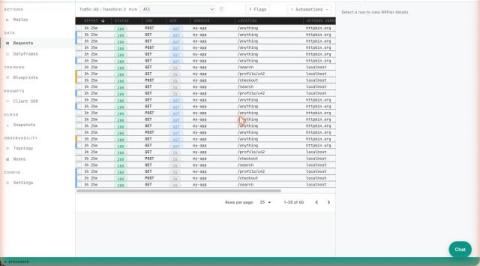
The Kubeshark Workflow That Doesn't Stop at the Dashboard

The Observability Gap shows up the moment you try to reproduce a production bug locally. Your traces tell you a request was slow. Your logs tell you which line printed. Neither tells you what was actually on the wire: the headers, the JSON body, the surprise field your client started sending last Tuesday. Until now, closing that gap meant SSHing to a node, attaching a debugger, or shipping a sidecar through change review.

Let AI Run Your Cloud Infra? Ex-VMware & SAP Architects Weigh In. (ft. TechWorld with Nana)

Can you trust AI to run your platform? AI can now spin up production infrastructure in minutes — but speed cuts both ways. In this episode, Nana(TechWorld with Nana) sits down with Doron Grinstein and Dan Wilson, two architects who built, broke, and fixed platforms at VMware and SAP, for a no-hype look at platform engineering in the age of AI.

Real-World Service Desk Automation: Use Cases That Prove a Platform is Enterprise-Ready

Most conversations about service desk automation stay at the strategy level for too long. Capability checklists and evaluation frameworks matter, but they won’t show you what the platform does when something breaks at 2 AM, or what happens when a single incident crosses four team boundaries before it can close. These scenarios show where simpler platforms start to give way. Teams usually automate the clean, single-system work first.

Security and reliability review: 7 delivery model weak points to check first

Security audits that focus only on application code often miss the delivery layer entirely. That is where the most common and most avoidable failures live. Most teams treat security as a layer added on top of a working system. The problem is that the delivery model itself introduces risk before a single line of application code runs. When deployments are manual, environments are inconsistent, or configuration drifts across stages, the system behaves unpredictably.

Data sovereignty is an opportunity for regional growth

Data sovereignty wasn’t a major topic just a few years ago and now it’s becoming a major economic opportunity for regions across the UK. In this clip from Perspectives from the Edge, Katie Gallagher OBE from Manchester Digital discusses why the conversation around data sovereignty has shifted, and how the rise of AI is accelerating demand for trusted regional digital infrastructure. As organisations rethink where data is stored, processed and governed, regions like Manchester are increasingly well placed to benefit through investment, innovation and digital skills growth.

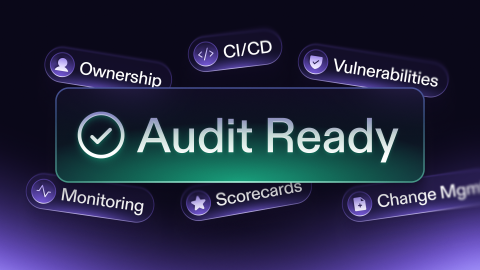
The audit-ready engineering org

Two weeks before the audit, the Slack messages start. Get me a screenshot of this. Can you screenshot the CI/CD logs? Can you add the artifact names that were deployed to production and when, and when the incident happened? Senior engineers stop shipping. A spreadsheet appears. The product roadmap goes on hold while four people chase down ownership data and evidence that should have existed all along. This fire drill is the symptom of an operating model problem.

Welcome Keynote | Ubuntu Summit 26.04

Welcome to Ubuntu Summit 26.04! In this welcome keynote, Mark Shuttleworth (CEO, Canonical), and Jon Seager (VP Engineering, Canonical), detail how Ubuntu is driving speed, safety, and community access in the era of agentic engineering. Learn how Canonical is balancing the need for rapid innovation with strict safety sandboxing through snaps, LXD, and microVMs. You'll also get a first look at what's in store for Ubuntu.

Introducing Workshop | Ubuntu Summit 26.04

In this talk from Ubuntu Summit, Dmitry Lyfar (Engineering Manager at Canonical) introduces Workshop: a new solution for launching composable, secure, and fast development environments on Ubuntu in a single command. Learn how to create sandboxed, reproducible environments for running agents with different development stacks consistently and securely. Ubuntu Summit 26.04 is a showcase for the innovative and the ambitious.

Using Bootc to Manage Ubuntu Hosts | Ubuntu Summit 26.04

What if you could manage your Ubuntu hosts the same way you manage your containerized applications? Managing Ubuntu hosts traditionally means configuration management, package updates, and drift control using tools like Puppet, Chef, or shell automation. Bootc streamlines the process. A Cloud Native Computing Foundation (CNCF) Sandbox project, bootc lets you define your Ubuntu systems as OCI container images and deploy them consistently across bare metal, virtual machines, edge devices, or cloud environments.

Introducing Workshop: launch sandboxed development environments on Ubuntu with a single command

Today, Canonical announced the release of Workshop, a solution for launching development environments with a single command. These environments are configured once, and can be reproduced on different machines. This means consistent workflows across development machines and deployment pipelines, and less time managing dependencies.

Bring Your Playwright Suite to Harness: No Rewrites, No Infrastructure, AI-Powered Triage Built In | Harness Blog

Key Takeaway: Harness AI Test Automation now runs existing Playwright suites without code changes, adds AI-powered failure triage, and integrates test results directly into build and deployment pipelines. ‍

Healthy PR Lifecycle Time: Benchmarks & Targets (2026)

Your pull request has been open for three days. Your reviewer hasn’t commented. You’re starting to wonder if anyone will ever look at it—and whether the code you wrote on Monday still makes sense on Thursday. This feeling is common. PR lifecycle time—the duration from first commit to merged code—directly impacts how quickly you ship features, how fresh your code stays, and how engaged your reviewers remain.

How to Use Git Blame in Your Editor in 6 Steps (2026)

Tracking down who made a specific change in your codebase can feel like detective work. Whether you’re debugging an issue or trying to understand why a particular piece of logic exists, knowing the history behind each line is invaluable. GitKraken makes this process simple with tools like GitLens for VS Code and GitKraken Desktop, which bring blame annotations directly into your workflow.

10 Privacy-First Engineering Intelligence Platforms 2026

Engineering leaders need more than raw metrics, they need actionable insights they can trust with their data. When evaluating engineering intelligence platforms, privacy controls and centralized repository oversight should top your criteria list. The platforms on this list each offer distinct approaches to tracking DORA metrics, developer productivity, and code quality while keeping your data secure.

dotConnect Providers and Entity Developer Receive Major Feature Updates

We are excited to announce major updates across our dotConnect Providers product line and Entity Developer. The release introduces expanded API support, new business objects and reports, improved authentication capabilities, and broader compatibility with modern.NET platforms. Our dotConnect product line continues to evolve with the latest technology changes.

3 Best PostgreSQL ADO.NET Providers for .NET Projects

In 2026, choosing the best PostgreSQL ADO.NET providers, or the right PostgreSQL.NET driver, comes down to the details. You need to know how they perform under load, how well they fit your stack, and what happens when things break. This guide compares the leading provider options side by side to help you identify the right fit for your environment. By evaluating these PostgreSQL ADO.NET providers, you can avoid pitfalls early, saving evaluation time and preventing costly fixes later.

Top 4 MySQL ADO.NET Providers for 2026

Modern.NET applications depend on stable ADO.NET providers to connect their logic with MySQL databases. But developers often run into familiar issues, async performance that’s unreliable, providers that differ in maturity, licensing that’s unclear, or integration friction with EF Core or cloud pipelines. In this guide, you’ll get a clear, architecture-based comparison of the top ADO.NET providers for MySQL.

OpenTelemetry Monitoring with Netdata

If you've standardized on OpenTelemetry (or you're heading that way), you probably know the collector gets your data out, but where it lands and how useful it is once it gets there are separate problems. Netdata now ingests both OTLP metrics and OTLP logs natively, so your OTel pipelines feed directly into the same monitoring experience as everything else in your infrastructure: same dashboards, same alerting, same query interface. No separate backends, no context switching.

Your developers are using AI agents, your data exposure just multiplied

Your developers are already using AI agents. GitHub Copilot, Cursor, Claude Code. Not just for autocomplete, but to generate features, run test suites, and iterate across branches. Each agent needs a database to work against. And in most organizations, nobody has checked what's actually in that database, or whether it should be there.

You probably don't need private PKI for internal infrastructure

Running your own certificate authority sounds like the responsible choice for internal infrastructure. Distribute your root cert to every machine and issue certs internally. In practice, you spend the next six months chasing down every device, contractor laptop, and vendor console that didn’t get root installed. The warnings come back. And when they do, people click through them, because they always have. There’s a simpler path, and most teams don’t know it exists.

Preview launch: the Agent Impact Leaderboard and the Business Impact & ROI Dashboard

The Agent Impact Leaderboard and the Business Impact & ROI Dashboard are live in preview inside GitKraken Insights today. We built them because the questions engineering leaders are getting asked about AI shifted faster than the tools to answer them. Here’s what shipped and how to get access.

Run your first microbuild in 5 minutes

AI coding agents produce code faster than most teams can validate it. Without a validation step between the agent and CI, every problem gets caught after the push, and feedback arrives long after the agent has lost context. Agents need consistent feedback while they’re working so that small failures get fixed locally and CI stays focused on moving code into production.

AI Might Break Open Source Differently Than You Think

AI coding agents may not replace open source libraries overnight. But Adam Arellano, Field CTO at Harness, thinks models like Mythos could expose a bigger problem: finding bugs, vulnerabilities, and edge cases faster than maintainers can keep up. That might be the real threat to tools and libraries.

Instant Java Client SDK, no spec required!

Learn how to generate a client SDK for a production service when you have no documentation, no OpenAPI spec, and no remaining team knowledge of the original Ruby code. This demo shows you how to capture real production data from a running app and transform it into a functional Java client library in minutes. Visit proxymock.io OR speedscale.com to learn more.

Top 7 Multi-Cloud Management Platforms for Enterprise Teams

Multi-cloud management becomes difficult in a very specific way. The problem is usually not that an organization uses more than one cloud. The real problem is that architecture, governance, cost control, provisioning standards, and team workflows start evolving at different speeds. One team is optimizing delivery. Another is trying to lock down policy. A third is dealing with private infrastructure that still matters. A fourth is trying to make cloud spending predictable.

Observability Expanding Beyond Infrastructure and Into AI Systems

Observability revolves essentially around understanding infrastructure health. This means that operations teams monitor applications, netwo0rks, database and cloud environments using familiar signals. They use logs, metrics, latency, uptime measurements, and traces. If systems remain available and the performance stays within expected thresholds, the teams have enough visibility to understand whether applications are functioning properly.

5 Best ADO.NET Providers: Use Cases & Choosing Tips

Behind every modern.NET application is an ADO.NET provider handling database connections, queries, and ORM operations behind the scenes. As applications become more cloud-native and data-intensive, that provider layer has become far more important than many teams realize. Performance, scalability, deployment reliability, and even developer workflow can all depend on the quality of the provider underneath the application.

Kubernetes Optimization Beyond Requests and Limits - Node Scaling Blockers

Many of us understand the concept of Kubernetes Requests and Limits, and that by reducing over-sized resource requests we can reduce waste in our clusters. And for GKE Autopilot and EKS Fargate clusters that is true. Because you’re being billed directly for the resources you’re requesting, driving down requests can result in instantaneous savings. However in most hosted Kubernetes environments you’re not actually being billed for requests.

Your Company Has 10x More Developers Than You Think

The low-code promise failed for 15 years. AI builders delivered in 15 months. Here's what actually changed, why the engineer in me resisted it, and what it means for every CTO. Romaric founded Qovery to make Kubernetes accessible to every engineering team. He writes about platform strategy, developer experience, and the future of cloud infrastructure.

Don't Ban the Builders - Govern Them

AI tools turned everyone into a builder. Your sales team, your finance team, your CEO - they're all shipping apps now. The answer isn't to ban them. It's to give them a governed platform they actually want to use. Romaric founded Qovery to make Kubernetes accessible to every engineering team. He writes about platform strategy, developer experience, and the future of cloud infrastructure.

WireMock alternatives: pick the one that fits your problem

Picture this. You’re standing up a new service. Cursor or Claude Code wrote most of the controller, and it calls a payment API your team doesn’t own. Now you need tests. The agent is gamely inventing the response shape from whatever OpenAPI doc you fed it (which is a year stale), and the WireMock stubs it just generated are guesses dressed up as JSON. Three weeks later production breaks, the test suite was green the whole time, and nobody knows where to start looking.

Autonomous K8s Optimization Involves Both Compute and Storage Resources - Are You Doing Both?

One of the most powerful capabilities in K8s is the ability to autoscale resources to meet demands, scaling resources up during peak periods to ensure performance, and down again during lower periods to save money. In this joint session, Lucidity and Kubex walk through what end-to-end K8s optimization looks like when you address both layers together. We cover: Expect real examples, not slides full of theory. You’ll leave with a clear picture of where waste is hiding in your environment and a prioritized approach to addressing it.

Ubuntu Core 26 fleet observability

What is Ubuntu Core? Ubuntu Core is a minimal and strictly confined variant of Ubuntu powering devices around the world. Ubuntu Core 26 now integrates with the Canonical Observability Stack, streaming device logs and metrics to centralized Grafana, Loki, and Prometheus infrastructure, deployable in the cloud or on-premise, without burdening the device's primary workloads.

Teamwork Collection: Built for the Next Era of Teamwork

Your team's best ideas shouldn't get lost between the doc, the ticket, and the meeting recording — but that's exactly what happens when AI lives outside your workflow. Teamwork Collection by Atlassian puts AI agents and your team on the same page — literally. Ideas flow to execution, agents pull context from your actual projects, and the line between "human work" and "AI work" starts to disappear.

AI Won't Replace You. Someone Using It Will.

AI isn’t about replacing engineers. It’s about leverage. The teams that win will be the ones that: Triage incidents faster Correlate signals automatically Reduce manual investigation Automate repetitive operational work In observability, that means asking: AI won’t eliminate expertise, it amplifies it. The real risk isn’t AI taking your job. It’s competitors using AI to operate at a speed and efficiency you can’t match.

Decoding design: How design and engineering thrive together in open source

Open source thrives on engineering-driven processes. Fast feedback loops, terminal tools, Git workflows: they’re the lifeblood of how we build software in the open. But for software to truly excel, we need to create user experiences that empower people to use them. I wanted to bring this conversation into the spotlight as part of Canonical’s Open Design initiatives. What better way than at FOSS Backstage 2026 Berlin?

Devart Brings AI Agents Closer to Enterprise Data with New MCP Server Product Line

We are excited to announce the release of the brand new line of MCP Servers (Model Context Protocol), designed to connect AI assistants, AI agents, and large language models directly to enterprise databases and cloud business platforms. The release includes 19 specialized MCP Servers and the flagship Universal MCP Server, which enables AI access to virtually any data source through the ODBC standard.

HAProxy Enterprise WAF protects against Drupal core SA-CORE-2026-004 SQL Injection (CVE-2026-9082)

On May 20th, 2026, the Drupal Security Team published a new advisory disclosing a security vulnerability report in the database driver of the Drupal content management system. The issue affects installations configured to use PostgreSQL as their database, leading to a possible SQL Injection.

Same team, but building more ft. Chris Kelly of Augment Code

Most teams obsessing over token costs are measuring the wrong thing. The real savings from AI aren't in lines of code written faster. They're in the coordination overhead that disappears when fewer humans need to align before anything gets built. Chris Kelly, Head of Product at Augment Code, joins Rob to cover why prototypes have replaced specs, how agents enable dynamic team capacity the way cloud replaced over-provisioned servers, and what "good code" even means when your primary reader is an LLM. In this episode.

Why AI economics needs a financial control plane

Runtime guardrails and control towers govern AI activity — but without a financial control plane connecting spend to outcomes, enterprises can't tell which AI bets are worth it. Most enterprises can answer exactly one question about their AI rollout: what did we spend?

Civo AI: Strategy over complexity

Most cloud providers think AI is just a hardware problem. They focus on the GPUs, the racks, and the raw compute, but they leave the strategy up to you. At Civo, we do AI differently. We don't just provide the hardware; we guide you through the full life cycle of AI adoption, from initial planning to scaling production workloads. By leveraging best-in-class NVIDIA models and GPUs, we give you the performance to unlock AI at scale without the fear of being bogged down by complexity. It's more than infrastructure, it’s cloud freedom with AI built-in.

Self-host AI on Kubernetes: GPU clusters, private models, and the GitOps Catalog

Spin up a GPU workload cluster using Konstruct's new GPU cluster templates, deploy a self-hosted LLM, and use it in your organization — all live on stream. This hands-on session shows how shipping AI workloads to GPU clusters is just as easy as deploying to Konstruct physical or virtual clusters, and how open source apps in the GitOps Catalog make it even faster. Walk away knowing how to cut your token spend by running models privately on your own infrastructure.

From Watching AI Search to Engineering for It: What Q1 2026 Taught Us About Real Digital Demand

Last year, I wrote about how AI-driven search trends reshaped my digital marketing strategy in ways I hadn’t seen in two decades. At the time, the story was mostly observational: traffic patterns were changing, conversions were holding, and AI-generated search answers were clearly influencing buyer behavior. Fast-forward to the first quarter of 2026, and one thing is clear — this shift didn’t slow down; it accelerated.

Why DevOps transformations fail in regulated industries, with Merge Ready's Matt Bailey

Cortex co-founder and CTO Ganesh Datta sits down with Matt Bailey, DevOps consultant and founder of Merge Ready. Matt shares lessons from helping large regulated organizations in finance, healthcare, and government transform their DevOps practices, and explains why DevOps is an outcome rather than a toolchain.

Redgate Monitor Product Updates - May 2026

Redgate Monitor ships new features every month and the past few months have brought some exciting new additions to empower your workflows. Spanning AI-powered tooling, cloud deployment, cross-database platform support and enterprise security, these updates reflect some of the biggest areas shaping how database teams work today. Whether you're managing compliance requirements, trying to get on top of alert management or looking to get a better grip on cloud costs, there's something here for you.

Canonical announces fully Managed Kubeflow AI operations platform on the Microsoft Azure Marketplace

Canonical, the publisher of Ubuntu, today announced the general availability (GA) of Managed Kubeflow on the Microsoft Azure Marketplace. This solution enables AI teams to get a fully managed, production-ready MLOps platform in their own tenant. Upstream Kubeflow is a powerful tool for machine learning, but it remains notoriously challenging to deploy and maintain.

Developing web apps with local LLM inference

I’ve yet to meet a developer that enjoys working with metered AI APIs. The need to pay for every API call in development works in direct opposition to the ethos of rapid iteration, and it’s easy for the costs to get out of hand. That’s why Canonical has created a different approach to building AI-powered applications; one where the model lives inside your app, not behind a pay-per-token HTTP call.

A Practical Guide to Refactoring Production Databases | The Tony and Tonie show Ep44

That “simple” production database refactor may be more dangerous than it looks. Learn how Data Modeler helps teams minimize the risk. Once a database is live, even simple design improvements can affect data, applications, reports, and integrations in unexpected ways. Tony and Tonie discuss how Redgate Data Modeler helps teams map out the proposed changes visually, expose hidden dependencies, and plan a safer roll out.

The sovereignty shift: how to grow regional tech ecosystems

Manchester is one of the UK’s leading tech ecosystems – but how did it get there? In this episode, Pulsant’s Wendy Shearer speaks with Katie Gallagher from Manchester Digital about Manchester’s rise as a powerhouse for UK tech, data sovereignty, innovation, talent and inclusive growth. Discover how the region has evolved from its strong industrial heritage into a thriving digital economy now home to major FTSE 100 companies and six unicorn businesses.

Certificate Audit logs are live

Certificate automation does a lot of work on your behalf. Agents running on your servers, talking to certificate authorities, deploying certs to your infrastructure. At some point someone (your CISO, your auditor, or your own brain at 3am) is going to ask: what exactly happened, and when? Today we’re shipping audit logs. Every action taken in CertKit is now recorded: logins, invitations, certificates added, issued, renewed, revoked, and deployed. Agent registrations, approvals, and config changes.

Teach Your AI Coding Agent to Instrument, Monitor, and Troubleshoot Infrastructure with netdata/skills

There’s a growing ecosystem of AI coding agents: Claude Code, Cursor, Copilot, Codex, Gemini CLI, Windsurf, and others. They’re good at writing code, but they don’t inherently know how to instrument that code for observability, configure monitoring infrastructure, or troubleshoot production systems using real telemetry data. That knowledge lives in documentation, runbooks, and the heads of your senior SREs.

Reduce CI Costs Without Slowing Down Development | Harness Blog

Continuous integration (CI) costs can escalate quickly as engineering teams scale. While most organizations focus on cloud bills, the true cost of CI includes slow build times, developer wait time, inefficient test execution, and overprovisioned infrastructure. CI cost optimization is the practice of reducing the total cost of CI pipelines by improving build efficiency, minimizing compute usage, and eliminating unnecessary work without slowing down development.

Why Artifact Repository Sprawl Slows Down Software Delivery | Harness Blog

Three weeks into a platform modernization project, this question landed in my inbox: "Why does our deployment pipeline take 40 minutes instead of four?" This is artifact repository sprawl in practice, and it does more than slow pipelines. It fragments your security posture, your compliance evidence, and your ability to answer basic questions like "what's actually running in production right now?".

Mini Shai-Hulud Explained: How the TanStack and RubyGems Supply Chain Attacks Worked | Harness Blog

Shai-Hulud is back - this time being lighter, faster and more automated than before. This new wave, termed as Mini Shai-Hulud, has affected a number of packages from tanstack, uipath, opensearch-project and mistralai among others over the past few weeks, with the latest series of major compromises coming on 19th May, 2026 on major organizations openclaw-cn and antv. Check an extensive list of affected packages here.

A look into Ubuntu Core 26: Cloud-powered edge computing with AWS IoT Greengrass and Azure IoT Edge

Welcome to this blog series which explores innovative uses of Ubuntu Core. Throughout this series, Canonical’s Engineers will show what you can build with this Core 26 release, highlighting the features and tools available to you.

NVIDIA Vera Rubin: What is it, what's new, and when you can get it

NVIDIA's infrastructure roadmap moves fast, and the next major milestone is already here. The NVIDIA Vera Rubin platform is the company's next-generation AI compute architecture, the successor to Blackwell, and it's shaping up to be one of the most significant leaps forward in AI infrastructure NVIDIA has ever shipped. Whether you're planning your next training cluster, scaling inference pipelines, or building the infrastructure to power autonomous agents, Vera Rubin is worth understanding now.

AI Governance vs AI Innovation: Are AI Agents Outrunning Enterprise Oversight?

In this special episode of Agents of IT, the team dives into one of the biggest questions shaping enterprise AI right now: Is AI adoption moving faster than governance can keep up? Ari, Fran, Zach, and Ian break down the growing tension between agentic AI, automation, security, and oversight. From AI hallucinations and context overload to GRC challenges, shadow AI, and the future of AI governance roles, the conversation explores what enterprises need to consider as autonomous operations become reality.

AI Observability In 2026: What It Is, The Five Pillars, And Why Cost Is The One Everyone Skips

AI observability covers performance, quality, reliability, safety, and cost. Most tools handle the first four. Here's what each pillar means, which tools cover which, and why cost is the dimension enterprises keep missing.

Why Standard Service Desk Automation Doesn't Reduce Ticket Volume (and What Does)

The platform has been live for six months. Workflows are running, the virtual agent is fielding requests, and the vendor dashboard shows deflection numbers are going up. Then someone pulls the actual ticket volume report, and it looks almost identical to the one before the rollout. This comes up constantly in enterprise IT, and most teams respond the same way. They tell themselves the platform needs more automations, a wider user base, and another quarter to mature. Months pass.

Agentic Pipelines now supports Claude Code

Last month, we introduced Agentic Pipelines, a new way to orchestrate AI agents to automatically, and routinely, handle the repetitive engineering chores so you can get back to solving the fun, cool problems. When we launched, Agentic Pipelines supported Atlassian’s developer AI agent, Rovo Dev. Today, we’re opening up Agentic Pipelines to even more teams: You can now run agentic steps in your pipeline with Claude as the provider.

Cloud has a climate cost. Here's our plan to reduce ours.

Cloud hosting is not invisible. Every project deployed, every resource provisioned, every region selected carries a real energy cost, and that energy cost has a climate cost. At Upsun, we've known this for a while. What we're sharing today is where we stand, what we measured, and what we've committed to doing differently from 2026 onwards. Our ambition is calibrated to what we can credibly deliver, and we think being upfront about that matters more than overpromising.

How much engineering time is your infrastructure consuming?

Most engineering teams underestimate the time infrastructure demands from them. The hidden cost isn't in provisioning, it's in the accumulated friction of environment drift, manual handoffs, and repetitive infrastructure maintenance that quietly consumes hours your team should be spending on product.

Keep your Agents Under Control with agent-belt

You’re shipping a product with an AI-facing interface, or embedding AI-facing interfaces across your existing product line – skills your customers trigger, MCP servers their agent reaches for. Indie author or enterprise, your code runs in someone else’s agent runtime, against a model that updates every other day and a CLI that updates every other week. Cursor 2026.05.05-84a231c rolls out. Claude Code 2.1.132 lands the same week. OpenAI bumps gpt-5.5.

How to Build AI Agents for Enterprise Operations | Agent Builder Demo

Episode 4 of Resolve Reels is live! See how Agent Builder helps teams create purpose-built AI agents with the right guardrails, routing logic, and orchestration for enterprise operations. In this episode: Build specialized agents with defined responsibilities Improve routing with conversation starters and guardrails Test and operationalize agentic AI at scale This is how enterprises move toward Autonomous Operations and Zero Ticket IT.

Storage For The AI Tidal Wave | VAST Data CEO Renen Hallak

AI infrastructure is entering a new phase – one where the biggest challenge may no longer be building better models, but building systems capable of feeding them. In this episode of Uplink, Michael Reid sits down with Renen Hallak, Founder and CEO of VAST Data, to explore the infrastructure realities behind the AI boom. From software-defined storage and GPU-scale architectures to neoclouds and agentic AI, this conversation dives deep into the systems powering the future of artificial intelligence.

Early Warning Signs Your Network Needs a Refresh

Is your network holding your business back? Learn the warning signs that tell you it’s time for an upgrade before it hits your bottom line. Most network failures don’t just happen overnight, but are the result of warning signs that went unnoticed or ignored. The “if it’s not broken, don’t fix it” mindset is one of the most common and costly mistakes in network management.

AI Dev Tools: What 100K Engineers at Google Really Taught Us

AI developer productivity, agentic workflows, and the lessons learned running engineering tools for 100,000+ software engineers at Google. John Montgomery, CCO at GitKraken, sits down with Asim Hussain, co-founder of Alterion AI and former Google VP of Engineering Productivity, to get real about what AI actually changes for engineering teams in 2025.

The 5 Hats We Wear During Code Review

If you are a software developer or engineer, you most likely have to do code review. At the bare minimum, you probably have had your pull requests reviewed. If you haven’t, then you are probably curious about how the rest of the world deals with the process. In general, we use code review to make sure we are shipping high quality code that does what it’s supposed to and is easy to maintain. That’s the goal, at least. In practice, code review can get messy.

A Developer's Guide to Aiven Apps

We recently announced the Limited Availability (LA) launch of Aiven Apps, which lets teams define, run, and scale production-ready, real-time applications using container and Compose-based workflows they already know. It provides a managed, stateless runtime that runs directly inside your data perimeter, letting you deploy applications alongside open-source data services like PostgreSQL and Apache Kafka.

Snyk vulnerability compliance with kosli evaluate trail

Kosli recently released kosli evaluate trail, a command that evaluates selected attestations in a Kosli trail against a Rego policy file. We used it to build a complete and useful solution for tracking Snyk container vulnerabilities for cyber-dojo (an open-sourced browser based online tool for practising TDD which Kosli uses for demos). You’ll read about what we built, why we built it, how we tested it, and specifically.

Claude Mythos: Sorting Fact from Fiction and What It Means for Cyber Defense in 2026

Claude Mythos may be wrapped in hype, but the core signal is real: AI is making vulnerability discovery much faster, which means defenders have less time than ever to patch and enforce secure configurations. The real risk isn’t just smarter models, it’s that security teams will face a flood of new findings while the window between disclosure and exploitation keeps shrinking.

Engineering teams in 2027

There's a conversation I keep having with our design partners at incident.io. It starts when I ask "what are you doing with AI internally?" and lands in a similar place every time. The shape of how their engineering teams work is changing fast. Not in vague "AI is transforming everything" ways, but in concrete, repeatable patterns. Different companies are building the same things. The frontier teams are six to twelve months ahead of the average, and they're describing the same future.

From Traffic Context to Confirmed Fix in 3 Minutes

We’ve been building an AI agent that can take a production bug, find the root cause in captured traffic, write a fix, and validate it before a human reviews it. We call it Agent Factory. Last week we ran it on ourselves, against a real bug in our own production service. The first thing we did was get the workflow wrong.

Anatomy of the AI Software Factory: The Context Layer

This is Part 2 of the AI Software Factory series. In Part 1, we established that the Agile methodology is buckling under the weight of “elastic code.” When AI agents can generate functionality in seconds, two-week sprints and manual task management become organizational bottlenecks. We introduced the concept of the AI Software Factory: a shift from managing human tasks to managing business intent through a “Funnel of Increasing Trust.” But a factory requires infrastructure.

The sovereignty without toil guide: why compliance shouldn't require a Kubernetes tax

True data sovereignty isn't about managing your own cloud accounts; it’s about where your data resides and how it is governed. By utilizing a unified configuration file to deploy on sovereign infrastructure like OVHcloud, Upsun provides standardized sovereignty without the complexity of “Bring Your Own Cloud”.

DORA Metrics in the AI Era: Why Deployment Isn't Faster

DORA metrics in the AI era reveal a paradox: PR volume is climbing, but deployment frequency is staying flat. In this talk, GitKraken's Director of Product Jeff Schinella breaks down why AI-accelerated code generation is creating a review bottleneck that your DORA metrics can't fully explain on their own. Jeff walks through how PR metrics (cycle time, first response time, code churn, and PR size) serve as the leading indicators behind your DORA data. If your deployment frequency is flat while PR counts go up, the bottleneck isn't your devs. It's your review capacity.

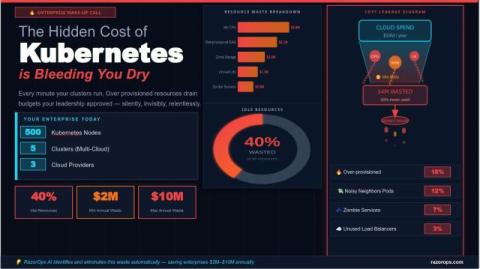
The Hidden Cost of Kubernetes: Why Your Cloud Bill Is 40% Higher Than It Should Be

The average enterprise running Kubernetes wastes between $2 million and $10 million annually — not from overspending, but from under-optimizing. This is the story of costs you can't see on your dashboard but that your CFO feels every quarter.

GitLens vs VS Code Git Graph Ranked for Solo Devs

Choosing the right Git extension for your VS Code setup can make the difference between a smooth workflow and hours lost hunting for context. GitLens, developed by GitKraken, and VS Code Git Graph both aim to enhance your Git experience, but they approach the problem differently. This article ranks both extensions across key workflow scenarios – merge conflicts, commit history, code review, debugging, UX, and performance – so you can pick the right tool for how you work.

AI Productivity Metrics Dashboard for Engineering Managers (2026)

Measuring AI’s impact on your engineering team is harder than it sounds. Headlines claim AI writes 30% of code and doubles productivity, but those numbers rarely match what you see on the ground. Without a dedicated dashboard that blends leading indicators, anti-gaming safeguards, and ROI reporting, you cannot answer the question that matters most: is AI helping your team ship better software faster?

What Vera Rubin means for AI infrastructure in 2027

Every so often, NVIDIA releases something that quietly changes the direction of the industry. CUDA did it. DGX did it. NVLink did it. Vera Rubin feels like one of those moments again. At first glance, Rubin looks like the natural successor to Blackwell. Faster GPUs, larger memory pools, and eye watering performance numbers. But the more you dig into the architecture, the clearer it becomes that NVIDIA is not simply shipping another accelerator generation.

What a Context Graph Actually Is, and How to Build One | Harness Blog

Engineers have been shipping pieces of "the graph" for years. Service maps. Dependency graphs. Knowledge graphs. RDF triples. The newest entrant is the context graph, and the reason it shows up now is specific: software is increasingly executed by agents, and agents need a model of how work actually happens, not just an index of what exists.

Core Java vs Enterprise Java: Jakarta EE, Spring Boot & Modern Trade-offs [2026 Guide] | Harness Blog

‍ When you're architecting an enterprise Java application, one decision quietly shapes everything downstream: runtime footprint, deployment pipelines, and how your platform team handles incidents at 3 a.m. For two decades, that decision was framed as Java SE vs Java EE. In 2026, that framing has quietly inverted.

AI, Platforms, and the Future of Value Delivery: A Conversation with ServiceNow

How do enterprises turn AI from experimental potential into real-world software delivery value — without slowing down, breaking security, or sacrificing reliability? At {unscripted} 2025, Amit Zavery — President, Chief Product Officer, and COO of ServiceNow — joined Harness CEO and Founder Jyoti Bansal for a candid fireside chat on the future of AI in the enterprise, the role of platforms in unlocking developer productivity, and why"AI-native" only works when speed, security, and reliability move together.

Anthropic Shipped An Enterprise Analytics API. We Shipped the Claude Adapter Today.

Anthropic just shipped an Enterprise Analytics API with user-level token and cost data. Today, we're shipping the CloudZero adapter that maps that data to teams, budgets, and cost centers — so Claude spend gets the same accountability as the rest of your stack. Anthropic released the first beta of its Enterprise Analytics API this week. Admins can pull token usage and dollar cost through a programmatic endpoint, broken down by user, model, context window, region, and product surface.

Teamwork Collection - Power the era of human-AI collaboration | Team '26 | Atlassian

As organizations work to bring humans, agents, and automation together, teamwork is getting even more complex. If your AI strategy feels like a collection of one-off experiments layered onto disconnected tools and siloed knowledge, join Atlassian leaders to see how Teamwork Collection brings together Jira, Confluence, Loom, and Rovo into a connected foundation for human-AI collaboration at scale.

Solved: fatal: Not a git repository (or any of the parent directories): .git

The fatal: not a git repository (or any of the parent directories): .git error means Git cannot find a.git directory in your current folder or any parent folder. In most cases, you are either in the wrong directory, the project was never initialized with Git, or the.git folder is missing or corrupted.

Multi-cloud vs. hybrid cloud: Which approach is right for your organization?

Cloud adoption has evolved from simple infrastructure outsourcing into a spectrum of deployment models designed to balance performance, resilience, compliance, and cost. Two of the most widely adopted approaches today are multi-cloud and hybrid cloud. While they are often discussed together, they solve different architectural problems.

Coming soon to Perspectives from the Edge - Wendy is joined by Kate Gallagher of Manchester Digital

In this teaser for an upcoming episode of Perspectives from the Edge, Wendy Shearer, Director of Partners & Ecosystems at Pulsant, speaks with Kate Gallagher, Managing Director at Manchester Digital, about how Manchester has become one of the UK’s leading technology ecosystems and a model for regional innovation and growth.

Cortex | See every engineering scorecard in one view with All Scorecards

Engineering orgs track AI maturity, production readiness, incident preparedness, and a dozen other standards. Each one usually lives in its own scorecard, which makes it hard to see where the org is actually stuck. For this Feature Friday, our Principal Product Manager Christine Byun walks through the new All Scorecards report, now in private beta. In this demo: Birdseye showed you one standard in detail. All Scorecards zooms out so you can see the whole engineering org at once.

Service Collection keynote - Shatter the service quo | Team '26 | Atlassian

AI is transforming how businesses operate and leaders are being held to higher expectations. Service must be unified, intelligent, and resilient across your entire organization, not patched together and slowed down by legacy constraints. Learn how Atlassian’s AI-powered Service Collection, including Jira Service Management, Customer Service Management, Assets, and Rovo, enables teams to meet this moment.

Cursor Cloud Agents Are Incredible - Until You Need Production Governance

Cursor Cloud Agents are the best AI coding environment for individual developers. But for enterprises that need AI-written code to ship through staging to production with audit trails, RBAC, and compliance - there's a gap. Romaric founded Qovery to make Kubernetes accessible to every engineering team. He writes about platform strategy, developer experience, and the future of cloud infrastructure.

What cloud portability actually means and how to achieve it

Having workloads on two clouds is not the same as being able to move workloads between them freely. Portability is about the friction of movement, not the number of providers in use. Most teams that call themselves multicloud are not portable. They have separate workloads siloed on separate providers, each with its own toolchain, deployment pipeline, and set of operational conventions. Moving anything between those environments means starting from scratch. That is not portability.

The "Free" AI Tool That Will Ruin Your Code#speedscale #aiagents #aicoding #devops #softwareengineer

Relying on AI and interns to build custom traffic replay tools is a scalability nightmare that introduces security risks, brittle code, and massive maintenance costs...use Speedscale instead. Learn more: speedscale.com.

There's an npm-shaped hole in the AI tooling stack

I've had this same conversation with 60+ engineering teams in the last six months. A team adopts AI tooling. One developer figures out how to use it well, builds up a vault of skills, MCP configs, and slash commands that 10x their output. The rest of the team has whatever they can scavenge from a shared Notion doc.

Why agentic AI development needs reliability guardrails

AI has massively accelerated code deployment. In fact, since the introduction of agentic coding, GitHub has seen exponential growth in PRs, commits, and new repos. What they originally predicted would require 10X capacity, they’re now estimating it’s going to require 30X capacity, and the biggest driver is agentic development. Companies across industries are building agentic pipelines to ship features faster than ever before. That acceleration isn’t without risk.

How Engineering and Ops Teams Use OKRs to Connect Technical Work to Business Outcomes

Engineering and operations teams have a measurement problem that most other functions don't. The technical metrics are excellent. Deployment frequency is up. MTTR is down. Uptime is at 99.97%. The CI/CD pipeline is running cleanly and the on-call burden has been reduced by 30% since the team adopted a proper incident management process. By every internal measure, the team is performing well. And yet, in the quarterly business review, the conversation keeps returning to the same uncomfortable question: what did engineering actually deliver for the business this quarter?

What are the benefits of decentralized AI infrastructure?

Have you ever considered how you can utilize artificial intelligence (AI) without sacrificing control over your data and autonomy? As we continue to navigate the changes of AI in the 21st century, it is important to understand how decentralized AI infrastructure can empower individuals and organizations to harness the potential of AI while maintaining sovereignty over their data and decision-making processes.

LLM Observability: Lessons From MLOps w/ Maria Vechtomova (Cauchy)

For nine years, Maria Vechtomova was shouting about monitoring. Nobody cared, until LLMs arrived. As co-founder of Cauchy, Databricks MVP, and one of the most followed voices in MLOps, Maria has watched the field evolve from hand-built experiment trackers to today's flood of observability tools, and her central claim might surprise you: globally, nothing has changed. The fundamentals are the same: track your code, data, and models so you can roll back when something breaks.

Automated Release Management: From CABs to Continuous Delivery | Harness Blog

The thing with Change Advisory Boards is that the intent was always good. Get smart people in a room, look at the evidence, and make sure nothing catastrophic goes out the door. In theory, that's hard to argue with. It doesn't scale in practice. Things happen between meetings. Teams rush to hit the window. The CAB meeting may not catch every risky deployment, but at least everyone can feel good about the process before the incident happens. Automated release management asks a different question entirely.

AI Asked Our General Counsel Anything. She Didn't Hold Back.

What happens when AI interviews a tech leader? You get unexpectedly honest answers. Harness General Counsel Hanna Steinbach sat down with ChatGPT — and skipped the corporate script. From the realities of parenting while leading a legal team at a high-growth startup, to the daily habits that keep her grounded, this is the kind of candid leadership perspective you rarely see. Oh, and she's definitely the person sprinting to the gate right as boarding starts.

The FinOps Competitive Landscape in 2026 - When Cost Optimization Meets Reliability

The dashboard says you can save 30%. The SRE team won’t sign off. You’ve probably been in this meeting. Finance has a number. The platform team has a scar. Somewhere between them sits a senior manager, maybe you, being asked to choose a cost optimization tool that one side will champion and the other side will quietly refuse to deploy in production. The standoff isn’t about price. It’s about trust.

The RAM Crunch: How UK Businesses Can Weather the Global Memory Shortage

Tech headlines are being dominated by the perfect storm that has led to a global shortage of Random Access Memory (RAM). As the short-term, temporary memory that handles data for processing and applications, RAM - and specifically Dynamic Random Access Memory (DRAM) - is a foundational business technology.

Security vs speed in databases | The Simple Talk Podcast

Are engineering teams quietly accepting more risk? Redgate's 2026 State of the Database Landscape report reveals that people are increasingly willing to accept more risk to be more productive and take full advantage of AI’s capabilities. Steve Jones, Kellyn Gorman, Grant Fritchey and Pat Wright share their thoughts on that in today's episode. They share stories from their own careers, debate on whether the decline of the DBA 'gatekeeper' role has weakened security practices, how AI is amplifying the problem - and much more.

How are hyperscalers misleading the cloud industry?

In 2024, Mark Boost, CEO at Civo, introduced the concept of ‘cloud parity’, a cloud computing approach that ensures a consistent, identical experience, feature set, and operational model across public, private, hybrid, and edge environments. “Cloud parity gives teams the freedom the cloud was supposed to deliver in the first place. It gives enterprises the sovereignty they need. It gives public sector bodies the clarity they require.

The AI Productivity Paradox: We're Measuring the Gains and Missing the Costs | Harness Blog

For the past year, I've been hearing a version of the same thing from engineering leaders: AI tools are working, productivity is up, the business case is there. And yet, something about the picture still feels incomplete. So we decided to go find out how widespread that feeling actually is. We surveyed 700 engineers and managers across five countries, and published the results in the State of Engineering Excellence 2026.

Disaster Recovery Testing: A Practical Step-by-Step Guide for 2026 | Harness Blog

Effective disaster recovery testing follows a clear three-phase lifecycle: plan, execute, and review. Most DR programs fail not because of missing tools, but because of untested runbooks and unclear ownership. Platforms like Harness Resilience Testing bring chaos, load, and DR testing into one pipeline so teams can catch risks before they become incidents. Most organizations don't fail at disaster recovery because they lack technology.

Lovable, Bolt, and Replit Are Wonderful - Until Your CISO Finds Out

Non-technical teams are building apps on Lovable, Bolt.new, and Replit with company data and zero governance. Here's why that's a compliance nightmare - and what enterprise platform teams should deploy instead. Romaric founded Qovery to make Kubernetes accessible to every engineering team. He writes about platform strategy, developer experience, and the future of cloud infrastructure.

AI DevOps in 2026: How AI Coding Tools Are Breaking Your CI/CD Pipeline (and How to Fix It)

AI coding tools turned every engineer into a 10x developer. Now your CI/CD pipeline is the bottleneck. Learn how to handle 10x more deploys per engineer with Qovery's dual deployment model. Romaric founded Qovery to make Kubernetes accessible to every engineering team. He writes about platform strategy, developer experience, and the future of cloud infrastructure.

From Copy Fail to Dirty Frag: Why Speed-to-Exploit Is Forcing a New Approach to Linux Security

In early 2026, two back-to-back Linux kernel exploits, Copy Fail (CVE-2026-31431) and Dirty Frag (CVE-2026-43284 & CVE-2026-43500), shattered assumptions about how quickly attackers can weaponize disclosed CVEs. Dirty Frag, a zero-day Linux vulnerability that affected most major distributions, had PoC exploits published within hours of its disclosure. It’s a stark reminder: the timeline between vulnerability disclosure and active exploitation has shrunk from weeks to hours.

How HAProxy built its modern application delivery architecture

Let’s be real: building reliable tech products is hard. Modernizing that same tech without compromising the user experience is even harder. The "rip and replace" approach to modernization can severely disrupt your customers’ integration efforts and workflows. When it doesn’t work, reversing course might be the least-worst option. By contrast, the evolution of the HAProxy One application delivery platform architecture at HAProxy Technologies over 25 years has been gradual and consistent.

Rethinking BYOD security: protecting data without trusting devices

BYOD (bring your own device) has always looked better on paper than it does in real life. The promise is clear: let people use the gadgets they already own. Less friction, lower costs, and more freedom. But when security and privacy are non-negotiable, the conversation around BYOD usually ends quickly. Not because BYOD is a bad idea, but because the model behind it doesn’t quite work. With BYOD, you’d be trying to secure something that isn’t meant to be trusted.
Getting started with Codex and CircleCI

Codex is OpenAI’s coding agent, powered by the GPT-5 family of models. It reads your files, proposes edits, and runs commands directly in your local environment. It ships as both a desktop app and an open source CLI, and it extends through plugins that connect it to external tools and services. Like any AI coding tool, Codex is strongest when the code it generates gets validated automatically.

Choosing a Software Engineering Intelligence Platform (2026)

Engineering leaders face a common challenge: too much data scattered across too many tools, and no clear picture of how software delivery is actually performing. A software engineering intelligence platform pulls together metrics from your Git repositories, CI/CD pipelines, and issue trackers into a single view – helping you make decisions based on evidence rather than intuition.

From Monitoring to Observability: How DEX Integrations Strengthen IT Visibility and User Productivity

When I started working in IT in the last 90’s, IT performance was always measured by the health of infrastructure: CPU utilization, network latency, server uptime, and for many organizations, little has changed in the last 30+ years. We became very good at keeping systems alive, yet users still struggled to get work done. That disconnect is exactly why Digital Employee Experience (DEX) has emerged as a critical discipline. But DEX on its own is not the end goal.

Redgate Monitor | AWS Database Migration Readiness

n this demo, we explore the AWS Database Migration and Modernization (D2M) framework, from Align and Assess, trough to Optimize, and show how Redgate Monitor helps you to establish performance baselines, right-size target environments and continuously optimize RDS and Aurora spend for full cloud cost visibility. Learn how Redgate Monitor can give you a single view of your entire AWS and on-premises, multi-database environment.

Your Metrics Look Fine. Your Engineers Are About to Quit.

Developer experience predicts what's coming 3 to 6 months before it shows up in your delivery metrics. So why are most engineering leaders measuring it last? In this session, GitKraken VP of Developer Research Jeremy Castile breaks down what developer experience (DevX) actually is, how to measure it across 6 key dimensions, and how it connects to velocity, code quality, and AI impact data your team is already tracking.

Redgate Test Data Manager | AWS Database Migration Readiness

In this demo, we explore the AWS Database Migration and Modernization (D2M) framework, from Align and Assess through to Optimize, and show how Redgate TDM helps teams to safely work through compliance or data privacy concerns during cloud migrations. See how to safely mask sensitive data, create reusable datasets, and accelerate development with consistent, compliant test data across environments. Discover how test data management reduces risk, supports DevOps pipelines, and enables faster, more secure cloud migrations.

#058 - The Future of AI and Platform Engineering with Blake Sherwood (Smarsh)

In this episode, special guest Blake Sherwood joins the show to discuss his unique career trajectory from tourism and coal mining to leading massive-scale Kubernetes migrations. Blake shares insights from his experience managing petabytes of data in high-compliance environments, delving into the practical realities of integrating AI into enterprise workflows and observability systems.

Redgate Flyway Enterprise | AWS Database Migration Readiness

In this demo, we explore the AWS Database Migration and Modernization (D2M) framework, from Align and Assess through to Optimize, and show how Flyway helps simplify database versioning, automate deployments, and enable reliable CI/CD. See how to reduce risk, improve collaboration, and modernize your database workflows in the cloud with better visibility and control.

Claude Code Sandbox: The Complete Guide to Sandboxing AI Agents in Production

How to sandbox Claude Code, Codex, and other AI coding agents for production use. Compare local Docker, Daytona, E2B, and Qovery approaches - with architecture diagrams and real-world examples. Romaric founded Qovery to make Kubernetes accessible to every engineering team. He writes about platform strategy, developer experience, and the future of cloud infrastructure.

PagerDuty Appoints John DiLullo as Chief Executive Officer

Jennifer Tejada Transitions to Executive Chair of Board of Directors After Serving as CEO Since 2016. John DiLullo Brings Deep Enterprise, Product and Go-to-Market Leadership Experience to Lead Next Phase of Growth. Company Reaffirms First Quarter and Full Fiscal Year 2027 Guidance.
Sponsored Post

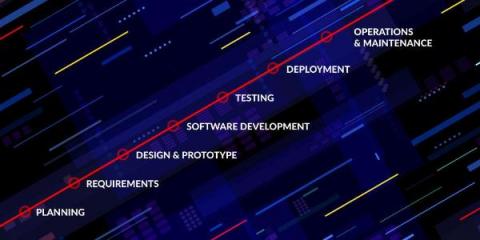
The SDLC: phases, popular models, benefits & more

The Software Development Life Cycle (SDLC) describes the process we follow to deliver software to customers. It captures each step of creating software, from ideation to delivery and eventually to maintenance. In this post, we've broken down everything you need to understand the SDLC.
Sponsored Post

Replay Real Customer API Sessions as Datadog Synthetics Tests

A customer pings support: "I tried to check out twice this morning and got a 500 each time, but it works fine for everyone else." The session ID is in the email. You have full request/response capture in your environment, you have Datadog Synthetics already running browser checks against the same flow, and you still spend the next two hours grepping logs because none of those tools let you say "show me just this user's requests, in order, and re-run them."

Dashboard Playlists: Cycle Through Dashboards in TV Mode

When we shipped TV mode, we heard almost immediately: “Great, but I have five dashboards and one screen.” A single dashboard on a wall display covers one view of your infrastructure. If you want to rotate between your network overview, database health, application metrics, and infrastructure summary, someone has to walk over and click, or you’re buying more screens. Dashboard playlists solve this.

The Enterprise Buyer's Guide to Service Desk Automation Platforms

Here’s a story that plays out constantly in enterprise IT, and few people talk about afterward. A team runs an evaluation with multiple vendors using a structured scoring process. Then, they make their choice, but six months into deployment, the platform that excelled in every demo is now struggling with the actual environment. The IT leader who signed off is in a room with their CIO, trying to explain why the numbers fail to match the projections.

SLI, SLO, SLA: What They Mean for Load Testing

Most engineers can recite these three terms. Fewer know how they actually connect during a load test. If your team is running performance tests without mapping results to SLOs, you're collecting data without a pass/fail signal. This short gives you the mental model to turn load test output into something your SLA can actually depend on.

Beyond code execution: the strategic case for stateful AI sandboxes

While ephemeral sandboxes are effective for isolated code execution, enterprise AI agents require a more robust context to be reliable. Upsun provides production-like preview environments, complete with byte-level clones of apps and services, offering a higher standard of validation for agentic workflows.

Solving the Complexity of Data Center Operations with Cloud-Based DCIM Software

Managing a growing data center requires accurate, real-time infrastructure data. Outdated tools often miss critical changes, delay decisions, and make it harder to control energy usage, capacity, and risk. Hyperview is a cloud-based Data Center Infrastructure Management (DCIM) platform that helps teams monitor, manage, and optimize their data center infrastructure from one centralized system.

Running Your App in Production

Your app is deployed. Users are signing in. Traffic is flowing. Everything is live. Congratulations, give yourself a pat on the back. Okay that's enough. Now it’s time to get back to work because you’ve officially entered the phase where production starts revealing all the decisions you made three months ago, unsure how it would affect you today. Because deploying an app is one half of the job. And, production environments have a way of exposing: This is where operations begin.

What's New in dbForge 2026.1: Greater Convenience, Enhanced Code Completion, and a Big Update of dbForge Studio for PostgreSQL

The time has come to announce the release of dbForge 2026.1, a grand update that brings a variety of new features and long-anticipated enhancements to the entire dbForge ecosystem. As usual, the update will cover all database systems that dbForge is compatible with, but this time, there will be a special focus on PostgreSQL and related databases and cloud services, whose users will be witnessing a major step forward, with multiple new features, options, and whatnot.

Best ADO.NET Tools for SQLite in 2026

The best ADO.NET tools for SQLite should preserve the speed that makes SQLite worth using in the first place. Recent benchmarks show it completing 100,000 sequential reads in 272 milliseconds, nearly 5x faster than MySQL on the same hardware, because there’s zero network overhead between your app and the database. A slow or poorly matched provider wipes out that advantage. Queries drag, operations behave unpredictably under concurrency, and simple data access turns into a scaling problem.

AI startup on a budget? How to master GPU computing without overspending

This blog is based on the webinar, “Panel Discussion: Understanding the importance of GPUs for AI success”. You can watch the full recording by clicking here! Cheap GPUs don't kill AI startups. Cheap thinking about GPUs does. In 2026, the teams burning through runway fastest aren't the ones who can't afford compute; they're the ones measuring the wrong thing and scaling the wrong way.

LLM API Pricing Comparison In 2026: Every Major Model, Ranked By Cost

Compare LLM API pricing across OpenAI, Anthropic, Google, DeepSeek, and Mistral in 2026. Full pricing tables, hidden cost breakdowns, and proven strategies to cut AI spend. Written for engineering leads, platform teams, and FinOps practitioners evaluating or optimizing production AI costs.

Together AI Pricing In 2026: Models, Costs, And How To Manage Your Bill

Together AI pricing ranges from $0.10 to $9.00 per million tokens. Compare all models, GPU rates, free tier details, and practical cost optimization strategies. Written for engineering leads, platform teams, and FinOps practitioners evaluating open-source inference providers.

Three Architectural Principles for Mythos & GPT-Cyber Readiness

Since Anthropic announced Project Glasswing and the capabilities of Claude Mythos Preview, and OpenAI announced GPT-Cyber – my calendar has looked the same every day: Back-to-back calls with CISOs, AppSec leads, and security architects. And every call starts with the same question.

New dcTrack Connector for Dell OpenManage Enterprise

Dell OpenManage Enterprise (OME) is a management and monitoring application that provides information about Dell servers, chassis, storage, and network switches across the enterprise network. Sunbird’s new Dell OME connector programmatically pulls data from Dell OME into dcTrack, driving automation and giving you a single pane of glass with complete information across all your Dell assets.

"It works on my machine": why environment parity is still a platform problem in 2026

How many hours did your team spend last quarter debugging issues that only appeared in one environment? What would change if every environment were guaranteed to be identical? In 2026, environment inconsistency remains one of the most expensive bottlenecks in software development. Developers frequently spend more time debugging differences between infrastructure setups than they do on their own code.

Why Mandating AI Tools Backfires on Engineering Teams

Responsible AI adoption for engineering teams starts with culture, not compliance. In this GitKon talk, Rizel Scarlett (Tech Lead of Open Source DevRel at Block) shares how Block helped thousands of engineers actually want to use AI tools, including Goose, Cursor, Claude Code, and more, without mandates, vibe coding disasters, or security gaps.

Humans aren't fast enough for 4 9's

When thinking about Service Level Objectives (SLOs) and contractual Service Level Agreements (SLAs) for availability, I always like to put the percentages into concrete numbers. It’s easy to lose track of what’s meant when saying “99.95%” availability, and even more is lost when thinking how much harder it is to achieve 99.99% compared to 99.95%. On a monthly basis, and in concrete terms, 99.95% availability means you get 21 minutes and 55 seconds of downtime.

Monitoring Your Azure to Azure Local Migration: One Dashboard for Both Sides

More organizations are moving workloads from Azure public cloud to Azure Local (formerly Azure Stack HCI) than most people realize. The reasons vary: data sovereignty requirements, latency-sensitive workloads that need to be closer to the edge, cost optimization for predictable workloads where reserved cloud capacity doesn’t make financial sense, or regulatory constraints that require data to stay on-premises.

How to Choose the Right ADO.NET Provider for Dynamics 365

Without a dedicated Dynamics 365 connector, software engineers can spend up to 50% of their time building custom integrations instead of shipping core features. They get pulled into JSON handling, OAuth setup, and OData limits, which slows everything down. A dedicated ADO.NET provider changes all that. It lets teams query CRM data with SQL, use familiar C# tools, and plug into ORMs like Entity Framework or Dapper, making it a practical dynamics CRM connector for modern.NET applications.

Geo Maps: See Where Your Infrastructure Lives

When your infrastructure is spread across regions, data centers, branch offices, or edge locations, knowing where a node is physically located matters more than people usually admit. During an incident, “the node in the Singapore POP” communicates faster than a hostname. When you’re planning capacity, seeing geographic clustering tells you something that a flat list of nodes doesn’t.

The zero-trust agent: why your AI needs a sandbox, not a blank check

Key takeaway: Granting AI agents unrestricted access to cloud infrastructure is an unacceptable security risk. Upsun provides a "zero-trust" framework by utilizing isolated, production-perfect preview environments that allow AI to be productive without the risk of a hallucinated production outage.

A New Era of Linux Kernel Vulnerabilities

There have been TWO major kernel vulnerabilities announced this week. Copy-Fail (CVE-2026-31431) was announced on April 30th. Dirty Frag (CVE-2026-43284), also known as 'Copy Fail 2: Electric Boogaloo' announced literally hours ago. Both have already been patched on Cycle, and our users can receive this update simply by restarting their nodes. The Linux patch was released less than an two hours ago, and we're the first to get it to our customers.

Using Cortex AI Assistant to Clean Flags

Every team ships feature flags. Nobody owns the cleanup. The result is predictable: ownership gaps, environmental drift, complex targeting nobody remembers writing. In this Feature Friday, Cortex VP of Product Kara Gillis walks through how she triaged nearly 100 of our own LaunchDarkly flags using the Cortex AI Assistant in Slack. The Assistant queried our internal Feature Flag Scorecard and returned.

Zero-Code OpenTelemetry for Vert.x

Drop a JAR on the JVM. Get distributed tracing, RxJava context propagation, log-trace correlation, and Vert.x internal metrics. No code changes. No Maven dependency. Java 8–21. Inside the design of last9/vertx-opentelemetry v2.3.4. Prathamesh works as an evangelist at Last9, runs SRE stories - where SRE and DevOps folks share their stories, and maintains o11y.wiki - a glossary of all terms related to observability.

What is sovereign AI, and why does it matter for your business?

With AI reshaping every corner of the modern business, the highest-value workloads are often locked behind complex regulatory frameworks. Yet many organizations are still running them on infrastructure they don't fully control, trusting external platforms to decide where their data lives, where workloads run, and how their AI operates. Civo was built to change that.

Infrastructure for AI Agents: what platform teams need to build now

If an AI agent in your development workflow needed to spin up a test environment tonight, how many manual steps would stand between the request and the environment being ready? By early 2026, AI agents have transitioned from simple code assistants to first-class platform citizens. They are running test suites, analyzing performance, and triggering deployments.

Why I Give My Engineers $5,000 Per Month Of Claude Code Tokens

A few weeks ago, a group of engineering leaders I trade notes with got into it over a question none... A few weeks ago, a group of engineering leaders I trade notes with got into it over a question none of us has a clean answer to: How much should you let an engineer spend on AI? One SVP at a company of similar size and stage is in calibration mode and capping engineers at $200 per month. Hit the cap, you can self-bump by $100. Hit that, you need your manager. I told the thread our number. $5,000.

Creating Successful Migration Workflows with Puppet

I’ve been doing this for over thirty years. Sysadmin, ops lead, global teams, and more data centre migrations than I’d like to admit. Site to site, P2V, V2V, cloud, hybrid, all of it. Every migration gets sold as a clean, well-planned transition. None of them are. They go wrong in very predictable ways. Not because moving infrastructure is especially difficult, but because nobody ever has a clear, current view of what’s actually running, what’s changed, and what still matters.

Backup vs Disaster Recovery: They're NOT the Same Thing | Resilience Testing | Harness

Having backups doesn't mean you have disaster recovery. And that gap could kill your business. Backups are just data snapshots stored safely for restoration when files get corrupted or deleted. Disaster recovery is your complete operational playbook for bringing back servers, applications, networks, and entire infrastructure after catastrophic failures. You can restore every byte of data from backup and still watch your business stay offline for hours or days because you lack the recovery procedures, failover systems, and tested runbooks to actually get operations running again.

How to Improve Your Documentation with AI (CircleCI Chunk Tutorial)

AI coding assistants help you ship features fast, but documentation almost never keeps up. In this Ship Smarter session, we'll show you how CircleCI's Chunk autonomous CI/CD agent automatically analyzes your codebase, identifies documentation gaps, and opens a pull request with improvements. No manual writing required. In this video.

Building a dev platform like a product: Inside The New York Times with Sneha Rao and Ahmed Bebars

Cortex co-founder and CTO Ganesh Datta sits down with Sneha Rao, VP of Product, and Ahmed Bebars, Principal Engineer, both from The New York Times Developer Platforms team, to discuss what it means to build and operate a developer platform at scale across a complex media organization.

Your platform team's name is holding it back

When you stood up your platform team, you probably spent more time on the org chart than on what to name it. Reporting lines, headcount, scope of the first charter, those felt like the real decisions. The name was administrative. Something to put in Slack and the directory and forget about. That was the most consequential decision you made. The name you give a platform team isn't just branding. It's a scope declaration.

How to Ship AI-Generated Code to Production

AI writes code. But shipping to production? That still takes a software engineer. In this GitKon talk, Chris Kelly from Augment Code breaks down what it actually means to use AI-assisted development to write production-ready code, not vibe code. If you've been using AI coding assistants and wondering why the output doesn't always make it past code review, this is for you. Chris covers: Key takeaway: The engineers who will thrive aren't the ones who let AI do everything. They're the ones who know how to review, direct, and architect around what AI produces.

Q1 2026 Product Update: Harness Pipeline | Harness Blog

The first quarter of 2026 introduces eight major pipeline orchestration enhancements that accelerate development, simplify validation, and strengthen governance. Execute pipelines from Git tags for immutable versioning, leverage AI to author OPA policies without Rego expertise, and gain complete visibility into queued pipelines across your account.

7 Best Practices to Improve Digital Employee Experience in Modern IT Environments

Digital employee experience isn’t just a nice to have anymore. In hybrid, SaaS heavy IT environments Digital Employee Experience (DEX) is where productivity can live or die. Employees don’t care whether the culprit is Wi‑Fi connectivity, CPU/RAM load, poor battery life, or a misbehaving cloud app. They just know work got harder.

Q1 2026 Product Update: Harness Continuous Delivery & GitOps | Harness Blog

The first quarter of 2026 introduces AI-powered continuous verification that eliminates configuration overhead, expanded deployment platform support including Azure Container Apps and enhanced Windows capabilities, and GitOps workflow improvements that align with how teams actually ship software.

Introducing Harness Release Orchestration: Enterprise Release Management, Reimagined | Harness Blog

Enterprise releases spanning multiple services, teams, and environments demand more than spreadsheets and manual coordination. Harness Release Orchestration provides a unified framework for modeling, automating, and tracking complex releases with complete visibility from planning through production deployment.

Founder keynote: Human-AI collaboration at scale | Team '26 | Atlassian

It’s time to reimagine teamwork for the AI era. Join Atlassian leaders to hear how human-AI teams collaborating in one system of work will propel your entire organization forward. About Atlassian: Behind every great human achievement, there is a team. From medicine and space travel to disaster response and pizza deliveries, we help teams all over the planet advance humanity through the power of software. Our mission is to help unleash the potential of every team.

Why database ownership is so fragmented in 2026 - and what you can do about it

In today’s cloud-driven, multi-platform environments, answering the simple question - who owns that database? - is no longer straightforward. As teams adopt open-source tools and spin up cloud services on demand, ownership is becoming fragmented across development, operations, and data teams. This shift is accelerating innovation but also creating new challenges in visibility, control, and accountability, as Grant Fritchey explains.

How a Marketing Intern Ended Up Running Claude in a Terminal

Before I ever ran Claude in my terminal, I thought I already understood AI tools pretty well. Like most people, I had used ChatGPT, Google Gemini, and Perplexity for everyday tasks. Such as helping with schoolwork, organizing ideas, summarizing information, or getting through something faster when time was tight. They were useful, but they still felt separate from how real work happened.

The paved road to production: what good internal developer platforms look like

When was the last time you asked a developer if they actually use the platform you built for them, or whether they’ve found a faster way around it? We talk with companies every day who deal with this exact scenario. They spend months or even years building their IDP. Then a new project requires a stack or workflow that the IDP doesn’t support. The developer is under pressure to deliver, so they spin up their own solution. This is why most IDPs fail quietly.

Introducing Chunk sidecars: Inner loop validation that keeps up with your agents

Local development and remote validation were always meant to work together: developers iterate on their machine, run a few manual checks, then push to CI to clear code for production. But AI development broke that balance, flooding CI with a volume of commits no developer has read, let alone tested. Chunk sidecars restore the balance: lightweight, preconfigured environments that run alongside your local workflow and validate changes as they happen.

What kind of correlations become impossible without depth and breadth?

Most teams don’t have a data problem. They have a correlation problem. When visibility is fragmented:→ Marketing sees conversion drop→ Engineering sees API latency So the wrong call gets made. Example: Checkout drops → pricing gets blamed → discounts applied. Reality: a backend API timeout was killing transactions. That’s what happens when you can’t connect: user impact (what) to system behavior (why)

Rovo makes AI-native teamwork real for the enterprise

AI-native teamwork is here. With your team's context connected via the Teamwork Graph, Rovo moves beyond “answer this” to “take this on” with: Max mode in Rovo Chat that completes complex tasks autonomously (coming soon!) The new, unified builder experience in Rovo Studio is now generally available to put your AI to work. Teamwork Graph-powered agents are now available across your entire stack. New enterprise-grade controls to manage and secure agents at scale.

Feature-Based Pricing: A Guide To Per Feature Pricing in SaaS

Feature pricing or per-feature pricing is a common SaaS pricing model for good reasons. Here’s how it works, including real examples and how to do it. The best pricing strategy for your SaaS business will depend on your specific business model, target market, and competition. You’ll also want to test different pricing strategies to see which one works best for you. That said, feature-based pricing can be a very profitable way to price SaaS products. Here’s how it works.

Introducing Megaport DDoS Protection: Built-In Network Resilience for Megaport Internet

This fabric-native shield delivers private, professional-grade resilience that is easily added via the Megaport Portal in under 60 seconds. Megaport is evolving the connection. With the launch of Megaport DDoS Protection, we are securing the mission-critical Megaport Internet connection by filtering out malicious traffic before it ever reaches your platform.

How to reduce alert noise without missing what matters

Reducing alert noise involves drawing a line between incidents that need an immediate response and ones that do not. Get this distinction wrong and your team is either interrupted unnecessarily or misses something critical. In this guide, we’ll help you make that distinction clear. We’ll cover what counts as noise and how to reduce it without missing what matters.

Resolve's Agents of IT - S2Ep9 - When AI Personalization Gets too Personal

In this episode of Agents of IT, we dive into one of the biggest conversations shaping enterprise AI right now: personalization. From copilots vs autonomous agents to the “creepiness threshold” of hyper-personalized AI, we explore what organizations are getting right, what they’re getting wrong, and why context matters more than ever in the future of IT operations. Topics covered in this episode: The team also breaks down.

The State of DCIM Software in 2026

Data Center Infrastructure Management (DCIM) software has matured considerably over the past decade. Deployments are faster, interfaces are easier to use, integrations are deeper, and organizations across industries are seeing real, measurable results. According to Gartner, DCIM software has reached a critical inflection point in the Hype Cycle: the Plateau of Productivity.

The state of cloud and AI in 2026

Over the past decade, cloud computing has evolved from an emerging technology into the foundation of modern digital infrastructure. However, the latest industry research shows that the industry has now crossed a critical threshold. The conversation is no longer about whether to adopt cloud, cloud-native technologies, or AI. Instead, it has shifted toward operational efficiency, economic predictability, and infrastructure at scale.

The Role of AI Chatbots in Modern DevOps Incident Response

Modern DevOps environments demand speed, accuracy, and continuous availability, especially when incidents disrupt critical systems. As organizations scale their infrastructure, traditional response methods often struggle to keep pace with the volume and complexity of alerts. This is where intelligent AI chatbots for customer support are becoming essential, as they provide real-time conversational interfaces that connect teams to automated workflows, incident data, and resolution tools, much like the capabilities showcased in advanced enterprise conversational AI platforms.

Beginner's Guide to Colocation as a Service (CaaS) when businesses are growing

Having a growing business is going to involve many, many decisions, and few are heavier than the way that you maintain your IT systems. Scaling the team, scaling the data, and systems - it all adds complexity, and in no time, you are under pressure to keep everything running. The server room in the back office is a solution at some point-and then it becomes a problem. This is where Colocation as a Service comes into play. If you heard of the term but are not sure what it means, or whether it applies to your business, this guide will show you how.

Top 10 Private Cloud Providers Optimized for Hybrid Environments (2026)

Hybrid infrastructure has stopped being a "strategy option" and become the default operating model for many engineering teams. Workloads are now routinely split across on-prem systems, private cloud environments, and public cloud platforms - not because it's elegant, but because it's necessary. The problem is that most private cloud providers weren't designed for this reality. They tend to optimise for either traditional virtualised infrastructure or public cloud abstraction layers, but not the messy middle ground where workloads need to move seamlessly across environments.

Best Salesforce ODBC Connector Tools in 2026

Salesforce ODBC drivers solve a specific problem: they allow SQL-based tools to query Salesforce data without requiring custom API integrations. That capability matters because Salesforce holds over 20% of the global CRM market and is used by more than 150,000 companies worldwide, making it the largest CRM ecosystem in operation today.

The AI Paradox: Why You Have To Spend More And Can't Explain Where It Goes

AI adoption costs are going parabolic. The companies that can see what they're spending will invest with confidence. Everyone else is flying blind. Every company adopting AI is facing the same problem: the cost of AI adoption in products, in operations, and especially in engineering is accelerating with no alignment between spend and value. The competitive pressure is real. Companies that don’t invest in AI will be displaced by those that do. But the investment itself is becoming inscrutable.

Top-Down FinOps: Align Cloud Spend with Real Business Strategy

In this episode of FinOps on Azure, Michael Stephenson sits down with Frank Contrepois, independent FinOps voice and co-host of The FinOps Guys podcast — to explore what it really means to manage cloud costs from a business-first perspective. Frank has been in the FinOps space for nearly a decade and brings a genuinely different angle to the conversation. His background in commodity trading at Strategic Blue (a Morgan Stanley spinoff) shaped how he thinks about reserved instances, commitment strategies, and why most teams approach cost management the wrong way round.

The boring 80% is what kills your backlog

A few weeks ago, we shipped cascading replication for PostgreSQL, MySQL and Redis on Cloud 66. Customers can now build replication chains: a primary streaming to a middle replica, which in turn streams to leaves. It reduces load on the primary, supports geographic distribution, and stops you from melting your network when you have a large fan-out of replicas all pulling WAL from the same machine. PostgreSQL has supported cascading replication natively since version 9.1, which shipped over a decade ago.

No egress fees. No lock-in. That's cloud freedom

With hyperscalers, growth comes with a hidden cost. The more your data moves, the more you pay, by design. Egress fees are that cost. A model built to discourage migration, limit flexibility, and keep you trapped in their ecosystem. At Civo, we've eliminated that barrier completely. No egress fees, no hidden charges. Every cost is transparent and predictable, so you always know exactly what you're paying for. You stay because you choose to. That's cloud freedom.

What is alert fatigue? (And how does it happen)

Alert fatigue doesn’t announce itself. It builds quietly over weeks and months until one day a critical incident triggers and nobody responds with the urgency it deserves. By that point, the damage is already done. This guide walks through what alert fatigue actually is, how it happens, and what you can do about it.

A Guide to 400G Connectivity

Ready to scale beyond 100G? Learn why 400G is on the rise, when to use it, and how to deploy it. Network traffic is growing exponentially. Cloud adoption, AI, large-scale data replication, video streaming, and generative applications are all drivers, and enterprises with traditional connectivity setups may find themselves struggling to keep up. Enter 400-gigabit Ethernet (400G): a high-capacity, scalable networking standard that enables you to build faster and more cost-efficient networks at scale.

What is an ASN? Understanding the backbone of the Internet

Using the internet often feels effortless when clicking a link or joining a call, but behind that simplicity lies a highly structured system that ensures data moves efficiently across the globe. One of the key building blocks of this system is the Autonomous System Number (ASN).

Harness Lives Inside Cursor Now - Plus Everything Else That Shipped in April

April was a big month at Harness. AI is changing how code gets written — and the rest of the SDLC is catching up. In this update, Dewan Ahmed walks through Harness product releases across three themes: AI in the developer workflow, security and governance for AI assets, and self-service maturity for developers and platform teams. What's covered (with timestamps): Found this useful? Subscribe for monthly product updates, and drop a comment telling us which release you want a deep dive on next.

Learn these 4 Chaos Engineering Principles Before You Break Anything | Resilience Testing | Harness

Want to start chaos engineering? Don't randomly break stuff and hope for the best. Real chaos engineering starts with defining your system's steady state metrics like latency, throughput, and error rates. Then you form a clear hypothesis about what should happen when failures occur. Next, you inject controlled failures, starting small with single pod kills or network drops, not production meltdowns. Finally, you limit the blast radius by running experiments in safe environments first.

Version Control Platforms 2026: Workflow Comparison

If you spend most of your day in branches and pull requests, the platforms you pick decide how much friction you carry. The “version control platforms” label covers two different things: the hosting service where your code lives, and the client you use to interact with it locally. They both matter, and they don’t always pull in the same direction.

How to Choose GitFlow vs Trunk-Based in 7 Steps (2026)

Merge conflicts waste hours of development time every week. The Git branching strategy you pick directly shapes how often these conflicts appear and how painful they are to fix. GitKraken simplifies conflict resolution with visual tools that help you spot problems before they become blockers. This guide walks you through a step-by-step decision process for selecting between GitFlow and trunk-based development.

GitLens vs VS Code Git Graph: Setup & Productivity

Picking the right VS Code Git extension can shape how you move through your codebase every day. GitLens and Git Graph both add visual Git tools to your editor, but they take different paths to get there. GitLens gives you deep context about every line of code – who wrote it, when, and why. Git Graph focuses on visualizing your commit history in a branching timeline. This article breaks down each extension so you can decide which one fits your workflow.

Prevent Merge Conflicts in Small Teams: 2026 Guide

Merge conflicts can bring a small team’s momentum to a grinding halt. You’re working on a feature, ready to push your changes, and suddenly Git throws up conflict markers that demand your attention. For smaller teams where everyone touches the same codebase, these interruptions stack up fast. This guide walks you through the root causes of frequent merge conflicts and gives you actionable tactics to prevent them.

Your preview environment is lying to you

A customer asked me once, in the middle of a demo, "what is lorem ipsum?" That is the moment. The preview URL loaded. Every page rendered. The merge was clean, the build was green, the tests passed. And a customer I was trying to sell to was reading placeholder copy out loud on a shared screen. I've thought about that moment a lot. Not for the embarrassment, though I earned it. For what it told me about what a preview environment actually is, which is not what most of us think it is.

AI Enablement for Dev Teams: The 6-Pillar Flywheel

AI adoption is already happening on your team, whether you have a strategy or not. Tracy Lee (CEO of This Dot Labs, Microsoft MVP, Google Developer Expert) breaks down the AI Enablement Flywheel — a 6-pillar framework used by successful engineering organizations to move from scattered experimentation to scalable, ROI-positive AI workflows.

AI Supply Chain Attacks Are Here. And Most Organizations Aren't Ready

When I read about the Vercel breach tied to a Context AI compromise, I wasn’t surprised. I’ve been talking with customers for a while now about how AI was going to introduce a new kind of supply chain risk. This is exactly what that looks like. What stands out to me is how familiar the pattern is. We saw it with open source, then again with SaaS, and again with cloud.

The most debated DORA metric (even Google debates this)

What's the most debated DORA metric? Nathen H from Google's DORA team breaks down the change lead time debate — and why even the experts can't fully agree on when a change is "committed." Is it at commit? After merge? The answer matters more than you think. Subscribe for more DevEx and DORA insights from our Web Summit series.

AI in Software Delivery: Engineering Excellence or Just Market Hype? | Harness Blog

AWS re:Invent 2025 made one thing very clear: enterprise interest in AI is no longer theoretical. The conversation has moved beyond curiosity. Teams are actively experimenting, leaders are looking for production-ready use cases, and engineering organizations are trying to figure out where AI can create real leverage across software delivery, security, platform engineering, and operations.

How to use Ubuntu on Windows

Why run Ubuntu on Windows? It’s about getting the best of both worlds. Many organizations rely on Windows applications, enterprise software, and policy configurations; but for developers and system administrators, Ubuntu’s native command-line tools, package managers, and server environments are invaluable. Likewise, with its broad ecosystem of machine learning tools and libraries, and silicon optimizations, Ubuntu is ideally suited for AI workloads.

#057 - From Pagers to Pair Programming: Navigating Massive Scale and AI with Stefana Muller (Sale...

In this episode of "Kubernetes for Humans," Stefana Muller, VP of Infrastructure & Operations at Salesforce, shares her fascinating journey from technical support to navigating the massive scale of the Own Backup acquisition. Stefana dives into the immense multi-cloud Kubernetes challenges of scaling from 18,000 to over 52,000 clusters, standardizing environments across AWS and Azure, and leveling up security to meet stringent Salesforce standards.

NVIDIA DCGM Collector: Deep GPU Monitoring for Data Center and AI Infrastructure

GPU infrastructure is expensive and increasingly central to production workloads. Whether you’re running ML training jobs, inference serving, video transcoding, or HPC workloads, understanding what your GPUs are actually doing, and what’s going wrong when performance degrades, is not optional.

A guide to setting up alerts for a new service

When you launch a new service in production, you’re working with a lot of unknowns. You don’t yet know how it behaves under real traffic or which incidents are worth waking someone up for. That makes alerting for a new service a little different from what you’re used to with an established one. The goal in the early days isn’t to get everything perfectly configured. It’s to learn enough about the service to get your alerting right.

Hyperscaler vs. independent cloud: How startups should choose in 2026

A two-person startup signs up for the obvious hyperscaler because their last company used it, because Stripe runs on it, because the documentation is exhaustive, and because the free tier looks generous. Eighteen months later, with a small team and a healthy seed round, they discover they're spending $18,000 a month, and they don't quite know where most of it is going. Three engineers can describe the architecture in detail. Nobody can describe the bill.

Stop ECS Containers From Collapsing Into One Service in OpenTelemetry

Why ECS containers collapse under service.name = aws_ecs and how to fix it for both EC2 launch type and Fargate, including the resource-vs-log-record pitfall that quietly breaks log filtering. Prathamesh works as an evangelist at Last9, runs SRE stories - where SRE and DevOps folks share their stories, and maintains o11y.wiki - a glossary of all terms related to observability.

Step 5 to Web App Deployment: Cloud Configuration (Where Your App Actually Lives)

So far in this deployment series, you’ve: Now we arrive at the layer that quietly determines whether your app thrives… or throws mysterious 2am errors. Step 5 is cloud configuration. This is where your application gets its infrastructure, its environment, and its ability to scale without drama.

Build with Claude Code, Deploy with Qovery

AI coding tools eliminated the 'writing code' bottleneck. But deploying that code? Still a mess. Here's how Claude Code + Qovery Skill lets you go from idea to production in a single prompt - with enterprise-grade guardrails. Romaric founded Qovery to make Kubernetes accessible to every engineering team. He writes about platform strategy, developer experience, and the future of cloud infrastructure.

Google Cloud Next '26 Recap: AI, Efficiency, and the Rise of Frictionless Delivery | Harness Blog

‍Summary: Google Cloud Next ’26 focused on the future of software delivery, emphasizing that AI, platform consolidation, and an urgent push toward efficiency are reshaping the Software Development Life Cycle (SDLC). The key takeaway from the event was that organizations are moving from AI experimentation to operationalization, actively consolidating fragmented tools onto end-to-end platforms that embed AI for control, intelligence, and speed. ‍

Your free credits are leading to a 30-person nightmare

Before I worked in tech, I worked in logistics. I saw a specific pattern repeat itself at office supply companies over and over, until I could see it coming before the customer did. The pattern went like this. A small office supply company would sell paper and pens to local businesses. One day a customer asked, "can you deliver a box of paper?" The salesperson said yes, drove the box over in their car after work, and thought nothing of it. The customer told their friend.

Shadow IT Is Back - And Vibe Coding Made It 10x Worse

AI coding tools are the new Shadow IT - but instead of rogue Trello boards, they have OAuth access to your code repos, cloud accounts, and production databases. Here's what's already gone wrong, and how platform engineering fixes it. Romaric founded Qovery to make Kubernetes accessible to every engineering team. He writes about platform strategy, developer experience, and the future of cloud infrastructure.

Test Data Management and SOC 2 Compliance | The Tony and Tonie show Ep43

SOC 2 compliance isn’t just about protecting data in your production systems. Your test data may also be exposing you to risk. Here’s how to get it under control. Using production data outside prod is one of the fastest ways to create compliance risk. Tony and Tonie discuss how a Test Data Management approach gives you the control, automation and traceability that SOC 2 demands, without slowing down development.

Google Cloud Storage Pricing: The No BS Guide To GCP Storage Costs [2026]

This straightforward guide will help you understand GCP storage pricing without the jargon. Understanding where your cloud spend goes enables you to pinpoint who, why, and what drives your cloud costs. This visibility supports informed decisions about reducing unnecessary spend or increasing investment in high-return areas.

How Criteo handles 23M requests per second (RPS) with HAProxy Runtime API automation

Criteo handles 23 million requests per second (RPS) while maintaining peak performance and minimizing downtime. For most organizations, handling that level of traffic is just a theoretical stress test — a what-if scenario should their infrastructure ever be overwhelmed by an unexpected wave of requests. But for Criteo, 23 million RPS is just another Tuesday.

Resolve Webinar: Introducing AgentLab: The Foundation of the Autonomous Service Desk

Most service desks still operate across fragmented systems. A single ticket can touch 4–7 tools, often more, slowing resolution and increasing cost. Copilots suggest. Traditional automation executes fixed paths. Neither closes the loop. AgentLab changes that. In this webinar, we introduce a new model built on agentic AI and orchestration. One where AI agents don’t just assist. They act, adapt, and resolve.

ISO 27001, G-Cloud and SOC 2: How to vet a sovereign cloud provider

A procurement officer at a mid-sized financial services firm spent six months last year negotiating with a cloud provider that turned out not to hold the certification it had implied in its sales deck. The contract collapsed during legal review. The firm lost the time, the provider lost the deal, and somewhere in the middle, a senior engineer learned the difference between "compliant with the principles of" and "audited to the standard of.".

Get Ship Done: Everything We Shipped in April 2026 | Harness Blog

It’s becoming increasingly clear that AI-generated code can create real challenges once it reaches production. At Harness, we’ve been focused on innovating fast and solving those problems, so teams can move quickly without sacrificing reliability. In the past 30 days, we delivered 70+ new features.