For software developers around the world, Git is considered to be one of the most popular version control systems, if not the most popular one. Git allows you to track changes to your codebase and collaborate with other developers. But sometimes, managing Git to perform large or complex operations in your repositories can be overwhelming. Using a Git GUI can make all the difference. Let’s explore the advantages of using GitKraken Client with your repositories hosted on GitHub.
When our CEO and co-founder Tomer Levy delivered his “Observability is Broken” presentation at last year’s AWS re:Invent, he highlighted numerous challenges faced by today’s organizations as they seek to advance their observability practices. Of the six individual points that he noted, two specifically dealt with the current shortage of available engineering expertise, with another two focused on data overload.
Canonical began the development of Ubuntu Core in 2014, to create a fully-containerised platform for IoT. In Ubuntu Core, we use the same kernel container technology that Docker and LXC are built on, to put every component of the system into a secure sandbox, with well-defined upgrade and rollback. We did this to enable autonomous connected Internet of Things devices to receive updates which they could apply without human intervention, to address security and business needs at the edge.
This Kubernetes Architecture series covers the main components used in Kubernetes and provides an introduction to Kubernetes architecture. After reading these blogs, you’ll have a much deeper understanding of the main reasons for choosing Kubernetes as well as the main components that are involved when you start running applications on Kubernetes. This blog series covers the following topics.
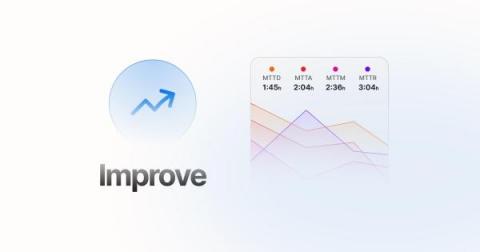
Although the causes and solutions for incidents vary widely, most incidents follow a similar timeline from declaration to resolution. We call the period of time it takes to move from one phase or milestone of an incident to the next cycle time.
HAProxy Fusion Control Plane gives you power to simplify, scale, and secure your HAProxy Enterprise infrastructure using a centralized orchestration solution, making it easier to extend HAProxy Enterprise’s security and performance across on-premises and cloud-hosted applications. With the release of version 1.1, HAProxy Fusion is more secure, more flexible, and even easier to use.
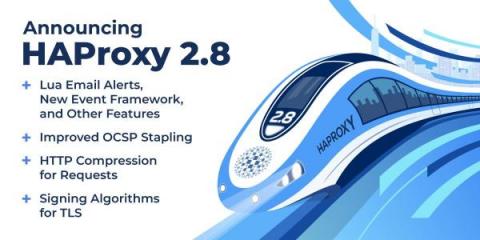
HAProxy 2.8 is now available, and HAProxy Enterprise 2.8 will be released later this year. Register for the live webinar HAProxy 2.8 Feature Roundup to learn more about this release and participate in a live Q&A with our experts.
In today's evolving technological landscape, enterprises are under increasing pressure to deliver high-quality software at an accelerated pace. Internal Developer Platforms (IDPs) provide a centralized developer portal that empowers developers with self-service capabilities, standardized development environments, and automation tools to accelerate the software development lifecycle. In this week's blog, we're taking a closer look at internal developer platforms and how implementing IDPs is helping organizations overcome the complexity of modern software development and increase developer efficiency to accelerate the delivery of software products.
When you set up on-premise digital infrastructure, it is crucial to enable your devices to communicate with each other. The devices on your network should be able to send and receive data packets to handle requests and send responses back to callers. One of the components that allow data transmission to the proper destination is the network switch. The network switch plays an important role in distributing data packets to devices.
When you send an email or load a website, you probably never think about how the data gets from your computer to the server that needs to process it. But something does have to decide how the data will move across the vast expanse of the Internet – and, in particular, which of the virtually infinite number of potential routes your data will take as it moves from your device to a server and back again.
In a recent meetup I hosted alongside Kunal Kushwaha, we discussed Cilium, an eBPF-powered open-source cloud-native networking solution that offers security, observability, scalability, and superior performance. Throughout this blog I will explore how the increased usage of Kubernetes has led to the need for advanced networking, security, and observability solutions. This will allow us to take a closer look at how Cilium can benefit Kubernetes users.
In 21st-century business, computing is what makes daily operations, competitive advantage, and strategic growth possible. The foundation that enables this is a hybrid cloud infrastructure that supports business requirements, delivers a suitable user experience, and stays on budget. Mastering the ABCs of infrastructure performance management (IPM) will put you on the road to long-term success.
Engineering organizations that ship fast have Observability as part of their core DNA.
Data center consolidation involves reducing the number of servers, storage, network systems, racks, or entire data center sites to improve IT efficiency and create a more streamlined environment with lower space, power, and cooling requirements. As businesses migrate their workloads to the cloud or virtualize servers, the need for physical space decreases. This prompts companies to downsize their footprint, utilizing existing resources more and alleviating data center management challenges.
Azure Storage offers a robust set of data storage solutions including Blob Storage, Queue Storage, Table Storage, and Azure Files. A critical component of these services is the Shared Access Signature (SAS), a secure way to provide granular access to Azure Storage services. This article explores the intricacies of Azure Storage SAS Tokens.
Generative Artificial Intelligence (AI) is commanding conversations these days, a never-before-seen system that’s captured many millions of users since its debut in November 2022. A machine learning innovation that creates content of all kinds (and that’s just the beginning), generative AI also comes up with new product designs and optimizes business processes. We have only begun to exploit and understand this disruption.
Kubernetes is a popular open-source container orchestration platform. It is highly configurable and feature-rich, but it also requires a deep understanding of containerization. When you are running Kubernetes in production, you need to account for cluster monitoring and logging, governance, and security. In this article, you will learn about Kubernetes security, including pro tips to help you handle architecture concerns, dependencies, and container vulnerabilities.
Migrating to a cloud model would reduce costs and let me focus on consumption pricing; reduce complexity by moving backend software and hardware support to the provider; and increase agility by letting my developers use all those nifty new tools that were emerging daily from cloud providers. The data center was heading the way of the dinosaurs! All was good. Everyone was happy. Well, in theory anyway. Until reality kicked in.
Networks today span the world and provide many connections between geographically disparate data centers, and public and private clouds. This creates a variety of network management problems. If your network is not working properly, it can be very difficult or even impossible to get the most productive or correct operation of your applications. A sophisticated network requires constant monitoring using the right tools and creating a network performance monitoring strategy.
Prometheus is a robust monitoring and alerting system widely used in cloud-native and Kubernetes environments. One of the critical features of Prometheus is its ability to create and trigger alerts based on metrics it collects from various sources. Additionally, you can analyze and filter the metrics to develop: In this article, we look at Prometheus alert rules in detail. We cover alert template fields, the proper syntax for writing a rule, and several Prometheus sample alert rules you can use as is. Additionally, we also cover some challenges and best practices in Prometheus alert rule management and response.
For today’s software organizations security has never been more top of mind. On one side there is the present and growing threat of being hacked by malicious actors, set out in Crowdstrike’s recent Global threat report. And, on the other, there is a wave of cybersecurity regulation from the government to mitigate such cybersecurity vulnerabilities.
This week I’ve been reading through the recent judgment from the Swedish FSA on the Swedbank outage. If you’re unfamiliar with this story, Swedbank had a major outage in April 2022 that was caused by an unapproved change to their IT systems. It temporarily left nearly a million customers with incorrect balances, many of whom were unable to meet payments.
The rapid technological advancements in the last decade led to a massive migration of data and applications from on-premise environments to the cloud. While this cloud migration trend dominated the IT world, a recent paradigm shift has emerged that’s moving in the opposite direction – ‘Cloud Reverse Migration’ or ‘Cloud Repatriation’.
Understanding Metrics, Logs, Events and Traces - the key pillars of observability and their pros and cons for SRE and DevOps teams.
It feels great writing this. It's hard to believe that we have been working on Spike.sh full-time for 3 years now. It's been the most rewarding experience of my life. A big thank you to all of our users and your constant feedback, which has only made Spike.sh better month on month. We are - Over the years, we have always kept our heads down and built. During this entire process, we have learnt a huge deal of things when it comes to incidents and how they are being managed.
The use of virtualization in modern computing is becoming indispensable. Virtualization allows users to operate numerous operating systems on a single physical machine, which boosts productivity, lowers costs, and makes maintenance easier. But It's crucial to conduct periodic checks on a Linux virtual machine to make sure it's operating smoothly and effectively.
If you’re looking for a short answer on OpenSearch vs Solr, here’s a flow chart: We normally recommend the one you (or your team) already know or the prefer because, for most projects, there’s not that much in it in terms of features. Both search engines are well supported and have strong communities behind them. That said, there are significant differences, too.
Generative AI projects like ChatGPT have motivated enterprises to rethink their AI strategy and make it a priority. In a report published by PwC, 72% of respondents said they were confident in the ROI of artificial intelligence. More than half of respondents also state that their AI projects are compliant with applicable regulations (57%) and protect systems from cyber attacks, threats or manipulations (55%). Production-grade AI initiatives are not an easy task.
Location-based marketing has been around for a while. Marketers have used ZIP codes to send personalized marketing messages to target audiences. However, these tactics are limited. For example, you can’t trigger ads in real-time or at the moment of highest intent. But what if you could target the right customers at the right place and time? Enter geofencing.
As we continue to journey through 2023, one of the highlights in the tech world has been the evolution of Azure Storage, Microsoft’s cloud storage solution. Azure Storage, known for its robustness and adaptability, has rolled out several exciting updates this year, each of them designed to enhance user experience, improve security, and provide more flexibility and control over data management.
What's the difference between SREs and Platform Engineers? How do they differ in their daily tasks?
As we announced at Cephalocon 2023 in Amsterdam, Canonical has started to make container images for Ceph available. We received lots of questions at the booth about what it means to the average Ceph user who has or wants to deploy Ceph on Ubuntu. In this blog post, we will cover the benefits to users who are running containerised Ceph on Ubuntu, and specifically how these images can provide an improved security posture.
Since its inception in 1988, the traceroute has undergone several variations. You might be wondering, ‘Why so many?’ The answer is simple: achieving traceroute functionality has been a balance between security and utility. Whenever malicious actors exploited firewall and router vulnerabilities, their vendors responded with fixes and solutions which impacted the traceroute algorithms.
Legacy systems and point solutions are part of any business. And while they have their history and benefits, it’s critical to find a balance for your organization. IT teams have been acclimated to disparate event management and monitoring tools. Now, with massive and rapidly increasing data flow, this disconnect is slowing and paralyzing IT teams.
For many data center professionals, the daily operations of a data center require a lot of repetitive manual data entry tasks. Manually entering data about data center assets over and over again is not only time-consuming, but it risks inaccurate information due to human error. However, there is a new way forward.
As a mobile game developer, there are many components of your game that you need to monitor. Everything from the servers that are hosting your game, to your best players, and your best-converting actions. That’s a lot of data, and it’s hard to know how to get the most out of that data. This article will look at the KPIs (Key Performance Indicators) you need to monitor, the best tools for monitoring these metrics, and how to handle this data in the most effective way.
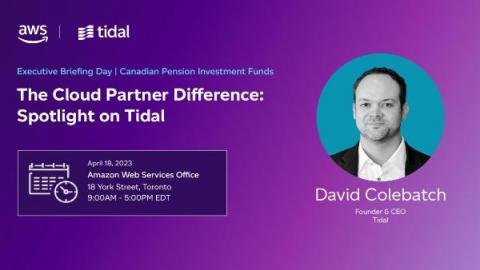
Tidal CEO, David Colebatch, had the privilege of sitting with Marcus Pozzan, Senior Partner Account Manager for ISVs at AWS Canada for the Canadian Pension Investment Funds Executive Briefing Day on April 18, 2023.
In our previous blogs on Capturing Application State and using Ephemeral Containers for Debugging Kubernetes, we discussed the value of being able to deploy specific tools to gather diagnostics for later analysis, while also providing the responder to the incident the means to resolve infrastructure or application issues.
In the ever-evolving landscape of cloud computing, data redundancy is no longer just an option but a must-have feature for any business looking to fortify its data storage and accessibility. One of the most recent additions to the world of data redundancy is Azure Files’ Geo-Redundancy feature, a 2023 release that’s set to take the world of cloud storage by storm.
It is an old cliche adage, but there is no better statement than “a picture is worth a thousand words” that explains the effectiveness of visuals to deliver a message. Especially, in the data domain where a raw message often exists in numbers, visualizing graphs and charts is the best way to share information. When it comes to visualizing metrics from Graphite, there is no solution that can beat Grafana.
When it comes to identity and access management solutions, two names that often come up are Active Directory (AD) and Azure Active Directory (AAD). While many people are familiar with AD, AAD is still a relatively new concept to some. In this article, we will take a deep dive into both directories and explore their similarities, differences, pros, cons, and everything in between.
In the modern digital age, the migration of data and applications to the cloud has been a significant trend, prompted by the promise of increased efficiency, scalability, and reduced IT costs. Cloud services such as Microsoft’s Azure Cloud have become increasingly popular, offering a host of services including computing power, storage solutions, and advanced analytics.
Static application security testing (SAST) involves analyzing source code to identify and address potential security vulnerabilities. Using SAST early in development identifies threats before they can affect a live environment. SAST is particularly important for continuous integration and continuous deployment (CI/CD) pipelines. These pipelines automate the integration of new code changes into the main codebase and deploy applications to production environments.
Streaming Aggregation and Recording Rules are two ways to tame High Cardinality. What are they? Why do we need them? How are they different?
Navigating compliance requirements can be complex because there are so many of them, and there is a good chance that at least one set of standards applies to you. Standards can be for specific sectors, like The Health Insurance Portability and Accountability Act (HIPAA) for healthcare, or may apply more generally to organizations across industries, like the General Data Protection Regulation (GDPR).
.Organizations in every industry continue their transition to cloud services, and while this may be a step forward in general, it does bring with it its own unique set of challenges. Cloud use, and in particular CloudOps, relies on a complex and intricate infrastructure which is difficult to manage and maintain, and it's a critical part of keeping a business' networks functioning. This makes finding a way to simplify the use of CloudOps a top priority for many businesses, but does a solution exist?
Kubernetes is now the de-facto standard for container orchestration. With more and more organizations adopting Kubernetes, it is essential that we get our fundamental ops-infra in place before any migration. In this post, we will learn about leveraging Jenkins and Spinnaker to roll out new versions of your application across different Kubernetes clusters.
This blog dives into detail about one of StackState’s most unique and powerful features, Kubernetes dependency maps. Dependency maps are Kubernetes service and infrastructure maps, enhanced with real-time topology, that show dependencies between all components at any moment in time.
How does Netdata's machine learning (ML) based anomaly detection actually work? Read on to find out!
Microsoft Azure is often hailed for its “limitless potential” and “unlimited possibilities”. But what does that mean in practical terms? How can Azure transform your business operations and why is it worth your attention? In this article, we’ll delve into these questions and illustrate the value of Azure through four key applications that can enhance your business operations and provide tangible benefits.
Seamless shopping experiences, along with superior customer service and overall customer satisfaction keep the retail world running and serve as the foundations for business growth. Behind the scenes, IT teams are working on incident response and operational efficiency, which brings things full circle for retail companies.
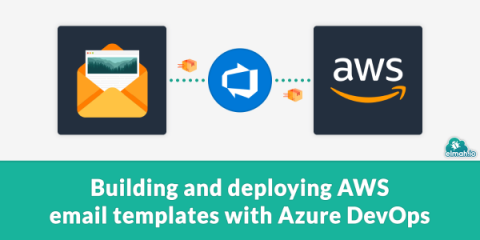
This is the third and final post (for now) in the series about developing email templates with MJML and deploying them to AWS. In the previous post, we developed a Gulp script to automatically build HTML from the MJML file and insert it in a template file for AWS. In this post, we will set up an automated build and deployment of the email template using Azure DevOps. A quick recap.
Container technologies have revolutionized the field of software development. By using containers, you can bundle together an application's source code with its libraries, dependencies, and configurations, ensuring that it runs predictably and reliably on different machines. But how can you be sure that your containers are running smoothly once deployed? That's where container monitoring tools like cAdvisor come in. Below, we'll go over what cAdvisor is and the different use cases for cAdvisor.
Azure Blob Storage is a scalable, cost-effective, and durable cloud storage solution provided by Microsoft Azure. Serving as the backbone for many Azure services, it enables businesses to store a colossal amount of unstructured data ranging from documents, images, backup data, to log files, etc. Azure Blob Storage can handle all your static data that’s stored and read but not changed frequently, making it an indispensable part of any cloud data management strategy.
Everything you need to know about Prometheus Remote Write mechanism and storing metrics in long term storage such as Levitate.
Comparison between Prometheus and Datadog - two of the most popular monitoring tools in the market today.
Progressive delivery is a modification of continuous delivery that allows developers to release new features to users in a gradual, controlled fashion. It does this in two ways. Firstly, by using feature flags to turn specific features ‘on’ or ‘off’ in production, based on certain conditions, such as specific subsets of users. This lets developers deploy rapidly to production and perform testing there before turning a feature on.
In this post, we’re going to learn about the Ansible copy module. Before we look at the copy module specifically, let us first remind ourselves what Ansible is. You can install this open-source software on just one Linux machine. Then it can perform a lot of tasks on connected Linux machines without requiring Ansible installation on them. You can do tasks like copying files, fetching files, and a lot of other things all on connected machines, with a single command.
Authentication is the security process that verifies a user’s identity in order to grant access to their online account. It also functions as the gateway to your product. It’s a workflow you can’t compromise on without risking negative impacts on your users and your company. Fortunately, there are lots of authentication services that can do the heavy lifting for you. It’s important to understand what you can do in case of an authentication failure, when to do it, and why.
Over the past year, Spike.sh social media activity has been null. As a bunch of shy nerds in a small team working remotely across the world, we really never bothered with social media and our presence on it. We always kept our heads low and maneuvered around it. But no more. As of today, we are coming back on social media channels like LinkedIn, Twitter, and Reddit as well.
Azure Blob Storage is a cloud-based storage solution provided by Microsoft as part of its Azure platform. It enables users to store and manage unstructured data such as text, images, videos, and binary data in the cloud. This makes it a highly scalable and cost-effective way to store large amounts of data without having to worry about hardware maintenance or infrastructure management.
In today's fast-paced digital landscape, 24-hour operations centers play a crucial role in managing and monitoring large-scale infrastructures. These centers must be equipped with an effective monitoring solution that addresses their unique needs, enabling them to respond quickly to incidents and maintain optimal system performance. Netdata, a comprehensive monitoring solution, has been designed to meet these critical requirements with its advanced capabilities and recent enhancements.
In this blog post, we will explore the importance of scalability, automation, and AI in the evolving landscape of infrastructure monitoring. We will examine how Netdata's innovative solution aligns with these emerging trends, and how it can empower organizations to effectively manage their modern IT infrastructure.
Recently we updated our infrastructure. We wanted to discuss the updates we have done to show why we think it is important to keep our infrastructure up to date. Updating infrastructure is critical because it provides more security and improved speeds.
CircleCI supports GitLab as a version control system (VCS). In this tutorial you will learn how to set up your first CircleCI CI/CD pipeline for a project hosted on GitLab. As GitLab can be used either as a SaaS tool, as well as self-managed on-premise installation, I will cover the steps to connect it with CircleCI for both.
In 2023, monitoring is essential to modern DevOps teams' work. DevOps teams need reliable and flexible tools to effectively monitor and manage complex systems that can provide real-time insights into system performance, availability, and security. Open-source monitoring tools have become increasingly popular due to their cost-effectiveness, flexibility, and community support.
Have you ever heard of Azure Blob Storage? If you work with data storage, then chances are you’ve at least heard the name. But what exactly is it? In simple terms, Azure Blob Storage is a cloud-based storage solution provided by Microsoft. It’s used to store and manage unstructured data such as text and binary data, including documents, images, videos, and more.
The public sector is investing heavily on artificial intelligence and machine learning initiatives. Deloitte AI Institute reported that 60% of government AI and data analytics investments aim to directly impact real-time operational decisions and outcomes by 2024. From automating redundant tasks to increasing the quality of services offered to citizens, public sector institutions have a wide range of applications where they could implement AI.
More than 26,000 software vulnerabilities were discovered in 2022 – a new record – and critical vulnerabilities were up 59% over 2021, the previous record-high year. In other words, despite years of DevSecOps, software doesn’t seem to be getting more secure. Release management can help. A crucial goal of release management is vulnerability-free software.
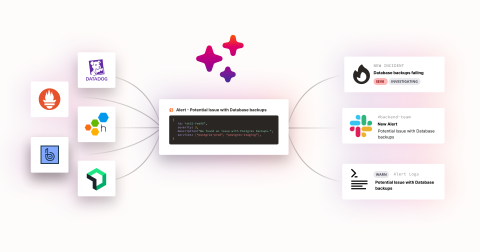
Here’s a crazy question: why do we still require a human to manually declare an incident for the things that we know are incidents? If we have enough confidence to build SLOs and high-severity alert routes for these specific scenarios, why are we still asking a human to confirm it’s an incident and get the assembly process in motion? Isn’t that just another button to push when we could be problem solving instead?
Voice over IP (VoIP) technologies and solutions have been widely adopted by consumers, businesses and service providers since the mid-2000s, but the rising popularity of remote work means businesses of all sizes are even more rapidly turning to VoIP for voice calls.
End-to-end visibility into pipelines is crucial for ensuring the health and performance of your CI system, especially at scale. Within extensive CI systems—which operate under the strain of numerous developers simultaneously pushing commits—even the slightest performance regression or uptick in failure rates can compound rapidly and have tremendous repercussions, causing major cost overruns and impeding release velocity across organizations.
Squid proxies are among the most popular open-source proxy servers preferred by companies across the globe to keep their networks safe and boost performance. Since Squid proxy’s release in 1996, companies have preferred it for its high-performance proxying, forwarding, and caching functions. Squid proxy logs contain information about the HTTP traffic passing through a server. This includes the source IP, destination IP, time of the request, and accessed URL.
To learn more about CircleCI or sign up for a free account, visit: https://circleci.com/signup/
DevOps teams and site reliability engineers (SREs) contend with a never-ending flood of notifications and alerts about outages, potential threats, and other incidents. Companies rely on their DevOps teams to not only keep abreast of all the notifications but also to identify and prioritize the critical alerts and resolve problems in a timely manner. Yet in 2021, International Data Corporation (IDC) reported that companies with 500-1,499 employees ignored or failed to investigate 27% of all alerts.
Preparing for a software audit can be a time-consuming and painful process where a lot of information needs to be gathered and verified in a provable audit trail. It means tracking down and piecing together evidence for pull requests, test reports, security scans, deployment logs, and more. This information is usually scattered across tools which are typically unsecured and unmanaged, so it can be easily deleted and/or modified.
Azure Service Principals are a crucial aspect of managing your Azure resources. They provide a secure and efficient way to manage your resources, without the need for human intervention. In this article, we will explore what Azure Service Principals are, how they work, and why they are important. As you may already know, Azure is a cloud computing platform that allows you to host, deploy and manage your applications and services.
Kubernetes is essential to modern application development and runtime. As a powerful container orchestration platform, its benefits include improved scalability, portability, and automation, all of which contribute to more resilient applications and cost savings. More and more organizations are adopting Kubernetes to develop applications that can scale, recover from failures, and quickly adapt to changing business requirements.
OpenStack is no doubt a wonderful and successful piece of software. It allows you to create your own cloud infrastructure, and thanks to its open-source nature, it’s free to use for everyone. But as with many giant software projects, all that power comes with a challenge: it is reasonably complex to install and configure.
The Docker project was initiated by dotCloud, a platform-as-a-service (PaaS) company that created Docker to run their internal infrastructure. Slowly, Docker became more successful than any of their other products, so dotCloud rebranded as Docker Inc. Docker provides easy-to-use tooling and grew into an entire ecosystem for container management.
High Cardinality woes are far & frequent in today's modern cloud-native environment. What does it mean, & why is it such a pressing problem?
The advent of multi-cloud and hybrid-cloud architectures has created new opportunities for organizations to leverage best-in-class features from various cloud service providers. However, these complex environments present their own unique challenges, especially when it comes to monitoring and managing performance.
While organizations are quickly adopting AI to automate tasks and improve operations, it’s important to consider the security risks associated with integrating AI into your company’s processes and software. AI not only brings an opportunity to increase efficiency but also introduces additional risks to your organization if not used responsibly — just like a recent example from Samsung has shown.
The success of your MSP depends on how you leverage technology to gain a competitive edge in the market. Use technology well, and you can streamline your operations, increase productivity, differentiate yourself from your competitors and grow your business. Two tools most successful MSPs leverage are remote monitoring and management (RMM) and professional services automation (PSA). Both aim to improve productivity and efficiency.
Are you tired of sluggish load times when uploading or downloading large files? Do you need a reliable and scalable storage solution for your business or personal use? Look no further than Premium Block Blob Accounts! In this article, we’ll explore what these accounts are and why they’re essential for anyone dealing with large amounts of data.
Thanks to the economic downturn and rising interest rates, leading financial industry stalwarts such as Accenture, BlackRock, BNY Mellon, Goldman Sachs, and PayPal have already laid off hundreds or thousands of employees. And these are just the big names; banks, credit unions, insurers, and private equity firms of all sizes worldwide are carefully reviewing their headcount and trimming their workforce in order to stay competitive.
Data is the new oil, and it’s crucial to protect it from prying eyes. With the increase in cyber attacks, encryption is more important now than ever before. Azure Storage Data Encryption offers robust security features that help safeguard data stored on Microsoft Azure Platform.
On the 2nd of May 2023, Jaspreet Kaur of the Azure Automation Product Group released this blog, providing an update on updates to Azure Automation in 2022 and what is in the pipeline for 2023. In the blog, Jaspreet detailed the major changes that Microsoft have made to the core of Azure Automation to improve the reliability and scalability of the underlying infrastructure.
Migrating data can be tricky and stressful, even under the best conditions. Jira migrations can be particularly complicated due to the various applications many organizations use in conjunction with it. As you are likely aware of, in an effort to focus on offering a better Cloud service, Jira Server has reached the last stage of its End-of-Life transition, with no further support planned after Feb. 2024.

We've seen a tremendous transition in the architecture of our systems over the years, from basic, linear systems to increasingly sophisticated, non-linear systems. We've moved away from monolithic programs, where a single person could comprehend the entire operation of a system, and toward a distributed world dominated by a microservices design.
At one particular time, a developer would spend a few months building a new feature. Then they’d go through the tedious soul-crushing effort of “integration.” That is, merging their changes into an upstream code repository, which had inevitably changed since they started their work. This task of Integration would often introduce bugs and, in some cases, might even be impossible or irrelevant, leading to months of lost work.
Digital transformation—and its intended benefits, including flexibility, scalability, agility, cost control, and more—is enabled by cloud computing. You need all these things because, now more than ever, businesses and markets are highly dynamic. Sometimes it’s an opportunity you want to capitalize on. Other times it’s a threat, such as a disruptive competitor, or a challenge, like new regulatory requirements. Some things you see coming, and others take you by surprise.
Unlock the full potential of your cloud investment! Discover strategies to enhance performance and reduce costs. In the dynamic world of cloud computing, optimization isn't just about cost reduction. It involves a fine balance between managing costs and maximizing value while ensuring efficient resource allocation.
Azure virtual machines (VMs) are a powerful tool in the world of cloud computing. They allow you to create and manage virtual machines in the cloud, giving you the freedom and flexibility to run your workloads anywhere, at any time. With Azure VMs, you can easily deploy and scale your applications with minimal fuss. The beauty of Azure VMs is that they provide a secure, highly available infrastructure that can be customized to meet your exact needs.
Embarking on a cloud migration journey? Grasp the obstacles and arm yourself with best practices for a smooth transition. Success lies in understanding, planning, and adapting. As we continue to advance further into the 21st century, businesses of all sizes are finding themselves in the midst of a digital revolution.
Are you storing your data in the cloud? If yes, then you must be aware of the various security challenges that come with it. One of the biggest concerns in cloud computing is securing data from unauthorized access. However, with Azure Storage Private Endpoints, Microsoft has introduced a solution that can help organizations secure their data in the cloud.
As a global leader in second-generation Data Center Infrastructure Management (DCIM) software, we have the opportunity to speak with a lot of data center professionals. One of the most common stories we hear is that they are still using Excel, Visio, open-source software, and homegrown tools to manage their data centers and that these tools are causing them a lot of pain. They're manually intensive, inaccurate, hard to use, and not integrated.
This is the first article of a series of two covering the advantages and disadvantages of hosted and non-hosted Kubernetes management platforms. First, let’s introduce hosted what is hosted Kubernetes management platform (KMP) and provide a broader view of hosted KMPs.
This article is the second in a series covering Kubernetes Management Platforms (KMPs). In the first article, we analyzed hosted KMPs, exploring their potential benefits and customer base. This blog will examine non-hosted KMPs and the organizational customer profiles that can benefit the most from this solution. After the first article, you may think that hosted KMPs are the way to go, but there are many things to consider before deciding.
As software developers, we all have our own preferences when it comes to our tools of the trade. GitKraken is a popular Git client that is loved by many developers for its ease of use and powerful features. More than that, GitKraken Client offers a variety of ways for you to customize it to your liking. You can access all of the customization options from the ⚙ Preferences menu.
XDP, or eXpress Data Path, is a Linux networking feature that enables you to create high-performance packet-processing programs that run in the kernel. Introduced in Linux 4.8 and built on extended Berkeley Packet Filter (eBPF), XDP provides a mechanism to process network packets earlier and faster than is possible through the kernel’s native network stack. In this post, we’ll discuss.
How to filter metrics by labels using OpenTelemetry Collector.
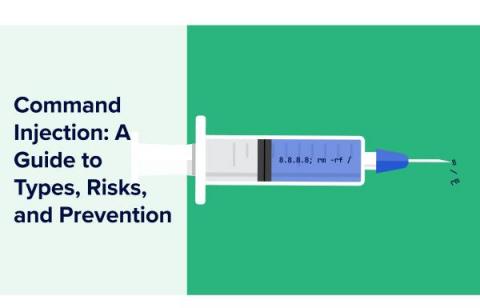
Command injection is a kind of cyber attack that allows an attacker to execute arbitrary commands on a system. Attackers accomplish this by exploiting vulnerabilities in an application’s input validation process.
Learning from incidents has become something of a hot topic within the software industry, and for good reason. Analyzing mistakes and mishaps can help organizations avoid similar issues in the future, leading to improved operations and increased safety. But too often we treat learning from incidents as the end goal, rather than a means to achieving greater business success. The goal is not for our organisations to learn from incidents: it’s for them to be better, more successful businesses.
Spiraling costs are causing organizations to look for ways to reduce their monthly spend – hidden charges and unexpected bills are surprises that CFOs can no longer afford. With current costs from hyperscaler cloud providers skyrocketing, many are now asking whether going cloud-native is the right move for them. There are, however, a number of tips and tricks that you can action today that will help you reduce your cloud bill at any provider.
Canonical joined the Connectivity Standards Alliance last year to lead the charge for Linux in the smart home. The Matter standard is a particular focus for us. Its secure design and open ecosystem align well with Ubuntu’s own values of security and openness. Ubuntu Core and Matter make for a powerful pair. Ubuntu Core’s containerisation makes it a highly secure OS that pairs well with the highly secure protocol.
At Logz.io, we’re seeing a very fast pace of adoption for Kubernetes–at this point, it’s even outpacing cloud adoption, with companies running on-prem fully adopting Kubernetes in production. Why are companies going in this direction? Kubernetes provides additional layers of abstraction, which helps create business agility and flexibility for deploying critical applications. At the same time, those abstraction layers create additional complexity for observability.

A web application or an API breaking is a matter of when, not if. Whether the cause is buggy code making it to production or infrastructure failing to support the software built upon it, incidents of varying severity are the norm rather than the exception, appearing frequently enough that the industry has coined the terms Mean Time To Detect (MTTD) and Mean Time To Recovery (MTTR).
Spring is here and so are the latest G2 Badges! I’m happy to share that G2 has awarded 15 badges to SUSE in its 2023 spring report, including the overarching ‘Users Love Us’ badge (again). G2, the world’s largest and most trusted tech marketplace, recognized Rancher, SLE Desktop, SLE Real Time, SLES and SUSE Manager as High Performers and Momentum Leaders. G2 also awarded the openSUSE Tumbleweed Linux distribution.
Unlocking the full potential of monitoring through ML integration, anomaly detection, and innovative scoring engines. Machine Learning has been making waves in various industries, but its adoption in the monitoring and observability space has been slower than expected. Many “ML” features remain gimmicky and do not provide actual real world value to users that encourages their further use.
As more and more organizations undergo digital transformation, IT automation is becoming more important and essential to implement. A report by Smartsheet found that more than 40% of those surveyed spend about a quarter of their time working on repetitive tasks, and almost 70% of them say that automation’s biggest opportunity would be that it significantly reduces the amount of time spent on these tasks.
Whoever owns Reliability should define its parameters. But who owns the Reliability of a Product? Engineering? Product Management? Or the Customer success team?
Last month, the Singapore bank DBS experienced a 10-hour outage of its digital services. Not only was it massively disruptive to customers, but it caused the bank’s stock to lose 1.4% of its value in a single day. And it’s not the first time DBS has had to deal with the fallout of an IT snafu; in November 2021, Singapore’s finance regulatory body imposed significant additional capital requirements on the bank after its digital banking services were disrupted for two days.
Azure Storage is a cloud-based storage solution offered by Microsoft as part of the Azure suite of services. It is used for storing data objects such as blobs, files, tables, and queues. Azure Storage offers high scalability and availability with an accessible pay-as-you-go model that makes it an ideal choice for businesses of all sizes. In today’s digital age, data has become the most valuable asset for any business.
In today’s world of virtualization, IT professionals are often faced with the challenging task of choosing the right platform for their organization’s needs. Azure, VMware, and Hyper-V are three major players in the virtualization market, each with its strengths and weaknesses.
User management poses a significant challenge to business and IT teams alike. Privacy and compliance regulations necessitate restricted access to critical production environments along with any IT tools used within the organization. When personnel transition to new roles, organizations, or departments that no longer require access to production environments, it is imperative that business and IT teams swiftly remove their permissions to avoid any issues that could arise during audits.
Although some organizations may hesitate to publicly announce when they have an incident — afraid that acknowledging outages will scare customers away — the opposite is often true. When you proactively communicate with your customers, even during bad times, you have the opportunity to not only build trust but also buy grace during the incident.
Yesterday we launched the third iteration of cloudsmith.com.
In today's hyper-connected world, cyber threats are an ever-present challenge that organizations of all sizes must face. With cybercriminals becoming increasingly advanced, prioritizing monitoring and managing your firewalls to safeguard your digital assets has never been more critical. This article aims to comprehensively understand five essential firewall monitoring best practices to fortify your network and protect your valuable data.
As companies come to rely on digital systems in everything they do, network security has become more important than ever. Unfortunately, with that digital transformation comes complex networks to support it, and thus complex network security.
Banks are facing stiff competition from FinTech firms. When most people think of this head-to-head battle, they likely assume that the differentiator is technology. The banks have legacy solutions, while the FinTech firms have newer innovations. While this framing is accurate, it does not give the full picture. FinTech firms are not only turning to new technology for the sake of new technology – they are doing so in service of what matters the most in their industry: customer service.

Azure Storage Account Failover is a critical feature offered by Microsoft Azure that provides users with the ability to switch to an alternative instance of their storage account in case of a disaster or an outage. In simple terms, it is the act of transferring control of Azure storage account operations from one region to another, ensuring business continuity and disaster recovery.
So, you think you monitor your infra? As humanity increasingly relies on technology, the need for reliable and efficient infrastructure monitoring solutions has never been greater. However, most businesses don't take this seriously. They make poor choices that soon trap their best talent, the people who should be propelling them ahead of their competition.
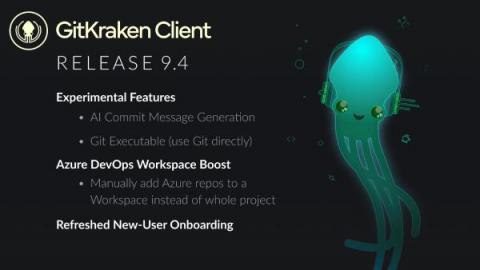
You shouldn’t have to wait for features that are eager for a test run. Especially if those features are optional to try and open for feedback. GitKraken Client 9.4 introduces experimental features like AI commit message generation and the ability to use Git directly in the app, along with time-saving improvements to Azure DevOps Workspaces and our onboarding.
IPv6 was developed in the late 1990s as a successor to IPv4 in response to widespread concerns about the growth of the Internet and its potential impact on the existing IPv4 address protocol, in particular potential address exhaustion. It was assumed that after some time as a dual-stack solution, we would phase out IPv4 entirely. Almost twenty-five years later, however, we are approaching full-scale depletion of IPv4 addresses, in part because IPv6 adoption is still lagging.
Navigating the fast-paced, highly competitive telecommunications industry calls for a proactive approach to stay ahead of the curve. As customer expectations soar and technological advancements continue to shape the sector, telcos must embrace IT automation to remain relevant. Delving into 5 top use cases for IT automation in the telco industry, let’s uncover the key drivers that empower businesses to thrive in today's market and be well-prepared for the demands of the future.
Incident response has been the cornerstone of reliability for decades. From digging in the server logs to navigating modern observability dashboards, responding quickly to incidents and outages is a big part of minimizing downtime. And it should be! When something breaks, your team should move as quickly as possible to address and repair the problem.
From Robocars to Reliability — SRE with self-driving cars; mapping out where the Observability space is in conjunction with self-driving cars.
In our article on managing static credentials, we discussed the necessity of secrets — the passwords, tokens, and API keys that connect digital services together — and the importance of keeping them secure so that your infrastructure and data are kept safe from intrusion and misuse. For organizations delivering software at scale, managing credentials across multiple teams and projects can quickly become tedious and error-prone, creating bottlenecks and unnecessary risk.
With over 2.5 billion users, Android enjoys a dominant 85% market share in the mobile operating space. It does have one glaring weakness however: enterprise. Most businesses still favor iOS, the operating system of Apple devices like the iPhone and iPad. As part of Google’s bid to secure more of the enterprise market, Android Enterprise is a software platform that provides application programming interfaces (APIs) to developers who build MDM solutions.

The observability landscape is changing fast, as organizations look to deploy applications and separate themselves from competition at a breakneck pace. What are the trends organizations need to be aware of as they make sense of the landscape? Every year, we at Logz.io set out to answer this question by going right to the DevOps and observability practitioners on the front lines.
High levels of web traffic can lead to network congestion, often causing network latency, and in some cases, outages. Traffic shaping is a technique that can help prevent network congestion by controlling how much traffic enters and leaves a network. We debuted traffic shaping in the release of HAProxy 2.7 and HAProxy Enterprise 2.7, allowing our users to control client upload and download speeds.
IT alerts are difficult to understand, even for experienced professionals. The language of IT alerts is akin to an enigmatic code requiring fluency in dozens of observability languages to extract technical meaning and business impact from a stream of seemingly disconnected events, alerts, and notifications.

There are two types of website owners: those who back up their website data, and those who will soon start doing it. Backing up a website’s data is so critical; losing data can result in substantial revenue loss. There are various methods of backing up your website. This article outlines the top 15 tools for backing up your website externally. We will have an overview of each tool along with its benefits and drawbacks.
Another release of the Netdata Monitoring solution is here!
Generative artificial intelligence (AI) is defining 2023. Numerous tech companies, including OpenAI and Google, have put out large language models (LLM) that can be used by consumers directly, or integrated into other products via an application programming interface (API). Many companies are rushing to include generative AI into new or existing products. Some are even doing so in customer touchpoints, such as digital kiosks.
Over the years, open source has become a way of working that allows people to modify and share designs to inspect, alter, and enhance source code. This has led to a range of benefits for users of open source, such as having more control over software, better security, more stability, and an inspired community. Last year, Mark Boost, CEO at Civo, spoke with OpenUK as part of their yearly report to discover the UK’s journey with open source.
One of the aspects we appreciate about digital signage is that it promotes fairness. Unlike social media, pay-per-click (PPC), and online advertising, where coverage is often determined by budget, digital signage allows businesses of all sizes to compete equally. With digital signage, the cost of setting up and rolling out is determined by the number of screens you use rather than the number of competing companies. Digital signage is a versatile tool that anyone can easily set up.
Memory databases are known for their ability to store and manage large volumes of data in memory. Their memory-based architecture allows users to quickly retrieve critical information and benefit from performant data reading. Thanks to these characteristics, businesses use memory databases for various applications that require prompt data access playing a vital role within their digital resources.
There are numerous instances where a single buildpack falls short in app building, for instance when working on a NodeJS app with a PHP backend. We are thrilled to announce the global and immediate availability of Multi-Buildpacks for all app sizes, including our Free tier. The Multi-Buildpack feature allows you to: Alongside the introduction of multi-buildpacks, we're expanding support for Add-on buildpacks (such as APT, Static, or the newly introduced FFmpeg buildpacks).
The unexpected collapse of Silicon Valley Bank (SVB) in March served as a wake-up call for financial institutions, depositors, shareholders, and regulators alike. If a seemingly-solid bank like SVB can go under almost overnight, everyone has begun to wonder if any financial institution is safe, with banks and regulators worldwide analyzing the continued risk to the entire banking system.
How often have you heard the phrase “trust is earned” in life? While well-meaning, I think this can actually lead to some strange behaviour at work, especially when you’re on a fast growing team. Startups experience a lot of chaos and unknowns your teams need to navigate, so it’s vital to know you can trust the people around you. As you grow, how you set expectations around trust as people join your team can impact your ability to hire, onboard, ship and ultimately, survive.
The FDNY EMS Command responds to more than 4,000 calls per day. They range from car accidents to building fires to cats stuck in trees, and responses vary accordingly. Sometimes they might take hours, sometimes they take just a few minutes. With such unpredictable conditions, the FDNY focuses on improving what they call “response time.” That’s the amount of time between a 911 call being made and emergency responders arriving on the scene. This might sound familiar.
The mem.kernel chart in Netdata provides insight into the memory usage of various kernel subsystems and mechanisms. By understanding these dimensions and their technical details, you can monitor your system's kernel memory usage and identify potential issues or inefficiencies. Monitoring these dimensions can help you ensure that your system is running efficiently and provide valuable insights into the performance of your kernel and memory subsystem.
Netdata provides a comprehensive set of charts that can help you understand the workload, performance, utilization, saturation, latency, responsiveness, and maintenance activities of your disks. In this blog we will focus on monitoring disks as block devices, not as filesystems or mount points. The Disks section in the Overview tab contains all the charts that are mentioned in this blog post.
Scalability is crucial for monitoring systems as it ensures that they can accommodate growth, maintain performance, provide flexibility, optimize costs, enhance fault tolerance, and support informed decision-making, all of which are critical for effective infrastructure management.
If you're accustomed to running software in production, you know that every minute counts when there's a disruption. However, not every issue is obvious enough to immediately find and remediate. That can be a big obstacle to overcome, which is where StackState's Kubernetes remediation guides come into play. They contain expert knowledge that guides you step by step to understand the issue, enabling swift remediation.
When it comes to the world of cloud computing, Microsoft Azure is one of the top players in the game. However, managing an Azure environment can be complex and requires a good understanding of its various components. One such component is an Azure tenant. An Azure tenant, also referred to as a directory or a subscription, is essentially a dedicated and isolated instance of the Microsoft Cloud that holds your organization’s data and accounts.
The adoption of POS devices across industries is advancing, fast! Businesses including restaurants, grocers, and retail stores are seeing POS devices as a multi-functional hub that offers menu creation, tableside ordering, employee management, CRM, inventory management, and more. According to statistics, 59% of retailers made focusing on omnichannel capabilities their top POS priority in 2020.
We’ve all read the headlines about spectacular data breaches and other security incidents, and the impact that they have had on the victim organisations. From LastPass to SolarWinds, “data security” seems to be the phrase on the lips of every CTO these days. And in some ways there’s no place more vulnerable to attack than a big data environment like a data lake.

The PodSecurityPolicy API, initially deprecated in Kubernetes v1.21, was entirely removed in Kubernetes v1.25. Because the API was removed, you cannot create, edit or query PodSecurityPolicy resources in a Kubernetes v1.25 cluster. Also, because its admission controller was removed, your clusters can no longer enforce any PodSecurityPolicy rules that were created in Kubernetes v1.24 and prior.
Many people think cloud migrations are a binary decision: either lift-and-shift or completely modernize applications. However, the reality is that there is a spectrum of transition types available, each offering different levels of value.

Developers and teams who want to deploy new code often and safely leverage feature flags to decouple code deployments from feature releases. Feature flags enable teams to release new features to a subset of users, making it possible to test a new feature’s impact on users and ensuring that developers can easily roll back the feature if it causes downstream issues.
The Reliability industry needs a managed, non-vendor lock-in answer to spiraling costs, high cardinality and the toil of managing a tsdb.
Azure Subscriptions are a key component of Microsoft Azure’s cloud platform, as they form the foundation for managing and organizing resources in the Azure environment. In essence, an Azure Subscription is a logical container for resources that are deployed within an Azure account. Each subscription acts as both a billing and access control boundary, ensuring that resources are accurately accounted for and that users have the appropriate permissions to interact with them.
The global COVID-19 pandemic ushered in a new era of remote work. The Pew Research Center reports that over 71% of people had transitioned to working from home at the height of the pandemic. As of 2023, that number is still relatively high, with 59% of workers remaining at home though social distancing restrictions have long been relaxed. As remote work becomes increasingly common, many managers are considering transitioning to the new model.
[London, UK, May 2, 2023] – Canonical, a leading open-source provider of cloud computing services, has announced that Ubuntu Pro is now available in a subscription-included model on Amazon Web Services (AWS). Users can now launch Ubuntu Pro on-demand instances and purchase Ubuntu Pro Compute Savings Plans from the Amazon Elastic Compute Cloud (Amazon EC2) console.
If you’re in DevOps, you know the word ‘Kubernetes’. While saying that mouthful of a word (generally shortened to k8s in text) would have gotten you a weird look and someone asking if you need to lie down before 2017, it’s been sacrilegious to even consider starting a project without architecting your solution on top of it in the last few years.
The different states of system processes are essential to understanding how a computer system works. Each state represents a specific point in a process's life cycle and can impact system performance and stability.
As a system administrator, understanding how your Linux system's CPU is being utilized is crucial for identifying bottlenecks and optimizing performance. In this blog post, we'll dive deep into the world of Linux CPU consumption, load, and pressure, and discuss how to use these metrics effectively to identify issues and improve your system's performance.
Context switching is the process of switching the CPU from one process, task or thread to another. In a multitasking operating system, such as Linux, the CPU has to switch between multiple processes or threads in order to keep the system running smoothly. This is necessary because each CPU core without hyperthreading can only execute one process or thread at a time.
Swap memory, also known as virtual memory, is a space on a hard disk that is used to supplement the physical memory (RAM) of a computer. The swap space is used when the system runs out of physical memory, and it moves less frequently accessed data from RAM to the hard disk, freeing up space in RAM for more frequently accessed data. But should swap memory be enabled on production systems and cloud-provided virtual machines (VMs)? Let's explore the pros and cons.

Tracking incident metrics can help you discover patterns in the causes and costs of incidents and help you understand brittle parts of your organization. We've seen them help teams zero in on things like: But it can be intimidating to get started. Do you really need metrics if you're a small team or just beginning to formalize your incident management program? I say yes. The key is to start with something manageable and grow.
Interrupts, softirqs, and softnet are all critical parts of the Linux kernel that can impact system performance. In this blog post, we'll explore their usefulness, and discuss how to monitor them using Netdata for both bare-metal servers and VMs.
As a developer, triage duty week was often the worst week of my month. Anytime a bug was reported, I’d search for the right environment, wander through logs, pray there was an associated stack trace, use my mental mapping of our code base, and route bugs to the right teams. Developers on triage rotation need to ensure bugs are routed to the correct team along with adequate information to help the team investigate the bug.
Securing sensitive data is crucial for any application, but managing this data can be complex and error-prone. Docker secrets provide a reliable and secure way to handle sensitive information like passwords, API keys, and certificates in your Docker environment. In this introductory guide, we’ll explore what Docker secrets are, how to use them with practical examples, and share some best practices to help you safeguard your sensitive data effectively.
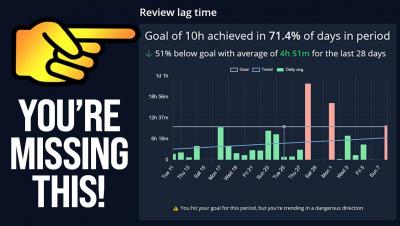
Sleuth's new Goals dashboard helps teams set, track, and achieve their goals. Here's how it works.
Access control is a security mechanism that regulates who has access to sensitive data, resources, and systems. It ensures that only authorized users can access sensitive data and activities while keeping unauthorized users out. Access control is critical for protecting sensitive data such as personally identifiable information (PII), financial information, and intellectual property.
There is rapid adoption of artificial intelligence (AI) and machine learning (ML) in the finance sector. AI in banking is reshaping client experiences, including communication with financial service providers (for example, chat bots). Banks are exploring ways to use AI/ML to handle the high volume of loan applications and to improve their underwriting process.
Virtualization has become an essential component of modern IT infrastructure, enabling organizations to optimize their resources, improve efficiency, and reduce costs. Microsoft Hyper-V, a popular virtualization technology, allows for the creation and management of virtual machines (VMs) on a physical server. It enables multiple operating systems to run simultaneously on the same hardware, providing both flexibility and scalability.
We have to come clean. During KubeCon, we experienced an incident that we weren’t ready to discuss until now. This incident caused quite a disruption and, had it been left unresolved, would have had a massive snowball effect. At the time, we didn’t want to raise any alarms, so we kept it quiet while our team rallied to resolve it. And to be honest, most folks probably didn’t even realize that it happened since we moved so quickly.
April was a month to remember at incident.io. Not only did we attend our second conference ever with KubeCon in Amsterdam, but we also very subtly released our brand-new Status Pages product. OK, it probably wasn't subtle. Both moments required months of preparation, feedback loops, iteration, and so much more behind-the-scenes work to get right. So if you ran into us at KubeCon, thank you for stopping by and meeting with our team.