Operations | Monitoring | ITSM | DevOps | Cloud

The latest News and Information on Monitoring for Websites, Applications, APIs, Infrastructure, and other technologies.

Bringing the Most Advanced Sampling to the OpenTelemetry Collector

Sampling is a core skill that everyone who runs an observability pipeline at scale will learn. There are lots of tradeoffs within the various decisions you'll make from reducing bandwidth, CPU, and memory, to reducing costs and making the observability backend's performance better for users. Historically, there have only been three mechanisms, each with their own tradeoffs: However, there is a secret fourth option: adaptive tail sampling—which changes those tradeoffs.
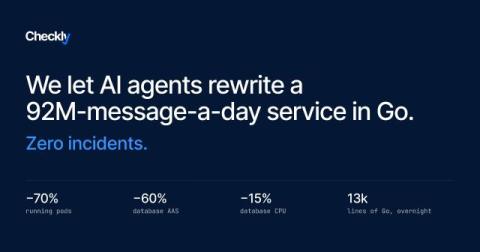
We Let AI Agents Rewrite a 92M-Message-a-Day Service in Go. Zero Incidents.

Our Results Daemon processes about 92 million messages a day. We recently rewrote it from Node.js to Go, and we let Claude Code write it. We wanted to know whether we could trust an agentic rewrite for a critical, high-throughput production service rather than a prototype. It shipped with zero incidents, a 70% reduction in running pods, and a lighter database load.

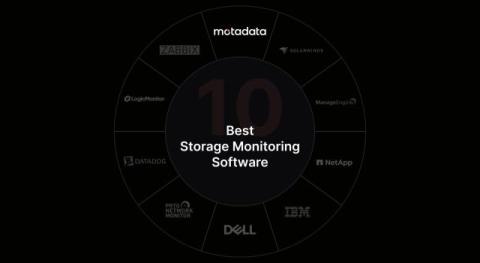
Best Storage Monitoring Software: 10 Tools Compared

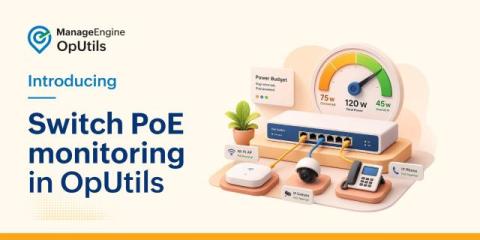
Storage rarely fails loudly. A pool fills. Latency climbs on one LUN. The first to notice is a user whose application timed out. The best storage monitoring software catches it earlier. It watches capacity, IOPS, latency and drive health across your arrays, which is what storage resource monitoring is for. In this blog, you will see: By the end you will know which one fits. Storage monitoring software tracks the health, capacity and performance of your IT storage.

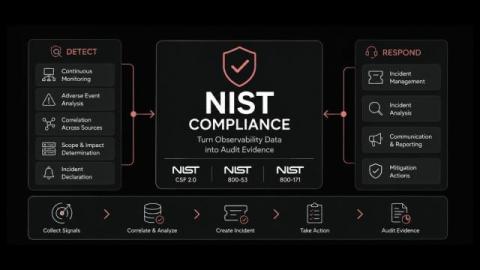
How NIST Compliance Turns Observability Data Into Audit Evidence

Can you prove, on demand, which production systems were under continuous monitoring last quarter? Buyers, auditors, and insurers all ask a version of that question, and the answer decides contracts as often as audit findings. NIST compliance means aligning security controls and operations with standards from the National Institute of Standards and Technology, then holding evidence that the alignment stayed continuous. The frameworks are precise about outcomes and quiet about mechanics.

Compliance Doesn't Fail on Audit Day. It Drifts Every Day in Between.

For CIOs, compliance is no longer simply a box to check at audit time. It has become part of the operating standard for resilient, accountable, and well-managed enterprise IT. The reason is straightforward: enterprise technology environments change continuously. Infrastructure scales. Configurations change. Cloud resources move. Exceptions accumulate. Dependencies evolve across hybrid and distributed architectures.

Data-Driven Decisions Accelerate IT Results

Modern IT teams, having moved beyond the traditional reliance on hunches and personal experience that once shaped their day-to-day choices, no longer operate on intuition, since every meaningful decision now rests upon measurable, verifiable evidence gathered from their systems and workflows. Every deployment, capacity change, and incident response now depends on measurable evidence, not guesswork. Companies that base their operations on concrete numbers ship faster, recover quicker, and allocate budgets with far greater accuracy.
Sponsored Post

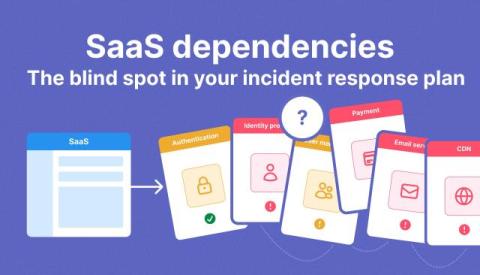
SaaS dependencies: the blind spot in your Incident response plan

So let's talk about the incidents that weren't yours to fix. It's 12:26 UTC on August 14, 2026. Outbound email starts bouncing. Inbound messages from partners stop arriving. Your team checks the obvious things first: mail server logs, recent deploys, firewall rules, your own DNS zone records. Everything on your side looks clean. By 12:48 UTC, an Early Warning Signal by StatusGator has already flagged a spike in reports pointing at Proofpoint. But if you're not watching for that signal, you don't know it exists yet.
Sponsored Post

Eliminate Data Transfer Fees from Your AWS Log Costs

As businesses generate, capture, and seek to analyze more data than ever before, they often find themselves limited by high data storage costs, expensive data processing fees, and high management overhead. For organizations who wish to expand their log analytics programs and become more data-driven, maximizing cost efficiency has become a critical operational objective.

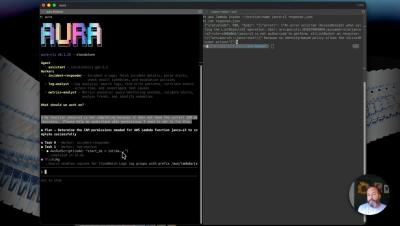
S3 Access Denied: AI SRE Agent AURA Finds the Missing Permission

The bucket is right there and the function still cannot read it. AURA reads the failure, names the one missing action, and returns the policy to add. A permissions failure gives you the symptom and not the action name. The usual path is reading the error, guessing which actions the execution role is short, and widening the policy until the call goes through. Greg hands AURA a Lambda function that fails when it tries to reach an S3 bucket. AURA identifies the missing ListBucket permission on that particular bucket and returns the minimum policy needed to allow it.