

Operations | Monitoring | ITSM | DevOps | Cloud

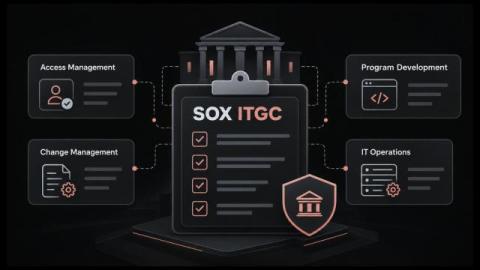
SOX ITGC Controls Checklist for IT Service Management and Year-Round Audit Readiness

How much of your SOX audit season goes into rebuilding proof of work that was already done? Access was approved, the change went through review, the backup ran, yet the evidence lives in email threads, chat messages and a spreadsheet someone updated last quarter. When an auditor asks for a complete list of production changes, IT staff have to pull records from several places against a deadline.
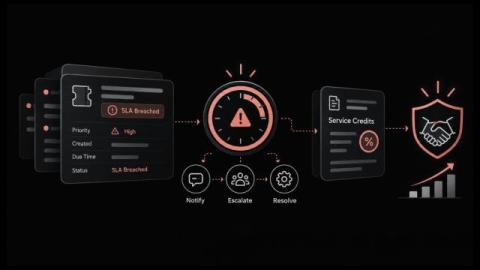
What Happens When an SLA is Breached and How to Recover Customer Trust

What does your organization owe a customer when a priority ticket misses its resolution target by forty minutes? For most service providers and internal service desks, the answer stays unclear until the customer asks for a credit or a manager asks why the monthly SLA report shows a miss. By then, the facts that decide the outcome, such as when the clock started, whether it paused and who was told, are scattered across tickets, emails and chat threads.

How IT Infrastructure Management Keeps Services Reliable and Costs Predictable

When a business application slows down, how fast can your organization trace the cause to a server, a network link, storage or a cloud instance? Often it comes down to who's on call that day, since asset, observability and change data are scattered across separate systems. Engineers then check each tool one at a time while customers wait and the cost of the outage grows. IT infrastructure management solves this by keeping asset records, health data and change history in order before an incident starts.

IT Service Continuity Management: How to Build an ITSCM Plan

Most IT teams have a recovery plan somewhere. It was written for a disruption that has not happened yet, and tested less often than anyone admits. The gap rarely sits in the technology. Nobody agreed which services come back first, or how fast. There was time to settle that calmly, and it went unused. IT service continuity management is the ITIL practice that settles those questions in advance. In this blog, you will: By the end you will know what belongs in an ITSCM plan and who has to agree to it.

What Is AI Networking? The Two Pillars and Which One You Need

AI networking means two different things. Vendors rarely say which one they are selling. One is using AI to run the network you already have. The other is building network infrastructure fast enough to train AI models. Both pillars are real, and they solve completely different problems. Most network teams only ever need the first. In this blog, you will: You will finish knowing which pillar your own question belongs to.

What Is DORA Compliance? The Digital Operational Resilience Act Explained

The Digital Operational Resilience Act has applied to EU financial firms since 17 January 2025. The first year was mostly paperwork. In year two, supervisors want proof, and most of that proof sits with IT operations. DORA joins the other rules on your cybersecurity compliance list, with much tighter clocks. A major incident needs its first report within 4 hours of classification. In this blog, you will: By the end, you will know what DORA compliance asks of your IT team and where to begin.

IT Offboarding and How to Revoke Access Without Leaving Security Gaps

When someone leaves your organization, how sure are you that every account they could reach was closed? Most IT offboarding starts by disabling the employee's main login account, and that step usually works. The risk comes from the other accounts, tools and devices the person used that the main account does not control. These include personal API tokens, shared vendor portal logins, laptops still with a courier and SaaS tools bought on a department card.

How to Fix Slow DNS Lookups Across Clients, Resolvers and Networks

Why does every page, login and business application hesitate before anything loads, even when bandwidth graphs look healthy? That pause usually comes from name resolution: no connection starts until its hostname has been translated into an IP address, and whatever time that translation takes is added to the request. Slow DNS seldom shows up as a clear error.