Operations | Monitoring | ITSM | DevOps | Cloud

Elixir performance monitoring for Phoenix, Oban, and more

Hey Elixir friends, great news! Honeybadger now offers performance monitoring for your Elixir, Phoenix, and Oban applications. Last year, we launched Honeybadger Insights, a new logging and performance monitoring tool bundled with Honeybadger. Insights allows you to query your logs and events to diagnose performance issues, perform root-cause analyses, and create charts and dashboards to see what's happening in real time.


Accelerating Observability Adoption: Why Self-Service Isn't Optional Anymore

For observability adoption to scale, you must eliminate the bottlenecks. A self-service approach is the only sustainable model, enabling all teams–not just a select few–to access, implement, and scale observability easily. But making the shift requires more than access: you have to design for it.

Sentry's AI debugger now references traces for troubleshooting distributed systems

Debugging is an ever-present pain for all developers, and that will continue despite, or maybe even thanks to, the rise of AI-written code. Tools like Sentry have been around for a while to help us engineers track and debug issues, but it’s tempting to make that process even faster and easier with some shiny new AI tools. Sure, I could just copy-paste the exception’s stack trace from Sentry into ChatGPT, but what if I really wanted something smart?

How to Make the Most of Your Auvik Demo

A live demo is one of the easiest ways to see if Auvik fits your network management needs. In just one session, a product expert walks you through core workflows, highlights features that matter to your team, and answers your toughest questions — no setup required. If you’re thinking about switching network monitoring solutions, a demo can be more helpful than a trial.

Windows 365 vs. Azure Virtual Desktop: Which is Right for Your Business?

Since the COVID-19 pandemic, organizations have shifted their workforce to remote and hybrid operations. This transition has birthed a new demand for cloud-based desktop solutions to let employees access their desktops from anywhere. The demand for these solutions spotlights services like Windows 365 vs. Azure Virtual Desktop (AVD). These two services move desktop environments to the cloud, facilitating collaboration between teams.

A simple new way to visualize Prometheus

Even if you don’t work with Prometheus day-to-day, you most likely have heard of it. After Kubernetes was donated to the Cloud Native Computing Foundation (CNCF), Prometheus became the second project to be incubated soon after. That was back in 2016 and it is still one of the most active CNCF projects. Why is it so popular? It’s the de facto monitoring tool for containerized workloads running on-prem and in the cloud – that is, it’s the monitoring tool for Kubernetes.

Simplifying Container Observability for DevOps Teams

In modern microservices architectures, container observability is crucial for maintaining reliability and performance. It helps teams detect issues early and optimize distributed systems. This guide will walk you through the essentials of container observability, including advanced techniques and troubleshooting strategies to ensure your containerized applications run smoothly.

AWS Centralized Logging: A Complete Implementation Guide

In cloud environments, logs are often spread across numerous services, making it difficult to track down issues or gather meaningful insights. For AWS users, this challenge can become especially time-consuming. Centralized logging in AWS helps by bringing all your logs into a single platform, making management and analysis easier.

Why Enterprise Middleware Teams Need More Than Just Prometheus & Grafana

Let’s be real, Prometheus and Grafana are great tools. They’ve earned their place in enterprise IT by offering solid infrastructure monitoring and visualization. But in complex, multi-middleware environments, these tools hit their limits. Picture this: a business-critical transaction is delayed or missing. Dashboards look fine. CPU and memory are stable. But something still feels off.

Monitor and Debug Laravel Applications with Sentry

Join me for a hands-on workshop where we'll debug real-world issues in a Laravel and React application using Sentry. We'll tackle three common production problems: You'll learn how to use Sentry's powerful tools including: Performance monitoring and tracing Error context enrichment Seer AI for root cause analysis Session Replay and Breadcrumbs By the end, you'll be equipped to debug complex issues in your own applications with confidence!

How software triage is changing with AI agents

"Imagine spending hours manually sifting through error logs, trying to pinpoint the root cause of a critical issue. This is a common challenge in software development." This is a problem that many engineers experience today and this process can be greatly improved an automated using AI agents. These AI agents will require as much context about the issue or problem as possible to be effective and have any opportunity to help improve this process.

The Guide to Kubernetes Debugging

Kubernetes is widely used for deploying, scaling, and managing systems and applications and is an industry standard for container orchestration. Google engineers originally developed Kubernetes as an open-source project. Its first release was in September 2014, and since then, it has matured into a graduate project maintained by the Cloud Native Computing Foundation (CNCF). With the complexities of scale and distributed systems, debugging in Kubernetes environments can be difficult.

What Is a Logging Formatter and Why Use One?

Logs play a crucial role in DevOps and software development, especially when troubleshooting issues. However, raw, unformatted logs can quickly become overwhelming and difficult to navigate. This is where logging formatters help by turning messy log entries into clear, structured data, making it easier to pinpoint problems. In this guide, we’ll cover everything you need to know about logging formatters—how they work, why they matter, and tips for implementing them effectively in your workflow.

Targeted snoozes with full history

No one likes to admit it but we all hit snooze on the morning alarm every now and then. The same goes for Oh Dear alerts - sometimes you know that link deep in the docs will get fixed eventually but right now you're busy working on something else. Getting reminded every hour isn’t always helpful. Since April 2020, Oh Dear has allowed you to temporarily silence alerts for any check.

Getting Started With AWS Dashboards

Being the most popular cloud solution provider, AWS needs no introduction. With its powerful and numerous services and solutions, many companies of all sizes and shapes run their applications and/or infrastructure on AWS. With AWS being integrated with other internal services as well as external solutions hosting the business apps, it is crucial to be aware of what's happening across the landscape and beyond, to ensure business continuity. The AWS plugin for SquaredUp helps you achieve exactly that.

From Logs to Metrics Part 1: Building an Open-Source Logs-to-Graphite Pipeline

Monitoring doesn't always need to be complex. In this guide, we'll show you how to turn raw logs into usable metrics using a lightweight open-source setup with no ELK stack and no heavy lifting. We'll use Loki, Python, and Telegraf to convert logs into Graphite metrics you can easily monitor or alert on. This is perfect for system admins, DevOps beginners, or anyone curious about building more innovative monitoring pipelines from scratch.

How to keep Ingress NGINX Controller metric volumes manageable and still meaningful

The Ingress NGINX Controller is a widely used Kubernetes component for managing HTTP and HTTPS traffic routing. While it provides powerful observability through Prometheus metrics, it’s also notorious for generating an excessively high number of time series. The root cause lies in how the controller labels its metrics—tracking requests across multiple dimensions such as ingress name, host, path, status code, and upstream response times.

How Often Has GitHub Gone Down? A Data-Backed Look at 2024 Outages

GitHub, a platform offering version control and collaboration services for software development, plays a pivotal role in managing code, tracking issues and pull requests, and deploying software. As millions of developers and businesses rely on GitHub's infrastructure, its reliability is crucial. Tracking GitHub's outages and understanding their frequency is essential, particularly for organizations that depend on the platform for critical processes.

Apache Tomcat Performance Monitoring: Basics and Troubleshooting Tips

When Java web applications experience slowdowns or crashes, the culprit is often the Tomcat server. For DevOps engineers overseeing critical applications, proactive monitoring is crucial for ensuring optimal performance and reliability. In this guide, we'll explore the essential aspects of monitoring Apache Tomcat servers, focusing on the key metrics to track, setting up robust monitoring systems, and troubleshooting common performance issues that could impact your application’s stability.

A Guide to OpenTelemetry Tracing in Distributed Systems

Understanding what’s happening inside your applications is key to keeping them performing well and reliably. OpenTelemetry tracing is an open-source, flexible solution that lets you monitor your distributed systems without locking you into a specific vendor. reliably This guide walks you through everything you need to know about OpenTelemetry tracing, from the basics to more advanced techniques, with practical tips for troubleshooting common issues along the way.

How to get alerted when your EC2 instance shuts down

Some of your most critical infrastructure runs on AWS EC2, so it's pretty damn important to know when your EC2 instances shut down. Sure, chances are someone in your organisation will start kicking and screaming within 30 minutes of a particularly important instance shutting down, but we can do better than that. When it comes to monitoring and customers (whether inside your org or outside), being proactive wins you a lot of points.

Australia Is Investing in Resilience - Are Businesses Ready?

The 2025-26 Australian Federal Budget sets out a clear priority: building a stronger economy and a more resilient nation. That includes investment in critical infrastructure, skills and services to help Australians navigate ongoing uncertainty. More than $3 billion has been committed to upgrade the National Broadband Network (NBN), extending high-speed fibre to 95% of homes and businesses.

Common Downtime Causes and How Website Monitoring Can Help

Downtime only shows up at the most inconvenient moments — like right after a 'quick deploy' or during the five minutes you dared to step away. Maybe it’s a traffic spike hammering one endpoint and taking the rest down with it. Maybe it’s that 'small change' you confidently shipped straight to prod. Either way, users can’t reach your site, and now you’re debugging live in production.

Application Debugging in Sentry with Flags, Tracing, and Seer

In this video, Cody takes you on a tour or fixing problems in the Unborked marketplace using Flags, Traces, and Seer! Sentry is all about giving you options when it comes to debugging - whether its using the dev toolbar to manage feature flags on the fly, using replays and tracing to dive deep into whats happening in your application, or even using Seer (in beta) to pull all the context from your application together - everything from traces, to errors, to stack traces and more - and give you a root cause of what went wrong, and pull a PR to fix it.

AI and the Data Value Challenge: Why It's Time to Rewrite the Rules of Data Management

Like the sailor in Coleridge’s “The Rime of the Ancient Mariner,” surrounded by ocean water that he cannot drink, modern organizations contend with similar challenges: data is all around, but it’s not doing them much good (or as much as it could at least). Exploding data volumes have complicated the data management strategies for security and observability teams seeking to contain costs while meeting regulatory and compliance obligations.

Is OpenTelemetry ready for Infra Monitoring?

“A system is never the sum of its parts; it's the product of their interaction.” — Russell Ackoff, Systems Thinker Infrastructure monitoring is an attempt to capture and record the product of interactions between various systems. Infrastructure monitoring comes across as challenging and tedious, often spread across multiple tooling system.

Cribl and Palo Alto Networks Launch Partnership with Cortex XSIAM Integration

Cribl’s powerful data processing engine is designed specifically for IT and Security teams, enabling organizations to take control of their ever-growing data volumes. By simplifying the management, processing, and analysis of telemetry data, such as logs, metrics, and traces, generated across complex digital environments. This empowers organizations with the choice, control, and flexibility to manage and analyze data, allowing them to adapt to evolving needs and strategies.

12 OpenTelemetry-Compatible Platforms You Should Know in 2025

OpenTelemetry has transformed how engineering teams implement observability. This vendor-neutral framework for collecting metrics, traces, and logs has become indispensable for several reasons: Elimination of vendor lock-in Organizations can switch observability providers without changing instrumentation code, enabling greater flexibility and negotiating power with vendors.

Pandora FMS Stands Out in G2 Spring 2025 Reports: 35 Key Recognitions in Monitoring and Cybersecurity

Madrid, April 2025 – The monitoring and observability platform Pandora FMS has been recognized in 35 leading reports in the G2 Spring 2025 edition, solidifying its position as one of the most versatile solutions for managing complex IT infrastructures, hybrid environments, and critical operations.

How to Overcome IT Misery with Real-Time Monitoring and Proactive Solutions

How to Overcome IT Misery: Putting an End to Constant Firefighting with Real-Time Monitoring IT professionals spend far too much time reacting to issues instead of preventing them. Join us for a discussion on how proactive monitoring with NinjaOne improves response time, decreases troubleshooting, and boosts productivity. Discover how NinjaOne’s customizable real-time monitoring empowers you to spot potential problems early and address them before they become five-alarm fires.

What is API Monitoring and How to Build API Metrics Dashboards

In today's connected world, APIs are the backbone of modern applications. Whether you're working on a microservices architecture, a mobile app, or a SaaS platform, APIs are what keep everything talking to each other. But how do you know if your APIs are healthy, performing well, and delivering what your users need? That's where API monitoring comes in. Let's break down what API monitoring is, why it matters, and how you can build effective API metrics dashboards to keep your systems running smoothly.

Prometheus Distributed Tracing: An Easy-to-Follow Guide for Engineers

When your microservices architecture starts growing, tracking requests as they bounce between services becomes a real headache. You know the feeling—a user reports a slow checkout process, and you're left wondering which of your twenty services is the bottleneck. That's where distributed tracing with Prometheus comes in.

How To Pick The Correct Metrics For Your Monitoring

This is a guest blogpost by Adam Sweet from the Icinga Partner Transitiv Technologies. Since this is a longer post, we added a tl;dr at the end. For many, host and application monitoring is an afterthought at the end of a project. Some people don’t think about monitoring at all until a few failures go unnoticed and a customer or end-user calls to ask why something isn’t working.

Events, Alert, and Incidents: What's The Difference? How Do They Relate?

Effectively managing events and alerts is essential for preventing or quickly resolving incidents, whether it’s a sudden service outage or an ongoing cyberattack. The three terms — events, alerts, incidents — are different but they are closely related. Read on to learn more. Ensuring the reliability, performance, and efficiency of IT systems is both the heart of operational excellence and an important strategic objective for digital organizations.

Building a Simple Synthetic Monitor With OpenTelemetry

Using server-side telemetry to understand what’s going on inside your system is incredibly valuable, but what about the responsiveness the user actually sees? In this post, I’ll cover what synthetic monitoring is and show an example of how you can create a simple monitor using OpenTelemetry, .NET, and an Azure function. If you only want to see how it’s built, skip ahead to building a synthetic monitor.

How does website monitoring even work?

Every website manager knows that feeling when you look at your inbox only to find a customer notifying you that a core page of your site is down. The worst part of it all, you don’t know how long that page has been down for. If you’ve yet to experience that, count your blessings. Well, unless you decide to opt for a website monitoring solution before it happens to you. With website monitoring, you can ensure every page on your site is up and running at all times.

Extending the Capabilities of DX Unified Infrastructure Management: Release 23.4 CU4

Release 23.4 Cumulative Update 4 (CU4) for DX Unified Infrastructure Management (DX UIM) adds significant improvements to the product’s security stance and extends technical currency to support modern infrastructures. The release builds on the proven track record of DX UIM to deliver enterprise-ready capabilities and monitoring coverage, while meeting the highest standards for security, scalability, and performance.

Rails Apps and Slowdowns: How Scout Shows what Databases Don't

Congratulations! Your Rails app has finally started seeing consistent traffic and things are on the upswing. But with growth comes the potential for the sluggish sort of SQL queries that can really slow things down. In this post, we’ll go over what your database (whether it’s MySQL or PostgreSQL) can tell you about the problem, and we’ll also talk about what it can’t tell you. Spoiler alert: this is where Scout comes galloping over the hillside to the rescue!

The ROI of VDI: Delivering Value or Draining Resources?

VDI has been a cornerstone of enterprise IT for nearly two decades. Once seen as a breakthrough for secure remote access and business continuity, the cost of resolving IT issues within VDI environments has led some leaders to question whether these systems are a blessing or a burden. With rising pressure on IT teams from shrinking budgets and increasing demands for efficiency, one question keeps coming up: Is your VDI investment a value driver, or a cost center?

Website Monitoring vs. Web Analytics: What's the Difference?

In the present day’s digital world, a company’s website is more than just a digital shopfront important factor in customer experience, marketing, and company operations. With so much at stake on the performance of the Web and user engagement, organisations have to ensure that the websites are tuned both technically and for meeting visitor needs.

Why choose StatusGator: The smarter way to stay ahead of cloud outages

In today’s cloud-first world, downtime isn’t just an inconvenience—it disrupts work, frustrates users, and costs money. Whether you’re in DevOps, IT support, or engineering, it’s critical to stay informed about outages affecting the services your company relies on. That’s where StatusGator comes in.

Grafana Campfire - Data Visualization Tips and Best Practices (Grafana Community Call- April 2025)

Creating dashboards in Grafana gives you some very good built-in features to manipulate your data by using transformations, variables, filtering, overriding,, annotations for your data and with addition of Community plugins (data sources, panels and apps) increases the user experience to a whole next level. Still, many users do not either know about these features or do not use it correctly and why is the reason?

Continuous testing in DevOps: The missing piece for reliable systems

Reliable, high-performing systems are the lifeblood of modern digital businesses. But it's hard to know where to start, especially when you're a startup with limited resources and a small DevOps or SRE team. Fortunately, effective continuous testing doesn't have to be overly complicated. In this guide, we'll break down the essential components of continuous testing in DevOps, with special attention to the often-overlooked monitoring aspect that can make or break your testing strategy.

DevOps project management: A comprehensive guide for startups

DevOps teams in startups face a unique challenge: delivering reliable systems with limited resources while keeping pace with rapid growth and change. But search for "DevOps project management," and you'll find yourself drowning in enterprise frameworks, complex methodologies, and expensive tools that seem disconnected from startup realities. It's hard to know which approaches actually work when you're operating with constraints on time, budget, and personnel.

Why Observability is Getting Expensive and OpenTelemetry is Becoming More Popular | Grafana Labs

Grafana Labs' Jen Villa shares the latest insights into how organizations are rethinking their observability strategies — with cost now taking center stage. This video covers: Chapters: Grafana Cloud is the easiest way to get started with Grafana dashboards, metrics, logs, and traces. Our forever-free tier includes access to 10k metrics, 50GB logs, 50GB traces and more. We also have plans for every use case.

Investigating External API Slowdowns

Oftentimes we need to depend on external APIs to achieve the functionality your app offers. And as we all know, dependencies = points of failure. You don’t own what you don’t control. That’s why it’s super important to keep an eye on them. In this video we’re going to see how we can use Sentry to monitor third party APIs to figure out if they’re causing slowdowns in our own app.

Bulletproof strategies against 6 security incident types

Every 11 seconds, a business falls victim to a cyberattack. The financial impact is staggering: $10.5 trillion in annual damages predicted in 2025. But beyond the immediate costs, security incidents can permanently damage your reputation, destroy customer trust, and even force your company to close its doors. What's particularly alarming is how unprepared most organizations are.
Sponsored Post

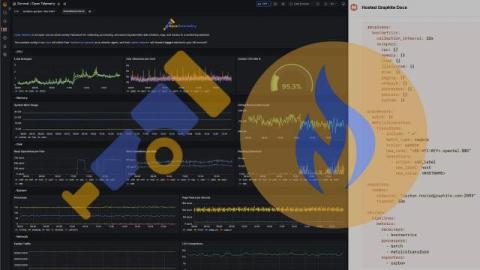
How to Configure OpenTelemetry as an Agent with the Carbon Exporter

If you're already using OpenTelemetry for tracing and logs, adding otelcol-contrib as an agent for system metrics just makes sense. It keeps everything in the same pipeline, so you're not juggling multiple monitoring tools or dealing with inconsistent data formats. Plus, with built-in support for host metrics, custom processing, and direct exports to Graphite, it's a solid way to ship performance data without extra overhead. In this article, we'll detail how to install the OpenTelemetry Collector Contrib distribution, and configure it to export system performance metrics to a Graphite datasource.
Sponsored Post

Fabrix.ai Demo Day Showcases Agentic Platform and AGNTCY Collective Ecosystem Alliance

Fabrix.ai, a pioneer in enterprise-ready agentic AI solutions, successfully hosted its highly anticipated Agentic AI Demo Day yesterday, bringing together IT operations, NOC operations, and AI operations professionals for a comprehensive showcase of its Purpose-built Agentic AI Operational Intelligence Platform.

Everything You Need to Know About OpenTelemetry Histograms

Modern systems throw off a lot of data—metrics, traces, logs—sometimes more than we know what to do with. When you're trying to understand how values spread out over time (like response times, memory usage, or queue lengths), averages alone don’t tell the full story. OpenTelemetry histograms help fill in those gaps. This guide walks through what they are, why they matter, and how DevOps engineers can use them to improve observability in real systems.

Introducing the Causely data source plugin for Grafana

Endre Sara is a Co-Founder of Causely, where he’s building a causal reasoning platform to continuously assure service reliability and eliminate human troubleshooting. Previously, Endre was VP of Advanced Engineering at Turbonomic and a VP at Goldman Sachs. At Causely, we believe observability tools shouldn’t just collect more data—they should enable you to understand it.

Correlation ID vs Trace ID: Understanding the Key Differences

You’re staring at logs, trying to figure out what caused that odd error in the middle of the night. Or maybe you're following a chain of requests across services, hoping to understand how one user action triggered a series of unexpected behaviors. That’s where distributed tracing and request tracking—specifically, correlation IDs and trace IDs—are invaluable. It’s the kind of detail that can make debugging faster and less painful.

Think Like a Query with Pablo Loaiza - Customer Brown Bag - April 24, 2025

Join us as we discuss how to approach real-world questions, translate them into queries, and refine them for maximum efficiency. Hands-on examples teach you how to filter effectively, compare historical data, correlate events, and troubleshoot common challenges.

All about OTel and Logging on Kubernetes with Loki (Loki Community Call April 2025)

In this pre-recorded Loki Community Call, we talk all about OTel and logging on Kubernetes with Cyril Tovena, Ward Bekker, Jay Clifford, and Nicole van der Hoeven at KubeCon EU 2025 in London. We discuss when why you should switch to OTel and why you shouldn't, what OTLP is exactly, and best practices for ingesting data through an OTLP endpoint.

Why you need Internet Performance Monitoring (IPM)

A few decades ago, monitoring your application was simple—everything ran on-premises, and performance issues were easier to pinpoint. But today, applications are built on globally distributed services, running across internal and external systems in the cloud, all connected through the Internet. In a world where the Internet is now your network, traditional APM (Application Performance Monitoring) isn’t enough. It only focuses on code and infrastructure, leaving critical blind spots that impact performance, availability, and user experience.

Breaking Down Silos with Correlation and Context

In modern IT environments, data is abundant, but clarity is rare. Enterprises deploy dozens of monitoring tools to collect metrics, events, and logs from across the network, yet when something goes wrong, teams still scramble to connect the dots. Why? Because these data streams exist in siloes, isolated by format, source, or system.

The State of Routing Security: Progress, Challenges, and Measurement

Kentik's Director of Internet Analysis, Doug Madory, explores the current landscape of BGP routing security. He discusses key progress made in Route Origin Validation (ROV), common pitfalls like AS-SET nesting, and ongoing challenges faced by the networking industry. With real-world examples and detailed traffic analysis from Kentik's extensive NetFlow data, Doug shares his insights and recommendations for NetOps professionals who want to improve their routing security practices. Watch this webinar replay to learn the latest methods for securing the global internet.

VictoriaMetrics Cloud: What's New in Q1 2025?

Time flies, and just like that, we are already in April! The first quarter of 2025 has been packed with exciting updates for VictoriaMetrics Cloud. If you joined our latest Quarterly Virtual Meetup, you might have already seen some of these announcements alongside other great improvements across all things VictoriaMetrics. In this post, we’ll take a closer look at what’s new in VictoriaMetrics Cloud.

Data Backup Strategies: The Ultimate Guide

Despite the nonstop warnings, millions of users still gamble with their data. A 2023 survey by Acronis revealed that 41% of people rarely or never back up their digital files, and businesses aren’t much better. Fewer than 20% of businesses back up their SaaS data, even though tools like Google Workspace and Microsoft 365 don’t guarantee full recovery after a loss or attack. The consequences?

Responsible AI: What It Means & How To Achieve It

The information age has leapt forward with the explosive rise of generative AI. Capabilities like natural language processing, image generation, and code automation are now mainstream — driving the business goals of winning customers, enhancing productivity, and reducing costs across every sector. New large language models are emerging almost daily, existing language models are optimized in a frantic race to the top. There seems no stopping the AI boom.

How to Build a Successful SIEM Migration Strategy

At least once a week, a team reaches out to discuss migrating from an established SIEM or analysis platform. This major decision is influenced by several compelling factors, which can create significant work for engineering teams and pose risks to the business. The cost of switching to a new platform, often referred to as displacement costs, can be substantial.

VictoriaLogs: Gaps, Gains & Growth - Tech Talk #4

It's the grand finale of our VictoriaLogs tech talk series! We'll consolidate everything learned from parts 1-3. VictoriaMetrics Co-founder Alex takes the virtual stage to provide the definitive wrap-up – reviewing key takeaways, addressing topics we didn't cover, clarifying what we got right, and transparently discussing what we could have explained better. Bring your questions for Alex in this interactive conclusion!

Strategic Windows Event Routing with Bindplane

Windows event logs can provide valuable insight into day-to-day operations and potential security issues. But making sense of that data—and getting it to the right place without overloading your systems or driving up costs—takes some planning. Bindplane helps with this by providing a flexible way to collect, process, and route Windows events. It’s designed to support security and compliance needs without adding unnecessary complexity.

Stay ahead of slowdowns: Introducing alerts for slow response time

Performance issues can sneak up before they turn into full-blown outages. Get notified when your website or service takes longer than usual to respond. We’re excited to announce that you can now set up response time thresholds and receive alerts when performance dips below your expected level. This means you can take action early, improve user experience, and prevent minor slowdowns from becoming major problems.

Monitor Your Site Where It Matters Most: Introducing Location-Specific Monitoring

We’re excited to unveil a long-awaited feature—Location-specific monitoring! Track uptime from the regions that matter to you and identify localized outages in time. You’ll also receive alerts for each monitor you create, ensuring you never miss a beat in any location.

Top 12 Zabbix Competitors & Alternatives 2025

Looking for a Zabbix alternative that is easier to set up, scale, and manage? In this guide, we have listed the top monitoring tools that deliver faster insights, better dashboards, and modern capabilities. Whether you are focused on performance, infrastructure, or log monitoring, you will find an option that suits your needs and helps you move beyond the limitations of Zabbix.

Why Should You Care About Endpoint Monitoring?

Modern applications rely on numerous interconnected endpoints to function properly. Maintaining visibility into these critical connection points is fundamental to both system reliability and security. When endpoints fail, degrade, or become compromised, the impact cascades to users, teams, and ultimately affects your bottom line. Effective endpoint monitoring provides the visibility needed to prevent these issues.

Top 3 tools for Azure cost reporting: SquaredUp, Azure Cost Management, & Power BI

Anyone managing Microsoft Azure will be aware of how quickly its costs can escalate. As cloud architectures grow in complexity—spanning hybrid environments, multi-subscription setups, and cross-platform integrations—the need for intelligent cost visibility tools intensifies. With enterprises typically overspending by 25%-35% on their cloud resources, Azure cost reporting has become a big focus for organizations navigating cloud financial management.

Elastic Cloud Serverless now generally available on Google Cloud

Elastic Cloud Serverless provides the fastest way to start and scale security, observability, and search solutions — without managing infrastructure. Today, we are excited to announce the general availability of Elastic Cloud Serverless on Google Cloud — now available in the Iowa (us-central1) region. Elastic Cloud Serverless provides the fastest way to start and scale observability, security, and search solutions without managing infrastructure.

How Does OpenTelemetry Logging Work?

Modern systems throw off logs like confetti—and making sense of all that noise is half the battle. OpenTelemetry logging offers a way to bring some order to the chaos. It helps DevOps teams collect logs in a consistent format, no matter what language or framework they’re working with. In this guide, we’ll walk through what OpenTelemetry logging is, why it matters, and how to put it to work in your stack.

Link to full status page from embedded iframe

We’ve rolled out a small update to the StatusGator iframe embed feature! Now, when you embed your status page on your website or app, it can include a link to your full StatusGator status page — giving your users a simple way to view detailed information about outages. And there’s more: If you’ve uploaded a favicon in your Status page settings, it will now appear next to the link in the iframe.

The Role of Observability in Modern DevOps Pipelines

DevOps has radically transformed how organizations build and deploy software, enabling faster delivery with greater reliability. Within this transformation, observability has emerged as a critical foundation for success. Unlike traditional monitoring that simply tracks known metrics, observability provides deep visibility into complex systems, allowing teams to understand and troubleshoot issues they couldn't anticipate. This shift represents much more than a technical evolution - it's a fundamental change in how organizations approach system health and performance.

Obkio's 2025 Pricing Updates: Investing in a Stronger, Smarter Network Monitoring Solution

For the first time in over 3 and a half years, we’re updating our pricing. Starting June 1st, new pricing will apply to all new purchases, upgrades, and renewals and will be reflected in upcoming billing statements. This change comes as we roll out a wave of powerful new features and improvements designed to help you monitor and optimize network performance better than ever before. We know pricing updates are never taken lightly, and neither is your trust in us.

Running our test suite in parallel on GitHub actions

A couple of years ago, Laravel introduced a great feature which allows to run PHPUnit / Pest tests in parallel. This results in a big boost in performance. By default, it determines the concurrency level by taking a look at the number of CPU cores your machine has. So, if you're using a modern Mac that has 10 CPU cores, it will run 10 tests at the same time, greatly cutting down on the time your testsuite needs to run completely.

War rooms? Finger-pointing? We can help you.

Say goodbye to late-night firefighting and endless finger-pointing. Explore how Catchpoint helps eliminate the need for “war rooms” by giving teams the visibility and insight they need to detect, diagnose, and resolve internet performance issues—before they impact users. Learn how Internet Performance Monitoring (IPM) empowers IT, SRE, and DevOps teams to: Pinpoint root causes across the entire internet stack Collaborate effectively across teams and vendors Proactively prevent outages and performance degradation Replace reactive chaos with data-driven confidence.

How to find Network Visibility Gaps: Strategies to Ensure Resilience and Performance

As IT infrastructures grow more complex, visibility and resilience have never been more critical. With hybrid IT, remote workforces, and distributed services, your network extends far beyond the data center or cloud—it spans the internet. Traditional monitoring tools leave blind spots that impact user experience and lead to costly downtime. To stay ahead, modern network performance monitoring (NPM) must evolve.

Why IT Leaders Need to Think Like CFOs: The ROI of Elastic Acceleration

I still get frustrated when I see organizations treating IT as a cost centre or an operational necessity rather than a strategic enabler. But the reality is, digital experiences are business-critical and performance is the new currency. Today’s IT leaders must adopt a CFO mindset, aligning technology investments with business outcomes, agility, and measurable return. Nowhere is this more relevant than in the realm of application acceleration.

Cloud Migration Benefits: Why Switching Network Management to the Cloud Makes Sense

Migrating your network infrastructure and management tools to the cloud offers tremendous advantages for modern businesses. As legacy on-premise data centers face growing limitations, shifting critical IT resources into robust cloud platforms provides the agility, efficiency, and innovation needed to stay competitive. This article explores the many benefits of cloud migration, including the financial, operational, and strategic upsides.

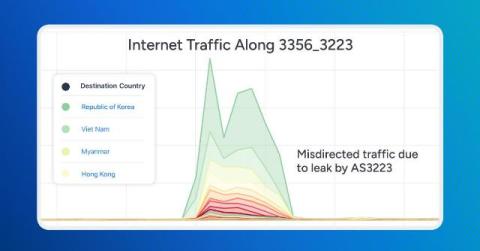
The Scourge of Excessive AS-SETs

An AS-SET is a special object that represents a group of ASNs and forms the basis for IRR-based route filtering. However, many AS-SETs in circulation today have grown so big that they effectively whitelist much of the routing table, rendering them ineffective. According to recent analysis, there are currently 2,192 AS-SETs which expand to over 1,000 ASNs each! In this blog post, we’ll describe what an AS-SET is, its role in route filtering, and how to deal with excessively large AS-SETs.

Lifespan of TLS certificates is getting reduced to 47 days

In a pretty significant shift for internet security and subsequently certificate management, the CA/Browser Forum has officially voted to reduce the maximum validity period of TLS certificates to just 47 days by March 15, 2029. This move aims to enhance digital security and trust across the web. But as these changes approach, it'll become increasingly crucial for organizations to understand their implications and prepare accordingly. Automation will likely become mandatory.

Metrics Monitoring: The Only Guide You'll Need

When major tech companies maintain high availability while others struggle with frequent outages, the difference often comes down to one thing: effective metrics monitoring. This guide will walk you through everything you need to know about metrics monitoring, from fundamental concepts to advanced strategies.

Traces & Spans: Observability Basics You Should Know

In modern software architecture, applications aren't just getting bigger—they're getting more distributed. With microservices, serverless functions, and containers running across multiple environments, understanding what's happening inside your systems can feel like trying to track a single raindrop in a storm. That's where traces and spans come in. These observability tools aren't just buzzwords—they're your secret weapon for making sense of complex distributed systems.

From Mandate to Mindset

Regulations like the EU’s Cyber Resilience Act (CRA) are top of mind for many in the embedded software world right now, and understandably so. The pressure to comply is real, especially for teams already juggling tight schedules and complex development environments. But as disruptive as these mandates might feel, they also present an opportunity and perhaps a necessary nudge to adopt better habits that can strengthen the software we build, far beyond compliance.

Building Smarter Manufacturing Systems with Bosch Rexroth and InfluxDB

Manufacturers are under pressure to increase efficiency, reduce downtime, and future-proof their factories. Rising costs, global competition, and shifting customer expectations mean that even small inefficiencies can lead to lost revenue or market share. This is difficult while using legacy systems that limit visibility and adaptability. These outdated systems often operate in silos, making it hard to access real-time data, respond to unexpected issues, or scale with modern technologies.

Monitor Microservices Effectively: A Practical Guide

Modern applications are often built using microservices: Small, independent components that work together. This makes systems more flexible and scalable, but also harder to monitor. In this guide, we’ll explain what microservice monitoring is, why it’s different from traditional approaches, and how to do it effectively. Whether you’re starting from scratch or improving an existing setup, this article will help you monitor microservices with confidence.

How Much Should I Be Spending On Observability?

I recently wrote an update to my old piece on the cost of observability, on how much you should spend on observability tooling. The answer, of course, is “it’s complicated.” Really, really complicated. Some observability platforms are approaching AWS levels of pricing complexity these days.

Need a better tool for managing hybrid collaboration environments?

If your clients are like most, they use multiple collaboration platforms to drive business and get work done. A common combo is Microsoft Teams and Zoom: over 60% of organizations use both, and together the two have a more than 80% share of the videoconferencing market. More platforms mean more complexity for you to manage — more parameters to watch, more tools to bounce between to keep an eye on things.

Is hybrid collaboration causing you headaches?

Real-time collaboration and virtual meetings have become part of the basic fabric of how work gets done. Because different collaboration platforms do different things really well, most organizations tend to mix and match them to fit their requirements. Teams and Zoom are two of the most common pairings. A study commissioned by Zoom and conducted by the research firm, Metrigy found that 62% of companies use both.

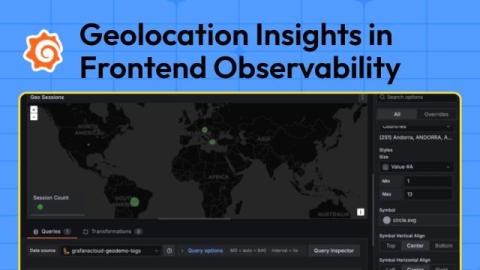
How to get started with frontend observability: A quick Grafana Faro example

Modern cloud-native applications and web browsers are highly complex, making it challenging to gain visibility into their performance. Without an effective way to track and measure frontend performance, it becomes difficult to monitor real user experiences, detect critical issues, assess website health, and ensure optimal functionality. But what if you could see exactly what your users are experiencing in real time?

Datadog: The Good, The Bad, The Costly

When things break, logs are often the first place you turn to figure out what's going on, which is why Datadog makes it easy to find them. The ability to pivot between traces, metrics, and logs in one place speeds up investigations and helps teams move faster during incidents. That level of correlation is a big reason so many teams rely on Datadog. ‍

How to Get Started with Grafana Infinity Data Source Plugin | Grafana Labs

In this Grafana Learning Journey supplementary video, Developer Advocate Marie Cruz shows how to start with the Grafana Infinity Data Source plugin, from installation to building a dashboard using CSV and JSON data. CHAPTERS Grafana Cloud is the easiest way to get started with Grafana dashboards, metrics, logs, and traces. Our forever-free tier includes access to 10k metrics, 50GB logs, 50GB traces and more. We also have plans for every use case.
Sponsored Post

System Center 2025 Migration: Preparing for a Smooth Transition

Microsoft System Center has been a cornerstone of enterprise IT management, evolving to meet the dynamic demands of modern IT infrastructures. The release of System Center 2025 represents a significant advancement, introducing new capabilities designed to enhance security, streamline operations, and support hybrid cloud environments. These enhancements address the growing complexity of IT ecosystems, enabling organizations to manage workloads more efficiently and securely across on-premises and cloud environments.

Ensuring Compliance & Business Continuity with Automated Backup & Recovery

Every organization has two non-negotiables: stay compliant and stay online. But achieving both—especially at scale—isn’t easy. Many IT teams still rely on manual processes for backups, documentation, and recovery. And when something goes wrong? The cost isn’t just measured in downtime, but in regulatory penalties, lost trust, and business disruption. What if network compliance wasn’t a separate process—but could naturally integrate into your recovery strategy?

Distributed Network Monitoring: Guide to Getting Started & Troubleshooting

When systems span clouds, containers, and regions, knowing what’s happening under the hood is more than a nice-to-have—it’s critical. Traditional monitoring tools often fall short in these complex setups. That’s where distributed network monitoring steps in. This guide cuts through the noise to offer a clear, practical approach to keeping tabs on distributed systems—without drowning in dashboards or alert fatigue.

New Feature: Manage Your session.id in Honeycomb's Web SDK

The session.id field is special in Honeycomb for Frontend Observability. It’s a default option for filtering and grouping, and it’s the basis for session timeline analysis (in Early Access). Now you can control how session.id is set. In prior releases (< 0.15.0) of the Honeycomb Web SDK, we used our own UUID generator for session.id, and it was not accessible outside of the Web SDK itself. As of version 0.15.0, we give you full control.

How One Enterprise Reduced 1,600 Trap Alerts by 80% and Saved 26 Hours During Migration

For large-scale IT organizations, SNMP traps and log alerts are critical, but they can also be a hidden source of technical debt. Over time, alerting systems balloon with noise like redundant conditions, alerts from decommissioned tools, and logic that no longer maps to today’s hybrid infrastructure.

Network Monitoring Automation: Streamlining Operations and Efficiency with Motadata AIOps

Did you know the network infrastructure market revenue is expected to reach YS$253.21bn by the end of 2025? Over the years, small businesses and large organizations have been using networks to communicate and exchange information. With digital transformation and adoption of new technologies, networks are becoming increasingly complex. Organizations find it challenging to track these complex, extensive networks and identify issues in real time through manual monitoring.

Optimize AWS Transit Gateway Usage

AWS Transit Gateway simplifies network architecture by connecting multiple VPCs and on-premises networks through a centralized hub—but it's easy to incur unnecessary costs if not managed properly. Learn how Kentik provides deep visibility into your AWS Transit Gateway usage, quickly highlighting expensive or inefficient traffic patterns. Using Kentik's Data Explorer, we show how to identify unnecessary intra-VPC traffic that's adding costs and potentially degrading performance.

Troubleshooting Java Applications with Coroot

Java applications run on top of the JVM — a powerful but complex runtime environment that re-implements many OS features. It has its own memory management, garbage collector, and dynamic code compiler (JIT). While these features help with performance and portability, they often make troubleshooting a real challenge. At Coroot, we recently improved our support for continuous profiling in JVM-based applications.

One year in: How Flex Licensing is transforming log management and visibility

A year ago, we set out to transform log analytics pricing by making it as flexible, transparent, and as customer-friendly as possible. We built a model that aligns cost with business value, charging only for data storage and analytics executed. With Flex Licensing, customers can scale usage up or down without breaking the bank, eliminating hidden costs and inefficient licensing structures. There is no more pre-planning or tiering of log data; there is just log ingest with sensible pricing.

Master IT infrastructure management with OpManager Plus

IT infrastructures in the modern business landscape never stand still. The backbone that keeps the organization and its business operations running is expected to relentlessly scale with the newer technologies and challenges that are thrown in while keeping business functions online without disruptions. IT infrastructure transcends from networks and servers to applications and cloud environments, where every component is as crucial as the other. And the margin of error is very small.

Data Strategy for SREs and Observability Teams

In Honeycomb’s Customer Architects team, we work with the full spectrum of team, scope, and budget sizes. “The data isn’t valuable enough” is something we’re always dismayed to hear, but we hear it often enough. The thing is, as much as we want it to not be true, no product or tool can magically maximize the value of your telemetry data—at least not without gobs of human input, oversight, and review.

How to Connect Prometheus to Grafana in Under 2 Minutes | Tutorial | Grafana Labs

In this step-by-step tutorial, we’ll walk you through how to get Prometheus and Node Exporter running locally on an ARM64 Mac (like the M3 MacBook Pro), and how to connect it all to Grafana Cloud for beautiful dashboards and metric insights.

Assist 2.0: The New Era of DEX for Everyone

For many years, I've spoken with power users in IT departments who love the insights they get from Nexthink. They can run complex queries, create dashboards, drill down into the network view, or implement new automations across thousands of digital workplaces. I've also noticed that these same teams have increasingly asked us to share the power of Nexthink with other IT functions, HR teams, or even employees.

New in Adaptive Logs: user-facing temporary pauses, exemptions, and per-service recommendations

We launched Adaptive Logs last year to help you optimize your log volumes and costs in Grafana Cloud, and we’ve been hard at work ever since making improvements based on your feedback. Over the past couple of months, we’ve delivered several new features to help reduce toil, apply recommendations with precision, and—what we’re most excited about—confidently optimize your log ingestion while still providing peace of mind to your end users!

A Comprehensive Guide to Monitoring Disk I/O on Linux

In a Linux environment, understanding how your storage devices perform can mean the difference between a system that flies and one that crawls. Whether you're troubleshooting performance issues or fine-tuning your server setup, getting familiar with Linux disk I/O statistics is an essential skill for any tech professional. This guide breaks down everything you need to know about Linux disk I/O stats - from basic concepts to practical monitoring techniques that you can implement today.

The Power of Over 3000 Intelligent Observability Agents

Catchpoint has officially crossed a major milestone: over 3,000 intelligent agents now power our Global Agent Network. This isn’t just a big number. It underscores our commitment to helping our users monitor what matters, from where it matters most: the end user. With agents deployed across 105 countries, 346 cities, and every layer of the Internet stack, Catchpoint now offers the broadest and deepest visibility into user experience available today.

Why Internet Performance Monitoring is Non-Negotiable for Today's Websites and Apps

IT organizations are challenged with too many war rooms where the best people in the team waste time looking for the root cause of an issue. It’s not like we don’t have enough tools or that we are not leveraging AI. Why is everything ‘green’ while users are reporting issues? Are we simply looking in the wrong place?

How to Use MySQL Performance Analyzer

If you're dealing with slow MySQL queries and wondering why your database performance is lagging, you're not alone. MySQL performance analyzers are key tools for pinpointing bottlenecks, optimizing queries, and ensuring your databases stay efficient and responsive. Let’s explore how these tools can help you keep things running smoothly.

The Importance of Asset Disposal for asset management: Maximizing Value and Reducing Risks

Starting a business requires investing in fixed assets like land, buildings, equipment, etc. Have you ever wondered what happens when these assets turn old or outdated? Further, why should you never dispose of these capital assets or fixed assets without a proper strategy? Asset Disposal is a critical aspect of asset management that involves the systematic removal of outdated assets from the balance sheet.

Application monitoring for businesses of every size

Can application performance truly influence business outcomes? The numbers say it all. Amazon’s 2024 annual report revealed a staggering $638 billion in revenue—and by its own benchmark, a mere 100 millisecond delay could cost Amazon 1% in sales, equating to a potential $6.38 billion loss. Now imagine the scale of financial impact on organizations worldwide with underperforming applications. Every millisecond counts, and the business case for optimizing performance has never been clearer.

How to Troubleshoot Internet Connectivity Issues for IT Pros

A reliable Internet connection is the lifeblood of nearly every organization. From seamless video conferences to uninterrupted data transfers and smooth online operations, the modern business world depends on a steady flow of data. However, as IT professionals know all too well, even the most robust networks can encounter connectivity issues that disrupt productivity and cause frustration.

Lumigo brings AI-powered observability directly into your Microsoft Teams workflow

We’re excited to announce that Lumigo Copilot is now integrated with Microsoft Teams, extending the power of our AI observability assistant beyond Slack and into your Teams-based workflows. Until now, Lumigo Copilot worked exclusively within Lumigo’s UI and Slack, where teams instantly ask questions about issues, receive AI-generated observability insights, and take action without leaving their collaboration space.

Will it Monitor? Tracking the ISS in Real Time

Tracking the International Space Station (ISS) as it orbits Earth is not just a captivating endeavor for space enthusiasts, it's also an excellent demonstration of how real-time data collection and visualization can be achieved using readily available open-source tools. To monitor the ISS location and trajectory, we'll demonstrate how to set up a simple cron job to fetch it's coordinates every five minutes, parse the data into a suitable format, and visualize it on a dashboard.

Why Data Harmonization is Critical to Your AIOps Strategy

Picture this: Your phone rings in the middle of the night. It’s your engineering lead, calling to inform you of a significant outage affecting your customer-facing services. As your network operations team jumps into action, they’re greeted with chaos. Over 40 alerts flood their screens simultaneously. Your network, infrastructure monitoring, and application performance monitoring tools all fire independently, each with its own dashboard and presenting data in incompatible formats.

Team-Oriented Observability with Coroot

Modern apps are built by many teams, each owning a different set of services: APIs, background jobs, databases, platform components, and more. As the system grows, it gets harder for each team to focus on what actually matters to them.When everything is mixed together, dashboards get messy, service maps are too large to be useful, and alerts end up reaching the wrong people. Instead of helping, your observability stack turns into a distraction. It has lots of data, but no clear context.

Apache Cassandra Monitoring: Tools, Challenges & Best Practices

When your distributed database architecture scales to handle massive workloads, keeping tabs on everything becomes critical and complex. With its masterless architecture and linear scalability, Apache Cassandra powers mission-critical applications across industries—but without proper monitoring, you might as well be flying blind through a storm.

Applications Manager's dashboard: What's new?

In today’s fast-paced IT landscape, efficient application performance monitoring is essential. IT teams need real-time insights, interactive data visualization, and a seamless user experience to detect and resolve issues swiftly. With the latest enhancements to ManageEngine Applications Manager’s dashboard, monitoring is now smarter, faster, and more intuitive than ever before.

Making VMware Cloud Foundation Environments Part of Your Network Observability Picture

Private cloud solutions like VMware Cloud Foundation (VCF) are rapidly gaining traction as organizations seek the benefits of on-premises control with cloud-enabled agility. While these offerings deliver significant benefits, they also introduce significant challenges for network operations teams striving to maintain optimal user experiences.

Fix Bugs Faster-Without the Fire Drills

Most bug-fixing workflows are productivity traps in disguise. You’re mid-sprint, someone logs an issue, and suddenly the next two hours are gone. You’re pinging teammates, digging through logs, jumping into five different tools just to answer basic questions like: That’s time you don’t get back. That’s context-switching that kills momentum. That’s what GermainUX was built to eliminate.

Advanced Python Logging: Mastering Configuration & Best Practices for Production

Python's logging system provides powerful tools for application monitoring, debugging, and maintenance. This comprehensive guide covers everything from basic setup to advanced implementation strategies, helping you build robust logging solutions for your Python applications.

Don't default to microservices: You'll thank us later!

Don’t default to microservices: You’ll thank us later! Donald Knuth, professor emeritus at Stanford University and “father” of algorithm analysis, once said – now quite famously – that “Premature optimization is the root of all evil.” It’s one of those sayings that all engineers know, most understand, and many struggle to follow through on consistently. What Knuth misses in this pithy, memorable quote is the fact that evil is tempting.

How a cooking platform whipped up a new observability plan with Grafana Cloud

As any good cook knows, if you want to create a top-notch dish, you have to use the best ingredients. So when the engineering team for Cookidoo — an online platform and app that features more than 80,000 guided recipes for the Thermomix, an all-in-one kitchen small appliance — realized the observability tool they were using to monitor the platform wasn’t delivering what they needed, they decided to switch to Grafana Cloud and OpenTelemetry.

The Hidden Cost of DIY AI in Network Operations

While AI offers powerful benefits for network operations, building an in-house AI solution presents major challenges, particularly around complex data engineering, staffing specialized roles, and maintaining models over time. The effort required to handle real-time telemetry, retrain models, and manage evolving environments is often too great for most IT teams.

Serverless Monitoring In The Cloud With Bindplane and OpenTelemetry

Almost two years ago I wrote the first installment of what was supposed to be a 3 part series on Serverless Monitoring. Parts two and three never materialized. Today, however, I am revisiting that original idea and expanding upon it. I hope to succeed this time in making it a full three-part series. For this first installment (Revisited), I will again work with Google Cloud Run to monitor MongoDB Atlas.

Debug App Performance Down to the Function Call-Introducing Continuous Profiling & UI Profiling

When something slows down in prod, it’s too easy to fall into old habits. Throw in a few more logs, ship some metrics, try to reproduce the issue locally, and maybe reach for perf or py-spy if you’re feeling ambitious. Traces can help, but they usually stop just short of explaining why things are slow, especially when it’s deep in the stack.

New: Restrict subscriber email addresses by domain

We’ve just rolled out a highly requested feature: Email domain restrictions for your status page subscribers! Now you can control who subscribes to your status page updates by restricting access to email addresses from specific domains. Whether you want to limit subscriptions to internal team members or approved partners, this feature gives you the flexibility to manage your audience with precision.

GDPR Log Management: A Practical Guide for Engineers

GDPR compliance for logs can be tricky—especially when you're trying to maintain system visibility and protect user data at the same time. For SREs and IT teams, it’s a balancing act between staying on the right side of privacy laws and not losing the context you need to troubleshoot. This guide walks through practical ways to handle personal data in logs, set up retention rules that make sense, and stay compliant without creating unnecessary friction.

Build a Time Series Forecasting Pipeline in InfluxDB 3 Without Writing Code

Curious how time series forecasting fits into your InfluxDB 3 workflows? Let’s build a complete forecasting pipeline together using InfluxDB 3 Core’s Python Processing Engine and Facebook’s Prophet library. InfluxDB 3 Core’s Python Processing Engine dramatically lowers the barrier to entry—not just for experienced developers but for anyone with a basic understanding of time series data and Python.

Differences Between RemotePC Attended Access and Dameware Attended Access

In today’s interconnected world, remote support solutions are essential for businesses and IT teams to assist users effectively. Among these solutions, RemotePC and SolarWinds Dameware are leading tools offering attended access capabilities. However, choosing the right tool requires thoroughly understanding its unique features, advantages, and ideal use cases. This article provides an in-depth comparison of RemotePC attended access and Dameware attended access.

Mezmo Recognized with 25 G2 Awards for Spring 2025

We’re thrilled to share that Mezmo has been recognized by G2 with 25 badges across four key categories: Enterprise Monitoring, Log Monitoring, Log Analysis, and Cloud Infrastructure Monitoring. These awards are more than just a celebration of our platform—they’re a reflection of you, our customers. Your feedback, support, and insights push us to build better solutions and deliver the highest standards of performance and service.

Why Software Performance Optimization Is Business-Critical - and Often Overlooked

You've probably heard this before: "If it works, don't touch it." And while that might fly in some areas of life, in software development it's a dangerous mindset - especially when it comes to performance. Many companies build digital products that technically work. They launch, they onboard users, and they don't crash on day one. But fast forward a few months - or a few years - and the same product becomes sluggish, bloated, and frustrating to use. It's not broken - but it's bleeding revenue and trust, quietly and continuously.

OpenTelemetry vs APM - The Future of Application Monitoring Explained

Application monitoring is important for finding and fixing issues in modern software systems. Traditionally, teams have used Application Performance Monitoring (APM) tools to track application health and performance. These tools provide built-in features like dashboards, alerting, and error tracking. Now, OpenTelemetry is becoming popular as an open-source way to collect telemetry data like traces, metrics, and logs. It gives developers more control and avoids vendor lock-in.

Grafana Cloud updates: new testing features in Grafana Cloud k6, enhanced troubleshooting in Kubernetes Monitoring, and more

We consistently roll out helpful updates and fun features in Grafana Cloud, our fully managed observability platform powered by the open source Grafana LGTM Stack (Loki for logs, Grafana for visualization, Tempo for traces, and Mimir for metrics). In case you missed them, here’s our monthly round-up of the latest and greatest Grafana Cloud updates.

The Role of Automation in Network Compliance & Misconfiguration Prevention

In the high-stakes world of IT operations, compliance isn’t optional—but bureaucracy is. Security standards and audit demands aren’t going anywhere, and every configuration change could be the one that triggers a compliance failure or service outage. Traditionally, compliance has been synonymous with paperwork, manual reviews, and late-night fire drills before audits. But that mindset is due for an upgrade.

How to Connect ELK Stack with Grafana

In today’s distributed systems world, you need clear visibility into logs, metrics, and everything in between to keep systems healthy and reliable. That’s where the ELK Stack and Grafana work well together—each solving a different part of the observability puzzle. ELK handles the heavy lifting of log collection and processing. Grafana adds intuitive dashboards and powerful visualizations.

A Closer Look at Docker Build Logs for Troubleshooting

In the world of containerization, understanding what's happening under the hood during image builds can mean the difference between smooth deployments and frustrating debugging sessions. Docker build logs are your window into this process, offering crucial insights that help you optimize builds, troubleshoot errors, and maintain robust container infrastructure.

No More War Rooms

Say goodbye to late-night firefighting and endless finger-pointing. Explore how Catchpoint helps eliminate the need for “war rooms” by giving teams the visibility and insight they need to detect, diagnose, and resolve internet performance issues—before they impact users. Learn how Internet Performance Monitoring (IPM) empowers IT, SRE, and DevOps teams to: Pinpoint root causes across the entire internet stack Collaborate effectively across teams and vendors Proactively prevent outages and performance degradation Replace reactive chaos with data-driven confidence.

AI Agent Observability Explained: Key Concepts and Standards

AI agent observability has become a critical discipline for organizations deploying autonomous AI systems at scale. This guide explores the emerging standards and best practices for monitoring, analyzing, and improving AI agent performance in enterprise environments.

14 Key IT Trends for 2025

In the face of rapid technological advancements, businesses must redefine how they operate. Staying ahead of emerging IT trends is non-negotiable if you want to maintain an edge. From remarkable improvements in artificial intelligence (AI) and automation to enhanced connectivity and the provision of more personalized IT services, these developments present numerous opportunities to increase productivity and outshine competitors. Eager to learn what you should add to your IT strateg y in 2025?

How Much Should I Be Spending On Observability?

In 2018, I dashed off a punchy little blog post in which I observed that teams with good observability seemed to spend around ~20-30% of their infra bill to get it. I also noted this was based on absolutely no data, only my own experiences and a bunch of anecdotes, heavily weighted towards startups and the mid-market tech sector. This post should have ridden off into the sunset years ago. To my horror, I have seen it referenced more in the past year than in all preceding years combined.

A complete guide to monitoring cross-platform apps using APM

Cross-platform environments are crucial for businesses aiming to optimize development costs while reaching a broader audience. By leveraging shared codebases and frameworks, organizations can maintain a consistent user experience across platforms without the need for redundant development efforts. They enhance operational efficiency by offering multi-framework support and providing a consistent user experience across platforms.

An Overview of the Grafana Infinity Data Source Plugin | Grafana Labs

Do you have data formats you want to visualize in Grafana that are not supported natively? Or maybe you want to quickly prototype a dashboard and grab data from various endpoints such as REST APIs, CSV, JSON, or GraphQL? If you answered yes, then this video is for you! In this video, Developer Advocate Marie Cruz provides an overview of the Grafana Infinity Data Source Plugin and talks about the value and benefits it can bring.

Remote Desktop File Transfer: Securely Move Files Between Desktops

Remote desktop file transfer allows people to transfer files between remote desktops and local machines quickly—and it is more vital than ever. IT teams rely on remote desktop tools to access servers, while remote employees use these tools for file transfers when working from home or collaborating with colleagues at other locations.

Windows 10 end of life: Strategy for IT teams

As the Windows 10 end of life (EOL) begins on October 14, 2025, you could already be on your toes proactively preparing for the transition to avoid security risks, operational disruptions, and unexpected costs. This blog serves as a comprehensive guide to help businesses navigate the challenges and make the most of the opportunity to upgrade. The date to remember: Windows 10 EOL happens on October 14, 2025.

Automation: Data processing of imported data using property modifiers in Icinga Director

The raw data imported from the external sources (CSV, SQL, REST API, LDAP, etc.) is usually not in the right format. Hence, they have to be processed or converted before they are used to modify objects using synchronization rules. To do this, Icinga Director provides different property modifiers. There are many property modifiers provided by Icinga Director.

Bridging performance gaps in application management with real user monitoring

Ensuring your application is up and running is never enough. It’s essential to ensure that your application is fast and also error-free to deliver a buttery smooth digital experience for your users. An application performance monitoring (APM) tool will help you track the performance of your application with metrics, reports, and automated alerts, but it doesn’t always capture how real users experience your application.

How Much Network Capacity Should Businesses Maintain

Network capacity: So, how much network capacity does your business actually need? The answer depends on your users, applications, and growth plans. Today, we’ll calculate your network capacity requirements, avoid common pitfalls, and ensure smooth operations — whether your team is in-office, remote, or hybrid.

An easier way to configure the OpenTelemetry SDK in your applications | Declarative Configuration

In this video, we'll explore OpenTelemetry's declarative configuration feature, a powerful new method to configure the OpenTelemetry SDK using a YAML file without the complexity and overhead of programmatic instrumentation. I'll demonstrate this with a simple Go application instrumented using declarative configuration, sending metrics, traces, and logs to Splunk Observability Cloud. We'll cover: Resources.

IoT Advances in Automotive Monitoring and Maintenance

The Internet of Things (IoT) has become inseparable from the automotive industry, especially the monitoring and maintenance divisions. Innovations like sensor technologies and advanced analytics have transformed cars and trucks into more connected vehicles. Here's a guide on IoT advancements and what to expect in the future.

Digitate Launches ignio AIOps Platform Availability in AWS Marketplace

Digitate announces the general availability of its flagship product ignio™ in AWS Marketplace, a digital catalogue with thousands of software listings from independent software vendors that make it easy to find, test, buy, and deploy software that runs on Amazon Web Services (AWS).

Monitoring in the Age of Complexity: 5 Assumptions CIOs Need to Rethink

In 2025, the average enterprise juggles over 150 SaaS applications, hybrid cloud infrastructures, and a workforce that expects seamless digital experiences—yet most CIOs still rely on monitoring strategies built for the data center era. The result? A $1.5 trillion annual hit to global GDP from downtime and performance lags, according to recent industry estimates. The problem isn’t the tools—it’s the thinking behind them.

eG Enterprise Alerting Integrates With Yet More ITSM Ticketing Systems, Including BigPanda and Freshservice

Just a quick blog to let you know that eG Enterprise v7.5 has introduced support for further ticketing systems – including for popular ITSM solutions such as BigPanda and Freshservice.

OpenTelemetry for AI Systems: Implementation Guide

AI systems, from machine learning models to Large Language Models (LLMs) and autonomous AI agents, introduce unique observability challenges. Their non-deterministic nature, complex dependencies, and specialized performance characteristics require thoughtful instrumentation approaches. OpenTelemetry has emerged as the leading standard for implementing observability across these systems.

Leveraging AI for enhanced network monitoring in finance

What’s the cost of a slow network if you are working in financial circles? A one-second delay in trade execution can mean millions in lost revenue. A lag in payment processing? That’s frustrated customers raising thousands of support tickets that your team would struggle to handle and potential compliance fines. For CIOs, CTOs, and IT leaders in financial services, keeping networks up and running is a business imperative.

Why do you need an application monitoring tool?

If you got your hands on a high-performance sports car, would you dare to drive it without a dashboard showing speed, fuel levels, or engine health? Absolutely not! Just as a dashboard helps keep your car running at peak efficiency, an application monitoring tool serves as your app’s digital dashboard, ensuring high performance and preventing unexpected crashes.

APM Observability: A Practical Guide for DevOps and SREs

Modern application architectures have evolved from simple monoliths to complex distributed systems spanning multiple environments. This evolution has transformed how we approach monitoring and troubleshooting. Traditional monitoring methods that focus solely on uptime and basic health checks are no longer sufficient for understanding system behavior in cloud-native environments.

Understanding GraphQL in .NET: When and why to use it

APIs are the heart of most modern applications. Due to their simplicity and lightweight design, RESTful APIs are a popular choice for client-server communication in most applications. However, APIs can become limiting when fetching complex or related data. The front end may over-fetch or under-fetch the meaningful data. For example, different pages require different responses. RESTFul APIs require different field endpoints, each involving repetitive complex joining conditions.

Cloud-Based Network Management: Benefits & How it Works

Managing networks has never been more complex—more devices, more remote work, and more security challenges. Traditional on-premise solutions can struggle to keep up, requiring constant maintenance and on-site troubleshooting. That’s why businesses are shifting to cloud-based network management, which provides real-time visibility, automation, and remote access to keep networks running smoothly.

How to create and monitor an AWS Lambda function in Java 11

Serverless computing is a modern cloud-based application architecture in which the application’s infrastructure and support services layer are completely abstracted from the software layer. While every application still relies on physical servers to run, serverless applications shift that responsibility to cloud service providers like Amazon Web Services (AWS).

Everything You Need to Know to Start Monitoring Postgres

Keeping your Postgres databases healthy is non-negotiable if you care about application performance and reliability. But monitoring Postgres the right way? That’s where things get tricky. Between the sheer volume of metrics and the noise that comes with them, it’s not always obvious what to pay attention to—or when. This guide breaks things down with a focus on what matters in real-world production setups.

Log Consolidation Made Easy for DevOps Teams

Managing multiple systems that each generate their alerts and logs can quickly become overwhelming. The challenge of scattered logs is a real headache, especially in the fast-paced world of DevOps. Log consolidation is not just a convenience—it's an essential practice that can save you from chaos and improve your operational efficiency. This guide covers everything you need to know about log consolidation, from understanding what it is and why it matters, to practical steps for making it work.

InfluxDB 3 Core & Enterprise GA: The Next Generation Time Series Platform for Developers is Here

After months of development, testing, and community feedback, we’re excited to announce the general availability (GA) release of InfluxDB 3 Core and InfluxDB 3 Enterprise. This release brings us closer to our vision for InfluxDB: a time series database that helps developers solve the problem of collecting, analyzing, monitoring, and acting on data across sensors, networks, servers, and applications. We view time series as a way to analyze, monitor, and act on data through time.

6 Silent Traps Inside CloudWatch That Can Hurt Your Observability

One of the most common things we hear from our users, is how AWS costs keep increasing with CloudWatch often playing a big role. CloudWatch has long been the default observability solution for AWS users. While it’s great for some use-cases, it’s also important to check out and weigh other alternatives which could be better suited for modern observability demands. Let’s examine some areas where modern observability platforms outweigh CloudWatch. Note.

InfluxData Announces General Availability of InfluxDB 3 Core and InfluxDB 3 Enterprise, Simplifying How Developers Build with Time Series Data

InfluxDB 3 Core is an open source, high-speed, recent-data engine; InfluxDB 3 Enterprise adds performance, high availability, security, and scalability for mission-critical workloads Built-in Python Processing Engine brings collection, transformation, monitoring, alerting, and automation on time series data.

Agent 2 Agent: A Giant Leap for AI Agents - And Why Enterprises Must Get Security Right

At Google Cloud Next, one statement particularly caught the attention of innovators and cybersecurity professionals alike: Google’s introduction of Agent 2 Agent (A2A) marks a major evolution in AI architecture. It enables autonomous agents to collaborate across services, platforms, and domains—unlocking powerful use cases across virtually every industry.

Datadog named a Leader in the Forrester Wave: AIOps Platforms, Q2 2025

We are thrilled to announce that Datadog has been named a Leader in the Forrester Wave: AIOps Platforms, Q2 2025. We believe this placement reflects Datadog’s commitment to offering an AI-driven platform that enables customers to observe and secure systems, orient teams, and take action in one place. Datadog sits within your most critical workflows, processing trillions of telemetry data points every hour through your alerts, service maps, teams, on-call schedules, and more.

What is an AI agent? A plain-English guide we wrote for ourselves (and you).

AI agents are everywhere in the headlines—and yet no one seems to agree on what they actually are. Ask five companies what it means, and you’ll get five different answers: So yeah—no wonder people are confused. At the highest level, everyone agrees on this: AI agents are systems designed to act on behalf of a user. But that’s where the agreement ends. The big differences come down to how independent they are, how intelligent they really seem, and what kind of work they can do.

Elastic Observability 9.0/8.18: Elastic Distributions of OpenTelemetry (EDOT) now GA, LLM observability, and more

Elastic Observability 9.0/8.18 announces several key capabilities: Elastic Observability 8.18 and 9.0 is available now on Elastic Cloud — the only Elasticsearch offering to include all of the new features in this latest release. You can also download the Elastic Stack and our cloud orchestration products — Elastic Cloud Enterprise and Elastic Cloud for Kubernetes — for a self-managed experience. What else is new in Elastic 9.0/8.18? Check out the 9.0/8.18 announcement post to learn more.

AWS Lambda, OpenTelemetry, and Grafana Cloud: a guide to serverless observability considerations

In our increasingly serverless world, observability isn’t just a “nice to have”—it’s essential. Serverless functions such as AWS Lambda bring incredible benefits, but they also introduce complexities, especially around monitoring and debugging. In a previous article, I provided a quick, practical guide for sending AWS Lambda traces to Grafana Cloud using OpenTelemetry.

What Is Hybrid Cloud? Trends, Benefits, and Best Practices

Over the past decade, businesses have realized that relying solely on their data centers has limitations. That’s why 38% of organizations turned to private clouds in 2024 to control their data. However, as the need for more flexibility and scalability grew, they started integrating public cloud services. In this article, we’ll explore hybrid cloud computing, what it is, how it works, and why it’s a hot future trend for businesses.

How to Detect Insider Threats: An In-Depth Guide

Cybersecurity threats don’t exclusively come from external attackers—insider threats must also be considered and mitigated. Insider threats come from employees, contractors or business partners who have legitimate access to IT systems to fulfill business functions. They have access to data and systems that are valuable to cyberattackers or would cause reputational damage if disclosed outside the organization. For example, an insider could leak private company information.

What Is High Availability in SQL Server?

Developed by Microsoft in the 1980s, SQL Server is a relational database management system designed to help store, retrieve, and manage data. SQL Server’s strong data processing capabilities, robust security, and high scalability make it an excellent option for enterprise environments that need to process high volumes of advanced analytics, transactions, and more. Data availability is vital for businesses of all sizes, so organizations strive for high availability (HA).

100% Solutions, Zero Snark: What Makes AlertBot Customer Support Superior

Let’s start with a blatant truth: If we tell you that AlertBot offers “superior customer support,” then you are perfectly within your rights to respond with a tepid “meh,” or perhaps an irritated “so what?” Why? Because EVERY COMPANY in this industry claims to offer amazing customer support. Of course, many of them provide mediocre customer service, and a few of them deliver awful customer service.

Histogram Buckets in Prometheus Made Simple

Staring at a monitoring dashboard and still feeling like you're missing half the picture? Happens more often than you'd think. Especially when you're dealing with metrics like request durations or payload sizes—data that doesn’t behave nicely or fit into neat little averages. This is where Prometheus' histogram buckets step in. They're not just another metric type; they're a better way to track the messy, uneven world of performance data.

Observability Trends for 2025

The evolving digital technologies and artificial intelligence (AI) fundamentally reshape business dynamics. Analyzing the growth and impact of running online businesses, several organizations from different industries started adapting this modern approach to create revenue streams and enhance their customer experience. On one end, it turned out to be a brilliant strategy; on the other, managing the complex business data and systems was a big challenge.

Why you should embrace more incidents (seriously!)

We’re all looking for ways to improve on our incident response. We investigate various metrics and methodologies—all in the name of making sure our customers see the reliable and performant systems we’ve sought to build. In fact, all these efforts are leading us, as an industry, to finally realize the power of surprising anomalous events in our systems. They give us an opportunity to reexamine our expectations and see how our models of the sociotechnical system differs from reality.

Database Monitoring Metrics: What to Track & Why It Matters

Let’s be honest—your database isn’t just another component. It’s the thing holding everything else together. When it slows down or fails, the ripple effects hit fast and hard. So keeping an eye on its performance? Non-negotiable. The challenge is, there’s no shortage of metrics you could monitor. But not all of them are useful.

On-Premise to Cloud Migration Step-by-Step Guide for Network Management

Cloud adoption has reached a tipping point — 98% of U.S. organizations have already migrated at least some business operations to the cloud. Global cloud spending is projected to reach $1.3 trillion by 2025 as companies rapidly embrace off-premise solutions, with 63% of IT decision-makers reporting accelerated cloud migration plans over the past 12 months.

MCP, Easy as 1-2-3?

Seems like you can’t throw a rock without hitting an announcement about a Model Context Protocol server release from your favorite application or developer tool. While I could just write a couple hundred words about the Honeycomb MCP server, I’d rather walk you through the experience of building it, some of the challenges and successes we’ve seen while building and using it, and talk through what’s next. It should be pretty exciting, so strap in!

Identify risky behavior in cloud environments

Risk assessment requires context. One of the primary challenges with protecting cloud environments is understanding how certain activity can lead to risk. Risky behavior can be categorized as any activity or action that increases the likelihood of an attack in your cloud environment. While certain activity may not be malicious on its own, it can expand an environment’s attack surface or indicate post-compromise behavior.

How to Migrate from SolarWinds to Auvik Without Downtime

Switching from one network management system (NMS) to another is a big decision for IT teams and MSP businesses. An NMS is the central hub for everything from network troubleshooting deep dives to planning hardware refresh cycles and enabling quarterly business reviews (QBRs). And even if a different platform is clearly a better fit for your organization than your current NMS, it’s important to consider the operational overhead of actually making the switch.

OpenTelemetry vs. Prometheus Usage: 2025 Observability Survey Analysis | Grafana Labs

Myrle Krantz, Director of Engineering at Grafana Labs, talks about vendor lock-in, OpenTelemetry vs. Prometheus, open source adoption, and other tooling findings from Grafana Labs’ third annual Observability Survey — featuring insights from over 1,200 practitioners across the globe.

From Traditional Monitoring to AI-Enhanced Observability

Traditional monitoring approaches have served IT operations for decades, providing basic visibility into system health through predefined metrics and thresholds. However, these conventional methods face significant limitations when confronted with modern, complex environments: Static Thresholds and Rules Traditional monitoring relies heavily on manually defined thresholds and rules.

How to use constant variables in Grafana dashboards

In this video we'll look at constant variables. Constant variables let you add a value to a dashboard that can be changed by an editor or administrator, but not edited by viewers of the dashboard. Grafana Cloud is the easiest way to get started with Grafana dashboards, metrics, logs, and traces. Our forever-free tier includes access to 10k metrics, 50GB logs, 50GB traces and more. We also have plans for every use case.

The hidden costs of tool sprawl: An SRE's guide to observability consolidation

An overview of the benefits, challenges, and philosophy behind consolidating your observability tools Picture this: It's 3:00 a.m., and your phone is buzzing with alerts from what seems like a dozen different monitoring tools. As you blearily scroll through the notifications, you can't help but wonder, "How did we end up with so many tools, and why can't they just talk to each other?".

Observability vs APM: What's the Real Difference?

Remember when monitoring your apps meant checking if they were up or down? Yeah, those days are long gone. As systems have gotten more complex—microservices talking to other microservices, containers spinning up and down, serverless functions doing their thing—the approach to understanding system health has had to level up too. APM tools have been the bread and butter for DevOps teams for years, but now everyone's talking about observability.

Logging vs Monitoring: What's the Real Difference?

Let's talk about something central to DevOps work: logging vs monitoring. While both are essential components of maintaining system health and reliability, they serve distinct purposes and complement each other in different ways. The distinction between them isn't always clear-cut, especially as tooling continues to evolve. This guide talks about the practical applications, technical differences, and implementation strategies for both logging and monitoring in modern DevOps environments.

Cross-domain integration: Combining DEM and observability

Effective monitoring and optimization of an interdependent environment require a coordinated strategy. Through the integration of observability and digital experience monitoring (DEM) platforms, businesses can dismantle silos and obtain a real-time, comprehensive view of their whole digital infrastructure. This comprehensive strategy empowers enterprises to proactively handle problems and optimize the end-to-end digital experience, which also improves performance and risk management.

Mission: AI possible-What agentic AI means for the future of ITOps

If 2023 was the year AI entered the enterprise conversation and 2024 was the year of AI overhype, 2025 is the year it takes action. “Agentic AI” has quickly become the banner term for next-gen systems that aren’t limited to generating responses—they operate, decide, and resolve. The shift from passive chatbots to autonomous agents is underway, and for IT operations teams, the implications are massive.

KubeCon 2025 London: OpenTelemetry Steals the Show and Splunk's Bold Moves

I was lucky enough to attend KubeCon Europe 2025 in London, where the energy around OpenTelemetry (OTel) reached fever pitch. From packed sessions to buzzing hallway conversations, it’s clear: OpenTelemetry isn’t just the future—it’s the present. Here’s what stole the spotlight.

Navigating the Future of Event Intelligence Solutions: Gartner's Insights and Selector's Leading Role

The 2025 Gartner Market Guide for Event Intelligence Solutions arrives at a critical time for organizations facing increasing complexity in managing IT events. Today’s diverse, distributed IT environments create significant operational challenges – alert fatigue, fragmented tools, and slow incident response – impacting both efficiency and customer experiences.

Making profiling visualizations accessible to engineers at all levels

Modern code profilers gather performance data that is highly useful for developers, but the traditional presentation of that data can be challenging to interpret for engineers who are new to profiling. For the Continuous Profiler team at Datadog, our guiding mission is to make profiling a standard practice for all developers by flattening its learning curve and helping teams quickly gain insights into application performance.

Debug Logging: A Comprehensive Guide for Developers

When an app breaks and there's no clear clue why, debug logs often hold the answers. They record what the code was doing at each step, making it easier to trace back and spot what went wrong. This guide covers what debug logging is, why it’s useful, and how to use it without turning logs into a wall of noise.

On-Premise vs. Cloud Network Management: Which Is Right for Your Business?

Deciding between on-premise vs. cloud solutions is one of the biggest IT infrastructure choices businesses face today. Both options come with their own advantages and trade-offs. The right choice depends on your company’s needs, resources, and long-term growth plans. In this guide, we’ll break down the key differences between on-premise and cloud-based network management, covering factors like cost, security, scalability, and ongoing management.

How SpotOn overhauled its observability strategy with standardized tagging and Grafana Cloud

Many engineers would agree: migrating to a new observability platform can be a serious undertaking. But it’s also the perfect opportunity to step back, revisit some of the foundational practices that drive your observability strategy — and reap some major benefits, as a result. This was the case at SpotOn, a provider of restaurant point of sales systems and business software, which recently migrated from four disparate observability tools and consolidated on Grafana Cloud.

AI assistant: From generalist to specialist

In the AI world, there’s a lot of buzz about creating custom large language models (LLMs) tailored for specific domains, perhaps for better security, context, expertise, or accuracy. It’s an appealing idea: What better way to solve your niche challenges than with a bespoke AI designed just for you? But here’s the thing — building a great LLM isn’t just challenging; it’s prohibitively expensive and resource-intensive.

How we use our Digital Experience Monitoring products to reduce friction in frontend testing and debugging

Blind spots in frontend monitoring can occur when you’re managing complex modern applications. Browser and device variability, user journeys with intricate workflows and multiple touchpoints, and ephemeral frontend components can all create visibility gaps that make it difficult to identify, understand, and resolve the issues impacting user experience.

AI That Matters: Driving Real Outcomes in Network Operations

AI can be a transformative tool in network operations — but only when it’s tied to clear, measurable outcomes. Rather than chasing hype, IT and NetOps teams should focus on solving specific operational challenges like reducing MTTR, cutting costs, and stabilizing infrastructure. AI has real potential when strategically applied, and when aligned with business goals, it becomes a powerful ally in modern network operations.

Synthetic transaction monitoring: The ultimate guide 2025

You’ve landed on the ultimate guide to synthetic transaction monitoring (STM). If you want to check that your critical web services function and perform optimally, detect third-party failures, and surface issues before they reach your users…you need to know about STM. You might’ve heard it referred to as user journey monitoring or web application monitoring — we’ll get to that in a few scrolls. Let’s go.

How to Use Prometheus for APM

Monitoring applications shouldn’t be a guessing game. But too often, DevOps engineers end up buried under a pile of metrics that don’t help when things go wrong. That’s where Prometheus APM comes in. It offers a straightforward way to make sense of your systems—especially when you're working with modern, distributed setups like microservices.

Navigating container monitoring: Key challenges and practical solutions

It’s no secret: Containers have fundamentally reshaped application deployment, driving agility and scalability. However, they’ve also introduced a new set of complexities in container monitoring that often outpace traditional methodologies. In this blog, we’ll explore the core challenges in container observability and outline pragmatic strategies for ensuring a robust and performance-driven containerized environment.

The importance of proactive event handling in modern IT observability

Events are the heartbeat of modern IT observability. Events are the threads that wave across distributed IT systems to create a fabric of cohesion. They empower teams to shift from reactive firefighting to proactive management, fostering resilience, actionable insights, and superior user experiences (UXs) with platforms like ManageEngine Site24x7. This blog explores the pivotal role of events in observability and how to harness them effectively.

How a cloud-based SaaS platform like Site24x7 makes network monitoring easy

It's a beautiful day. You're settling in with your morning coffee, feeling positive, and ready to take on the tasks of the day. Emails are trickling in, orders are processing, customers are happy, and everything is running like clockwork—until abruptly, it isn't. Willfully, your network decides it's time it took a coffee break, too. Pages won't load, transactions hang mid-air, and the entire office looks at you like you personally unplugged the internet simply because you sneezed at the wrong time.

OpenTelemetry's Hidden Superpowers: The OTEL Collector

Catch the replay of this in-depth and practical webinar where experts Nočnica Mellifera and María de Antón unveil the real power of the OpenTelemetry Collector. In this hands-on session, we cover: Whether you’re new to OpenTelemetry or deep into building observability pipelines, this session will help you fine-tune your setup, reduce noise, and boost performance.

Critical Requirements for Modern API Monitoring

Enterprises lose millions annually due to API outages and performance degradation. Modern observability strategies are crucial to mitigate these risks. Today, almost every system is dependent on APIs. Data integration, authentication, payment processing, and many other functions rely on multiple reliable and performant APIs. Banks around the world, for example, have adopted the Open Banking API for payments, credit scoring, lending origination, fraud detection, and lots more.

It's Not the Cards You're Dealt; It's How You Play Them

If you run IT operations for a managed service provider (MSP), you know you’ve got to work with a lot of different customers, each of whom presents a unique set of challenges to your ability to deliver the services that you offer. These customers expect flawless service delivery—and often, you’re asked to deliver that despite the limitations of your own IT infrastructure. But don’t fret.

HAProxy vs NGINX Performance: A Comprehensive Analysis

When architecting high-performance infrastructure capable of handling substantial traffic loads, the choice of load balancer is a critical decision that can significantly impact system reliability, performance, and cost-efficiency. Among the leading contenders, HAProxy and NGINX stand out as mature, battle-tested solutions with distinct strengths and characteristics.

Empower your engineering teams with Self-Service Actions in Datadog Software Catalog

Engineering teams constantly balance the need for speed and standardization, but achieving both goals at the same time often feels impossible. Developers’ dependence on platform engineers for support with infrastructure and tooling can create bottlenecks for routine operational tasks such as provisioning environments, troubleshooting incidents, and managing deployments.

Can Your Network Monitoring Tool Keep Up? | Obkio

A while ago, your company chose a network monitoring tool that worked perfectly — back when most employees worked in the office, networks were centralized, applications ran on-premise, and "the cloud" was just a buzzword. But today? Your network has evolved (SD-WAN, remote work, SaaS apps), while your monitoring tool hasn’t. Now, false alerts flood your team, troubleshooting takes hours instead of minutes, and your tool only monitors your network devices but offers zero visibility into performance from the end-user perspective or critical cloud-based apps.

Flexible Log Management at Scale for Government

As government agencies scale their IT modernization initiatives and deepen their focus on security, managing and maximizing the value of growing log volumes becomes more challenging. During this webinar, Datadog experts examined how to collect, process, and store large machine-generated data sets, transforming them from noise into actionable intelligence.

Honeycomb Acquires Grit: A Strategic Investment in Pragmatic AI and Customer Value

We’re excited to share that Honeycomb has completed our first-ever acquisition: we’re joining forces with Grit, bringing on board not only a strong team, but also compelling technology that supercharges our ability to deliver on our mission: to bring observability to every software engineer. This is a strategic move that will help us deepen the value we deliver to customers and accelerate our vision for what modern observability can and should be.

Reducing Telemetry Toil with Rapid Pipelining

Intellyx BrainBlog by Jason English for Mezmo ‍ “Bubble bubble, toil and trouble” describes the mysterious process of mixing together log data and metrics from multiple sources as they enter an observability data pipeline. ‍ Customers demand high performance, functionality-rich digital experiences with near-instantaneous response times.

Opsgenie alternative: How to migrate to Grafana Cloud IRM

In recent years, we’ve seen many organizations migrate from legacy incident response tools to Grafana Cloud IRM — our unified incident response and on-call management application hosted on Grafana Cloud — as they look to improve reliability, reduce costs, and consolidate their tooling. To help guide those efforts, we offer several IRM migration tools that allow you to more seamlessly migrate away from those legacy solutions and start using Grafana Cloud IRM.

Beyond the Bots: Is AI that Only Talks Already Obsolete?

It started with promise: deploy a chatbot, cut service desk costs, and deliver instant support to employees anytime, anywhere. And many large organizations bought in. But several years into this so-called “chatbot revolution,” the results tell a different story—one of inflated expectations and underwhelming outcomes. It’s time to face a hard truth: AI that only talks is no longer enough.

Observability: It's Every Engineer's Job, Not Just Ops' Problem

For years, organizations have used the term “observability” as an evolution of monitoring, a discipline practiced by operations teams to understand whether production software was working. I’ve been annoyed by this—not because it’s philosophically wrong, but because it diminishes the importance of observability as a generalized software engineering practice.

Deadman Alerts with the Python Processing Engine

Sometimes silence isn’t golden; it’s a red flag. Whether you’re monitoring IoT sensors, system logs, or application metrics, missing data can be just as critical as abnormal data. Without visibility into these gaps, you risk overlooking potential failures, security threats, or operational inefficiencies. In time series workflows, detecting silence is often the first sign of trouble—whether it’s a network issue, device failure, sensor failure, or stalled process.

TCP Monitoring With AppNeta: Why Expanded Support is a Game Changer

Broadcom continues to expand the capabilities of AppNeta by Broadcom, offering ongoing enhancements in features and value. With the introduction of TCP protocol support, users can now achieve more streamlined setup processes and deeper visibility into modern network paths. These enhancements help eliminate blind spots and improve monitoring accuracy across complex network environments. Review this post to learn more about these valuable new capabilities.

Elastic extends production-ready AI capabilities for all!

Elastic Security is making your organization safer with general availability of our favorite AI features. Elastic Security is announcing the general availability (GA) of two of our most widely deployed generative artificial intelligence (GenAI) capabilities: Attack Discovery, launched in May, and Automatic Import, launched in August. Elastic’s AI-driven security analytics are providing immense value to many organizations.

ELK vs CloudWatch - Choosing the Right Monitoring Tool

In today’s evolving cloud-native landscape, having a reliable monitoring and observability setup is essential for maintaining application health and performance. Two widely used solutions, Amazon CloudWatch and the ELK Stack (Elasticsearch, Logstash, and Kibana) offer powerful capabilities for log management, metrics, and alerting. But each serves different needs and environments.

How top DevOps teams use feedback loops to crush reliability goals

Delivering reliable software is like trying to hit a moving target. As a DevOps professional, you're constantly balancing speed and stability, all while user expectations grow and technology landscapes shift. Without proper feedback mechanisms, you're essentially flying blind. The good news? DevOps feedback loops provide the visibility and insights needed to navigate this complex environment. They are the fundamental building blocks that enable continuous improvement in software delivery and operations.

The Critical Role of Observability in Healthcare IT

Healthcare organizations are increasingly leading the charge in technology adoption, rapidly deploying advanced applications and digital tools to improve patient outcomes and operational efficiency. However, this acceleration is placing unprecedented pressure on existing IT infrastructure. Teams are being asked to support next-generation workloads, such as AI-powered diagnostics and real-time data platforms, on legacy systems, often without the benefit of increased budget or headcount.

Comparing ELK, Grafana, and Prometheus for Observability

Monitoring and observability are cornerstones of modern infrastructure management. Three popular solutions that often come up in this space are the ELK Stack, Grafana, and Prometheus. This comparison breaks down the key differences, use cases, and integration capabilities to help you determine which tool or combination better suits your operational needs.

Stop drowning in alerts: 12 DevOps alert management strategies that actually work

System outages cost businesses an average of $5,600 per minute, according to Gartner. That's over $300,000 per hour of downtime. But beyond the financial impact, downtime destroys customer trust, damages your reputation, and creates a backlog of urgent work for your already busy technical teams. The key to minimizing downtime? A robust DevOps alert management system that notifies you of issues before they become full-blown disasters.

The DevOps secret to 99.9% uptime: The ultimate Kubernetes monitoring guide

Monitoring your Kubernetes clusters is critical for maintaining reliable applications. But with so many metrics to track and tools to choose from, setting up effective monitoring can feel overwhelming. The Cloud Native Computing Foundation (CNCF) highlights record Kubernetes adoption, underscoring the growing need for robust monitoring solutions. Search for "Kubernetes monitoring" and you'll find a sea of contradicting information, countless tools, and complex setups.

Why your serverless monitoring is failing (and how to fix it)

Monitoring systems have become absolutely critical for modern businesses, and understanding the fundamentals of application monitoring is key to success. But when it comes to serverless monitoring, the game gets even trickier. Serverless architectures, while offering incredible flexibility and cost advantages, present unique monitoring challenges that traditional approaches simply can't handle.

How to Justify Switching Network Management Solutions to Your Leadership Team

Switching network management solutions can be a scary proposition, even when the system you have isn’t working well. After all, network management is the cornerstone of visibility, security, and IT operations, and if something is working “well enough” today, then leadership can be change-averse. However, sticking with a network management platform that isn’t a good fit for your environment can lead to waste, administrative overhead, visibility gaps, and reduced network reliability.

What Is Synthetic Data? A Tech-Savvy Guide to Using Synthetic Data

Synthetic data is gaining attention as artificial intelligence (AI) continues to evolve. But what exactly is it, and why is it so important today? At a high level, synthetic data refers to data that's generated by algorithms or mathematical models. It is not data collected from the real world.

Cloud Pathfinder: A Key to Cloud Network Intelligence

Cloud Pathfinder simplifies cloud troubleshooting by visually mapping connectivity paths between cloud endpoints and integrating the power of AI, identifying where and why traffic is being blocked. By analyzing cloud configuration metadata, it provides instant, actionable insights into routing and security issues — saving engineers hours of manual work.

Building a Self-Service and Scalable Observability Practice

Join us in this session and learn how Splunk can help you build a standardized observability practice. From implementing an observability-as-code service to role-based access controls (RBAC), Token Management, Metrics Pipeline Management, and OpenTelemetry, learn how to create an Observability platform to optimize your metrics usage and costs while managing workloads efficiently.

Top 3 tools for M365 reporting: SquaredUp, M365 admin center & Power BI

The M365 suite is vast, and the mountains of data that accumulate within each application are huge and ongoing. While data reporting is a necessity, management can feel unwieldy. Luckily, there is an array of reporting software on the market to support this challenge. This blog explores three powerful tools for M365 reporting: SquaredUp, Microsoft 365's native reporting tool, and Power BI.

How Sentry's AI Autofix Changed my Mind About AI Assistants

Blockchain, IoT, Big Data. If you’ve been around in tech for a while, you know that these kinds of buzzwords come and go: they make a splash going in and fizzle out over time. Seeing many of them come and go over the years has made me skeptical. What are they trying to sell us this time? Some might call it getting grumpy; others might call it becoming an enterprise architect. So you’ll have to forgive me for thinking AI agents seemed like just another buzzword.
Sponsored Post

Step by Step Guide for Using the HG-CLI Agent Installation Tool

Our latest project at MetricFire is a brand-new CLI tool! This tool makes agent installation on any OS a breeze, and we are quite proud of it. In this article, we'll share an overview of HG-CLI, and how to use it in Terminal User Interface (TUI) and Command Line Interface (CLI) mode. We'll also show you what to do with the metrics that are collected and forwarded to your Hosted Graphite account, giving you a full server monitoring setup in minutes!

Behind the screens: Site24x7's Google Cloud Monitoring architecture

Businesses need to operate with precision and efficiency. Monitoring your vast cloud environments is an important aspect of achieving such performance. Site24x7 Google Cloud Monitoring has been an indispensable tool for you and thousands of IT professionals to maintain the health and availability of Google Cloud resources. Have you ever wanted to know how Site24x7 does it without breaking a sweat—even when your cloud resources scale up and down exponentially?

Java Util Logging Configuration: A Practical Guide for DevOps & SREs

Setting up proper logging is like having a good navigation system when you're driving through unfamiliar territory. For DevOps engineers and SREs managing Java applications, understanding how to configure the built-in java.util.logging framework is essential knowledge that can save you hours of troubleshooting headaches. Let's break down java util logging configuration in a way that makes sense — no fancy jargon, we promise!

AI Vibe Coding: Productivity Superpower or Security Nightmare?

Imagine this: You’ve got a business problem to solve. Instead of waiting on dev cycles, planning sprints, and juggling priorities, you just ask an AI assistant to write the code for you. A few seconds later, it hands you the solution — and with your AI also providing a step-by-step deployment guide, what could be simpler? That’s the promise of AI Vibe coding — a future where anyone can build and deploy software just by describing what they want in natural language.

Infrastructure Monitoring: A Comprehensive Guide to Integrating Effective Alerting

Imagine you’re the IT guardian of a busy company. Every day, you rely on infrastructure monitoring tools to keep an eye on your servers, networks, and applications. These tools are your early warning system – they spot glitches before they become full-blown problems. But what happens when an alert is missed or delayed? That’s where effective alerting comes in.

Service Dependency Mapping: The Hidden Framework of AIOps

According to McKinsey report, 70% of digital banking transformations exceed budget and timelines largely due to one core problem: underestimating system complexity. The current issue? Financial institutions are being blind —they’re unable to see how deeply intertwined their applications, services, and infrastructure really are. A recent study shows 45% of financial institutions face at least one major IT breakdown every quarter.

Envoy vs HAProxy: Which Proxy Server Is Right for Your Infrastructure?

Choosing between Envoy and HAProxy isn't just about picking a proxy server. It's about deciding which tool will handle your traffic, balance your loads, and keep your services running when everything else wants to crash. If you're a DevOps engineer or system admin weighing these options, you're in the right place.

How to View and Understand VPC Flow Logs

If you're running workloads in AWS, you've probably heard about VPC Flow Logs. These logs are your eyes and ears for network traffic in your Virtual Private Cloud, and knowing how to check them properly can save you hours of troubleshooting headaches. Whether you're tracking down connectivity issues or monitoring for suspicious activity, this guide will walk you through checking VPC flow logs step by step, with practical examples you can apply today.

How to Use Playwright to Validate an API Response Schema (PWT-Native and Zod)

In this video, Stefan Judis, Playwright ambassador, explores ways to apply schema validation for API responses. We dive into three detailed examples: By the end of this tutorial, you'll learn how to employ Playwright's native methods or a JSON validation library such as Zod to ensure your API responses meet expected schemas.

Comprehensive Guide to Log Aggregation Techniques and Tools

Logs can provide vital insights to help you monitor system health, pinpoint and resolve issues, and improve cybersecurity. They capture real-time errors and record information about events and other system activities, shedding light on everything from application performance to security threats. However, managing logs can be overwhelming. To get the most out of your logs, you need to aggregate them into a centralized system where they can be organized, searched, and analyzed effectively.

Application Success, Unlocked: Nexthink Adopt Comes to Infinity

From desktops to applications and everything in between, Nexthink has delivered unmatched visibility enabling IT teams to see, diagnose, and fix issues plaguing the digital workplace. But, digital workplaces looking to supercharge employee productivity need more. Enter Nexthink Adopt, your new ally in eliminating friction and driving flawless adoption and usage of your most critical business applications.

Addressing configuration management in legacy network systems

Legacy network systems keep many enterprises running, but let's be honest—they can be a nightmare to secure. Misconfigurations, outdated protocols, security gaps, or even easy passwords make them easy targets for attackers. If upgrading isn't an option (for financial reasons or because you do not have the resources to refurbish the monolith that your legacy network has become), how do you lock them down? That's where Site24x7 comes in.

Beyond Their Intended Scope: DDoS Mitigation Leak

In this edition of Beyond Their Intended Scope, we take a look at last week’s BGP leak by a DDoS mitigation company which impacted networks around the world. We look at the impacts in both BGP and traffic data, and discuss how RFC 9234’s “Only to Customer” BGP Path Attribute could have helped.

How to Fine Tune Your IncidentHub Alerts

IncidentHub can send outage alerts to many external systems. You can choose from Slack, Webhook, Email, Discord, PagerDuty, and more. Alerts are effective only when they are relevant and actionable. In this article, we will explore how to fine-tune your IncidentHub alerts to receive only the relevant ones for your third-party services.

Monitoring, Observability, and Operational Resilience - SolarWinds TechPod 097

In this episode of SolarWinds TechPod, hosts Chrystal Taylor and Sean Sebring explore the key differences between monitoring and observability with guest Jeff Stewart, GVP of Product Management at SolarWinds. Observability goes beyond traditional monitoring, offering AI-driven insights and a holistic view of system health. Like understanding the anatomy of the body, observability reveals how IT systems are interconnected—where one issue can ripple across the entire environment.

Vercel is adding a new marketplace category and Sentry is in(to) it

More people will build and ship applications in the next year than in the 10 years previous. As more applications make their way into “launched”, by developers of all experience levels, making sense of “what broke”, “why”, and clear paths to fixing it is going to become more and more important. This is why it made sense for Sentry to be one of the first platforms launching Vercel’s new Observability Marketplace category.

How Cribl Partners with Google Cloud Security to Transform Telemetry Data Management for Google Security Operations

Organizations today are grappling with an explosion of telemetry data growth as cloud adoption accelerates, digital infrastructures expands, and operational complexity increases. More data creates more challenges for IT and security teams as they struggle to separate signal from noise while maintaining compliance and efficiency within constrained budgets. It often feels like being caught in the deep end of a wave pool without a floatie, with each new data source sending another wave crashing down.

A privacy-first, data-driven approach to optimize the user experience: Introducing Geolocation Insights in Frontend Observability

Grafana Cloud Frontend Observability is a real user monitoring (RUM) solution that provides immediate, clear, and actionable insights into the end-user experience of web applications. Understanding where those end users are located can provide valuable insights into frontend performance, error patterns, and overall user experience.

Monitor Oracle NetSuite performance with Continuous AI's offering in the Datadog Marketplace

Oracle NetSuite is a fully managed business management platform that helps organizations centralize and automate their core business functions, including enterprise resource planning (ERP), customer relationship management (CRM), and e-commerce. NetSuite customers have the flexibility to customize their business processes and operational workflows using SuiteScript, a programming language that provides application-level scripting capabilities.

An Easy Guide to Pausing Docker Containers

Docker containers have become essential tools in modern development workflows. While most DevOps engineers are familiar with starting, stopping, and removing containers, the "pause docker container" functionality often flies under the radar. Yet, this feature can be incredibly useful in various scenarios, from testing to resource management.

Essential Unix Commands Cheat Sheet for DevOps Engineers

If you work in DevOps and spend time in the terminal, knowing Unix commands isn’t optional. It’s part of the job. Whether you're managing servers, setting up deployments, or fixing something that just broke in production, these commands help you move faster and work smarter. This cheat sheet keeps things simple. No filler. Just the commands you’ll use when you’re in the middle of real work.

Java GC Logs: How to Read and Debug Fast

When a Java application starts slowing down, garbage collection is often a good place to look. For engineers responsible for keeping systems stable and responsive, understanding GC logs can make a real difference. This guide walks through the basics—what to look for, what the logs mean, and how to troubleshoot common issues—so you can get ahead of problems before they impact performance.

VDI vs VPN: Which Remote Access Solution is Best for Your Business?

The shift toward remote work has made reliable and secure access to company resources more important than ever. As organizations explore different solutions to address these needs, two popular technologies stand out: Virtual Desktop Infrastructure and Virtual Private Networks, or VDI and VPN. Both offer distinct benefits for connecting employees to critical systems, but the differences between them can significantly impact your business operations.

How Does 'Vibe Coding' Work With Observability?

You can’t throw a rock without hitting an online discussion about ‘vibe coding,’ so I figured I’d add some signal to the noise and discuss how I’ve been using AI-driven coding tools with observability platforms like Honeycomb over the past six months. This isn’t an exhaustive guide, and not everything I say is going to be useful to everyone—but hopefully it will clear up some common misconceptions and help folks out.

Martello Teams Up with DynamicCom

At Martello we’re thrilled to welcome DynamicCom as our newest partner. This marks a milestone for Martello marking our first entry into the UAE (Middle East) and Southern Africa markets. This partnership extends our global reach, as DynamicCom serves both direct customers and a large channel base of resellers across these regions.

How to build an agentic AIOps business case that delivers high ROI

The mandate is clear: Do more with less. But in IT, that’s often an impossible equation. Engineers are expected to deliver near-perfect uptime, resolve incidents instantly, and manage an increasingly complex tech stack—all while budgets tighten. Yet, despite your best efforts, you—or your team—are still chasing outages, drowning in alerts, and reacting instead of preventing.

How to Improve Performance in PHP

PHP apps can be deceptively simple — until something starts slowing down. Maybe it’s a page load that takes a few seconds too long, or maybe your server costs are creeping up without a clear reason. That’s where performance monitoring comes in. In this guide, we’ll walk through how to monitor and improve the performance of a PHP application. You’ll learn how to use profiling and tracing to identify bottlenecks in your code, and how to optimize your app.

10 Factors Affecting Your Network Performance & How to Fix Them

If your network feels sluggish, you're not alone. After years of battling slow connections, dropped calls, and frustrated end-users, I’ve learned one thing: network performance issues always have a root cause. Maybe your VoIP calls keep cutting out. Maybe cloud apps take forever to load. Or maybe your team complains about "the network being slow" — again. The problem? Networks don’t slow down for no reason.

Application Logging Best Practices for Network Technicians: A Comprehensive Guide

If you need to monitor your application’s health, troubleshoot issues quickly, and ensure compliance with various security policies, application logging is compulsory. Without proper logging, identifying the root cause of failures, tracking suspicious activity, or optimizing application performance will become significantly more challenging, if not impossible.

API Latency: Definition, Measurement, and Optimization Techniques

When applications experience performance issues, API latency is often a primary factor. For DevOps engineers, a clear understanding of API latency is essential for both resolving current performance problems and establishing preventative measures. This guide examines API latency from a technical perspective, covering its definition, measurement methodologies, and practical optimization techniques.

The Role of Log Shippers in Your Stack

Log shippers are essential components in modern infrastructure, serving as the critical connection between the systems that generate logs and the platforms that store and analyze them. They operate behind the scenes to ensure that important system and application information reaches its destination reliably. This guide provides a comprehensive overview of log shippers, including their functionality, implementation considerations, and selection criteria for different environments.

From data to action: Optimize Core Web Vitals and more with Datadog RUM

Delivering seamless user experiences requires deep visibility into web performance. Core Web Vitals—Largest Contentful Paint (LCP), Interaction to Next Paint (INP), and Cumulative Layout Shift (CLS)—serve as critical benchmarks for assessing site health. However, many teams struggle to turn these metrics into actionable insights that can help resolve performance problems.

Website monitoring checklist

Website monitoring can be much more effective with more specifics and details. Before diving into the specifics of monitoring, it's best to define your goals and preferences first. What is your target for implementing the monitoring? Is a better uptime all you are looking for, or do you wish to fine-tune your site's user experience? Making a website monitoring plan that is in line with your strategy and KPIs is always preferable to a one-size-fits-all approach.

Best Practices and Demo: Grafana Cloud's End-to-End IRM Solution | Grafana Labs

Grafana Cloud’s Incident Response and Management solution provides workflows that span creating alerts and SLOs, managing on-call and incident response, and learning from postmortems – all within the context of your observability stack. In this session, you’ll learn best practices for making the most of this IRM solution, including leveraging the historical incident data that’s accessible within Grafana Cloud.

Monitoring SaaS application health: How APM ensures uptime and performance

Software as a Service (SaaS) applications are the driving force behind modern digital enterprises, enabling seamless business operations across industries like finance, marketing, retail, and IT. From CRM platforms and e-commerce solutions to project management tools and cloud storage services, these applications offer businesses the agility and scalability they need to thrive.

How to Set Up Geolocation Insights | Grafana Cloud's Frontend Observability | Grafana Labs

Want to set up geolocation insights in Grafana Cloud's Frontend Observability? In this step-by-step tutorial, we'll show you how to configure geolocation tracking, use MaxMind's offline database for geocoding, and apply filters for precise location-based insights.

Pod Memory Usage: Tracking, Commands & Troubleshooting

Your containers are running, nd your clusters seem fine, but then you get that dreaded alert – memory pressure. Whether you're scaling up your infrastructure or just trying to keep things running smoothly, understanding pod memory usage isn't just nice to have – it's essential knowledge for any DevOps engineer worth their salt. Let's cut through the noise and get straight to what matters: practical ways to track, analyze, and fix memory issues in your Kubernetes pods.

ITSM Beyond IT: How Enterprises Use ITSM Across Departments

In this evolving digital world, organizations that only focus on implementing new technologies will not reach the top unless they know how to manage them effectively with ITSM. IT Service Management (ITSM) is an organization’s strategic approach for designing, creating, delivering, managing, and supporting IT services. ITSM has shaped IT operations for decades. Traditionally, it focused more on internal procedures and efficiency and less on user experience.

Splunk Federated Data Management - Process, Route and Search Cisco ASA logs

Imagine you have Cisco ASA logs that you want to onboard to the Splunk platform and Observability Cloud, but not all the logs need to be onboarded; some need to stay on low-cost storage like S3. In addition, you must mask or encrypt data before the logs are onboarded to these platforms. In this video, we will explore how Splunk Federated Data Management can assist with this challenge and help maximize the value of your data.

Why network observability is a boardroom priority for CEOs

Finances, strategy, and market expansion are all common CEO concerns. However, CEOs also need to focus on automatic advanced observability across highly dynamic environments. Network observability has become a boardroom discussion point because downtime directly impacts business performance. Observability helps reduce costs and enhance service quality. But what is network observability? Is observability truly necessary if you have a monitoring solution in place?

Is Github Reliable? Outage Trends, Stats & Comparisons

Reliable and scalable code hosting platforms are essential for developers, teams, and businesses. It's not just about keeping services online—speed, data accuracy, and the ability to recover from errors also matter. In 2024, uptime and performance are more important than ever. With so many development workflows depending on CI/CD pipelines, cloud environments, and package management, even short outages can cause major disruptions.

How to Configure ContainerPort in Kubernetes (The Easy Way)

This guide covers container port configurations in Kubernetes, explaining key concepts and practical setups. If you're setting up ports for the first time or troubleshooting connectivity issues, you'll find clear explanations and useful examples to help you navigate container networking effectively.

How to Master Log Management with Logrotate in Docker Containers

Docker containers continuously generate logs during operation, and without proper management, these logs can consume significant disk space, impact system performance, and create operational issues. Logrotate offers an effective solution for managing these logs in containerized environments. This guide covers the implementation of logrotate in Docker containers – from initial setup through advanced configurations that ensure stable, maintainable container deployments.

Best 6 AWS EC2 Alternatives for DevOps Teams in 2025

Looking for AWS EC2 alternatives? While EC2 is a popular choice for cloud computing, many DevOps teams are exploring options that better suit their needs, budget, or technical requirements. This guide breaks down the top alternatives, focusing on what matters most—features, performance, pricing, and real-world use cases. We’ll cover the technical details, performance benchmarks, and key considerations to help you make the right choice.

Detect, Resolve, and Communicate: Introducing Checkly Status Pages

Checkly has always been your early warning system—giving engineering teams unmatched speed and precision in detecting problems through powerful synthetic monitoring. When systems fail, communicating clearly and quickly is just as important as fixing the issue itself. Downtime is inevitable. Confusion doesn’t have to be.

Announcing BYOC and the OpenTelemetry Distribution Builder

Instead of deploying a patchwork of proprietary agents for every platform, a telemetry pipeline lets you route your data through a single, consistent layer—and send it to any backend you choose. Flexibility, achieved. But there’s a catch. If your pipeline is proprietary, you’ve only shifted the lock-in left. Sure, you can now add or swap destinations freely—but you’re still deeply dependent on a vendor in the middle of your data flow.

Optimizing SQL (and DataFrames) in DataFusion: Part 2

Part 2: Optimizers in Apache DataFusion In the first part of this post, we discussed what a Query Optimizer is and what role it plays and described how industrial optimizers are organized. In this second post, we describe various optimizations found in Apache DataFusion and other industrial systems in more detail.

Leverage Cloudflare logs for cost optimization, troubleshooting, and security

Cloudflare is a content delivery network (CDN) that helps businesses accelerate, protect, and optimize their websites, applications, and APIs. It acts as a reverse proxy, sitting between users and a website’s origin server to provide DDoS protection, web application firewall (WAF), CDN caching, and load balancing.

Gain key insights into user experiences faster with Datadog Synthetic Monitoring

In today’s fast-paced digital landscape, customers expect seamless and reliable user experiences and have little tolerance for poor performance or downtime. In order to avoid the costs to revenue and reputation that can come from poor customer experiences, organizations across all industries are increasingly prioritizing digital experience monitoring (DEM), the practice of monitoring how end users interact with business-critical applications in order to understand and optimize user journeys.

The Importance of TTFB for Web Performance #coding #frontend #programming #chromedevtools

Discover why Time to First Byte (TTFB) is crucial for website speed in this essential Concepts of Web Performance tutorial with Todd Gardner from Request Metrics. Perfect for junior web developers learning performance optimization, this concise guide explains exactly what TTFB measures—the critical waiting period between a user's initial request and your server's first response. Learn how TTFB encompasses redirects, DNS lookups, SSL negotiations, server processing time, and geographical distance, making it the first blocking step in your page's loading sequence.

Observability Costs: Tips for More Efficient Data Management

Can you ever get too much data? With modern architectures getting increasingly more complex with hundreds of microservices and containers, data volume grows at an exponential rate, and there’s no pause in sight. In this era of ever-expanding volume of telemetry, it’s nearly impossible to separate valuable data from noise, making things like root cause analysis or alerting needlessly more complicated, while putting pressure on the performance of your stack, your scalability and budget.

ScienceLogic Earns Trusted Seller Recognition from TrustRadius

At ScienceLogic, transparency and integrity are not just principles—they are the foundation of our mission. We are proud to share that ScienceLogic has been recognized as a Trusted Seller by TrustRadius. This distinction affirms our dedication to ethical review sourcing, accurate product information, and building customer trust.

Why you should be skeptical of SEO monitoring tools promising AIO monitoring in 2025

AIO Monitoring refers to the practice of tracking and analyzing the presence and impact of AI Overviews in search engine results pages (SERPs). AI Overviews are AI-generated summaries that appear at the top of SERPs, providing users with concise answers to their queries without necessitating a click-through to a website. This shift has profound implications for organic traffic and visibility, prompting SEO professionals to seek effective monitoring solutions.

How to use custom variables in Grafana dashboards

Custom variables let you define your own options for dashboard viewers to select. They're a way to fine-tune how your dashboard behaves. In this video we'll look at how to use custom variables in your own dashboards. Grafana Cloud is the easiest way to get started with Grafana dashboards, metrics, logs, and traces. Our forever-free tier includes access to 10k metrics, 50GB logs, 50GB traces and more. We also have plans for every use case.

Executive Buy-In is Driving Observability Maturity: 2025 Observability Survey Results | Grafana Labs

In this video, CTO Tom Wilkie from Grafana Labs breaks down some of the most compelling findings from our third annual Observability Survey, based on over 1,200 industry responses. The big takeaway? Executive involvement is on the rise—and it’s accelerating adoption of advanced observability practices like distributed tracing, profiling, and SLOs. He also explores how SaaS adoption, the maturation of central observability teams, and new instrumentation methods like eBPF and Beyla are reshaping the observability landscape.

Mastering MetricFire's Hosted Graphite CLI | Step-by-Step Tutorial

Learn how to efficiently use MetricFire’s Hosted Graphite CLI to manage your monitoring setup like a pro! In this tutorial, we’ll walk you through: Installing and setting up the CLI Sending and querying metrics with ease Managing dashboards and alerts from the command line Pro tips for automation and efficiency Whether you're a DevOps engineer, SRE, or developer looking to streamline your monitoring workflow, this video will help you get started quickly.
Sponsored Post

Top 10 .NET exceptions (part two)

In Part 1, we walked through the top 5 most common.NET exceptions-breaking down what triggers them and how to fix them. Now, we're rounding out the list with five more exceptions every.NET developer is bound to encounter at some point: These exceptions can stem from database issues, memory mismanagement, and logic errors that can bring your applications to a halt. In this article, we'll break down each one, explain when and why they occur, and share practical strategies to fix them so you can keep your code running smoothly.

Investigating an '[Object] not found' error in Next.js with Tracing in Sentry

Breakpoints and console.log statements might save your sanity during local dev, but production issues are another story. In prod, your errors might be distributed across different microservices, or hidden in minified code. Good luck hunting those down. That’s where Sentry’s traces and spans come in, offering you easy visibility into every network request, API call, DB fetch and more in a full-stack, distributed environment.

Announcing Cloud Pathfinder: Network GPS for Infrastructure Teams

Today, we’re excited to launch Cloud Pathfinder, an AI-powered path assessment service built into Kentik Journeys. Read on to learn how Cloud Pathfinder gives you instant, turn-by-turn insight into cloud routing—mapping out every hop, gateway, VPC/VNet, and attachment along the way.

Email Marketing and Website Downtime: How to Ensure Landing Pages Are Always Accessible

You know how important ensuring your business's round-the-clock availability is, especially if you operate across different time zones. With online businesses, marketing and sales never stop, catering to consumers 24/7 through chatbots, AI assistants, and server redundancy.

Why Do You Need a Redis Monitor in Place?

Redis Monitor is a simple yet powerful command-line tool that displays every command processed by a Redis server in real-time. It provides visibility into exactly what’s happening inside a Redis instance as it happens. Running a single command can uncover hidden performance issues: The output reveals thousands of unexpected HGETALL operations on a key that should be accessed infrequently. This exposes a Redis call inside a loop, causing unnecessary database strain.

When Should You Enable Trace-Level Logging?

There’s nothing like debugging a broken system at 2 AM, running on caffeine and frustration. When everything’s on fire, logs are your lifeline. That’s where trace-level logging comes in. Unlike standard logs, it captures the step-by-step execution of your code—think of it as the difference between a crime report and full CCTV footage. But more logs don’t always mean better debugging. Too much detail, and you’re drowning; too little, and you’re guessing.

Spotlight on Reference Tables Add Custom Metadata in Datadog! #Datadog #TMiDD #TechTips

This month we’re putting the spotlight on Reference Tables, which is now generally available and enables teams to add custom metadata to their existing Datadog telemetry. Check out the link in our bio to watch the new episode of This Month in Datadog.

Icinga 2 Insights With Event Streams

There are many ways to interact with the data that Icinga 2 collects, processes, and produces. The most common is probably Icinga Web, which displays checks in all the colors of a traffic light. Icinga 2 also comes with several metrics or performance data writers. But that is not all. Icinga 2 has open interfaces to integrate all kinds of third-party tools if one is not afraid to write a little glue code.

DataDog vs Cloudwatch - Choosing the Right Monitoring Tool

With the increasing complexity of modern applications and cloud infrastructures, monitoring and observability have become essential for maintaining performance, reliability, and security. Organizations need tools that provide actionable insights into their systems, enabling them to detect issues early and optimize resource usage. Two leading monitoring solutions in the market today are Datadog and Amazon CloudWatch.

Simplifying Multi-Node Setups with InfluxDB 3 Enterprise Modes

As your time series data grows, managing increasing workloads can quickly become a headache. High data ingestion rates, numerous (and complex) queries, intensive processing tasks, and routine maintenance like data compaction often compete for limited resources. This leads to unpredictable performance and slower response times, and common solutions often introduce operational complexity.

25+ AWS Monitoring Solutions And Best Practices You Need In 2025

AWS is one of the most popular public cloud platforms, offering over 240 cloud services. Despite the cloud provider’s efforts to make its tools easy to use, managing the vast array of AWS resources and services can be challenging. For example, AWS environments require continuous monitoring to determine what changes need to be made to reduce costs, improve performance, and secure your systems. This is where AWS monitoring tools, services, and best practices can help.

Deployment Tracking with Mezmo Live Streaming Tail

You've deployed a new feature into production. You've done your unit testing, fixed lots of bugs, your code is awesome. Now it's time for hundreds/thousands/millions of users to break...err...use your feature. You're diligent about tracking usage in real-time, and getting customer feedback when something goes wrong. You track the performance and response time impacts on the server. All is good...except...that feature isn't quite working for a specific group of users. Now what?

Prometheus Monitoring in 5 Minutes: Set Up Your First Alert

Prometheus is an open-source toolkit for systems monitoring and alerting, designed to collect and store metrics as time-series data. It was initially created at SoundCloud, and has since become essential in the cloud-native ecosystem, benefiting from a powerful query language, dependable alerting functionality, and a pull-based architecture. Prometheus effectively monitors rapidly changing container environments, microservices, and cloud infrastructure. Its main benefits include.

Monitoring Time to First Byte TTFB with the Performance Observer API #coding #frontend #programming

Discover why Time to First Byte (TTFB) is crucial for website speed in this essential Concepts of Web Performance tutorial with Todd Gardner from Request Metrics. Perfect for junior web developers learning performance optimization, this concise guide explains exactly what TTFB measures—the critical waiting period between a user's initial request and your server's first response. Learn how TTFB encompasses redirects, DNS lookups, SSL negotiations, server processing time, and geographical distance, making it the first blocking step in your page's loading sequence.

What is Time to First Byte (TTFB) - The Concepts of Web Performance

Discover why Time to First Byte (TTFB) is crucial for website speed in this essential Concepts of Web Performance tutorial with Todd Gardner from Request Metrics. Perfect for junior web developers learning performance optimization, this concise guide explains exactly what TTFB measures—the critical waiting period between a user's initial request and your server's first response. Learn how TTFB encompasses redirects, DNS lookups, SSL negotiations, server processing time, and geographical distance, making it the first blocking step in your page's loading sequence.

Maximizing ROI in server monitoring: A strategic approach for businesses

According to the 2024 Statista report on global crucial data center IT outages from 2020-2023 , power disruptions have become the leading cause of outages, rising from 37% in 2020 to 52% in 2023. This shift highlights an increasing vulnerability in infrastructure reliability, making proactive server monitoring more critical than ever. Want to see real-world examples? Check out our blog on major outages in 2024 , what caused them, and key lessons for businesses.

Observability and IT Monitoring for Federal, State, and Local Government | LogicMonitor

If you work in public sector IT—whether at the federal, state, or local level—you know how complex things have gotten. Keeping everything running smoothly is a daily challenge between aging infrastructure, hybrid cloud environments, and growing cybersecurity demands. LogicMonitor's hybrid observability platform powered by AI helps government IT teams simplify monitoring, reduce alert noise, and avoid issues with AI-powered insights. You’ll see how observability helps agencies.

New Google Cloud Run Visualization in Grafana Cloud | Demo | How to Monitor Google Cloud Run

Perfect for troubleshooting, performance tuning, and cost optimization, this new feature helps you stay in control of your Cloud Run workloads. With this sophisticated dashboard, you can: Monitor CPU, memory, network traffic, and active requests at a glance Drill down into individual services and containers with a single click Identify resource usage spikes and optimize performance Use the Right-Sizing View to find the top resource-heavy services & containers.

Essential Steps for Troubleshooting Network Problems

Everyone has a story about that one road trip where traffic got backed up, making people late to the event. When you have network connectivity problems, your information highway gets clogged up, making it difficult for users to access resources efficiently. While network troubleshooting strategies may seem simple, a lot of nuance and complexity lies in the activities when you dig into your data.

How we got abused via OTP

Going through my emails, I saw several about Twilio's auto-recharge, and then something about a suspension. We were using Twilio to send SMS messages and phone call alerts. "That's odd, let me check!". I logged into Twilio from my phone and checked. Horror. Instant horror. The balance was insane. But negative. I told my friend I need to sit down and check something. Pulled out my laptop and logged in. Same information. Same insane balance. Right there and then I knew it... we've been abused.

Adaptive Metrics in Action: How The Trade Desk Optimized Observability Costs | Grafana Labs

Managing observability costs at scale is no easy task — especially when metrics volume grows fast. In this talk, Paul Givens, Head of Observability at The Trade Desk, shares how they implemented Adaptive Metrics to control costs without sacrificing visibility. How Adaptive Metrics works to reduce cardinality and cost Real-world implementation lessons from a high-scale AdTech environment Key takeaways for teams managing large Prometheus-like metric sets.

Understanding Docker monitoring: A comprehensive list of key Docker metrics

In today’s fast-paced development landscape, containerization has become a cornerstone for deploying scalable and efficient applications. Docker, as one of the most popular container platforms, offers a robust environment for building and running containers. However, with great power comes the need for greater scrutiny, i.e., Docker monitoring or observability. Understanding Docker metrics is key to maintaining optimal performance and ensuring your containerized applications run smoothly.

LogicMonitor Achieves FedRAMP "In Process" Status: AI-powered Hybrid Observability for Government Agencies

Throughout my career working with government agencies, I’ve seen firsthand how critical it is to have monitoring solutions that meet federal security requirements while delivering the visibility needed to manage complex IT environments. That’s why I’m particularly proud to announce that LogicMonitor has reached a significant milestone in its commitment to serving government agencies and public sector organizations.

G2 Names Progress WhatsUp Gold a Leader in Network Traffic Analysis Grid Report

G2 has unveiled the leaders in the Network Traffic Analysis Grid Report, and the Progress WhatsUp Gold solution is one of them. Over 100+ G2 users have indicated that they are satisfied with WhatsUp Gold Network Traffic Analysis (NTA) and its numerous other features. The report states that 88% of users would highly recommend the WhatsUp Gold solution. In their quarterly reports, G2 will display leaders in particular technology sectors.

Webinar: Petabyte Scale, Gigabyte Costs: Mezmo's ElasticSearch to Quickwit Evolution

Many engineering teams rely on ElasticSearch for search and analytics, but as data volumes grow, so do the challenges of scale, cost, and performance. At Mezmo, we faced this reality head-on, recognizing the need for a more efficient and scalable solution to support our multi-cluster, multi-petabyte telemetry data backend. After extensive evaluation, we made the leap to Quickwit, an open-source, cloud-native search engine for logs. But making such a fundamental architectural shift—without disrupting customers—was no small feat.

Don't Let Agentic AI Become the Next Windows Paperclip

Microsoft’s recent trials of Co-Pilot Vision are paving the way for Agentic AI, a proactive and context-aware assistant that can enhance productivity by intelligently responding to user needs. By having visibility into what you’re working on, such AI can anticipate tasks, offer relevant suggestions, and reduce the friction of daily workflows. However, history has shown us that AI assistance, if not executed correctly, can become more of a nuisance than an asset.

Simplify multi-cloud cost management with FOCUS and Datadog

When your cloud environment spans multiple cloud service providers (CSPs) and SaaS providers, it can be challenging to collect cost and usage data in a way that gives you complete visibility. Each provider formats its data according to a unique billing model, and these inconsistencies can leave you with fragmented information about your total cloud spend.

Using eBPF for modern IT observability: challenges and opportunities

Modern IT demands modern observability that flows with its dynamism and all-encompassing approach. Modern observability must overcome the constraints suffered by traditional monitoring due to its custom-built agent-based architectures. Monitoring tools converge poll-based methods with log analysis and application performance monitoring (APM), a process that can be slow and lacking in granularity that today's complex environments demand.

Kubernetes Monitoring: One view for observing all your storage volumes

If you want to observe your entire Kubernetes environment, you need visibility into all of your resources, including storage volumes. But monitoring Kubernetes storage hasn’t always been easy, especially if you wanted to see how it related to other parts of your infrastructure.

This Month in Datadog: Reference Tables is generally available, Attacker Clustering, and more

Datadog is constantly elevating the approach to cloud monitoring and security. This Month in Datadog updates you on our newest product features, announcements, resources, and events. To learn more about Datadog and start a free 14-day trial, visit Cloud Monitoring as a Service | Datadog.

What MSPs Need to Know About ISO 27001 Compliance in 2025

In today’s evolving cybersecurity landscape, managed service providers (MSPs) play a critical role in ensuring their clients’ IT environments remain secure, compliant, and resilient. One of the most widely recognized global standards for information security management is ISO 27001—a framework that establishes best practices for managing security risks and protecting sensitive data.

Practical Tips on Handling Errors and Exceptions in Python

Have you ever encountered a confusing error message that left you wondering what went wrong in your Python code? You’re not alone. Even the most experienced developers run into exceptions, making it essential to understand how to handle them effectively. While basic syntax errors can be caught early by code editors and debugging tools, more complex issues often arise at runtime, requiring a structured approach to exception handling.

Avantra in 60 seconds

See why Avantra is the leading AIOps platform purpose-built for SAP. Avantra enable global enterprises and MSPs to break down silos, gain real-time visibility across hybrid SAP landscapes, and proactively orchestrate operations from a single point of control. With Avantra, SAP teams can shift from maintenance to innovation, accelerate their cloud ERP journeys, and deliver the resilience and agility their businesses demand.

Calculate the true cost of website downtime

We talk a lot about how website availability affects your business in revenue and brand perception. We throw out statistics, and we give dire warnings, but until you’ve taken the time to do the research, you don’t really know how the numbers affect your business. In this article, we step through the issues associated with downtime, and we show you how to quantify the impact of website downtime on your business’s revenue.

This Month in Datadog - March 2025

On the March episode of This Month in Datadog, Jeremy Garcia (VP of Technical Community and Open Source) covers Attacker Clustering, Auto Test Retries, and new Observability Pipelines features, including keyword dictionaries and several integrations. Later in the episode, Jinwu Liu (Product Manager) spotlights Reference Tables, which is now generally available, and Yash Kumar (Product Lead, Cloud SIEM) shows how these tables can be used to add context to detection rules in Cloud SIEM.

Agentic AIOps use cases: How AIOps protects your revenue and reduces risk

Real problems need real solutions. We’ve all heard the same lofty claims about AI in IT operations: “Reduce alert noise” and “Detect anomalies.” While these sound great on paper, they often fall flat when critical systems fail during peak buying seasons or a major security threat goes undetected.

Getting started with InfluxDB dashboards

InfluxDB is a powerful open-source time-series database widely used for monitoring system performance, IoT metrics, and application telemetry. With SquaredUp's InfluxDB plugin, you can effortlessly visualize and monitor your InfluxDB data, gaining real-time insights into your metrics alongside your other tools and services. This guide will walk you through connecting InfluxDB with SquaredUp, creating dashboards, setting up monitoring, and sharing your visualizations.

What is NIS2 Compliance? And How to Use Proactive Monitoring to Automate Compliance

NIS2 (Network and Information Security Directive 2) is the European Union’s updated cybersecurity directive, replacing the original NIS Directive (2016), often referenced to as NIS1. NIS2 was adopted in December 2022 and the deadline for implementation by EU member states was October 17, 2024. NIS2 strengthens cybersecurity requirements across essential and important sectors to enhance cyber resilience and response capabilities.

Want to grow your revenues? Think Microsoft managed services.

As an MSP, you basically have three options if you want to grow your revenues: go out and win more customers, sell more to the customers you have, or try to do both. Whichever path you choose, you need a killer offer, and these days it’s tough to beat a Microsoft Teams service. Millions of businesses rely on Teams for productivity, which means the potential market is huge. And has become strategically critical: companies need it to perform with high reliability and zero friction.

9 Best Container Monitoring Tools You Should Know in 2025

In a world where containers power everything from startup MVPs to enterprise applications, keeping tabs on your containerized environment isn't just good practice—it's survival. Container environments are notoriously dynamic and ephemeral, creating unique monitoring challenges that traditional tools simply can't handle. We've sorted through the noise to bring you the nine tools that deliver.

Top 5 Outages Detected by StatusGator in March 2025

In March 2025, several major services experienced outages that disrupted businesses and users worldwide. StatusGator provided early detection and real-time updates, helping users stay informed before official announcements. With its Early Warning Signals feature, StatusGator alerted users to potential disruptions even before official status pages reported issues, offering a crucial advantage in mitigating downtime. Here are the top five outages detected by StatusGator in March.

Top 5 EdTech outages detected by StatusGator in March 2025

In March 2025, several major EdTech services experienced outages that impacted students, educators, and institutions. StatusGator’s real-time monitoring and Early Warning Signals feature helped users stay ahead of these disruptions, providing alerts before official acknowledgments. Here’s a recap of the top EdTech outages detected in March.