Operations | Monitoring | ITSM | DevOps | Cloud

The latest News and Information on Monitoring for Websites, Applications, APIs, Infrastructure, and other technologies.

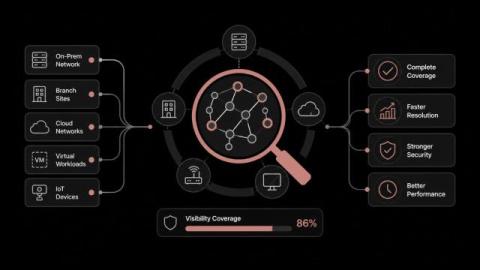
What is Network Visibility and How do you Achieve It?

What happens when the segment that failed was never reporting to anything? The incident stops being a diagnosis and turns into a search, and the cost of that search lands on the business rather than on the network team. Network visibility measures how much of your environment can account for itself under pressure. Most teams assume their coverage is broadly complete because their monitoring platform reports thousands of healthy objects.
Fin's CTO on Building Great Engineering Organizations in the AI Era

A few months ago, Darragh Curran, CTO at Fin (formerly Intercom) set a public goal to double engineering productivity and nearly tripled it instead. They did so by pulling a few levers: AI writing code at scale, building an AI-driven PR review system, leveraging observability as a trust mechanism, and with leadership becoming more hands-on through the transition.

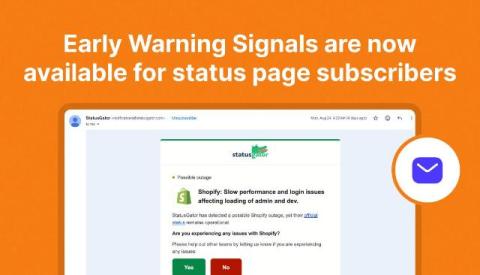
Early Warning Signals are now available for status page subscribers

Your status page subscribers can now receive Early Warning Signals in addition to regular outage alerts. Early Warning Signals is our flagship feature that detects outages before providers acknowledge them on their status pages. When we launched this feature two years ago, we had no idea how effective or beloved it would become. StatusGator now regularly detects outages at your most important providers, giving you that edge and answering the question: “Is it everyone? Or is it just me?”.

AI SRE Agent MCP Authentication by Header: Keep Keys Out of the Config

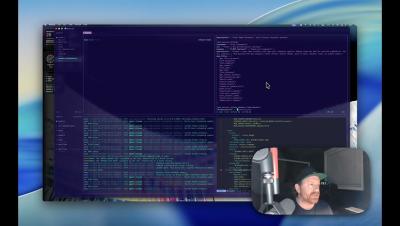
Nobody wants an API key sitting in an agent's config file on a shared server. Mike shows how AURA takes the credential off the request instead. AURA can hold your keys in its config file, but it does not have to. Mike Shearer, one of AURA's creators, walks through the alternative: AURA reads named headers off the incoming request and forwards them to the MCP servers it calls, so the credential never has to sit on disk.

AI SRE Agent Approval Workflow: Identity Forwarding to MCP Servers

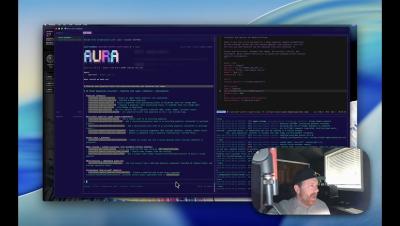
Two engineers can hold the same approve button and still not be allowed to make the same change. The key riding with the approval settles it. AURA's human in the loop config gates the create_pipeline tool on the Mezmo MCP server and sends each request to a webhook for review. A mock UI stands in for the approval system here, and Mike walks through the payload schema so you can point it at your own.

AI SRE Agent ChatOps: How AURA Runs in a Slack Incident Channel

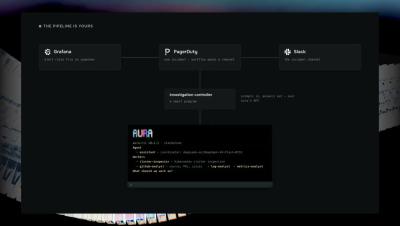
AURA runs as a standalone service and knows nothing about Slack. A separate bridge streams events off its API, which is what makes the chat tool swappable. This is the implementation behind the automated PagerDuty investigation demo. Jeff Vogt walks the whole path an incident takes: a Grafana alert fires PagerDuty, PagerDuty opens a Slack channel and sends a webhook, and a service called AURA Bridge picks it up and calls AURA's API with an investigation prompt.

Tech Talk #14 - Skill issue: A guide to Using AI skills with VictoriaMetrics

An engineer in an incident does not have a metrics problem, a logs problem and a traces problem. They have one question, and answering it today means opening three interfaces and retyping the same timestamp, service name and tenant into each one.

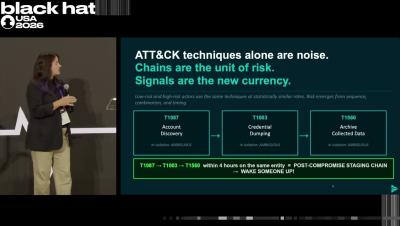
Introducing APEX: Adversarial Pattern Extraction and Correlation

In this Black Hat talk, Nicole Beckwith introduces APEX (Adversarial Pattern Extraction and Correlation), a detection framework—not a Cribl product—that clusters TTP-based signals around entities to support behavioral detection. It is intended for security practitioners, SOC and detection teams, and threat hunters who want to learn how to use raw telemetry or OCSF data, TTP chaining, time windows, criticality, and cross-correlation to detect behavior beyond static indicators and rule-count coverage.