Announcing Aiven for OpenSearch
Aiven is happy to announce the newest arrival on the OpenSearch scene! Read more about Aiven for OpenSearch and how existing customers can upgrade from Elasticsearch without issues.


Most companies don’t really put their data to work. These strategies can enable IT leaders to maximize value of cloud investments and drive business growth The amount of data businesses store in the cloud is growing 33% per year. Yet more than two-thirds of that information is never used. This failure is undermining CIOs in critical ways.
The yield() function determines which table inputs should be returned in a Flux script. The yield() function also assigns a name to the output of a Flux query. The name is stored in the default annotation. For example, if we query the following table: Without the yield function: The following Annotated CSV output is returned. Notice the default annotation is set to _results by default. Now if we add the yield() function: The following Annotated CSV output is returned.
For modern businesses faced with increasing volumes and complexity of data, it’s no longer efficient or feasible to rely on analyzing data in BI dashboards. Traditional dashboards are great at providing business leaders with insights into what’s happened in the past, but what if they need actionable information in real time? What if they want to use their data to estimate what may happen in the future? Companies are taking notice.
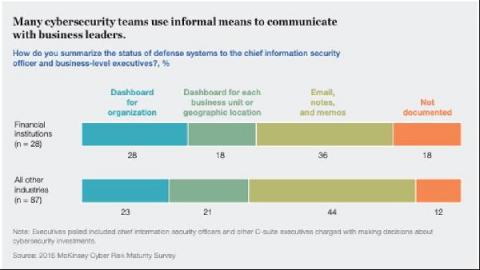
Defending against security threats is a full-time job. The question is: Whose job is it? Our cybersecurity landscape is in constant flux, with more users having increased access to corporate data, assets, APIs, and other entry points into the organization.
We are pleased to announce the general availability of Elastic 7.15, a release that brings a broad set of new capabilities to the Elastic Search Platform (including Elasticsearch and Kibana) and its three built-in solutions — Elastic Enterprise Search, Elastic Observability, and Elastic Security.
When organizations track metrics by the thousands, millions, or even billions, it’s helpful in many ways to understand which metrics have close relationships, meaning when one metric behaves in a certain way, one or more additional metrics can be expected to behave in a similar or opposite way.