Operations | Monitoring | ITSM | DevOps | Cloud

The latest News and Information on Incident Management, On-Call, Incident Response and related technologies.

Meet Root Cause Changes from BigPanda - IT Ops, NOC and DevOps Teams' Best friend For Supporting Fast-Moving IT Stacks

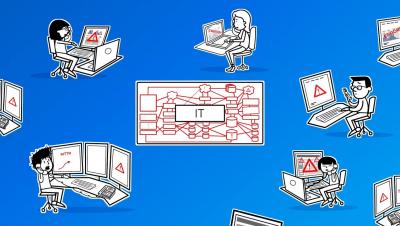
TL;DR: Fast-moving IT stacks see frequent, long and painful outages. Thousands of changes – planned, unplanned and shadow changes – are one of the main reasons behind this. Until now, IT Ops, NOC & DevOps teams didn’t have an easy way to get a real-time answer to the “What Changed?” question – the answer that can help reduce the duration of outages and incidents in these fast-moving IT stacks. Now, with BigPanda Root Cause Changes, they do.
What Is MTTR? Mean Time to Repair, Explained In Detail

Whether you’re slinging code, managing developers, wrangling servers, or filling most other roles in the modern tech firm, you care about keeping your software running while bringing home the bacon. If your website or application is down, you’re not making money. (Or, if you aren’t in this for profit, your message isn’t getting to the people who need it.) Therefore, it’s everyone’s job to keep things running smoothly.

Join the alpha program for Mattermost's new Incident Response Workflow app

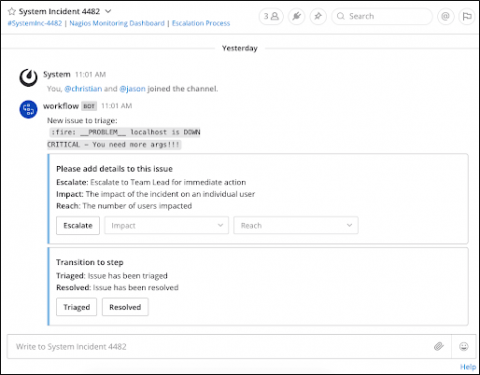
Is your InfoSec or DevSecOps team ready to resolve issues as quickly as possible? To help accelerate response times, we’re happy to announce the alpha release of the Mattermost Incident Response Workflow application for Enterprise Edition, supported in Mattermost 5.12 and later. The app is designed specifically for incident response and enables you to connect all your workflows, automate repetitive tasks, and collaborate on incidents—all without leaving Mattermost.

Rise of the Digital Operations Ecosystem

Many organizations today are dealing today a lot of complexity and disconnected tools. Teams and departments are running in parallel but siloed from each other. People are burned out from a lot of manual work, and everyone is crunched for time. This is not a happy ecosystem to live in. If this digital ecosystem doesn’t work together, your teams don’t know what’s going on and they lack the right information.

It Came From Below

I’m going to assume most people who read this blog are familiar with PagerDuty. But just in case anyone isn’t, PagerDuty is a tool we use in IT to notify us if some predefined check has failed. Maybe a key process has died or maybe we’re not seeing our expected traffic volume or maybe our server has stopped responding to ping. Whatever it is, PagerDuty will relentlessly, remorselessly, and loudly notify whoever is on call that something needs attention.

Achieve Better Accountability With Full-Service Ownership

Software teams seeking to provide better products and services must focus on faster release cycles. But running reliable systems at ever-increasing speeds presents a big challenge. Software teams can have both quality and speed by adjusting the policies around ongoing service ownership. While on-call plays a large part in this model, advancement in knowledge, more resilient code, increased collaboration, and practice also mean engineers don’t have to wake up to a nightmare.

What is a post mortem incident? How can we monitor this?

In particular, I liked very much the article that our colleague Sara Martin wrote in Pandora FMS blog about crisis management in information technology, these are the steps: Legend: “Jack’s Lantern (https://commons.wikimedia.org/wiki/File:Jack-o-lantern.svg) This article starts from point number five: when after a certain time of recovery the crisis has been solved and becomes a post mortem incident. This word comes from the Latin language and it means “after death”.

How to Manage a Critical Incident

Critical incidents don’t come with a predetermined schedule or warning. So, it’s up to your organization to have an incident response procedure in place to combat these crises. Don’t have one? Read below to perfect your incident response operations and adopt the right tools and procedures to fight against any critical event.