Operations | Monitoring | ITSM | DevOps | Cloud

Language AI to physical AI explained

What is physical AI? Physical AI embeds machine learning directly into hardware, enabling algorithms to interact, move, and perform autonomous tasks in the physical world. Traditionally, robots relied on precise, hardcoded coordinates; if an object shifted by a single millimeter, the entire system failed. Today, robotics is moving past rigid automation toward truly adaptive architecture. Neural networks help machines process raw sensor data in real time. Consequently, machines can dynamically reason through the unpredictable physical world.

Ship Reliable AI Faster: How to Operate AI Agents with Control and Confidence

Replace "AI shipped on hope" with an operating model that holds up once real users depend on it. AI quality is multi-dimensional, covering accuracy, tone, safety, and faithfulness to user data, and can't be debugged from outputs alone. Without visibility into what their AI actually did in production, teams miss regressions, reverse-engineer chains by hand, and watch a single bad answer erode trust built over hundreds of right ones.

The AI vendors just started watching the meter. CFOs need to watch the return.

On June 18, OpenAI gave ChatGPT Enterprise admins new credit usage analytics and spend controls. It’s a single view of credit consumption broken down by user, product, and model, default workspace budgets, per-group limits, and a Cost API for pulling the data into their own systems. Two days earlier, Microsoft shipped Copilot Cowork with spending limits, budget allocation, usage alerts, and user-level caps. This is a step in the right direction.

Seedance 2.5: Cinematic AI Storytelling

In the rapidly expanding digital economy, the ability to produce high-quality video content at scale has become the primary competitive advantage for e-commerce brands, self-media creators, and digital production studios. As audience attention spans continue to shrink, the necessity for high-fidelity, emotionally resonant, and visually consistent video content has reached an all-time high. This is where Seedance 2.5 enters the picture, representing a significant leap forward in generative AI video technology.

Creating an agentic feedback loop with reliability guardrails

Reliability guardrails help make sure that your applications stay reliable without slowing down. In an earlier blog, we went into why agentic AI development needs reliability guardrails. It went over how the increased speed of AI development demands automated guardrails to verify resilience and what kinds of tests these guardrails should cover. But that’s only the beginning. By themselves, guardrails act as a gate to ensure resilience mechanisms hold under rapid changes.

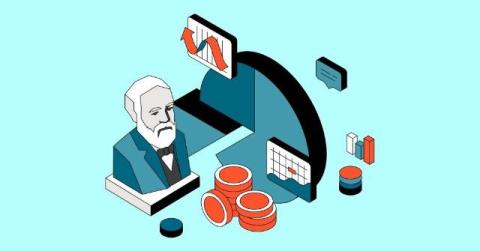
The secret behind Carnegie's fortune and the lesson for the AI era

Point A: 1835. Andrew Carnegie is born in a weaver’s cottage in Dunfermline, Scotland. The cottage has one main room, which the Carnegies share with another family. Point B: 1901. Andrew Carnegie becomes the richest man in the world when Carnegie Steel Company wins the Iron vs. Steel industrialists’ war, and he sells the company to J.P. Morgan for the modern equivalent of $450 billion.

Azure FinOps with AI: What's New in Turbo360 v5.2

Turbo360 v5.2 is the biggest AI update we've shipped. Every module now has AI built in - not just to surface data, but to explain it, guide you through it, and help non-experts take action without needing to call in a specialist. In this video, Mike Stephenson walks through every new feature in v5.2, from AI agents that explain cost drivers and rightsizing recommendations, to a brand new Savings Tracker that gives you a better way to prove FinOps impact to management.

How AI is changing platform engineering

AI is changing software development fast. But what does that actually mean for platform engineering teams? In this conversation, Civo's John Dietz and M R Rishi dig into what they're seeing on the ground, the 10x effect of AI on app count, what it means for platform team workloads, the debugging skills that are quietly being lost, and whether Kubernetes itself might eventually become just another abstraction.

Where did all my Claude Code tokens go?

Most teams judge their AI coding agent on two things: the monthly bill and a feeling. The bill tells you what you spent and the feeling tells you whether it seems to be helping, but neither one tells you what the agent actually did. As these tools move into the critical path of how software ships, that gap is starting to matter. I wanted to replace the feeling with something I could measure and understand what shapes of work affects this bill, so I decided to run an experiment on myself.