This post is part of a series featuring customers, partners, and experienced DX Unified Infrastructure Management (DX UIM) practitioners. We’ve asked these expert users to share their knowledge with the broader DX UIM community. Today, we’re featuring Kathy Solomon, the Unix Systems Administrator for the R&D Support organization within Broadcom IT.
I often hear from customers who complain about how “classic” performance testing (i.e., end-to-end testing with high volume of virtual users) of their applications before release slows down the cycle time by several weeks. In addition, the testing significantly consumes both people and infrastructure (hardware and software license) resources.
DevOps is a composition of enhanced engineering practices that reduce lead time and increase the frequency of delivery. The primary goal of DevOps is to ensure operations team members are engaged and collaborating with development from the very beginning of a project or product development. Within many enterprises, teams are being compelled to reassess the security of their DevOps implementations. Recent news on vulnerabilities like Sun Burst and Log4j underscore why this is so critical.
AppNeta by Broadcom Software is a SaaS platform that enables large enterprises to gain visibility into their business-critical applications as experienced from remote offices and to understand how the networks that drive them operate. Because of our network focus we often get compared to traditional monitoring solutions, but with a quick overview it should be easy to explain to others in your organization how we differentiate.
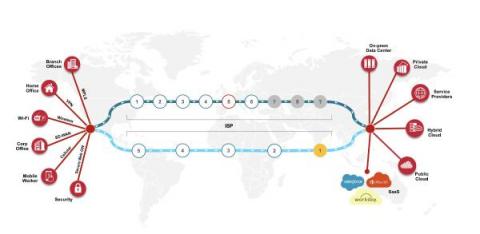
While network and application performance grow increasingly business critical, IT’s ability to track and control service levels continues to be diminished. The shift to hybrid and remote work means users are now highly reliant upon public internet connections, which require additional security at the network edge. Plus, the majority of apps, internal or external, are now cloud hosted.
While you often read about the move to “the cloud,” the reality is that most organizations aren’t moving to a single cloud, but multiple cloud environments from multiple providers. There can be a range of reasons for companies to use cloud services from more than one provider today.
A NoSQL database provides a mechanism for data storage and retrieval, without using the tabular relations associated with relational databases. Originally referred to as "non-SQL" or "non-relational" databases, NoSQL databases are increasingly used in big data and real-time web application environments. NoSQL systems are also sometimes called “Not only SQL” to emphasize that they may support SQL-like query languages or sit alongside SQL databases in polyglot-persistent architectures.