Operations | Monitoring | ITSM | DevOps | Cloud

Visual Link Analysis with Splunk: Part 2 - The Visual Part

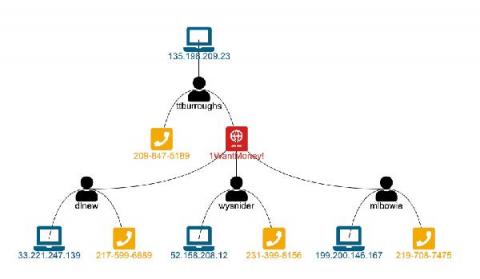
In part one of the "Visual Analysis with Splunk" blog series, "Visual Link Analysis with Splunk: Part 1 - Data Reduction," we covered how to take a large data set and convert it to only linked data in Splunk Enterprise. Now let’s look at how we can start visualizing the data we found that contains links. Why, you may ask, when we just developed a nice table of data that shows us links? Tables of data don’t always work well if you have more than one page of data.

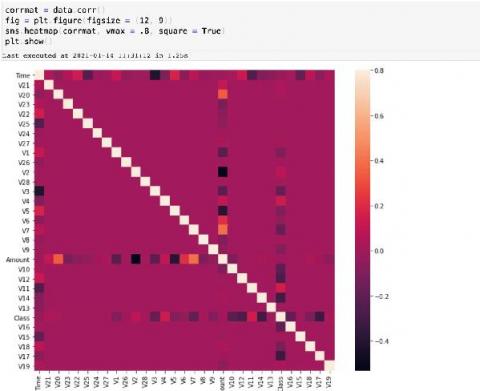
Detecting Credit Card Fraud Using SMLE

Organizations lose billions of dollars to fraud each year. For instance, the financial services sector projects losses to reach $40 billion per year in the next 5-7 years unless financial institutions, merchants, and consumers become more diligent about fraud detection and prevention. Splunk delivers integrated enterprise fraud management software that quickly defines behavior patterns and protects enterprise information from malicious actors.

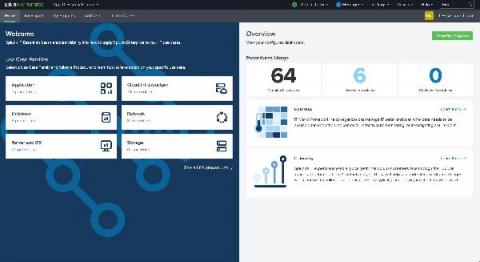
A New Fast Lane to Value: Introducing Splunk's IT Essentials Learn and Work Apps

We often hear that our customers love using Splunk, know the power behind our platform and want to expand usage to IT. But they aren’t sure what steps to take first. We want our customers to maximize their Splunk investment and get them jump-started with Splunk for IT use cases by providing the guidance and best practices they seek.

Detecting the Sudo Baron Samedit Vulnerability and Attack

On January 26th, 2021, Qualys reported that many versions of SUDO (1.8.2 to 1.8.31p2 and 1.9.0 to 1.9.5p1) are vulnerable (CVE-2021-3156) to a buffer overflow attack dubbed Baron Samedit that can result in privilege escalations. Qualys was able to use this vulnerability to gain root on at least Ubuntu 20.04 (Sudo 1.8.31), Debian 10 (Sudo 1.8.27), and Fedora 33 (Sudo 1.9.2), some of the most modern and widely used Linux operating systems.

Getting to Know Google Cloud Audit Logs

So you've set up a Google Cloud Logging sink along with a Dataflow pipeline and are happily ingesting these events into your Splunk infrastructure — great! But now what? How do you start to get meaningful insights from this data? In this blog post, I'll share eight useful signals hiding within Google Cloud audit logs that will help you uncover meaningful insights. You'll learn how to detect: Finally, we’ll wrap up with a simple dashboard that captures all these queries in one place.

Walkthrough to Set Up the Deep Learning Toolkit for Splunk with Amazon EKS

The Splunk Deep Learning Toolkit (DLTK) is a very powerful tool that allows you to offload compute resources to external container environments. Additionally, you can use GPU or SPARK environments. In last Splunk blog post, The Power of Deep Learning Analytics and GPU Acceleration, you can learn more about building a GPU-based environment. Splunk DLTK supports Docker as well as Kubernetes and OpenShift as container environments.

Get to Know Splunk Machine Learning Environment (SMLE)

One of our most exciting new projects at Splunk is coming to life. Over the past year, we have been hard at work putting together our vision: a place where Splunk admins, NOC/SOC teams, data analysts, and data scientists can collaborate, experiment, and operationalize their work, all in a single environment inside the Splunk ecosystem. We call it Splunk Machine Learning Environment (SMLE).

Splunk SOAR Playbooks: Finding and Disabling Inactive Users on AWS

Every organization that uses AWS has a set of user accounts that grant access to resources and data. The Identity and Access Management (IAM) service is the part of AWS that keeps track of all the users, groups, roles and policies that provide that access. Because it controls permissions for all other services, IAM is probably the single most important service in AWS to focus on from a security perspective.