Operations | Monitoring | ITSM | DevOps | Cloud

The latest News and Information on Containers, Kubernetes, Docker and related technologies.

Best Practices for Monitoring Kubernetes using Grafana

Microservices and containers have taken the tech industry by storm. Kubernetes is one of the tools that has evolved to manage these new aspects of software development. It is an open-source system for automating deployment, scaling, and management of containerized applications. One of the biggest challenges that organizations face when adopting Kubernetes is performing monitoring tasks in this dynamic environment.

Fleet Management for Kubernetes is Here

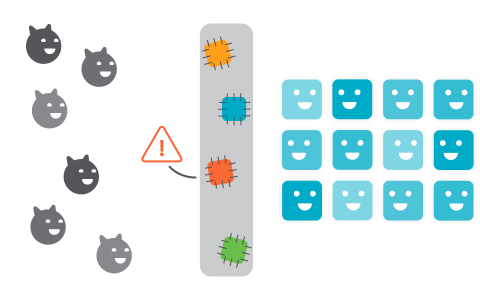
Today I’m excited to announce Fleet, a new open source project from the team at Rancher focused on managing fleets of Kubernetes clusters. Ever since Rancher 1.0 shipped in 2016, Rancher has provided a central control plane for managing multiple clusters. As pioneers of Kubernetes multi-cluster management, we have seen firsthand how users have consistently increased the number of clusters under management.

Announcing Hosted Rancher with Rancher 2.4

We’ve heard from many of our customers and prospects that they love Rancher but just don’t have the staff and expertise to operate the platform. Figuring out the compute, storage and networking architecture can be a challenge. Performing upgrades, backups and troubleshooting can also be time consuming. Monitoring the environment and knowing when to scale up or down, horizontally or vertically, is yet another thing to worry about.

From Web Scale to Edge Scale: Rancher 2.4 Supports 2,000 Clusters on its Way to 1 Million

Rancher 2.4 is here – with new under-the-hood changes that pave the way to supporting up to 1 million clusters. That’s probably the most exciting capability in the new version. But you might ask: why would anyone want to run thousands of Kubernetes clusters – let alone tens of thousands, hundreds of thousands or more? At Rancher Labs, we believe the future of Kubernetes is multi-cluster and fully heterogeneous.

Weathering an Economic Downturn: How Cycle Can Help Your Business Survive

In the last month, we’ve seen one of the most dramatic movements in economic activity ever recorded. Many business owners are clutched in the grips of mandatory closures and uncertainty of the future, for their business and for their employees. The tech world has been hit less hard — at least for now. Remote work is second nature to many of us and offering our products in the digital space means we are open for business.

Alcide kAudit Integrates with Sumo Logic

Alcide recently introduced Alcide kAudit, an automatic tool for analyzing Kubernetes Audit logs. This tool focuses on detecting non-compliant and anomalous behavior of users, automated service accounts and suspicious administration operations. Alcide’s recent integration with Sumo Logic enables users to gain full access to insights and real-time alerts from Alcide kAudit.

Migrating to Kubernetes

The reasons to move to Kubernetes are many and compelling. This post doesn’t make the case that you should migrate, but assumes you have already decided that you want to. When you’re clear on what you want to do and why you want to do it, the questions of “When?” and “How?” become your focus. What follows centers on the question of how to approach making Kubernetes the platform on which your workloads thrive.