Operations | Monitoring | ITSM | DevOps | Cloud

The latest News and Information on Log Management, Log Analytics and related technologies.

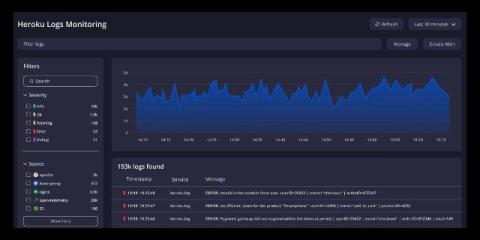
The Ultimate Guide to Heroku Logs Monitoring

Effective application monitoring is essential for developers, and Heroku, a popular Platform-as-a-Service (PaaS), provides a solid platform for deploying apps. However, monitoring logs is often an overlooked aspect of maintaining applications on Heroku. Heroku logs provide valuable information to help find bottlenecks, fix issues, and improve application performance.
Top 5 Things to Consider When Selecting a Log Analysis Platform

Here in this blog, we will discuss in detail how log analysis techniques are vital for the operation and protection of today’s complex IT networks. Understanding the functioning of the systems from where the log data is collected and analyzing user behavior is very much possible from log data originating from an organization’s software applications, networks, and security tools. They can also identify some situations that could be implying security issues.

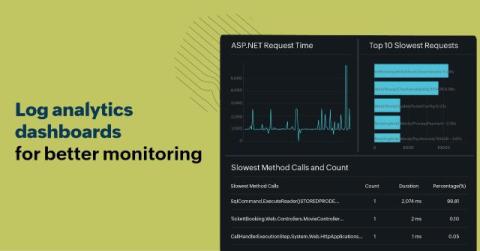
Leverage log analytics dashboards for better monitoring

Visuals often communicate better than words, and this is also true for monitoring systems. Dashboards are an essential feature in log monitoring systems, providing great value to those who need to analyze and monitor logs. They help centralize log data in a simple, easy-to-read format, avoid clutter, and allow the team to focus on critical metrics.

Splunk AppDynamics 24.10 Accelerates Deployment And MTTR

Splunk AppDynamics, now part of the Splunk Observability portfolio, provides critical observability for traditional 3-tier/n-tier applications and helps IT Operations teams quickly discover root causes of issues before end-users even notice. AppDynamics complements Splunk Observability Cloud, which is optimized for observing cloud-native applications by DevOps and engineering teams.

AWS re:Invent '24: Generative AI Observability, Platform Engineering, and 99.9995% Availability

I attended Amazon Web Services re:Invent conference. This is AWS's annual user conference, which takes over most of Las Vegas for a week. There’s a lot to do and take in—customer stories galore, new tech, learning different use cases, and all the walking. But you’re here to hear what I learned, so I’ve broken it down into sections. Enjoy!

Critical Context: Adding Trace Quickview to Logz.io's Explore

Complexity rules the day within the world of data systems and pipelines. A goal for any observability practice is to help reduce complexity and give users and administrators a clear view of what’s happening in any system. This is the path to unified observability, a mature system where monitoring and troubleshooting are streamlined. This has been difficult to achieve for many organizations.

The evolving role of SREs: Balancing reliability, cost, and innovation

A look at the expanding roles of SREs and the new skills needed: cost management and AI Imagine the CTO walks into your team meeting and drops a bombshell: "We need to cut our cloud costs by 30% this quarter." As the lead SRE, this might cause a strong reaction — isn’t your job about ensuring reliability? When did you become responsible for the company's cloud bill? If you've had a similar experience, you're not alone. The role of site reliability engineers (SREs) is evolving fast.

Diving into .NET 9.0, Blazor, and Observability with Coralogix

So, there I was, a newbie to.NET 9.0, Blazor, and Coralogix, standing on the precipice of observability in a world of production bugs and development mysteries. As an Agile enthusiast, I’m well versed in all things “observability” and how it’s a game-changer for root cause analysis, especially in today’s rapid, iterative development cycles. Observability is like getting X-ray vision into your application to understand what’s truly happening based on system outputs.

Complete Python Logging Guide: Best Practices & Implementation

Python's logging system provides powerful tools for application monitoring, debugging, and maintenance. This comprehensive guide covers everything from basic setup to advanced implementation strategies, helping you build robust logging solutions for your Python applications.