Operations | Monitoring | ITSM | DevOps | Cloud

The latest News and Information on DevOps, CI/CD, Automation and related technologies.

Containers vs. VMs: Which Should You Use?

Both containers and virtual machines are virtual environments that comprise a number of computing components and are independent in nature, thereby allowing developers to scale applications in isolated runtimes. Both of these concepts aim at providing independent sets of resources to individual computing environments to ensure quick and reliable application performance.

Monitoring RabbitMQ With Prometheus and Grafana

Prometheus and Grafana are powerful monitoring solutions. Combined together, you can build insightful monitoring metrics and display analysis on a beautiful dashboard. Among many external systems and applications, you can also monitor RabbitMQ with both toolkits. To integrate RabbitMQ into your Prometheus and Grafana, you can try MetricFire that provides hosted solutions for Prometheus and Grafana.

Bringing rich and real-time infrastructure monitoring to Netdata Cloud

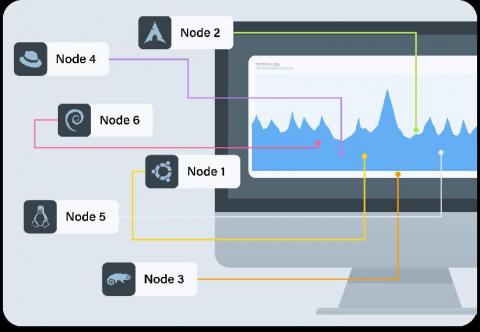
The Netdata Agent is well-equipped to solve monitoring and troubleshooting challenges for single nodes. We love that the Agent is so valuable to our users, but Netdata Cloud is designed for infrastructure monitoring. That’s why we’re working so hard to offer even more capabilities and help users monitor and troubleshoot infrastructures of all sizes, entirely for free!

Introduction to Performance Monitoring Metrics

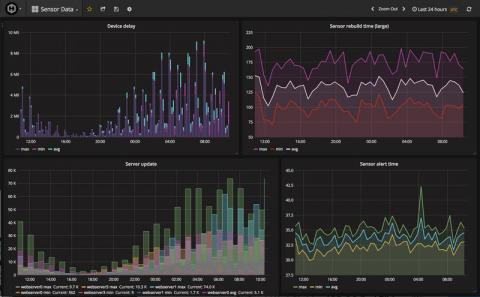
The reliability and stability of your services directly depend on how well you understand the state of your infrastructure and services. A great monitoring system will allow you to understand your infrastructure better. Monitoring the performance of your system allows you to not only fix current problems but also make changes to your infrastructure to avoid them in the future.

Track open source security exposure with Snyk and Datadog

Using open source code makes it easier to build applications, but the freely available nature of open source code introduces the risk of pulling potential security vulnerabilities into your environment. Knowing whether or not customers are actually accessing the vulnerable parts of your application is key to triaging security threats without spending hours fixing an issue that doesn’t affect end users.

Stackery is now a Amazon Linux 2 Ready Partner

As part of our expanding relationship with Amazon, we are excited to announce that Stackery is now recognized as Amazon Linux 2 Ready Partner, part of the Amazon Web Services (AWS) Service Ready Program. This designation recognizes that we are certified to run on Amazon Linux 2, the next generation of Amazon Linux, a Linux server operating system from AWS.

Telco cloud: what is that?

Telco cloud or a network function virtualisation infrastructure (NFVI) is a cloud environment optimised for telco workloads. It is usually based on well-known technologies like OpenStack. Thus, in many ways, it resembles ordinary clouds. On the other hand, however, it differs from them. This is because telco workloads have very specific requirements. Those include performance acceleration, high level of security and orchestration capabilities.

OpenStack at 10 - from peak to plateau of productivity

This week is the latest Open Infrastructure Summit, in a week where the OpenStack Foundation became the Open Infrastructure Foundation to reflect the expansion of the organisation’s mission, scope and community to advance open source over the next decade to support open infrastructure. It is also ten years since OpenStack launched and a lot has changed during that time.

Running Elastic Cloud on Kubernetes from Azure Kubernetes Service

It's safe to say that It's safe to say that Kubernetes is the de facto standard for orchestrating containers and the applications running in them. As the standard, a variety of managed services and orchestration options are available to choose from. In this blog post, we're going to take a look at running the Elastic Stack on Azure Kubernetes Service (AKS) using Elastic Cloud on Kubernetes (ECK) as the operator.