The latest News and Information on DevOps, CI/CD, Automation and related technologies.
Before we dive into the gap in cloud network security, let’s take a step back. If you’ve been in Operations for a while, you might remember how it used to be. “Network” was a team. When you needed to open a port on the network, you had to provide an exhaustive definition of the change, explaining what port you needed, what external addresses should be able to reach it, and where it should be routed to internally.
The first time I created a cloud compute instance, then still called a “Cloud VM”, was an almost transcendent moment. It was like magic. I was at my first organization which had adopted the cloud, in my first DevOps position, and I immediately knew that the world had changed.
This week, Hashicorp announced the launch of their new product - Waypoint - aiming to simplify the way developers build and run apps in the Cloud and on any platform (like Kubernetes). The project is open source and is well adopted by the dev community. As CEO and co-founder of Qovery, I am enthusiastic to see this product live. At Qovery, we believe in making the developer’s life easier, and seeing big Open Source companies moving in this direction is a good thing for all of us.
Amazon Web Services and Microsoft Azure do not need any formal introduction. They are two major players in the cloud computing and virtualization industry. AWS leads with about 32% market share. On the other hand, Azure is the next closest with about 17% market share. Both the tech giants, AWS and Azure, have been on an onward growth trajectory with revenue boosts coming in every quarter.
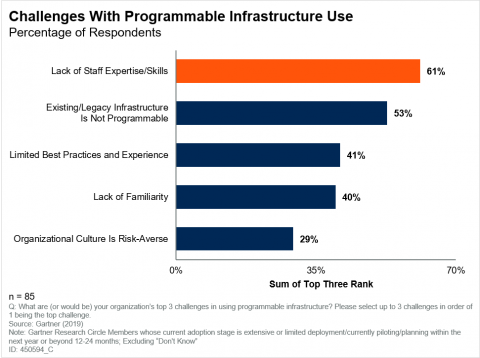
A hybrid infrastructure strategy is integral in creating a successful digital transformation in your enterprise. Programmable infrastructure (PI), or Infrastructure as Code, makes these strategies work in the real world. This blog will cover some highlights from the Gartner Report on why I&O leaders must adopt programmable infrastructure to enhance customer-focused agility.
Terraform is an increasingly popular infrastructure-as-code tool for teams that manage cloud environments spanning many service providers. New users are often drawn to Terraform’s ability to quickly provision compute instances and similar resources from infrastructure providers, but Terraform can also manage platform-as-a-service and software-as-a-service resources.
AWS offers the ability to login to a web UI dashboard. In this dashboard, you can add, edit, and deploy various cloud resources. When I was first getting started with AWS, this is where I began for two reasons: My very first full-time job as a Software Engineer was on a small enough team that all of our infrastructure was setup using the AWS console in a single AWS account.
15th October 2020: Canonical today announced autonomous high availability (HA) clustering in MicroK8s, the lightweight Kubernetes. Already popular for IoT and developer workstations, MicroK8s now gains resilience for production workloads in cloud and server deployments. High availability is enabled automatically once three or more nodes are clustered, and the data store migrates automatically between nodes to maintain quorum in the event of a failure.