It's Go Time: Executing a Cloud Migration
A tactical overview of key steps in the cloud migrations journey, from getting buy in with internal stakeholders to building your migration runbook.


The latest News and Information on DevOps, CI/CD, Automation and related technologies.
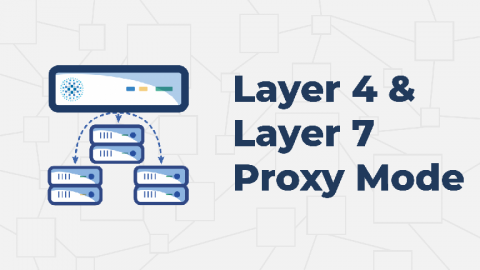
HAProxy can run in two different modes: TCP or HTTP. When operating in TCP mode, we say that it acts as a layer 4 proxy. In HTTP mode, we say that it acts as a layer 7 proxy. To understand the difference, you must first learn about the Open Systems Interconnection (OSI) model, which helps IT pros conceptualize and explain where a piece of software fits in the context of a computer network.
George Romero’s zombie classic, Dawn of the Dead, is the perfect analogy for a lot like the DevOps experience. Your cluster of services is like your Monroeville Mall. Your safe haven where you live and work for years on end, toiling away at survival. But who are the zombies? The answer isn’t always clear when you’re busy chasing down alerts at 2 AM.
CI/CD is a software development strategy which allows for faster development by introducing automation while still maintaining the quality of code deployed to production. Implementing a CI/CD pipeline not only promotes a safer deployment process but also improves the incident response process. CI/CD is broken down into multiple parts. The CI refers to continuous integration, meanwhile, the CD can refer to continuous delivery and/or continuous deployment.
DevOps practices, and the teams that implement them, are becoming increasingly critical to the value which any company provides its customers. This was the key message throughout a recent fireside chat between DevOps Institute Chief Ambassador Helen Beal and Moogsoft VP of Product and Design Adam Frank. A great paradox of the digital era is that, once written, software is invisible to those who write it.
When we were building out our first UI at Speedscale we wanted to get something up and running quickly. Fortunately there are a ton of options of web frameworks that can be used to throw together a quick “hello world” kind of application. However, a SaaS application needs a lot more than just displaying data. It needs to handle user authentication, loading data from a backend API, displaying data in a variety of formats, etc.