Operations | Monitoring | ITSM | DevOps | Cloud

What Are the Differences Between Elastic Beanstalk, EKS, ECS, EC2, Lambda, and Fargate?

Life before containerization was a sore spot for developers. The satisfaction of writing code was constantly overshadowed by the frustration of attempting to force code into production. For many, deployments meant hours of reconfiguring libraries and dependencies for each environment. It was a tedious process prone to error, and it led to a lot of rework. Today, developers can deploy code using new technology such as cloud computing, containers, and container orchestration.

Red Team vs. Blue Team: The Role of Each in Finding Your Cybersecurity Weakness

As the modern world moves almost entirely online, so do the issues we used only to face in the physical world. In years gone by, security may have taken the form of a CCTV camera or a person hired to ensure customers don't steal from your premises. Well, as you can probably tell, neither of these solutions works when it comes to cybersecurity and keeping a business safe online.

DevOps State of Mind Ep. 9: Recruiting for a DevOps Culture

Liesse Jones: Today we're joined by Anna-Marie Gutierrez-Lee, affectionately known as AMG, who's the Director of Talent Acquisition at LogDNA. She's passionate about mentoring recruiting teams and connecting talent to their dream careers, while fostering a genuine and positive candidate experience. Today, we're going to talk about how to recruit for a DevOps culture and why it's so important to bring more underrepresented talent into tech.

Automated Zero Trust: The Only Thing to Put Your Trust in

There’s no question that centralized identity and access management (IAM) helps companies reduce risk and prevent attacks. But, as this week’s Okta attack shows, centralized IAM doesn’t eliminate all risks. Attackers with access to IAM data can use this information to easily access downstream systems or modify permissions to grant elevated access to malicious parties.

Don't Forget About Kubernetes Jobs - Shipa Jobs Support

When I was making my first switch from a product engineering team to being field facing software engineer, one of my first projects was an integration project for a federal agency. The very first piece of enterprise software minus my productivity and development suite I was exposed to was BMC’s Control-M about 15 years ago. A lot of batch files to extract and transform data had to be run in order and on a daily basis; Control-M at the time was a job runner.

Benefits of scheduling continuous integration pipelines

Scheduling is an integral part of software development practices. Tools for scheduling jobs help development teams save time by scheduling recurring tasks — like modifying a database or sending out periodic emails — for execution at specified times. There are many to choose from, including cron for Linux, scheduled tasks for Windows, launchd for macOS, Jobber, and anacron.

Logic App Best practices, Tips and Tricks: #7 Learn from failures

Welcome once again to another Logic App Best practices, Tips, and Tricks. In my previous blog posts, I talked about some of the most essential best practices you should have while working with the Azure Logic App: And some tips and tricks: Today I’m going to speak about another critical Best practice, Tips, and Tricks that is often overlooked: learning from failures.

WhatsUp Gold Lesson: How Do I Configure a Device to Monitor My Voice over IP (VoIP) SLA?

WhatsUp Gold provides specialized Voice over Internet Protocol (VoIP) Service Level Agreement (SLA) monitoring necessary for tracking Quality of Service (QoS) and SLA metrics for your network of deployed VoIP devices (telephones, conference room devices and more). After you discover and configure devices for VoIP monitoring, you can view results and graphs on the WhatsUp Gold Custom Performance Monitors dashboard.

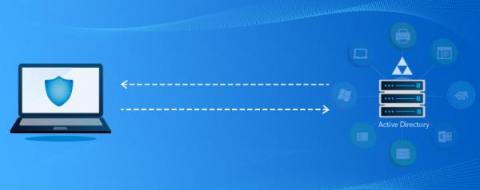
A practical approach to Active Directory Domain Services, Part 2: Active Directory and the Domain Name System

For readers who have returned to this blog after understanding the basics of Active Directory (AD) in part 1 of this series, welcome back! For all new readers: Hello! Get ready to jump into the world of AD. It would be good to take a quick peek at what was covered in part 1 before you continue. Be sure to read through part 1 as it will be your guide to: Part 2 of this series aims to introduce the interrelation of AD with the Domain Name System (DNS).