Operations | Monitoring | ITSM | DevOps | Cloud

Taking Inventory of Your Google Cloud

Splunk Cloud Architect Paul Davies recently authored and released the GCP Application Template, a blueprint of visualizations, reports, and searches focused on Google Cloud use cases. Many of the reports included in his application require Google Cloud asset inventory data to be periodically generated and sent into Splunk. But HOW exactly do you craft that inventory generation pipeline so you can "light-up" Paul's application dashboards and reports?

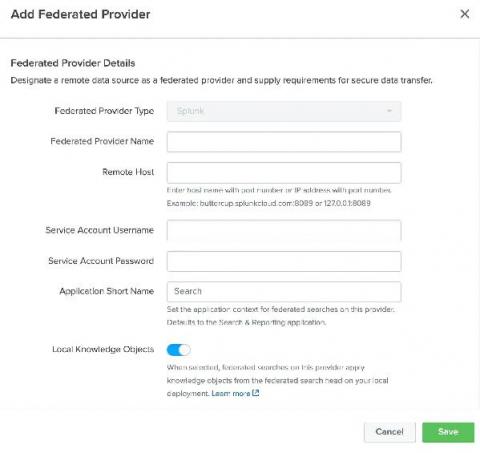
Introducing Splunk Federated Search

Rapid digital transformation partnered with increased cloud adoption have resulted in organizations generating unprecedentedly large volumes of data. This data is stored in disparate data repositories due to organizational boundaries, data protection, and privacy laws (e.g. GDPR). Additionally, it is stored across environment types with some kept in the cloud and often historical data and other sensitive data types are kept in on-premise environments contributing to more data silos.

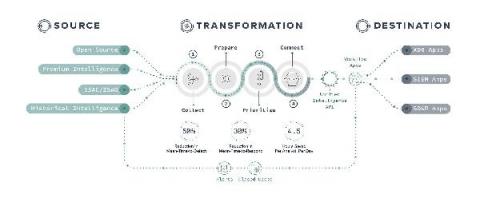
API 2.0: TruSTAR Operationalizes Data Orchestration and Normalization for a New Era in Intelligence Management

Today we released API 2.0, the latest version of TruSTAR’s API-First Intelligence Management Platform. This new version continues our commitment to simplify and streamline intelligence for automation in enterprise security intelligence management, and breaks through long-standing industry limitations around operationalizing data orchestration and normalization.

Managing Updates to the Splunk Cloud Vetting Process

Before apps can be installed in a customer’s Splunk Cloud deployments, these apps have to go through Splunk’s cloud vetting process. Cloud vetting helps ensure that apps are safe and performant for our mutual customers to use in Splunk Cloud. It’s important for us to make regular updates to our cloud vetting requirements in order to ensure apps running on Splunk Cloud are “up to snuff”.

Demystifying the Hype Around XDR

Extended Detection and Response (XDR) has generated a lot of buzz recently with press, analysts, and even customers. There’s no denying that, at face value, its promise of reduced complexity and cost while increasing detection and response is alluring. As security teams look to modernize their security tooling, they’re also looking for solutions to some of their largest challenges. Is XDR the answer? What is XDR, exactly, and how do you determine if it’s right for your organization?

Real User Monitoring: Past, Present and Future

Most front-end developers and practitioners are familiar with real user monitoring (RUM) tools as a means to understand how end-users are perceiving the performance of applications. Few people, however, are aware of the history of the RUM market, going back more than two decades. Over the years, as the internet has evolved with new technologies, RUM tools have evolved in lock-step to cater to the ever changing needs and use cases of engineering teams.

Monitoring IT Just Got Easier: Introducing the New Splunk App for Content Packs

We’re thrilled to announce the release of the Splunk App for Content Packs, an app that acts as a one-stop shop for prepackaged content and out-of-the-box searches and dashboards for common IT infrastructure monitoring sources, making it easy to get up and running with Splunk for IT use cases. In the past, you may have had to install and manage individual apps like Splunk App for VMWare and Splunk App for Windows Infrastructure.

The Digital Experience Trap: Are Companies Going Pro With Amateur Tools?

Recently, I’ve been thinking a lot about the relationship between world-class athletes and world-class IT systems. At first glance, it seems like there’d be little to compare, but there’s an interesting relationship between preparation and performance both these worlds share. During the Olympics, we see people cover 100 metres in under 10 seconds, cut through a pool in a minute, and stick landings with precision.

Five Questions Your Organization Must Ask to Prepare For a Ransomware Attack

Since last week, I’ve been speaking with Splunk customers and our own team about the cyberattacks impacting the Kaseya software platform. While Splunk was not impacted by the ransomware attack, as a security leader we want to help the industry by providing tools, guidance and support. It’s critical that we work together as a community to counter cybersecurity threats and share information about events like these.