The latest News and Information on Log Management, Log Analytics and related technologies.
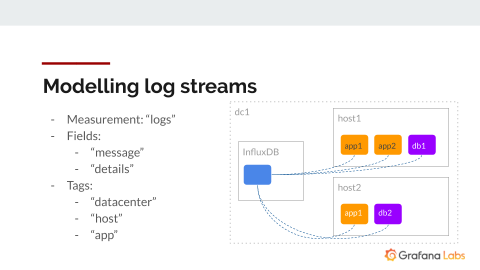
It’s time to stop thinking of Grafana as a general dashboarding tool. “Grafana Labs is on a journey to becoming a developer’s observability platform to support your classic DevOps use cases,” said Grafana Labs’ Director of UX, David Kaltschmidt, at a recent talk given at the 2019 InfluxDays Conference in London.
he Graylog community is what makes the product so exciting. It is awesome to see our community members take the time to help everyone over on our community forums, twitter, reddit or on their own private channels. I wanted to take some time to highlight a blog post by Community member BlueTeamNinja (aka Big Abe) who, after tackling a Graylog deployment shared lessons learned from a non-Linux/non-Elk person.
Logging your Kubernetes clusters to LogDNA is already a breeze, and now the LogDNA Kubernetes agent Helm chart makes it even easier. Helm is the official package manager for Kubernetes. With Helm, deploying and managing Kubernetes applications is as simple as typing a single command. This makes deploying the LogDNA agent across your cluster absolutely effortless.
Cloud is driving the way modern software is being built and deployed. At the forefront of this revolution is AWS, holding a whopping 33% of the cloud services market in Q1 2019. Considering AWS had a seven-year head start before its main competitors, Microsoft and Google, this dominance is not surprising. AWS offers, by far, the widest array of fully evolved cloud services, helping engineers to develop, deploy and run applications at cloud scale.
Managing agile software deployment for cloud infrastructure can be challenging. Deployments should be automated whenever possible to ensure consistent version management. Nevertheless, it can happen that identical software versions are not deployed to all servers. Such imperfect version management is a potential time-bomb. Distributed systems and microservices often rely on the deployment of the exact same software version installed on every cluster node.
In this post, I will describe in detail how to use the Threat Intelligence plugin that ships with Graylog. I’ll start with the steps necessary to prepare your data, then explain how to activate the feature and how to configure it for use.