In recent years, microservices have emerged as a popular architectural pattern. Although these self-contained services offer greater flexibility, scalability, and maintainability compared to monolithic applications, they can be difficult to manage without dedicated tools. Kubernetes, a scalable platform for orchestrating containerized applications, can help navigate your microservices.
Mezmo, formerly known as LogDNA, offers log analytics without any native capabilities around metrics and tracing data. While Coralogix’s full-stack observability supports logs, metrics, tracing and security data, for the purpose of this comparison with Mezmo, we will focus primarily on logs.
Google Cloud Platform (GCP) offers a wide range of features to support their core deliverable, highly available and scalable infrastructure-as-a-service. One of the features—GCP’s log management and available via GCP Log Explorer— is offered to support customers’ basic logging requirements.
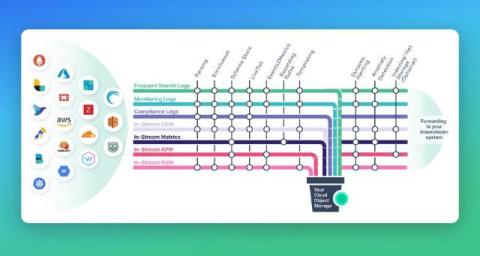
Observability architecture and design is becoming more important than ever among all types of IT teams. That’s because core elements in observability architecture are pivotal in ensuring complex software systems’ smooth functioning, reliability and resilience. And observability design can help you achieve operational excellence and deliver exceptional user experiences. In this article, we’ll delve into the vital role of observability design and architecture in IT environments.