Operations | Monitoring | ITSM | DevOps | Cloud

Institutional knowledge doesn't scale: Building an agentic data analyst

We’ve previously written about how deeply embedded data is in people’s day-to-day work at incident.io, and I’d have it no other way — demand for data is undoubtedly a good thing. What risks breaking at scale, however, is everything downstream of that demand: data-team capacity gets stretched thin, dashboard sprawl outpaces anyone's ability to maintain it, and stakeholders can't reach an answer without going through the data team.
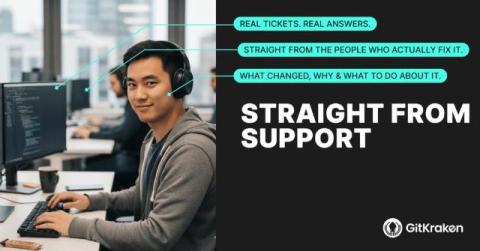
Straight from Support: AI credits, student plans, and why your Mac fans are so loud

Every so often we sit down with someone from our support team and turn their week into a blog post. First up: Roberto Vizcarra, on four things generating tickets lately, AI credits, student plans, integrations, and Mac performance. Here’s what changed and what to do about it.

AI cost reduction: tactics that preserve performance

AI cost reduction means lowering what you spend to run AI (tokens, inference, and compute) without sacrificing quality. The highest-leverage tactics, prompt caching, batching, and routing easy work to smaller models, cut spend 50 to 90% by removing waste, not capability. Somewhere right now, a finance leader is opening an AI bill that has quietly tripled, with no new product to show for it. Nobody approved it. No single decision caused it.

Shipped: Put every AI task on the cheapest model that can actually do it

If your team builds with AI, someone is defaulting to the biggest model available (say, Fable) because it feels like the safe pick, and the safe pick is almost always the most expensive one. One over-powered choice looks harmless on its own, but multiplied across every prompt, agent, and workflow, and you get a big number on the P&L. All that, yet nobody chose which model on purpose. As we like to say, using a default is not a decision.

Product leaders talk safer, faster releases and deeper analysis with Bits | This Month in Datadog

In July’s This Month in Datadog, Jeremy is joined by Datadog product leaders for in-depth conversations about how Bits enables you to confidently evaluate and release features containing AI-generated code, and use natural language to ask, understand, and act across Datadog.

Introducing MCP Connections: Netdata AI Now Reads From the Tools You Already Run

Netdata AI can now connect outward to the tools your team already runs, like GitHub, PagerDuty, Atlassian, or any custom MCP server, and read from them during an investigation. We call this MCP Connections. It’s the missing piece in the middle of every root-cause investigation: the alert tells you what changed, but the why is usually somewhere else entirely.

Key Benefits of Combining AI and DIA for Hospitality and Cafes

Hospitality venues and cafes run on speed - fast service, fast decisions, and increasingly, fast technology. As more businesses in this space adopt AI-driven tools for bookings, ordering, and guest personalisation, the quality of their internet connection has quietly become just as important as the tools themselves. Pairing artificial intelligence with a dedicated, business-grade connection isn't a technical detail reserved for large chains anymore; it's becoming a practical necessity for venues of every size.

An introduction to the NVIDIA B300: The Blackwell Ultra GPU

AI wasn't supposed to move this fast. Twelve months ago, the H100 was still the benchmark everyone measured themselves against. Six months ago, the B200 changed the calculus for serious inference workloads. Now there's the B300, NVIDIA's Blackwell Ultra GPU, and it doesn't just move the goalposts. It takes them off the pitch entirely. The B300 is the highest-performance GPU in the Blackwell family.