Operations | Monitoring | ITSM | DevOps | Cloud

17: There's No Life Without AI: Agents, MCP, and the Future of Automation With Viktor Farcic

On this episode of Kubex Talks, technology critic Viktor Farcic returns to talk with Andrew Hillier about the rapidly changing landscape in tech. Viktor has gone from AI skeptic to believer, claiming that there really is no life without AI anymore, from a professional standpoint.
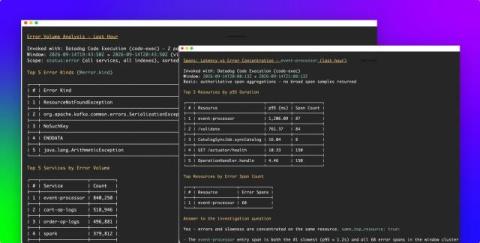

Cut AI agent cost and improve accuracy with Code Execution in the Datadog MCP Server

Observability investigations rarely follow a straight line. A latency question might cause an AI agent to start with a metric, pivot into traces, compare a deployment window, and finish by reducing thousands of logs to a few patterns. Each individual query is easy, but propagating context throughout an entire investigation can be tricky and expensive.

When users don't click thumbs up: Inferring agent feedback from Datadog telemetry

Collecting high-quality user feedback on agents, like from thumbs-up or thumbs-down buttons, is an important part of agent development. User feedback is needed for everything from basic gut checks on whether your agents are behaving well to planning and creating robust eval sets. It’s a critical part of Datadog’s Agent Observability, which provides explicit end-user feedback features for collecting and analyzing it.

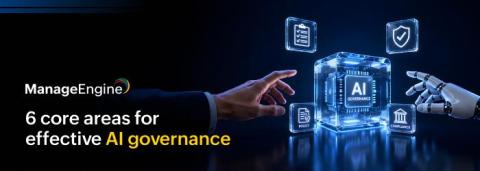
Enterprise AI governance framework: A practical guide to governing AI

AI adoption is accelerating across enterprises, but governance isn't necessarily keeping pace. As AI becomes part of everyday business workflows and applications, organizations need to understand where it is being used, what data it can access, and who is responsible for managing the risks. ManageEngine's shadow AI researchhighlights this challenge.

Build vs. buy: should you build your own AI cost management tooling?

Build when the problem is narrow (one provider, one team, simple attribution) and the tooling is strategically yours to own. Buy when AI spend spans providers, arrives untagged, and needs unit costs finance will trust, because that build is a multi-quarter platform project with a permanent maintenance tail. Price both paths in engineer-years before deciding. CloudZero sells the “buy” side.

Perplexity pricing in 2026: Free vs. Pro vs. Max, and who should pay

Perplexity pricing runs $0 for Free, $20 a month for Pro, and $200 a month for Max, with enterprise seats listed from $40 per user. Pro fits most people who search for work daily. Max exists for heavy automation. The prices are verified against Perplexity's live plans page as of September 2026. When Perplexity published a customer quote on its own pricing page, it chose an unusual one.

Building Sentry's Laravel AI Integration

During a recent Agent Hackweek, an internal Sentry event that gives us a week to build any AI or agent project we want, a colleague pitched me on writing the Laravel AI integration. The goal was to give agents built with Laravel AI the same Agent Tracing support we already have for other frameworks. I liked the idea, he built Sentry’s Agent Tracing for Python based agents before which meant he already had domain knowledge.

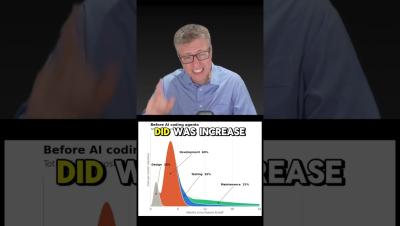
Claude and Codex Are Slowing Your Engineering Team Down #speedscale #devops #aicoding #claude #codex

While AI coding tools dramatically slash development time, they are quietly inflating testing and maintenance burdens because teams no longer fully understand their codebase. Discover how leading engineering teams are shifting focus to testing and context packages to eliminate bottlenecks and unlock true AI efficiency.

How to Identify Shadow AI with Teneo Managed DEX

What is Shadow AI, and how can IT teams identify unsanctioned AI tools being used across their organization? In this short video, see how Teneo Managed Digital Employee Experience (DEX) can provide visibility into AI application usage, helping organizations uncover Shadow AI and better understand which AI tools employees are actually using. With Teneo Managed DEX, IT and security teams can gain greater visibility into emerging workplace risks, including unauthorized or unmanaged AI applications that may create security, data privacy, governance, or compliance concerns.