Operations | Monitoring | ITSM | DevOps | Cloud

The Journey to Achieving Hyperscale Availability with AI-Driven Prediction

At hyperscale, a regional cloud outage is not merely a technical disruption—for Samsung Account, which serves 2.1 billion users across three global regions, it is an immediate global service crisis. Fragmented, region-siloed monitoring creates blind spots that make early detection nearly impossible, leaving SRE teams perpetually reactive rather than predictive. The path to proactive reliability requires both a philosophical shift and a foundational change in how observability data is collected, unified, and reasoned over.

From Legacy to AI-Ops: Securing and Scaling Systems for 20M Device Requests with Datadog

Modernizing a legacy system serving 20 million devices without users noticing is like replacing a jet engine mid-flight. In this session, YoungJin Jung and Donggen Hong from LG U+ share their 18-month journey transforming a Telco-scale API Gateway from a rigid, proprietary solution into a high-performance, open-source architecture on AWS, and the operational challenges they solved along the way.

Ship Reliable AI Faster: How to Operate AI Agents with Control and Confidence

Replace "AI shipped on hope" with an operating model that holds up once real users depend on it. AI quality is multi-dimensional, covering accuracy, tone, safety, and faithfulness to user data, and can't be debugged from outputs alone. Without visibility into what their AI actually did in production, teams miss regressions, reverse-engineer chains by hand, and watch a single bad answer erode trust built over hundreds of right ones.

The AI Engineering Playbook: How to Evaluate & Iterate at Every Phase of Development

AI coding tools are accelerating development velocity, creating a release challenge most teams aren’t equipped for. Without controlled rollout, higher change velocity makes it harder to know which specific release drove the results you’re seeing in production. And when teams use AI, to build AI – LLM apps and AI agents– complexity multiplies. Traditional observability can’t ensure AI agent quality, performance, and cost-efficiency at production scale.

What is AIOps? Benefits, Use Cases, and How It Transforms IT Operations

Decades ago, IT operations was relatively simple, with a few components such as client, server, network, and the static environments. IT teams relied on manual analysis to manage these systems. Over time, however, IT operations has evolved significantly, driving the adoption of AIOps technologies.

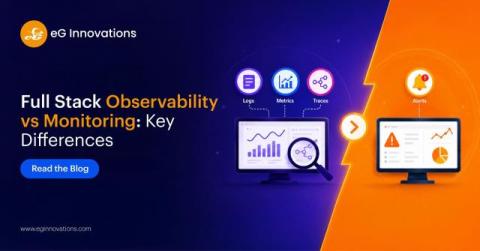
Full Stack Observability vs Monitoring: Key Differences

Traditional monitoring tracks system health by collecting data such as metrics and logs, this data is checked to see if a system is behaving as expected and alerts are raised if errors or anomalous data values are found. This works well in stable, predictable environments, but modern IT systems are far more complex and dynamic. In distributed architectures like microservices and cloud-native platforms, predefined alerts usually aren’t enough to explain why a failure is happening.

How Coding Agents are Changing the Traditional Software Development Lifecycle

AI coding assistants are rapidly evolving from passive copilots into active, agentic collaborators capable of planning, executing, and iterating on complex software tasks. This shift has huge ramifications onthe software development lifecycle (SDLC), developer productivity, and even the structure of engineering teams.

Fireside Chat with Datadog CPO Yanbing Li and Vercel CPO Tom Occhino

The way we build, ship, and run software is being reshaped by AI. In this fireside chat, Yanbing Li (CPO, Datadog) and Tom Occhino (CPO, Vercel) will discuss their perspectives on the impact AI is having across the industry and what it means for teams navigating this shift today.

Progressing AI Beyond Scaling and Into Deep Reasoning

The breakthroughs in AI today aren’t just coming from bigger datasets and more compute; Reinforcement Learning (RL) has quietly become one of the most powerful forces in modern AI development. RL is teaching models to reason and self-correct, enabling capabilities that make AGI feel less like science fiction and more like an inevitable future.

Digital Employee Experience Monitoring: Why It Matters for Hybrid Workforces

As enterprises embrace hybrid work models, SaaS-driven technology stacks, and highly distributed digital workplaces, employee experience has become inseparable from business performance.For years, IT investments were focused for customer-facing digital journeys, and internal systems were not a priority. However, the scenario has changed. Today, every employee relies on a complex and interdependent chain of endpoints, networks, cloud services, identity platforms, and business applications.

How AI-Powered Monitoring is Transforming IT Operations

Every monitoring vendor on the market now has an AI story. AIOps has moved from category buzzword to standard line-item in IT operations strategy, and the reasoning is sound: as infrastructure spreads across cloud, hybrid, microservices, and virtualized platforms, the volume and velocity of operational data has outrun what human teams can process. AI-powered monitoring is the obvious answer.

Datadog Data Observability: Be the first to know when data fails

Bad data doesn't announce itself. Datadog Data Observability gives you unified visibility across your entire data stack—from source systems and pipelines to dashboards and AI applications—so you catch silent failures before they cascade. Detect data quality and pipeline issues before stakeholders do, pinpoint root causes with end-to-end lineage, and reduce pipeline costs with job, cluster, and query recommendations.

Your Monitoring Stack Wasn't Designed. It Was Procured.

The 2am war room hasn’t gone anywhere. Ten years after Gartner coined the term AIOps, the platforms are bought, the licenses are renewed, the dashboards are live — and serious incidents still get resolved by engineers paging across multiple consoles, trying to work out where the fire actually is. MTTR has barely moved. Alert fatigue hasn’t eased. The outcomes the category promised, in most enterprises, have not arrived. Matt Lowe’s recent article on AIOps names the shortfall well.

Top New Relic Alternatives in 2026

New Relic is a capable full-stack platform, but its bill is built on two axes that both grow as you scale: data ingested and per-user seats. Full-platform user fees run $49 to $349 per user per month, so a 20-person team can pay $6,980 or more in seats alone before a single gigabyte of telemetry, and the Compute Capacity Unit model adds query and alert charges that spike during the incidents when engineers run the most queries.

DASH 2026 Keynote

At, Datadog launched 100+ capabilities to help customers drive autonomy and manage growing AI and security complexity. From new Bits AI, log management, and security capabilities, customers have the visibility and autonomous operations they need to detect, investigate and resolve issues across the development loop and data lifecycle. Tune in to the full keynote to catch the highlights.

If You Are Building a Startup from a Vibe-Coded App, Don't Skip This #devops #programming #ai

Everyone is vibe coding products right now. But most applications are missing one crucial thing: Observability. In this video, I talk about: You can literally start this weekend: If you are turning your vibe-coded app into a real startup, observability should not be an afterthought.
Sponsored Post

How APM fits into the modern observability stack

Most engineering teams don't have a data problem. They have an interpretation problem. Prometheus is running, logs are shipping to the aggregator, dashboards are green-and then a latency spike hits and the root cause takes 45 minutes to isolate. The data was there but the answer wasn't. That gap is where application performance monitoring (APM) operates. This article explores what APM adds to a modern observability stack, why relying on standalone tools leaves critical blind spots, and how teams can unify infrastructure data with application context for a complete operational picture.
Sponsored Post

Increase customer retention & stop leaving money in the shopping cart

We all know the pain and frustration associated with broken software. It's no secret that the internet is rife with broken links, slow pages, and broken shopping carts, often feeling like it's being held together with glue and duct tape. These issues aren't just causing frustration for customers; it costs businesses millions. According to the Consortium for Information and Software Quality, poor software quality cost US companies $2.08 trillion in 2020. Every interaction between a customer and your technology is an opportunity to build or destroy trust.

Your AI App Is Lying to You - Here's How to Fix That #devops #observability #programming

You shipped your AI app. But do you have all the answers? Do you actually know which model ran, how many tokens it consumed, or why it stopped? This is what LLM observability gives you, and most AI engineers are skipping it entirely. I built an SOS detection app and used OpenTelemetry to get full visibility into every single call. Token usage, model version, finish reason, and cost per call all in one place, standardised across any provider. Check out the OpenTelemetry GenAI docs in the link below; there is a lot more you can track than you think.

Best APM for Small Teams Without Dedicated DevOps in 2026

You don’t have an SRE. There’s no platform team. Your “monitoring strategy” is someone checking Slack for error alerts. When production breaks, the same two or three senior devs drop everything to debug. Sound familiar? Most APM tools are built for organizations with dedicated operations staff. They assume someone has time to configure dashboards, tune alert thresholds, and learn a complex query language. That person does not exist on your team.