Amazon Web Services (AWS) recently released a new cloud deployment option – ”Dedicated Local Zones” targeted at public sector, government and regulated industry use cases. Many customers still rely on on-premises infrastructure to meet regulatory and compliance requirements such as data localization. You can read the details of the AWS announcement including which services Dedicated Local Zones will support, here: Announcing AWS Dedicated Local Zones (amazon.com).
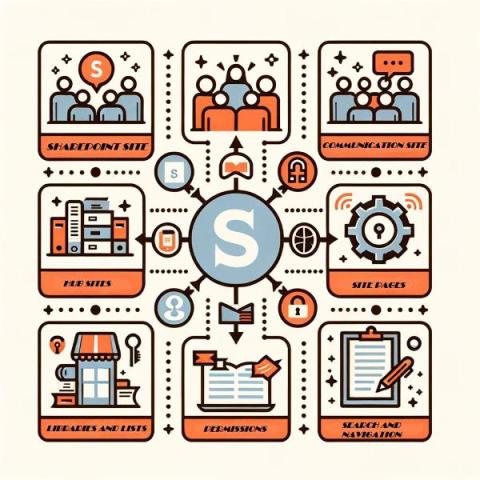
In the realm of collaborative digital environments, SharePoint Online emerges as a quintessential platform fostering seamless interactions, data sharing, and project coordination among teams. As part of the Microsoft 365 suite, it encapsulates a rich array of features tailored to meet the diversified needs of modern organizations.
While some businesses operate entirely in the cloud, some still have IT infrastructure they need to house. Others are moving from solely cloud environments to a colocation model. From air conditioning systems to networking facilities, there is a lot that goes into looking after IT infrastructure.
As businesses continue to expand their digital footprints, the demand for efficient and secure data management solutions has never been greater. Colocation, the practice of housing servers and IT infrastructure in third-party data centres, has emerged as an attractive option for enterprises seeking enhanced scalability, reliability, and cost-effectiveness. However, before making a decision on colocation, it is vital to carefully assess the financial aspects associated with this service.
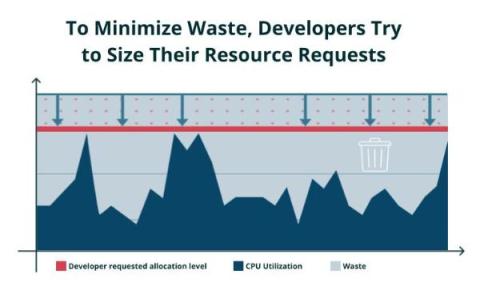
In a rapidly expanding, highly distributed cloud infrastructure environment, it can be difficult to make decisions about the design and management of cloud architectures. That’s because it’s hard for a single observer to see the full scope when their organization owns thousands of cloud resources distributed across hundreds of accounts. You need broad, complete visibility in order to find underutilized resources and other forms of bloat.
The Edinburgh South Gyle colocation data centre is the largest and most connected in Scotland, and one of the most connected north of London. In fact, there are 27 carriers available at the centre — more than double the number that any of our other data centres have. In fact, it’s so large and well-connected that we refer to it as the UK’s Northern Connectivity Hub. But what does that mean for your business - and how can you benefit from the colocation services available?
SharePoint Online (SPO) has become a cornerstone for many organizations seeking a robust, scalable, and collaborative platform. It’s a place where teams can seamlessly work together, share documents, and enhance their workflow efficiency. However, while SPO offers a plethora of benefits, the cost associated with its usage can be a potential hurdle, especially for businesses with large volumes of data.
Microsoft SharePoint stands as a robust web-based collaboration platform that has become indispensable for a myriad of organizations aiming for a streamlined and effective workflow management. Its seamless integration with Microsoft 365 unfolds a vista of functionalities, among which the feature of real-time notifications or alerts shines prominently.
As a developer I love automation, Whether it’s orchestrating a smart home or optimizing developer toolchains. Automation injects efficiency into my daily routine, simplifying intricate processes and eliminating repetitive tasks. Especially when it comes to toolchains, I’m constantly on the lookout for ways to boost coding workflows. Cloud Development Kits (CDKs) brought with them a new era of streamlined developer toolchains.
IT environments can produce billions of log events each day from a variety of hosts and applications. Collecting this data can be costly, often resulting in increased network overhead from processing inefficiencies and inconsistent ingestion during major system events. Google Cloud Dataflow is a serverless, fully managed framework that enables you to automate and autoscale data processing.
In the modern digital workspace, collaboration and security are paramount. Microsoft has been at the forefront of providing solutions that enhance these aspects of organizational operations. Two such solutions are SharePoint Online and Azure Active Directory (Azure AD). SharePoint Online, a cloud-based service, empowers organizations to create, share, and manage documents and content in a collaborative environment.
From the science fiction fantasies of the mid-20th century to today's reality, AI's journey has been a blend of innovation and apprehension. As we contemplate the future of AI, it’s interesting to look back at the early days of AI, how far it’s come and what we might yet expect. AI has the potential to be of huge benefit but could be disruptive in the wrong hands, particularly in the realm of cybersecurity. A Brief History and Development of AI.
In the digital era, effective document management is a cornerstone for operational efficiency in organizations. With a surge in data generation and collaboration needs, having a robust system to store, manage, and share documents is imperative. SharePoint Document Libraries emerge as a pivotal tool in this regard, offering a myriad of features to streamline document management, enhance collaboration, and uphold information governance standards.
In today’s digital-first business landscape, collaborative platforms like Microsoft SharePoint are not merely a convenience but a necessity. They facilitate seamless interaction, information sharing, and collective project management across geographically dispersed teams. However, the enhanced connectivity and accessibility come with a set of security challenges.
CloudNatix is an infrastructure monitoring and optimization platform for VMs, containers, and other cloud resources. Customers can use CloudNatix’s Autopilot feature to automatically configure and run infrastructure optimization workflows that allocate and run their resources more efficiently. CloudNatix can take action to auto-size Kubernetes and VM workloads, defragment Kubernetes clusters, and create harvest pods from unused VMs, among other key optimizations.
Elastic Observability is the optimal tool to provide visibility into your running web apps. Microsoft Azure Container Apps is a fully managed environment that enables you to run containerized applications on a serverless platform so that your applications scale up and down. This allows you to accomplish the dual objective of serving every customer’s need for availability while meeting your needs to do so as efficiently as possible.
The Microsoft infrastructure makes collecting network traces more complicated. Network traces (tracert) inside and out of the Azure Virtual Desktop virtual machine are valuable when diagnosing support issues or when an end-user calls up complaining of poor Azure Virtual Desktop performance. The following information should help improve the collection of network traces and trace data, which will aid in diagnosing Virtual Desktop Infrastructure connectivity.
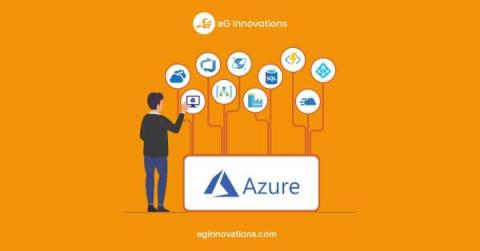
Microsoft Azure offers a choice of relational and non-relational database services to support a wide range of application needs and demands. Built-in intelligence helps automate management tasks like high availability, scaling, and query performance tuning to provide users with services that ensure applications are always available and performant. Many services offer essentially limitless database scale and SLAs (Service Level Agreements) usually range between 99.9-99.999% availability.
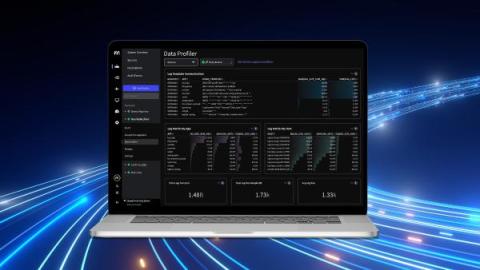
We recently had the privilege of presenting our telemetry data pipelining platform at Cloud Field Day. Today, we'd like to share a recap of our demo with you. In this demo, we explore the transformative potential of data profiling, telemetry pipeline optimization, and incident response. Foundationally, we follow an Understand, Optimize, and Respond workflow.
It is now the de facto standard for companies to operate across numerous regions and cloud-accounts. The reasons for this vary, and depending on where you sit in the organization, these reasons may be more or less apparent to you.
Webhooks, those wonderful little lifelines connecting one application to another, have become an essential part of our app notification world. They help keep your systems in the loop, notifying them immediately when events of interest occur. This real-time communication ensures that your applications remain responsive, adaptive, and always up-to-date with the latest information.
In this second episode, we explore a crucial element of your migration strategy - the Application Owner Interviews, a feature within Tidal Accelerator. These interviews are a game-changer, helping you make your migration not just IT-efficient but also business-driven.
Support complex environments at scale, enabling agile service delivery with low opex and a great customer experience.
Office 365, also known as O365, has become a cornerstone for enterprise productivity. With different plans such as Office 365 E1, E3, and E5, organizations can tailor their licensing to meet specific needs. This article delves into the nuances of Office 365 Enterprise Licensing, aiming to provide a clear understanding to help you make an informed decision.
SharePoint Online (SPO) has become a linchpin in fostering collaborative work environments in the modern digital age. Its robust features provide a platform where individuals can share, manage, and collaborate on content seamlessly. As SharePoint Online continues to evolve, understanding its limits and boundaries is crucial for administrators to ensure optimal performance and user satisfaction.
Maybe you’re still using monolithic applications, built and refined over many years. You understand that shifting to microservices or containerized architectures is a huge and daunting task. You’re probably grappling with the limitations of legacy systems—maybe they’re slow, tough to update, or can’t scale as you’d like. And you’re likely using more traditional IT monitoring tools or even some cloud observability tools.
Access-related challenges form a significant portion of the common issues encountered within SharePoint environments. These challenges can manifest in numerous forms, including denied access to resources, unresponsive buttons, or dysfunctional links. Unveiling the root causes and solutions to these access challenges is crucial for maintaining a seamless SharePoint user experience.
The transition from traditional on-premises IT infrastructure to the public cloud has brought substantial relief to IT decision-makers and sysadmins. Since many organizations use Microsoft Windows as their preferred operating system, Microsoft Azure has become the public cloud provider of choice automatically owing to a familiar GUI and Active Directory sync.
In today’s digital age, the need for efficient document storage and collaboration tools is more pressing than ever. Microsoft, being a leader in the enterprise solutions sector, offers two standout products in this category: SharePoint and OneDrive. While both tools hail from the same Microsoft family and integrate seamlessly with other Microsoft 365 apps, they serve distinct purposes. Let’s delve deeper into the nuances of each and understand their primary differences.
The story of how we simplified database system monitoring for generalists while making it flexible enough for specialists.
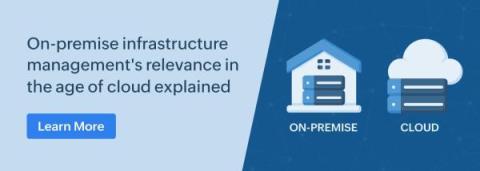
The cloud has revolutionized the possibilities of managing IT infrastructure. However, not all organizations are ready to make the move to the cloud. In this blog, we will discuss why on-premises infrastructure management solutions are still relevant in the cloud age.
For Azure Virtual Desktop (AVD) sessions, Microsoft exposes a set of user experience and graphics performance counters that eG Enterprise monitors out-of-the-box. These performance counters for Azure Virtual Desktop and Remote Desktop Protocol (RDP) / RemoteFX sessions can be used to troubleshoot AVD problems.
Amazon Simple Email Service (SES) is a cost-effective email service provided by AWS. It is by far the cheapest option available out there. Comparing the cost of sending emails with SES and other services like SendGrid or Mailchimp, it can be 100x cheaper. However there is a catch. Using SES directly, you will not get some of the features you might need to control the bounce rate of your emails.
In the realm of collaborative platforms, SharePoint Online stands as a robust solution that continually evolves to meet the dynamic needs of modern enterprises. The 2023 updates have notably elevated the platform’s capabilities, particularly in terms of file and document management and integration with other Microsoft 365 offerings.
In our first blog post, we introduced the concept of cloud unit economics—a system to measure cost and usage metrics. It helps maximize cloud value for better outcomes per dollar spent. We reviewed what cloud unit economics is, why it’s crucial to FinOps success, and how it enables organizations to unlock the full business value potential of cloud computing.
If you’re sick with a cold then measuring your body temperature is a wise move or maybe if things are really bad a visit to a doctor might result in testing vs. what are considered “normal” levels in order to diagnose the issue; seasonal flu or infection? To improve our health after picking up a bad bug, we do things that affect our situation back to normal levels once again where we can then declare ourselves healthy.
In the digital world, SharePoint holds a significant position, being a highly robust platform that caters to a multitude of collaborative needs. Among the rich features it offers, SharePoint Groups stand out as a fundamental building block for creating a conducive collaborative environment. These groups not only enhance interaction among team members but also provide a structured framework for managing permissions and access to resources.
In our journeys as developers, we frequently encounter the need for speed and efficiency. But often, integrating development tools can feel like a time-consuming venture, more so than our usual build processes. If you’ve ever found yourself delving into java logs looking for needles in logstacks, you’ll appreciate the beauty of this 1-click OpenTelemetry.
In the realm of enterprise solutions, Microsoft SharePoint has emerged as a cornerstone for fostering collaboration and managing content. Originating back in 2001, SharePoint has meticulously evolved, aligning itself with the changing dynamics of the corporate world. Today, it stands as a robust platform enabling organizations to create, manage, and share content in a highly secure environment.
In 2022, Ofcom, a UK regulator, began its market study into the cloud industry to investigate the dominance that hyperscalers, especially AWS and Microsoft, hold over the industry and the limits this creates for customers. This investigation follows concerns surrounding customers feeling “locked in” to a single provider, potentially leading to inflated prices in the market¹.
Microsoft Office 365, often simply referred to as Office 365, represents a significant shift in the way we approach work in a digital environment. It’s a subscription service that ensures you always have the most up-to-date modern productivity tools from Microsoft. This suite of services and applications goes beyond the traditional software suite to offer a wide range of tools and solutions to modern-day challenges faced by organizations and individuals alike.
In Episode 1, we delve into the critical topic of overcoming “Analysis Paralysis” during cloud migration. We will explore how Tidal Accelerator can help organizations break free from the shackles of over-analysis and guide them towards successful cloud migration.
In today's digital era, cloud computing has become the backbone of numerous businesses. Cloud systems have become the go-to choice for many organizational needs thanks to advantages like unparalleled scalability, accessibility, and cost-effectiveness. Still, the rapid surge in cloud adoption has attracted the attention of cybercriminals. According to a report from Netwrix, 68% of organizations experienced at least one cyber attack incident in the past year.
This is the third blog in our series on Kafka, where we continue to explore the nuances of deploying Kafka for scale. In our previous blogs, Essential Metrics for Kafka Performance Monitoring and Auto-Instrumenting OpenTelemetry for Kafka, we laid the foundation for understanding Kafka’s performance and monitoring aspects. Now, as we explore further into the Kafka ecosystem, we’re here to tackle the common challenges that can arise during deployment and scaling.
Using Grafana Cloud to manage and monitor even your most sensitive data from your AWS services just got easier. If your organization’s workloads are hosted in AWS and you are using a Grafana Cloud instance that’s also hosted in AWS, you can now use AWS PrivateLink to establish a secure connection between your virtual private cloud (VPC) network and Grafana Cloud for all your data.
CloudWatch can be a great start for monitoring your AWS environments, but it has some limitations in terms of granularity, customization, alerting, and integration with third-party tools. In this article, learn all the ways that Kentik can supercharge your AWS performance monitoring.
SharePoint, born from the tech giant Microsoft, is not just another application; it’s a robust platform that’s been transforming the way businesses handle their internal processes for years. At its core, SharePoint is designed to streamline collaboration and document management. But what does that mean in layman’s terms? Imagine a vast digital library, where instead of books, you have documents, images, videos, and other digital content.
The past decade has seen a drastic growth in the adoption of public cloud. One of the primary reasons for this is its cheaper infrastructure and ease of scale. With such rapid adoption of public cloud, the need for infrastructure automation also arises. This is because teams want to quickly provision infrastructure and automate tasks that previously took weeks in the case of traditional data centers, down to minutes in the public cloud.
Apache Kafka is an open-source distributed streaming system that has grown in popularity and usage across the technology industry. Originating from LinkedIn and now part of the Apache Software Foundation, Kafka provides a robust and scalable platform. It’s uniquely designed with an architecture that includes both a storage layer and a compute layer.

Virtana’s AI-powered platform is at the forefront of IT infrastructure management, offering a comprehensive suite of tools and services that empower IT leaders to make informed decisions on how to forecast demand and streamline operations. The rapid evolution of technology has ushered in an era of complexity and dynamism that IT leaders must navigate effectively.
With the ever-increasing demand for digital services, organizations face the questions of how will they keep up and where will they store and access their data and applications. The evolution of hosting options from on-premise infrastructure to colocation, cloud, and hybrid deployments has provided a diverse set of choices for organizations, and it is critical to select the option that best suits your unique needs.
A migration from on-premises SQL Server to Azure SQL offers many customers a number of advantages. It can enable scalability, reduce costs, enhance security, ensure high availability, and simplifies maintenance. Many organizations are looking to equivalent cloud services to move on-prem workloads such as SQL databases to the cloud, freeing themselves from the overheads of purchasing, configuring and maintaining physical hardware and infrastructure.
In the age of customization, SharePoint’s ability to provide a personalized experience is pivotal for user engagement. Just like a tailor-made suit fits better than a generic one, a SharePoint interface tailored to individual users resonates more deeply.
Azure File Share is a cutting-edge service offered by Microsoft’s Azure platform. This robust solution allows seamless integration of serverless file sharing capabilities accessible through industry-leading protocols such as SMB, NFS, and Azure Files REST API. When effectively utilized, Azure File Share can drastically improve the file-sharing experience for cloud-based and on-premises deployments. In the realm of Dynamics 365 Business Central SaaS, it has demonstrated unparalleled benefits.