Operations | Monitoring | ITSM | DevOps | Cloud

Harness Launches Two Products to Give Enterprise Teams Full Visibility into ROI of AI Spend | Harness Blog

Gartner expects worldwide AI software spending to hit $2.59 trillion in 2026, 47% more than organizations spent last year. The dollars are real and growing fast. But most organizations still can't measure the ROI of that spend. The problem has two sides: developers and infrastructure. On the developer side, engineers are using AI to write nearly every line of new code, and leaders have no way to tell whether that spend is producing software that ships.

Cost Per Outcome: AI Cost Management in Harness | Harness Blog

Companies are shipping AI features at a pace cloud teams have rarely seen. New agents, new copilots, new flows powered by language models, all moving from prototype to production in weeks. The spend that comes with it is real and accelerating, and most teams are seeing it on the invoice before they see it anywhere else. The question is no longer how much you're spending on AI. It's whether each dollar is producing a real outcome, and whether you can govern that spend before the next invoice arrives.

We're releasing the financial control plane for AI spend

Gartner forecasts $2.6 trillion in global AI spend this year. Most of it lands in invoices that don’t connect dollars to the developers who spent them, the customers they served, or the features they shipped. AI billing is a mess. CloudZero is the financial control plane for AI spend. Three capabilities, available today, reveal the by-customer, feature, and developer ROI of AI: 1. Real-time Spend: Capture every dollar spent on AI, at the source. 2.

AI spend is exploding. Most companies cannot prove ROI.

Only 14% of CFOs can prove AI ROI. OpenAI’s gross margin fell from 40% to 33% in 2025, well below its 46% target. Even the AI providers cannot reliably predict what AI will cost. Companies are scaling AI faster than they can measure it: more tokens, more agents, more model calls, more spend moving through systems finance cannot yet see. Every board is asking the same question: What is this AI investment returning? Most companies cannot answer it. The ones that can will compound their advantage.

Project and manage cloud spend with Datadog budget forecasting

Cloud and SaaS spending continues to grow across teams, services, and providers, changing too quickly for retrospective cost management workflows to keep up. Finance and engineering leaders often rely on last month’s reports or manually maintained spreadsheets, which don’t reflect current usage. As a result, teams lack context on how spend is trending and often discover budget overruns only after they’ve occurred.

Why AI economics needs a financial control plane

Runtime guardrails and control towers govern AI activity — but without a financial control plane connecting spend to outcomes, enterprises can't tell which AI bets are worth it. Most enterprises can answer exactly one question about their AI rollout: what did we spend?

AI Observability In 2026: What It Is, The Five Pillars, And Why Cost Is The One Everyone Skips

AI observability covers performance, quality, reliability, safety, and cost. Most tools handle the first four. Here's what each pillar means, which tools cover which, and why cost is the dimension enterprises keep missing.

Anthropic Shipped An Enterprise Analytics API. We Shipped the Claude Adapter Today.

Anthropic just shipped an Enterprise Analytics API with user-level token and cost data. Today, we're shipping the CloudZero adapter that maps that data to teams, budgets, and cost centers — so Claude spend gets the same accountability as the rest of your stack. Anthropic released the first beta of its Enterprise Analytics API this week. Admins can pull token usage and dollar cost through a programmatic endpoint, broken down by user, model, context window, region, and product surface.

Attribute AI costs across providers with Datadog Cloud Cost Management

AI adoption is accelerating across organizations, and spending often follows a similar pattern: rapid growth, multiple providers, and limited visibility into where costs originate. Each provider exposes billing data differently, with distinct schemas, dimensions, and interfaces. FinOps and engineering teams often spend significant time consolidating fragmented data, only to end up with partial attribution and limited context about who or what generated the AI spending.

LLM API Pricing Comparison In 2026: Every Major Model, Ranked By Cost

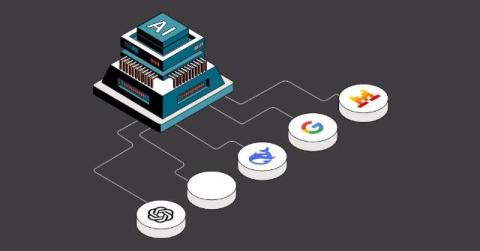
Compare LLM API pricing across OpenAI, Anthropic, Google, DeepSeek, and Mistral in 2026. Full pricing tables, hidden cost breakdowns, and proven strategies to cut AI spend. Written for engineering leads, platform teams, and FinOps practitioners evaluating or optimizing production AI costs.

Together AI Pricing In 2026: Models, Costs, And How To Manage Your Bill

Together AI pricing ranges from $0.10 to $9.00 per million tokens. Compare all models, GPU rates, free tier details, and practical cost optimization strategies. Written for engineering leads, platform teams, and FinOps practitioners evaluating open-source inference providers.

Why I Give My Engineers $5,000 Per Month Of Claude Code Tokens

A few weeks ago, a group of engineering leaders I trade notes with got into it over a question none... A few weeks ago, a group of engineering leaders I trade notes with got into it over a question none of us has a clean answer to: How much should you let an engineer spend on AI? One SVP at a company of similar size and stage is in calibration mode and capping engineers at $200 per month. Hit the cap, you can self-bump by $100. Hit that, you need your manager. I told the thread our number. $5,000.

Feature-Based Pricing: A Guide To Per Feature Pricing in SaaS

Feature pricing or per-feature pricing is a common SaaS pricing model for good reasons. Here’s how it works, including real examples and how to do it. The best pricing strategy for your SaaS business will depend on your specific business model, target market, and competition. You’ll also want to test different pricing strategies to see which one works best for you. That said, feature-based pricing can be a very profitable way to price SaaS products. Here’s how it works.

Analyze cloud costs with flexible spreadsheets in Datadog Sheets

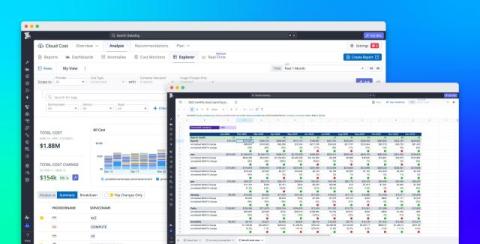
Cloud cost data is most useful when teams can adapt it to their own reporting and planning needs. In addition to viewing cost breakdowns, FinOps teams often need to calculate forecasts, reshape datasets, and present tailored views to finance and leadership teams. In many workflows, those steps happen outside the observability platform. Once the data is exported, it quickly becomes outdated and requires repeated manual updates.

The AI Paradox: Why You Have To Spend More And Can't Explain Where It Goes

AI adoption costs are going parabolic. The companies that can see what they're spending will invest with confidence. Everyone else is flying blind. Every company adopting AI is facing the same problem: the cost of AI adoption in products, in operations, and especially in engineering is accelerating with no alignment between spend and value. The competitive pressure is real. Companies that don’t invest in AI will be displaced by those that do. But the investment itself is becoming inscrutable.

Understanding Long-Term Cloud Migration Cost Savings

Whether you’re a small start-up or a large-scale enterprise, data storage and backups are a necessity for a business to run smoothly. While many businesses may need on-premises storage for maximum control, this can be expensive, so if you’re wondering about the cloud migration cost savings when using a company like Internxt S3, this article will cover everything you need to help migrate or store data in the cloud.

Google Cloud Storage Pricing: The No BS Guide To GCP Storage Costs [2026]

This straightforward guide will help you understand GCP storage pricing without the jargon. Understanding where your cloud spend goes enables you to pinpoint who, why, and what drives your cloud costs. This visibility supports informed decisions about reducing unnecessary spend or increasing investment in high-return areas.