Operations | Monitoring | ITSM | DevOps | Cloud

Introducing AI DLC Insights to Prove the ROI of Your AI Engineering Investment | Harness Blog

AI coding tools made code generation faster. Measuring what actually ships is the hard part. Over the last eighteen months, tools like Cursor, Claude Code, Copilot, and Windsurf have fundamentally changed how software gets built. AI-generated pull requests are increasing, developers are producing more code than ever before, and workflows that once took hours now happen in minutes. But most organizations struggle to clearly explain what that investment is actually producing.

Harness Launches Two Products to Give Enterprise Teams Full Visibility into ROI of AI Spend | Harness Blog

Gartner expects worldwide AI software spending to hit $2.59 trillion in 2026, 47% more than organizations spent last year. The dollars are real and growing fast. But most organizations still can't measure the ROI of that spend. The problem has two sides: developers and infrastructure. On the developer side, engineers are using AI to write nearly every line of new code, and leaders have no way to tell whether that spend is producing software that ships.

Cost Per Outcome: AI Cost Management in Harness | Harness Blog

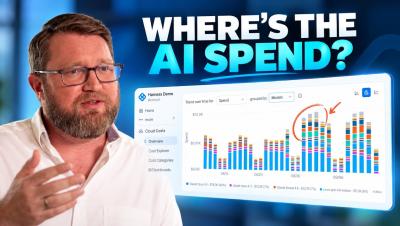
Companies are shipping AI features at a pace cloud teams have rarely seen. New agents, new copilots, new flows powered by language models, all moving from prototype to production in weeks. The spend that comes with it is real and accelerating, and most teams are seeing it on the invoice before they see it anywhere else. The question is no longer how much you're spending on AI. It's whether each dollar is producing a real outcome, and whether you can govern that spend before the next invoice arrives.

Bring Your Playwright Suite to Harness: No Rewrites, No Infrastructure, AI-Powered Triage Built In | Harness Blog

Key Takeaway: Harness AI Test Automation now runs existing Playwright suites without code changes, adds AI-powered failure triage, and integrates test results directly into build and deployment pipelines. ‍

AI Might Break Open Source Differently Than You Think

AI coding agents may not replace open source libraries overnight. But Adam Arellano, Field CTO at Harness, thinks models like Mythos could expose a bigger problem: finding bugs, vulnerabilities, and edge cases faster than maintainers can keep up. That might be the real threat to tools and libraries.

Reduce CI Costs Without Slowing Down Development | Harness Blog

Continuous integration (CI) costs can escalate quickly as engineering teams scale. While most organizations focus on cloud bills, the true cost of CI includes slow build times, developer wait time, inefficient test execution, and overprovisioned infrastructure. CI cost optimization is the practice of reducing the total cost of CI pipelines by improving build efficiency, minimizing compute usage, and eliminating unnecessary work without slowing down development.