The latest News and Information on Cloud monitoring, security and related technologies.
Azure Cosmos DB is a fully managed NoSQL database that scales automatically with load and supports multiple APIs. This makes it easy to incorporate with your applications while removing the need to maintain your own database servers. The Cosmos DB integrated cache—which is now in public preview—is a new offering that can help reduce costs and improve performance for Azure Cosmos DB.
It has been roughly two decades since cloud computing first appeared on the scene, and yet, despite overwhelming evidence of the business operational productivity improvements, cost-savings, and competitive advantages it provides, a significant remnant of the banking industry remains open without using it.
The following is an analysis of the Amazon Web Services incident on 12/07/2021. Millions of users were affected by an Amazon Web Services outage that took down major online services such as Amazon, Amazon Prime, Amazon Alexa, Venmo, Disney+, Instacart, Roku, Kindle, and multiple online gaming sites. The outage, which originated in the US-EAST-1 region on Dec. 7, 2021, is still ongoing at the time of blog publication.
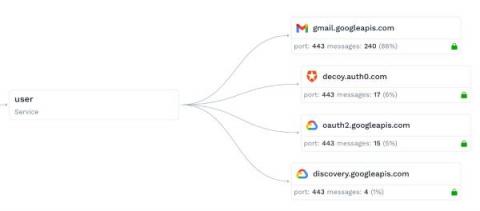
Building, running and scaling SaaS demo systems that run around the clock is a big engineering challenge. Through the power of traffic replay, we scaled our demos in a huge way. A few weeks ago we launched a new demo sandbox. This is actually a second generation version of our existing demo system that I built a few months ago (codename: decoy). Because the traffic viewer page shows the most recent data by default, you need to constantly be pumping new data in there. Any type of real-time SaaS system is going to have a similar requirement. So this needs to be planned.
Cloud computing has many benefits. But there are also challenges, and cloud cost management may be one of the biggest. Here are 49 stats, benefits, and hard truths you need to know about cloud cost management, along with tips and requirements to help you take control and keep your spending in check while delivering on all the value you’re looking for.
Since I wrote Launch Ubuntu Desktop on Google Cloud last week, I kept thinking about putting Ubuntu Desktop into containers. A container is an independent unit of software packages and their dependencies so that the application on the container can run reliably in different computing environments. Docker, an open-source project launched in 2013, made Container technology popular all over the world in just a few years. Why? Let’s compare Containers and Virtual Machines.