Operations | Monitoring | ITSM | DevOps | Cloud

Sponsored Post

5 Multi-cloud Data Management Best Practices You Should Follow

A multi-cloud approach helps organizations avoid vendor lock-in, leverage the best available technologies, and reduce costs - but it can also result in added complexity when it comes to centralizing, securing, and analyzing data from cloud applications and services. This blog highlights 5 multi-cloud data management best practices that can help you make the most of your data in multi-cloud environments.

How To Start A FinOps Career: Roles, Skills, Jobs, And Growth Paths

Want to know how to get a job in FinOps? You’re not alone. FinOps careers are rapidly emerging as essential roles in tech, helping companies manage cloud costs without slowing down innovation. These roles sit at the intersection of finance, engineering, and cloud operations. FinOps roles and responsibilities are expanding fast. In this guide, you’ll learn what FinOps professionals do, how to frame your skills for the job, what certifications help, and how to grow your FinOps career over time.

PC Storage Types Explained and Which One Is Best For You

If you’re computer is running out of storage, or isn’t performing as expected, it could be due to not enough RAM on your computer, or your internal hard drives are filling up. In this situation, what can you do? Learning more about PC storage types can help you choose the best physical devices to upgrade your storage and performance, or choose cloud storage services like Internxt to back up and store your files in the cloud.

Datadog Disaster Recovery mitigates cloud provider outages

A loss in infrastructure and applications observability can leave SRE and DevOps teams without insight into the real-time state of their production systems, causing them to temporarily pause code deployments and limit their ability to troubleshoot issues or respond to critical alerts. In modern cloud environments, where services are distributed and deeply interconnected, this lack of visibility can escalate quickly.

SQS Vs. SNS: Choosing The Right AWS Messaging Service

Picture this. You recently shipped a new feature, and things were working smoothly — until they didn’t. Now, one service is timing out. Another is overloaded. You dig in and realize the issue is with how your systems communicate. Messages are not arriving when or where they should. Your team had set up Amazon SNS for notifications and Amazon SQS for processing tasks. But somewhere along the way, the difference between SQS vs. SNS (and how they’re wired together) got lost in translation.

FinOps Is Not A Side Hustle

When rideshare drivers talk about a “side hustle”, they mean working a few hours on weekends to make extra cash. That’s fine for pocket money, but it’s catastrophic when the “hustle” is controlling your cloud and AI spend. Right now, too many companies run FinOps the way they run the office coffee pot: A volunteer refills it when things look empty.
Sponsored Post

AIOps for SAP: From Ground to Cloud

Anyone working in the SAP market in 2025 is aware of two big topics: migration to cloud-based ERP and the end of many long-used tools for managing SAP operations including Focused Run, Landscape Manager and Solution Manager. Both are impossible to ignore. Cloud-based ERP presents a new era of business software possibilities, and with it the opportunities and complexities of migration, transformation, and leveraging the elastic capacity and scalability of cloud-based designs. But right behind it, the question becomes "how are we going to run and manage this?"

Multi Factor Authentication for Synthetic Monitoring for AVD

Today, I’ll cover some of the basics of monitoring Multi-Factor Authentication and why ensuring MFA is implemented is essential, particularly in environments where remote access is possible. I’ll cover some recent, specific case studies where a lack of MFA has led to security breaches and the mechanisms the bad actors used.

How to monitor and manage front-end observability in Blackfire

In this video, we'll guide you through the process of monitoring and managing your usage of front-end observability features in Blackfire. Learn how to access your Browser usage dashboard to view browser traces collected per environment, track your quota consumption, and understand the concept of spike protection. You'll discover how Blackfire's automatic detection of abnormal traffic spikes protects your monthly quota and ensures continuous data collection.

How to Enable and Configure Front-end Observability in Blackfire

In this video, learn how to enable and configure Front-end Observability in Blackfire. The tutorial covers steps to enable features across multiple environments via the Organization settings / Front-end usage in the Blackfire dashboard. Control front-end observability by enabling or disabling Browser Monitoring and Analytics per environment, using a JavaScript probe and a unique browser key. The video emphasizes the importance of naming transactions and explains how to manually add tracking snippets to HTML for better control.

DevAIOps: A Call To Action For The Heroes Among Us

The year is 2025, and I’ve been watching teams discover what happens when you give developers AI superpowers without giving them AI super-governance. It’s like the merchandising scene from Spaceballs: “Vibe Coding: The Flamethrower. The kids love this one.” But here’s the thing: I’m not here to take away the flamethrowers. I’m here to hand out fire extinguishers and maybe suggest we practice in a safe room instead of the living room.

Top Career Paths After an Online MCA Degree: From Developer to Data Scientist

The tech industry is moving at lightning speed and so are the ways people learn and build careers. Over the past few years, online MCA degrees have gone from being a backup option to a smart, future-ready choice for students and working professionals alike. If you're wondering what kind of opportunities an online MCA can lead to, you're in the right place. Let's break down some of the most promising career paths available to you after completing an online Master of Computer Applications.

Console Connect expands Azure ExpressRoute reach with new global locations

Console Connect has expanded its global footprint with five additional Microsoft Azure ExpressRoute locations, bringing the total to 16 locations worldwide. This significant growth gives customers even more options to directly and securely connect to Azure from strategic data centre hubs in key international markets.

Building the Road for Innovation-PagerDuty and AWS in Action

Every organization wants to innovate, but the reality is that operational friction can grind even the most ambitious plans to a halt. A delayed response here, an inactionable alert there, and suddenly your engineers are spending more time firefighting than building. Context is scattered across tools, and the “big picture” is lost in a sea of alerts and thumbnail-sized dashboards that provide no context or direction.

JFrog Deployed on AWS: The Foundation for Cloud-Native Excellence

We are delighted to share the exciting news that JFrog has earned the “Deployed on AWS” badge in AWS Marketplace, marking yet another milestone in our journey of innovation and collaboration with Amazon Web Services (AWS). This achievement underscores our commitment to providing cutting-edge solutions that leverage AWS’s robust infrastructure to enhance the user experience and drive efficiency.

Azure Reserved Instances: Saving Smart, Maximizing ROI

Many teams buy RIs with the best of intentions (predictability and up to 72% savings) only to realize later that they’ve either overcommitted or left money on the table. Without clear visibility, what starts as a smart cost-saving move can slither into silent waste. This guide will help you get ahead of that. We’ll walk you through the ins and outs of Azure Reserved Instances, compare them to other savings options, and share best practices to help you avoid common pitfalls.

How To Sell Cloud Cost Optimization To Your CFO

You know you’re bleeding money in the cloud. Maybe not everywhere, but enough to feel it. Your engineers know it too. You’ve got idle resources humming away, AI workloads scaling like wildfire, and nobody can quite explain why last month’s bill jumped by 17%. So, you bring up the idea of investing in a cloud cost optimization product. Cue the skeptical glance from your CFO.

Is your cloud data truly sovereign? The CLOUD Act & FISA 702 reality check

As UK public sector bodies, financial institutions, and enterprises accelerate cloud adoption, a pivotal question emerges: Who truly controls your data, and under which laws? With data breaches and regulatory scrutiny intensifying, storing data and workloads in a host country alone doesn't guarantee sovereignty. U.S.

Live PostgreSQL Monitoring on Azure & AWS with pgNow

Managing credentials gets trickier as your Flyway project grows, especially when databases contain sensitive data. In this episode, Tony and Tonie break down how Flyway’s Property Resolvers help you keep secrets safe by pulling them securely from local or cloud-based stores, avoiding hardcoding them into config files.

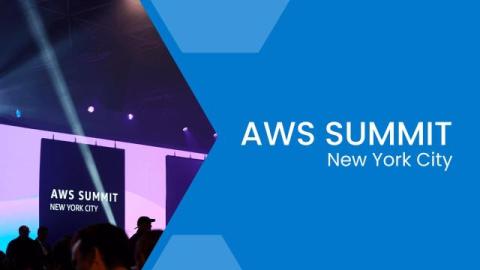
AWS Summit NYC 2025: Laser-Focused on AI

If you’re unfamiliar with AWS Summits, these are conferences that occur on a yearly basis in different cities. The events are mostly used to announce new products and technologies. This year, the theme was AI, as evidenced by the keynote, a large majority of the talks, and a walk around the vendor floor. The keynote talk was hosted by Swami Sivasubramanian, VP of Agentic AI at AWS.

How To Hire In FinOps: Roles, Responsibilities, Skills, Interview Questions, And More

FinOps is booming as a function. The global cloud FinOps market will grow from $13.5 billion in 2024 to $23.3 billion in 2029 — a compounded annual growth rate (CAGR) of 11.4%, according to Research and Markets. That’s in response to sharp increases in cloud spend. About $723 billion is expected to be spent on public cloud services in 2025, up from $596 billion the year before according to a Gartner report.

Building Systems For AI: Lessons On Governance From DevOps History

In 2008, Nuance hired me to join their Healthcare Speech Recognition team as a “Release Engineer.” DevOps wasn’t a thing yet — Patrick Debois and Andrew Shafer wouldn’t hold their first “DevOpsDays” until 2009. But I was lucky that “Release Engineer” at Nuance meant “jack of all trades” who wrote Makefiles, bash scripts, Perl, and Java to build and release code to a fleet of hundreds of on-premise Linux machines.
Sponsored Post

Streamlining multi-cloud complexity with unified observability

A wave of businesses are embracing multi-cloud strategies to gain flexibility and scalability. By combining on-premises infrastructure, private clouds, and public platforms like AWS, Azure, and Google Cloud Platform (GCP), IT teams can experiment, deploy, transform, and improve their IT applications significantly. On the down side, this modern IT approach of employing multiple clouds (in both public and private forms) also brings significant complexity, making it challenging to monitor systems, control costs, and secure environments. There are just too many threads to track and tie together to ensure a taut IT fabric.

From Chaos to Control-How PagerDuty and AWS Are Protecting Business Continuity

The recent outage on June 12 proved yet again that service disruptions are inevitable, it’s not a matter of if, but when? And the next question is: how ready are you when that disruption strikes? What sets successful leaders apart is how quickly they are able to recover. Digital businesses are more complex than ever. Teams are managing sprawling cloud environments, microservices architectures, and a dizzying array of third-party integrations.

Build Smarter With Cloud-Native Tools: Your 2025 Guide

Cloud-native tools promise speed, scalability, and resilience. The catch is you have to pick the right ones and use them well. Without the right foundation, they can mean more complexity, hidden costs, and a false sense of control. In this guide, we’ll help you avoid that trap. From infrastructure to observability and CI/CD tools, we’ll cover the solutions shaping modern cloud stacks.

Stream AWS Metrics to Grafana with Last9 in 10 minutes

It’s 2:47 AM and your Lambda functions are timing out. API response times are spiking. You’re flipping between the CloudWatch console, your APM tool, and your logs, trying to figure out what’s going wrong. CloudWatch has the metrics you need: CPU usage, memory pressure, and request rates — but connecting that data to what your app is doing takes time. The delay in stitching it all together slows down your incident response.

How to ensure your AWS workloads are resilient

Part of the Gremlin Office Hours series: A monthly deep dive with Gremlin experts. Cloud providers like AWS give you plenty of tools to make your workloads more resilient, but it’s up to you to apply them. However, considering how complex some of these tools are, where do you start? And how can you be sure your systems are more reliable as a result?

Cloud Storage Full? Try These Quick Fixes

Tired of getting cloud storage full messages? Having your account blocked because you’ve reached your storage limit can be frustrating, especially if you don’t know why your space is being occupied. To help you out, this article breaks down the fastest and simplest ways to clear space on your cloud account, from removing hidden junk to optimizing your settings.

In The AI Era, The Winning Teams Track Cloud Unit Costs From Day 1

Everyone’s obsessed with speed right now. Ship fast. Stack features. Slap an LLM on it and call it v1. Amirite? But in the AI era, where cloud costs can spiral in a weekend, moving fast isn’t enough. The teams that track cloud unit costs from Day 1? They’re the ones who come out ahead. Most teams don’t start there though. They focus on building features and chasing traction, and the cloud bill just shows up like that subscription you forgot to cancel. Maybe someone glances at it.

Checkly Is Now Available in the AWS Marketplace

If your team runs on AWS, getting new tools into your workflow isn’t just about functionality. It’s about how quickly you can procure, integrate, and see value. With Checkly now available on AWS Marketplace, monitoring doesn’t have to be an exception. This launch means Checkly fits into your procurement flow the same way it fits into your CI/CD: seamlessly. No vendor approval bottlenecks, no procurement delays, just faster access to the tools your developers already want to use.

What's Next for Cloud in India? Help Shape the Future with Our Cost Survey

As the cloud computing industry continues to evolve in India, it's becoming increasingly important for organizations to understand the complexities and challenges associated with it. Last year, we released a whitepaper on the cost of cloud that gathered insights from over 500 industry professionals. While this helped us understand more about the rising cloud costs, complex billing models, and vendor lock-in within the UK, it was unclear how this differed for the Indian market.

Top Terraform Alternatives And Competitors To Know

A few weeks ago, a lead DevOps engineer at a fast-growing SaaS company hit an unexpected wall. “It used to just work… until we scaled,” the lead noted after their Terraform setup began buckling under the weight of a growing cloud footprint. Another chimed in: “We’re spending thousands on infrastructure every week, but we can’t trace it back to who deployed what, or why.” Sound familiar? You’re not alone.

Control IP Requests with Ease: LightMesh Requestor Workflows

In growing organizations, network requests pile up and so does the risk of delays, miscommunication, or misconfigurations. Whether a developer needs a static IP for a staging server or a project team is scaling infrastructure, manual processes don’t scale with you. LightMesh Requestor Workflow gives your users a secure, controlled way to request static IP addresses — without granting access to your entire IP address management (IPAM) platform. Admins stay in control. IT team stays productive.

LogicMonitor in Hybrid Environments: Observability with Edwin AI powered by AWS

As enterprises scale in complexity, the infrastructure landscape is no longer just cloud or on-premises, it’s both. Hybrid is the new normal and it’s here to stay. And with that shift comes a new demand: a unified, scalable observability solution that works across the entire tech stack, from legacy hardware to cloud-native workloads. That’s where LogicMonitor comes in.

The Rising Importance of Network Security in the Age of Digital Transformation

As digital transformation reshapes nearly every industry, organizations are under immense pressure to modernize their infrastructure and embrace new technologies. From cloud computing and remote collaboration to AI-powered analytics, innovation is becoming the norm. But with progress comes vulnerability. The broader an organization's digital footprint becomes, the more it opens itself up to cyber threats.

Overcoming the common networking challenges when connecting the "big three" clouds

Adopting a multi-cloud strategy is common for many businesses as it promises flexibility in managing their data. However, this isn’t without complexity especially when it comes to networking. In a recent podcast episode, Trent Blakely and Jay Turner unpacked some of the most frequently missed challenges that come with multi-cloud deployments.

FinOps For AI: How Crawl, Walk, Run Works For Managing AI Costs

“It started as an experiment.” That’s how it begins at most companies. A small team spins up a few GPU instances to train a proof-of-concept model. Maybe it’s a fraud detection algorithm. Maybe it’s GenAI for support tickets. Either way, it’s just a test. Then the results come in, and they’re promising. Suddenly, that model is powering new features. Teams are fine-tuning LLMs in parallel.

Vertical Pod Autoscaling: How It Compares to Pepperdata Capacity Optimizer

Vertical Pod Autoscaling (VPA) is a component within Kubernetes designed to automatically resize the CPU and memory requests of pods based on their observed, historical usage patterns. While Pepperdata Capacity Optimizer and VPA both change the resource requests of pods in response to changing application resource requirements, there are several key differences.

8 Core Services Every Enterprise IT Partner Should Offer

Thanks to the rapid evolution of technology, the demand for effective IT services is a necessity. Organizations seek partners who can provide technological solutions and deliver strategic insights and support. As enterprises navigate digital transformation, they require a robust suite of IT services to manage their infrastructure and optimize processes. The right IT partner can streamline operations, reduce costs, and improve efficiency. Here are eight services that every enterprise IT partner should offer to empower their clients and promote long-term success.

The Three Constraints Of AI Adoption: Code, Servers, And Wallets

Earlier this year, OpenAI’s CEO Sam Altman admitted something that should make every engineering leader pause: they’re “currently losing money” on ChatGPT Pro subscriptions, which run $200 per month. Let that sink in. A company charging two hundred dollars a month for AI access — 10 times what most SaaS products dare to ask — is still bleeding cash on every user. This isn’t a pricing problem. It’s a physics problem.

Top 10 Cloud Asset Management Software For 2025

Cloud Asset Management software is a smart move for modern IT teams. It helps you manage your assets from anywhere, scale with your needs, and avoid the hassle of on-premise maintenance. But here’s the catch: picking the right tool isn’t easy. There are a lot of options out there. And every organization has its own goals, budget, and way of working. What works for one team might not work for another.

Cloud Log Management: A Developer's Guide to Scalable Observability

As systems move to microservices, serverless, and multi-cloud setups, debugging gets harder. You’re no longer dealing with a single log file; you’re looking at logs from dozens of services, running across different environments. Traditional debugging methods like SSH-ing into servers or adding print statements don’t scale in these environments. Cloud log management tools help by collecting logs from all your services into one place.

Why is the Trust in Big Tech Fracturing? Next Steps for the Cloud Industry

To read more on the findings from this research, visit The Digital Sovereignty Revolution whitepaper by clicking here. For years, US tech giants have enjoyed near-unquestioned dominance over the global cloud market. However, this dominance is being challenged as trust in Big Tech begins to fracture. According to our latest whitepaper, "The Digital Sovereignty Revolution", the foundation of trust in Big Tech's infrastructure and services is cracking.

Cloud Cost Optimization Strategies: How Mid-Size Organisations Can Reduce Cloud Infra Costs

Learn how mid-size companies can dramatically cut cloud infrastructure costs using practical strategies like compute rightsizing, serverless, storage tiering, and automated scaling. This guide also explores how Qovery simplifies and automates cost optimization for growing teams - no full DevOps team required.

Lumigo Launches AI Agent Observability

LLM-powered agents are reshaping software, but when they fail, troubleshooting is guesswork. Lumigo’s new AI Agent Observability, now in beta, gives you visibility into the entire lifecycle of your agents, from prompt to response to internal decision logic. Built for modern AI workloads, this feature is designed to help engineers monitor, debug, and optimize agents running on platforms like OpenAI, Anthropic, and open-source models.

FinOps Is The Margin Lever SaaS CEOs Keep Ignoring

You’re probably not combing through cloud bills. That’s not your job as CEO. But if no one on your executive team can tell you what it costs to serve a customer, ship a feature, or launch a new product line, that’s a problem. Not a someday problem. A right-now, quietly-draining-your-margins kind of problem. FinOps tends to get lumped in with cost-cutting — some finance thing, some DevOps thing. But that framing misses the point. Done right, FinOps is a growth enabler.

Top SaaS Companies Defining The Future Of SaaS

Picture this. Gartner forecasts worldwide end-user spending for public cloud usage to total more than $720 billion in 2025 — up from $595 billion in 2024. Out of that spend, SaaS will make up a chunky $299 billion. For comparison, Infrastructure-as-a-Service (IaaS) and Platform-as-a-Service (PaaS) will make up nearly $212 billion and $209 billion, respectively. Elsewhere, BetterCloud’s State of SaaS 2025 report found that the average organization uses 106 different SaaS tools.

What Is The Best One Time Payment Cloud Storage Plan?

Tired of paying for subscriptions for your cloud storage plan? The answer may be one time payment cloud storage deals. Although not every cloud service provides them, there are a few that offer a one-time payment deal so you can access cloud storage forever. These cloud storage deals are a great investment if you want to choose a provider to store your files forever, and with Internxt's lifetime plans, you not only get cloud storage but much, much more.

DORA Compliance: How Upsun supports our financial services customers

The Digital Operational Resilience Act (DORA) is set to reshape how financial institutions in the EU manage and contract with their technology providers. Since January 17, 2025, DORA requires financial entities to meet stricter rules for managing digital risks, especially when it comes to the third-party ICT (Information and Communication Technology) service providers they rely on.

Coralogix Expands AWS Partnership to Deliver AI-Driven Observability and Edge Threat Detection

Coralogix is proud to announce a new phase in its partnership with AWS through a Strategic Collaboration Agreement (SCA) focused on bringing AI-powered observability and security to the enterprise. At the heart of this collaboration is Amazon Bedrock, AWS’s managed service for foundation models.

Understanding GCP Availability Zones And How To Use Them

If you’ve ever deployed a cloud application and wondered why some workloads seem faster, more resilient, or more expensive than others, the answer often lies in how you’ve used availability zones. In this guide, we’ll break down how GCP availability zones work, why they matter, and how to use them strategically to balance availability, compliance, and Google Cloud costs.

AI Won't Be Productive By Default (And That's OK)

Remember when we thought deploying from our laptops was efficient? When FTPing files directly to production at 2 AM felt like peak productivity? We’ve been here before. As AI transforms how we write code, we’re about to learn the same lesson all over again — but this time with much bigger bills.

Introducing Packet Filtering on Megaport Cloud Router

Megaport Cloud Router's new feature is here to cut complexity and secure your network even faster. If you’re already a Megaport customer, Megaport Cloud Router (MCR) likely needs no introduction. This popular and long-standing solution allows customers to spin up routing capabilities on-demand within Megaport’s global Network as a Service (NaaS) platform and can be utilized across a variety of use cases.

Best Practices for Planning for Upcoming Cloud Maintenance

Cloud maintenance is a common practice in the tech industry. Whether you manage your own infrastructure or use a cloud provider, you will need to plan for maintenance and include it as part of your operational readiness. This ensures that your team is prepared for potential downtime and can deal with any incidents in a timely manner. This article will cover some best practices for planning for upcoming cloud maintenance.

Top Rancher Alternatives To Consider In 2025

Kubernetes orchestration isn’t getting any simpler. Today, teams are pushing into AI/ML, edge computing, and multi-cloud automation. And with that, you may be looking beyond Rancher. This guide walks you through today’s top Rancher alternatives, from enterprise-grade platforms like OpenShift to leaner developer-first tools like Lens and Portainer. With this intel, you can then decide which one fits your evolving stack, budget, and business goals.

How AI-driven Anomaly Detection Fortifies Compliance in Multi-Cloud Infrastructures

In a multi-cloud environment, each cloud platform brings its unique tech stack to record events, manage services, set up configurations, manage user access and permissions, etc. While this allows you to leverage the best-of-breed services from different cloud vendors, the complexity of this setup makes it challenging to detect and respond to anomalies across clouds in real-time.

Why SaaS Infrastructure Monitoring Is Critical for Modern IT Operations

In today’s cloud-driven world, keeping track of your software services is no longer optional—it’s essential. SaaS infrastructure monitoring helps IT teams keep an eye on the performance, uptime, and health of all cloud-based applications and systems in real time. With businesses relying heavily on remote tools and digital platforms, monitoring your SaaS stack ensures smooth operations and quick issue resolution.

Scaled Kubernetes Resource Management Requires Cross-Team Collaboration

As organizations scale their Kubernetes infrastructure, one truth becomes clear: no single team can optimize it alone. Efficiency, resilience, and cost-effectiveness in Kubernetes environments depend on the collective effort of multiple personas, each bringing essential knowledge and responsibility. But it’s not just about division of labor. It’s about active collaboration across roles to unlock the full potential of the platform.

Automating Kubernetes Resource Optimization: Strategies for Efficient, Scalable Workloads

Kubernetes gives you the amazing power to deploy and manage containerized applications. But this power comes with a trade-off. Instead of letting you focus only on writing code and delivering features, Kubernetes also shifts the burden of resource optimization i.e., cost control, performance, and scalability, directly onto your shoulders. The answer to these challenges is automation. Automated optimization takes the guesswork out of resource allocation.

30+ Essential Cloud Metrics For SaaS And FinOps Teams

Author Jeff Duntemann said a good tool improves how you work, whereas a great tool transforms your thinking. Companies that want to improve their cloud-based operations can rely on cloud metrics as an effective tool for transforming their cloud operations. You can’t fix what you don’t measure. Cloud metrics are the logs of data that a cloud infrastructure or application generates.

Stop paying for Microsoft 365 licenses

When someone leaves your company, the natural step is to disable their Microsoft 365 account. But what many businesses don’t realize is that they often continue paying for that user’s license — just to retain access to their OneDrive files, Teams chats, and emails. Over time, this adds up to thousands in unnecessary costs. In this article, we’ll explain.

What Impacts GKE Pricing? A Guide To Kubernetes Spending

Google Cloud released Google Kubernetes Engine (GKE) as a commercial version of native Kubernetes (K8s). GKE promises a user-friendly, reliable, and cost-effective service. Yet calculating GKE costs can be daunting, including understanding what you’re paying for and maximizing your return on investment. In this GKE pricing guide, we’ll discuss how GKE pricing works, what it costs, and more.

Pepperdata Helps Karpenter Work Better

Running Kubernetes on AWS? You're probably using Karpenter, the open-source autoscaler that dynamically provisions new instances as your EKS workloads grow. Karpenter launches rightsized instances in real time in response to pending pods, based on available instance types and the resources applications need. It also terminates underutilized nodes to reduce costs.

Top 5 outages detected by StatusGator in June 2025

June 2025 saw several high-impact outages across popular cloud services — from infrastructure giants like Google Cloud to developer platforms like Supabase and Heroku. For IT teams, MSPs, and developers, even short service disruptions can have ripple effects across workflows and customer experience. At StatusGator, we continuously monitor thousands of services to detect issues in real time — often before they’re publicly acknowledged.

Departed M365 Users

When someone leaves your organization, the first step IT usually takes is to disable their Microsoft 365 account. But have you ever stopped to ask: The answer might surprise you. If you’re not actively managing this, Microsoft will automatically delete that data — often in as little as 30 days. This post explains exactly what gets deleted (and when), why this is a problem, and what you can do to protect that data — without paying for unnecessary licenses.

Enhanced monitoring of Amazon EKS with Elastic add-on capabilities

Easily enable Elastic add-on within the Amazon EKS Console for streamlined monitoring and quick data onboarding. Amazon Elastic Kubernetes Service (EKS) makes running Kubernetes on AWS simple and scalable. But as your workloads grow, so does the need for robust monitoring and observability. Enter Elastic Agent, a powerful, unified way to collect logs, metrics, and security data from your EKS clusters, all managed through Elastic Fleet.