Operations | Monitoring | ITSM | DevOps | Cloud

Sponsored Post

Understanding Amazon Security Lake: Enhancing Data Security in the Cloud

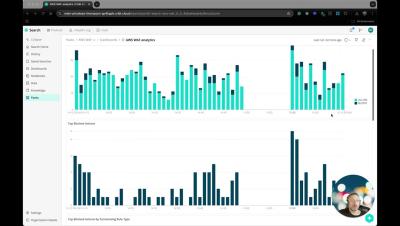
This year, Amazon Web Services (AWS), a leading cloud services provider, announced a comprehensive security solution called Amazon Security Lake. In this blog post, we will explore what Amazon Security Lake is, how it works, the benefits for organizations, and partners you can leverage alongside it to enhance security analytics and quickly respond to security events.
OneDrive vs iCloud: Pricing, Privacy & Best Alternatives (2026)

If you use a Windows PC or a Mac, you already have a cloud storage service. OneDrive’s built into Windows. iCloud comes with macOS. They’re just there. But convenient isn't the same as best. Which cloud storage you pick matters, especially when you think about who can actually access your files. We're comparing OneDrive and iCloud here. How does their security work? What are you trading away for convenience? What features do you get, and what's the real cost?

Amazon ECR Unpacked: How It Works And Why It Matters

If you are running containers on AWS, you need a secure place to store and share your images. Amazon ECR offers a managed registry that handles image storage, scanning, permissions, and versioning without extra configurations. In this guide, you’ll learn what Amazon ECR is, how it works, its features, real-world benefits, and pricing. We will also introduce you to a cost intelligence approach to keeping ECR costs under control.

10 Top Engineering Metrics For Measuring Software Engineering Success In 2026

Software engineers use engineering performance metrics to make informed decisions about their products, features, processes, and even their dev teams. In addition, measuring lets you know if you’re on track to meet your engineering goals. With so many tasks, data, and other information to monitor, how do you choose the right metrics to track? We’ll share that and more in this guide.

Google Photos vs. iCloud: What's the Best Way to Store Your Photos?

Whether you’re a professional photographer, hobbyist, or just want to take a quick snapshot of a hilarious cat, we all have the power to take beautiful pictures straight from our smartphones, thanks to the power of technology. Fortunately, we don’t have to worry about waiting weeks for our photos to be developed and organizing them effectively in photo albums because we have many photo storage apps and services to help us store our precious memories quickly and securely.

iCloud vs Google One: Which Cloud Should You Choose?

iCloud and Google One represent two of the most popular cloud storage options available, and may be at the top of your list of choices when considering which cloud storage is best for you. For Apple users, iCloud is the most popular option, as you receive 5GB of free storage straight away when you sign up with Apple, and it integrates well with iPhones, iPads, MacBooks, etc.

Normalize any logs for Cloud SIEM with Datadog's OCSF processor

Security teams need visibility across every system they defend, including cloud platforms, SaaS applications, security controls, identity providers, and custom services. But those systems all produce logs in different formats, with inconsistent field names and structures. That lack of standardization makes it harder to correlate events, write reusable detections, and investigate incidents quickly.

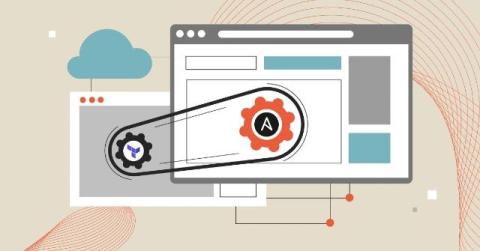
Ansible Vs. Terraform: What Are They And Which Is Best?

Choosing the right tool to manage your infrastructure can shape how fast your team moves and how reliable your systems become. Two names appear in almost every conversation: Ansible and Terraform. Both help you define, manage, and scale your environment. But they solve different problems and work in very different ways. One focuses on configuration. The other focuses on provisioning. Both are powerful. Both are widely used. And both can work together in the right stack.

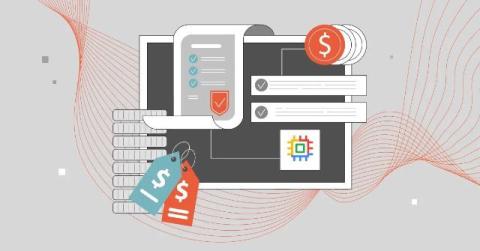
Google Cloud Compute Engine Pricing Guide

Virtual machines often represent the largest line item in a cloud bill. And for Google Cloud users, the Google Compute Engine (GCE) accounts for a large share of overall spend. GCE offers rich flexibility: you can choose specific machine types, scale up or down instantly, and match compute to load. But understanding how the pricing works is critical before you can unlock full value. On the surface, GCE looks simple. You pay for vCPU, memory, storage, and network.

Building and deploying the Symfony ChatGPT app with Upsun

This blog post is based on a live presentation by Guillaume at a SymfonyCon 2023 on deploying applications with the Upsun platform-as-a-service. We utilized AI tools for transcription and to enhance the structure and clarity of the content. If you still use File Transfer Protocol (FTP) for deployment, this post is for you.

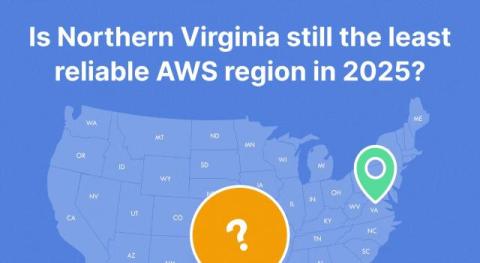
Is Northern Virginia Still the Least Reliable AWS Region in 2025? We Analyzed the Data

This updated analysis is based on StatusGator outage data collected from January 1 to December 9, 2025. We decided to review our AWS analysis of outages in 2022 due to several new AWS incidents, especially another widely discussed AWS outage in us-east-1 (N. Virginia) that occurred on October 20, 2025. We’ve expanded the report with fresh 2025 regional data as well as a new breakdown of affected AWS services.

Bulletproofing your Symfony application for Black Friday

This blog is based on Thomás Di Luccio's talk "Bulletproofing for Black Friday" from the Symfony 2024 conference. Thomás is a Developer Relations Engineer at Upsun. We utilized AI tools for transcription and to enhance the structure and clarity of the content. Picture this: You're a small ticketing startup that just landed a major deal with a large venue. After months of building features and preparing for launch, the big day arrives—season ticket sales go live.

What Is An AIOps Platform? AIOps Platform Definition And Deep Dive for 2026

If you’re running a SaaS business today, you’ve probably noticed the alarms never really stop. Logs. Alerts. Tickets. They pile up faster than many teams can triage them. Add multiple clouds, microservices, and AI-driven workloads, and suddenly, your “always-on” infrastructure feels like it’s always on fire. AIOps platforms promise to connect dots that human teams struggle to see fast enough. For engineers, these include surfacing root causes and outwitting outages.

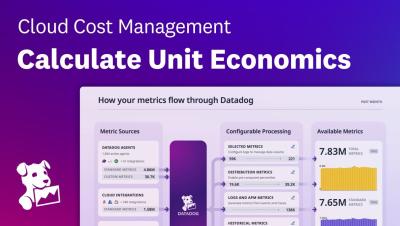
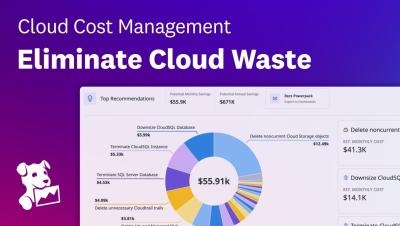
Drive business outcomes with Unit Economics in Datadog Cloud Cost Management

See how Datadog turns cloud usage and performance data into actionable business insights by helping teams calculate unit economics to measure and optimize the efficiency of every service. You’ll discover how to: Datadog bridges the gap between cloud costs and business value—helping organizations get the most value out of their cloud investment.
Sponsored Post

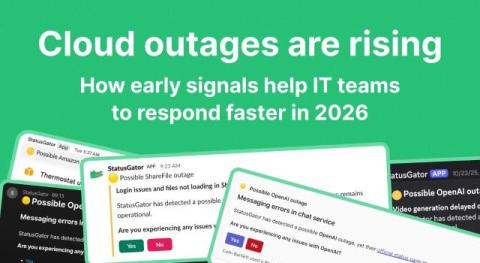
Cloud Outages Are Rising: How Early Signals Help IT Teams Respond Faster in 2026

Cloud outages used to be rare, headline-making events. Today, they're part of the daily reality of running digital operations. Whether triggered by a configuration error, network routing issue, API failure, or global infrastructure disruption, cloud incidents now occur frequently, propagate quickly, and affect more services than ever before. In 2025, one trend has become undeniable: Teams that detect cloud outages early experience less downtime, respond faster to incidents, and avoid unnecessary internal chaos.

CloudSpend in 2025: Making cloud cost management easier at scale

In 2025, cloud environments became more distributed, and cloud costs followed suit. Managing spend across multiple providers, teams, and business units required a more deliberate, governed approach, when visibility alone was no longer enough. Organizations needed clearer ownership, better structure, and tools that could scale alongside their cloud usage.

Cloud Efficiency Rate: A Clear Way To Measure Cloud Business Value

Cloud and AI spending is exploding, and every dollar counts. As companies race to innovate, they also face growing pressure to prove that their cloud investments are delivering real business value. That’s why CloudZero pioneered the Cloud Efficiency Rate (CER) metric, a unifying metric for quantifying cloud business value.

Building VC-ready AI companies: sustainability as an advantage

This blog post is based on a panel discussion about AI sustainability and investment trends, featuring insights from industry leaders at an AI conference. We utilized AI tools for transcription and to enhance the structure and clarity of the content. The AI investment is increasingly growing. While major tech companies plan to spend over $300 billion on AI infrastructure in 2025, investors are no longer just asking about powerful models or rapid scalability.

Making Azure Cost Management Clearer for MSPs: Forecasting, Visibility & Smarter Optimization

This video breaks down the core challenges MSPs face with Azure cost visibility, forecasting, and anomaly detection and how a smarter approach to optimization helps reduce unexpected spend across multi-tenant environments. If you're an MSP looking to simplify Azure cost management and improve clarity for your customers, this overview is a great place to start.

Mail in the Cloud: How Modern Startups Manage Physical Mail

For all the talk of paperless offices and digital-first businesses, physical mail hasn't disappeared. In fact, for modern startups, especially remote and distributed ones, it remains a quiet but critical operational challenge. Legal notices still arrive by post. Banks still send original documents. Government agencies still rely on envelopes and stamps. And vendors, surprisingly often, still mail checks.

Xiaomi Cloud Pricing Guide: Mi Cloud Plans, Security & Alternatives

You bought a Xiaomi device because you're smart with your money. Why overpay for Samsung or Apple when you can get flagship specs at half the price? Now you're facing the same question with cloud storage: stick with Mi Cloud at $0.99/month, or is there something better? Here's the thing nobody tells you. Mi Cloud's pricing looks competitive, but the real question isn't "how much does it cost?", it's "who can access my files, and do I care?".

Real-Time Anomaly Detection For Cloud Cost Monitoring: Why It's The Future (And How It Works)

“Every engineering decision is a cost decision,” notes Ben Johnson, co-founder and CTO of Obsidian Security. That’s the reality of building modern SaaS products in the cloud. But as Ben points out, the answer isn’t to make engineers think long and hard about every dollar they spend. “You don’t want your team hesitating to solve risky technical problems because a choice might add $100 to the bill.

What Is DevSecOps? A Guide To Secure DevOps Workflows

Security used to be something teams added at the end of a release cycle. Engineering pushed code fast. Security teams reviewed it later. But this flow only worked when the software moved slowly. Modern cloud environments broke the old security model. Containers, microservices, APIs, and infrastructure as code now change too fast for security to sit outside delivery workflows.

Lessons From The FinOps In Full Bloom Podcast: 6 Cloud Insights I Didn't Expect

Every time I step on set with a guest for FinOps In Full Bloom, I’m anticipating the lightbulb moments I know will pop up during the podcast. These are the conversations that reveal how curiosity and collaboration can spark real transformation in the cloud.

Transforming Symfony monolith to multi-apps: a step-by-step guide

This blog post is based on Florent Huck, Developer Advocate at Upsun, at SymfonyCon 2023. We utilized AI tools for transcription and to enhance the structure and clarity of the content. The journey from a single monolithic application to a multi-application architecture doesn't have to be daunting. At a recent developer conference, Florent from Upsun's Developer Relations team shared a practical step-by-step guide on how to refactor a monolith into multiple applications using Upsun.

Cloud observability in focus: How Site24x7 strengthened cloud monitoring in 2025

Cloud monitoring became more important as enterprises scaled distributed systems, multi-region deployments, and hybrid environments. Teams needed better cloud performance insights, clearer resource usage visibility, and stronger automation to prevent outages and control costs. This year, Site24x7 delivered a rich set of cloud monitoring updates across AWS, Azure, GCP, and OCI, helping teams stay ahead of issues and optimize their cloud footprint.

How Enterprises Modernize and Migrate to the Cloud Safely with Harness Automation

Cloud migration is a multi-layer transformation involving infrastructure, CI/CD, governance, security, and cost management—not just application movement. Enterprises face unique migration challenges due to complex systems, parallel cloud operations, compliance requirements, and tool sprawl. Automation and standardization are critical to reducing risk, manual effort, and operational inconsistency during cloud-to-cloud migrations.

Understanding Cloud Cost Elasticity: Aligning Spend With Value

In the cloud computing industry, we hear the word “scaling” a lot. We talk about scaling up resources to meet demand, scaling our teams, and scaling our platforms. What tends to get lost is whether your costs are scaling in proportion to the value you’re delivering. If those two metrics don’t move in tandem, it’s likely you’re leaving money on the table. It’s not enough to simply use the cloud.

Cloud Cost Optimization Services Beyond Tools: Building A Sustainable Operating Model

If you’ve already worked through cloud cost optimization strategies, the fundamentals aren’t new. CloudZero’s State of Cloud Cost report shows that cloud cost optimization is now a priority for most organizations. We’ve also covered these foundations in depth, including how cloud cost optimization works in practice and how FinOps teams approach cost accountability. What’s less discussed is what happens next. Cloud environments don’t stand still. Architectures change.

Breaking things fast: A new Approach to QA and testing

This post is based on Greg Qualls, Director of Product Marketing, presentation, "Accelerating QA and Testing," at SymfonyCon 2024. We utilized AI tools for transcription and to enhance the structure and clarity of the content. Before we dive in, I have over 18 years of experience in sales. If, at times, I sound like I'm trying to sell you something, please forgive me. I promise I'm not.

Build or buy, that is the question

For IT leaders who need to move fast without breaking governance. If you’re running IT for a bank, a SaaS company, or a Higher education institution, you’re carrying a brutal balancing act on your shoulders. On one side, your developers are pushing for autonomy, velocity, and the freedom to ship. On the other hand, you’re on the hook for governance, compliance, security, cost controls, and now that AI has entered the chat, innovation at scale.

AI & FinOps: The New Power Duo Driving Modern Profitability

FinOps teams have been expected to understand millions of dollars in cloud and AI spend using tools that a handful of (usually technical) specialists can operate. Dashboards, filters, exports, and SQL have been the norm. That era is over. CloudZero is now bringing AI directly into the FinOps workflow so anyone in the business can ask natural-language questions about cloud and AI spend, and get accurate answers back from the platform.

Preparing your eCommerce platform performance for Black Friday

This blog is based on an Upsun livestream discussion featuring Guillaume Moigneu, Field Engineer, and Thomas di Luccio, Product Manager at Upsun. The conversation was moderated by Greg Qualls. We utilized AI tools for transcription and to enhance the structure and clarity of the content. When Black Friday approaches, the stakes are high for eCommerce businesses.

Discover how to build AI-augmented applications with enterprise-grade security

IT leaders want AI that moves the needle without blowing up risk, cost, or changing control. Your teams need a path to productize AI features on top of existing apps, connect safely to external models, and satisfy audit requirements without slowing delivery. Those are the core buying criteria we hear from IT middle management: buy over build, predictable outcomes, and a strong compliance posture.

Why local internet traffic matters more than you think

Imagine sending a letter to your neighbour across the street, only for it to be routed through London or even Amsterdam before landing in their letterbox. This is effectively what happens to much of Scotland’s internet traffic. Despite physical proximity between users, businesses and services, digital data is frequently sent on needlessly long journeys, often leaving the country before reaching its destination.

Risks of Sharing Personal Information Online and Ways to Protect It

We know that you, like any other person, like to share stuff on the internet. Went on vacation? Post images of your family and tag the resort. Got promotion? Why not tag the company in the post on LinkedIn? Found a fun quiz on Facebook? Of course, it'd be fun to take it. But what if we tell you those are the things that help criminals to get as close to you as possible?

How Prop Firms Leverage Technology for Efficient Trading

In the fast-paced world of financial trading, speed, precision, and insight are critical to success. Proprietary trading firms, or prop firms, have emerged as specialized entities that trade financial instruments using their own capital rather than client funds. Their unique business model relies heavily on operational efficiency, and technology has become a central pillar in achieving this efficiency. Understanding how these firms operate and the role of technology in their strategies provides a glimpse into the future of trading.

Crafting a microservice that fits your needs

This blog is based on Haylee Millar's talk at the Symfony 2024 conference. Haley is a Product Engineer at Upsun. We utilized AI tools for transcription and to enhance the structure and clarity of the content. When faced with an aging system that needs new features, many development teams find themselves at a crossroads. Do you patch the old system and risk technical debt, or do you take the leap into microservices architecture?

The cloud the way you want it: Introducing cloud parity

For decades, there have been two incompatible worlds in cloud: Public (AWS, Google, Microsoft) and Private (VMware, Nutanix). Moving between them meant throwing everything away and re-architecting your systems. Civo is rewriting that script. This final thought from the Civo keynote at Civo Navigate London 2025 introduces Cloud Parity: the elimination of the public/private gap. It's just one way of working, with the same product, same API, and same support.

Cloud Cost Governance: Architecting Accountability And Business Value

Imagine this. A product team rolls out a change to improve reliability. The deployment succeeds. Traffic grows. Weeks later, cloud costs increase, and the finance team asks what changed. No one can point to a single decision or owner. This situation is common in cloud environments. Infrastructure scales automatically, and costs are shaped by technical choices made across engineering, data, and product teams. Most organizations review cloud spending after it has already occurred. Ownership is unclear.

How to Track Cloud Costs in Real-Time Instead of Waiting Days

Tired of waiting days to see your AWS bill spike? Datadog solved this problem using Apache Iceberg to deliver real-time cloud cost visibility - updating every 15 minutes instead of waiting for billing data. Here's how it works: They sync real-time resource inventory (EC2 instances, Kubernetes pods) into Iceberg tables, then use Trino to join those snapshots with unit pricing data. The result? FinOps teams can catch cost anomalies before they become budget disasters.

Civil Counterintelligence and the New Reality of High-Stakes Disputes

Across corporate, financial, and private sectors, the way high-stakes disputes are investigated and resolved is undergoing a quiet but profound transformation. As organizations become deeply embedded in digital ecosystems, conflicts increasingly leave traces not in documents or testimony, but in systems, networks, and behavioral data. This shift has given rise to civil counterintelligence - a discipline that blends cybersecurity, digital forensics, and strategic analysis to uncover truth in complex disputes.

Remote Access Explained: How to Connect to Your Work Computer from Anywhere in 2026

Your developer needs a file from their office workstation at 11 PM. Your sysadmin gets a critical alert while on vacation. Your security team demands audit trails for every remote connection. Welcome to IT operations in 2026, where 36% of new job postings now offer remote or hybrid work, and your infrastructure needs to keep pace. After analyzing deployment patterns across enterprise IT environments and reviewing security frameworks from SOC 2 to HIPAA compliance standards, we've identified what separates functional remote access from infrastructure that actually scales.

SaaS Architecture Fundamentals: Design Principles, Best Practices, And Examples

As an engineer, engineering leader, or CTO, your architectural choices shape how fast your team builds products and how efficiently you manage technology costs. Your architecture determines how much control you have over data, infrastructure, and customization. The Software-as-a-Service (SaaS) model is one of the most common ways to deliver software reliably to users anywhere.

How to Handle Cloud Monitoring Overload?

Reduce alert noise by 70% through intelligent aggregation, clear ownership boundaries, and filtering metrics that don't map to user-facing issues. Monitoring starts with a straightforward goal: understand your system's health and identify issues before users notice them. You set up metrics, create dashboards, and configure some alerts. At first, it works well. Over time, your stack gets bigger and more complicated. New services get added.

13 Real-World FinOps Insights From Anderson Oliveira

On a recent episode of FinOps In Full Bloom, host Thalia Elie sat down with Anderson Oliveira, a Senior FinOps Account Manager at CloudZero. With more than two decades in IT and deep FinOps expertise, Anderson brought clarity, humor, and a refreshingly human perspective to the conversation. Their chat covered everything from visibility and budgets to cultural friction and how to shift teams from resistance to results. Here are 13 insights and takeaways every FinOps-minded leader should hear.

AWS re:Invent 2025: 6 FinOps Signals That Mattered

This year’s AWS re:Invent was a blur of GPUs, LLMs, and infrastructure roadmap reveals — but for those listening between the keynotes, another story was unfolding. Between hallway chats, booth conversations, and live polls, a signal emerged from the noise: FinOps is growing up. Mature cloud teams aren’t just managing costs — they’re asking smarter, more strategic questions about value, forecasting, and engineering accountability.

Major Cloud Outages of 2025

Cloud outages in 2025 ranged from minor ones affecting some sections of users, to major ones affecting hundreds or thousands of users. Services like Cloudflare and AWS on which many other services depend experienced outages that affected many due to the cascading effect. Let's look at some of the major cloud outages in 2025.

Why Cloud-Based Startups Dominate

If you've been following developments in the business world, you will have noticed that cloud-based startups are dominating. But why is this? Why is almost every new unicorn a business that's in the cloud that appears on people's iPhones? Why isn't it something in the physical world? That's the topic we're going to discuss in this article. We're going to explore why cloud-based startups are the way to go in 2025 and 2026 and how you can leverage them to your advantage.

Expert Insight: Why Carrier Neutral Data Centres Give UK Businesses Greater Network Control

The demands placed on digital infrastructure have changed. As businesses expand across regions, adopt cloud platforms, and face stricter compliance requirements, networks must evolve just as fast as the workloads they support. The rise of AI, distributed teams, and latency-sensitive applications has made agility a central requirement for performance and resilience. Without it, costs rise, migrations slow, and continuity becomes harder to guarantee.

Gamifying FinOps (And CloudZero) For Better Adoption

In our increasingly online world, managing cloud, AI, and other tech spend has shifted from a good idea to an absolute necessity. But even when cost management is a priority, how do you get busy development teams and engineers actively engaged in the new practices? New initiatives are often viewed as more work on the team’s plate, which is an understandable deterrent to adoption. That leaves FinOps proponents struggling to get others on board.

The AI Cost Crisis: 'AI Cost Sprawl' Is Crashing Your Innovation (AI Cost Sprawl Explained + How To Fix It)

AI should speed up innovation, not inflate your cloud bill. But today, the biggest GenAI challenge for SaaS teams isn’t model quality; it’s cost. And increasingly, that cost comes from AI cost sprawl. That’s not because anyone is doing something wrong, but because AI operates differently from the cloud services we’ve all spent a decade learning how to manage.

Why cloud fragmentation is slowing teams down and how unified platforms solve it

Engineering teams today manage infrastructure spread across multiple clouds and tools. Whether this happened through gradual accumulation or deliberate strategy, the result is the same: complexity that slows teams down. Managing each cloud separately with different tools and workflows is a bottleneck to delivery speed, operational efficiency, and platform reliability.

Cutting tech debt at the source: how cloud application platforms put IT back on offense

For most Central IT leaders, tech debt isn't a surprise. It's the silent tax on every roadmap, every quarterly plan, every conversation about why things take so long. Modern cloud application platforms (true PaaS environments) give IT leaders a path to unwind years of accumulated complexity while simultaneously accelerating innovation. You no longer have to tolerate the tax.

This Month in Datadog - December 2025

For our last episode of 2025, we’re focusing on Datadog releases announced at AWS re:Invent. Join Jeremy to see how you can manage logs at petabyte scale in your infrastructure, eliminate unneeded costs in Amazon S3 buckets, build agentic workflows, and detect credential leaks. Later in the episode, Scott spotlights how you can connect your AI agents to Datadog tools and context with our MCP Server.

Highlights from AWS re:Invent 2025: Making sense of applied AI, trust, and going faster

After four days of AWS re:Invent—a 65,000-step marathon that included 60,000 attendees spread across five Las Vegas campuses—and navigating the latest installment of this 13-year-old cloud pilgrimage, we’re all a little dehydrated but significantly wiser. The volume of announcements felt less like a single flood and more like a river branching into three powerful currents. Making sense of this massive technological convergence requires zooming out.

How to launch a Deep Learning VM on Google Cloud

Setting up a local Deep Learning environment can be a headache. Between managing CUDA drivers, resolving Python library conflicts, and ensuring you have enough GPU power, you often spend more time configuring than coding. Google Cloud and Canonical work together to solve this with Deep Learning VM Images, which use Ubuntu Accelerator Optimized OS as the base OS. These are pre-configured virtual machines optimized for data science and machine learning tasks.

The Indirect Cost Trap: Why Your Margins Look Better Than They Are (And How To Fix It)

When a SaaS company scales, something curious happens. The cloud bill grows. One team swears it’s Kubernetes. Another blames the Black Friday promo. But when you’re unsure whether that increase is tied to healthy SaaS growth or simply overspending, your margins are already at risk. That gap between what’s spent and what’s understood is where indirect costs live. Yet these costs rarely show up in dashboards. Well, until it’s too late.

What is cloud parity? The future of flexible and sovereign cloud computing

Back in 2024, I officially put a name to a concept at Civo we had been developing for many years. I called it cloud parity. When Civo was incepted, two completely different worlds existed, the public cloud dominated by Amazon, Microsoft and Google, and the private cloud dominated mainly by VMware.

Your Cloud Economics Pulse For December 2025

Welcome to December’s edition of CloudZero’s Cloud Economics Pulse — your monthly read on how cloud spend is shifting across providers, services, and AI workloads. No surprises here — November continued the quiet reshaping trend we’ve seen all year. Compute softened, data layers grew, and AI/ML hit its highest share yet. AWS extended its lead, Azure and GCP nudged upward, and the emerging “AI layer” of providers continued to take shape.

Marginal Cost for Engineers: 10 Architecture Decisions That Secretly Inflate Your Costs

A few months back, a backend team at a fast-growing SaaS company shipped what seemed like a harmless feature. Just a simple request validation layer. No new service. No major dependencies. No architectural shock. Yet two months later, their cloud costs had climbed 38% without any significant increase in traffic, storage, or compute load. What they’d missed was that the validation layer triggered a fan-out pattern.

Tracking Azure SQL changes with Azure Functions and CI/CD automation

Imagine being able to automatically detect when a high-value order is placed, then log it and notify your sales team – without manually accessing your app code. Azure SQL Trigger Functions make this possible. By automating the response to database changes as they happen, you can streamline operations, sync data, and power workflows in near real-time. Azure SQL Triggers, especially when combined with serverless functions, offers a powerful, low-maintenance way to respond to real-time data changes.

New Relic Pricing: Monitoring Your Costs In 2026

New Relic provides full-stack observability and monitoring. It provides almost every type of system monitoring on a single platform. This includes monitoring tools for infrastructure, application performance monitoring (APM), synthetics, user, log, mobile, network, and Kubernetes components. DevOps, security, and business professionals use these capabilities to detect anomalies, analyze root causes, and fix software performance issues.

When major IT incidents occur, AI can deliver speed and transparency

The recent Cloudflare outage served as a stark reminder of how fragile the global digital ecosystem can be due to a single point of failure. In a matter of minutes, thousands of websites that rely on Cloudflare’s CDN, from Fortune 500 brands to SaaS platforms and consumer apps, went offline for hours. The business impacts were severe, with Shopify alone suffering over $4 million in losses while downstream merchant impacts potentially exceeded $170 million.

Data Centre Security Checklist: Executive Oversight for Compliance & Continuity

Compliance requirements and rising risk standards have raised the stakes for data centre security. Without assurance that facilities can resist disruption and protect data, organisations face increased exposure to audit failure, downtime, and reputational damage. For executives and auditors, data centre security is part of wider governance and risk management. Oversight means confirming that physical safeguards, environmental systems, and compliance frameworks are in place and can be trusted.

Your Guide To Inference Cost (And Turning It Into Margin Advantage)

AI adoption is exploding, but margins aren’t. In fact, an MIT analysis reports that 95% of organizations have yet to see measurable ROI from GenAI. This gap becomes obvious as soon as teams push a model into production and usage begins to scale. For most workloads, the pressure comes after training. Every message, call, query, completion, or retrieval triggers compute behind the scenes. That real-time execution is what AI inference is all about.

AWS Batch On EKS: Streamlining Containerized Workloads

Machine learning pipelines are getting heavier by the day. From model training to large-scale inference and data preprocessing, compute demands are scaling faster than teams can manage. Kubernetes clusters groan under unpredictable job spikes. Static infrastructure wastes money when workloads slow down. The result? Organizations are perpetually chasing flexibility, automation, and cost efficiency. AWS has quietly built a solution to establish that balance.

PagerDuty Becomes Newest AWS Software Partner to Earn Resilience Competency

As enterprise system failures cost businesses an estimated $400 billion annually in lost revenue and productivity, PagerDuty announced it has achieved the Amazon Web Services (AWS) Resilience Services Competency in the software category - becoming one of the first AWS Software Partners to earn the designation. This achievement validates PagerDuty's ability to help enterprises architect, deploy and maintain mission-critical systems that can withstand failures and recover rapidly with minimal business disruption.

Integrate InvGate Asset Management With Google Cloud - Keep Control of Your Cloud Assets!

Losing track of cloud resources is one of the fastest ways to rack up unexpected bills. In this video, Matt Beran shows you how InvGate Asset Management's Google Cloud integration helps you automatically sync and manage your GCP virtual machines, SQL databases, networks, and storage — all in one centralized asset inventory. InvGate also integrates with Amazon Web Services and Azure, giving you complete visibility across your entire cloud infrastructure.

Marginal Cost Explained: The KPI Every SaaS CFO Cares About (But You Rarely Track)

Ask a SaaS team how they measure cloud efficiency, and you’ll hear familiar things. Total cloud spend. Average cost per customer. Maybe a breakdown of spend by service. All useful, but rather wobbly. Now ask, “What does it cost you to serve one more customer?” That’s when the room goes quiet. And that’s often where cloud economics gets really wobbly. Because that number, your marginal cost, is what actually determines your margins. Not your total cloud bill.

When Trust Becomes Your Strongest Security Protocol

Managing IT for Witherslack Group does keep me up at night sometimes. Keeping our data secure is an ongoing challenge. When I say our data is sensitive, I mean a breach could genuinely destroy lives. We care for some of the UK's most vulnerable children: young people who have experienced sexual exploitation, kids whose parents cannot know their location, children from backgrounds most people could not imagine.

Level Up Your Container Security: Introducing the JFrog Kubelet Credential Provider

Amazon Elastic Kubernetes Service (Amazon EKS) is a fully managed, compliant Kubernetes service that simplifies running, managing, and scaling containerized applications. EKS automatically handles the availability and scalability of the Kubernetes control plane, allowing teams of any size or skill level to focus on building and deploying production-ready applications across diverse environments, including AWS, on-premises, and at the edge.

Harness and Amazon Team Up to Bring AI-Powered DevOps to Your IDE

Today, we’re excited to announce our expanded partnership with Amazon, bringing together the power of Amazon Kiro, Amazon Q Developer, and Harness SaaS on AWS to revolutionize how your team builds, troubleshoots, secures, and deploys software. This collaboration is designed to deliver a seamless, intelligent, and scalable software delivery experience for all AWS customers.

AI agents just got smarter thanks to PagerDuty + AWS

We are on the ground with AWS and announcing innovations that give customers more powerful AI agents for incident management. These new and improved integrations bring PagerDuty context into the AWS ecosystem for faster resolution and more connected data across the business. And, with our new competency, we take this a step further by codifying these best practices into our joint customers’ day-to-day operations. Announced today, here are some of the highlights.

Managing cloud infrastructure with AI assistant and Upsun MCP server

Artificial intelligence is changing the way we execute our everyday operations. AI assistants are incredibly intelligent; they can write code, explain complex concepts, and answer any question you throw at them. However, they can't execute actions on their own. If you ask your AI assistant to “create a backup of my database,” it may provide you with clear instructions, run the CLI commands directly or in some cases, even trigger actions through connected agent workflows.

Mastering AI Spend With CloudZero And LiteLLM

The AI landscape today feels a lot like the early days of the cloud: exciting, fast-moving, and completely fragmented. Every week, engineering teams are experimenting with dozens of large language models (LLMs) from providers like OpenAI, Anthropic, Google, Mistral, Meta, and beyond. They’re tweaking prompts, testing model performance, swapping context windows, and even running multiple models in parallel to figure out which one works best for each unique use case.

Monitoring Azure Metrics to Protect Uptime And Stop Threats Early

This is the fifth blog in our Azure Monitoring series, and we’re focusing on what’s most critical: keeping your environment secure and always available. Performance and cost mean nothing if your services go offline or your data is compromised. In this post, we’ll highlight the Azure metrics that help CloudOps teams detect threats early, build resilience into their stack, and stay ahead of outages before they impact users or compliance. Missed our earlier posts? Catch up.

From FinOps for AI to AI-Native FinOps

One year ago, at AWS re:Invent, we launched CloudZero Advisor, a free, standalone AI assistant that enables anyone to ask questions about cloud spend in plain language. It was the first experiment of its kind in FinOps, a chance to see what people really wanted to know when cost data finally became conversational. Over the past year, Advisor has become a learning engine.

Best Cyber Monday VPS Deals 2025: How to Evaluate Real Value Beyond Discounts

December brings a flood of Cyber Monday VPS deals, each promising unbeatable savings. The challenge isn't finding deals. It's identifying which ones deliver actual long-term value versus temporary promotional pricing that evaporates after a few billing cycles. This guide evaluates Cyber Monday VPS deals using three core metrics: total cost over realistic usage periods, included features versus add-on fees, and management requirements that impact your team's time investment.

Building AI Apps with AWS: From Foundation Models to Production-Grade Agents

In the last two years, generative AI has moved from "cool demo" to become an integral element of IT production. The research proves this trend: according to Fortune Business Insights, global spend on generative AI reached an estimated $67 billion in 2024. By 2032, this spending is expected to pass almost $1 trillion, with a compound annual growth rate of approximately 40%. Moreover, a McKinsey & Company survey finds that roughly two-thirds of companies have already integrated generative AI into their workflows, and 80% use it in its broad sense. This technological transformation, hence, poses a critical new question.