The first post in this series explored why traditional observability breaks down in hybrid cloud environments. As infrastructure, applications, and dependencies stretch across on-premises networks and cloud services, isolated monitoring views leave teams with an incomplete understanding of what is happening and why. That challenge raises the next question: what kind of operational model actually works in a hybrid environment?
The video was a product manager who claimed she worked at Netflix. (Her claim, not mine. I have no way of verifying it, and I can’t find the video now.) She was talking about how Netflix now requires every PM to vibe code a working prototype before presenting an idea to engineering. Show, don't spec. Build the thing first. I sat there for about ten seconds being mildly annoyed.
SAP customers with complex SAP know the challenges of managing multiple landscapes well. While classic tools like SAP Landscape Management (LaMa) and Focused Run served us well for years, they were built for a static, on-premises world. Now, with the 2027 end-of-support deadline for legacy solutions looming, the "fog" of hybrid management is getting thicker.
The best cloud monitoring tools are Hyperping (uptime, server monitoring, status pages, and on-call at a flat rate), Datadog (full-stack observability with the broadest integration catalog), New Relic (usage-based observability with the most generous free tier), Dynatrace (AI-driven automatic root-cause analysis for large enterprises), Better Stack (monitoring paired with logs and incident response), and Prometheus + Grafana (the open-source standard for cloud-native metrics).
If your infrastructure is configured outside version control through dashboards, scripts, or manual steps, environment drift is the expected outcome. Most teams have lived this scenario. A feature works in staging but breaks in production. Two hours later, someone finds a configuration setting that was changed in staging three weeks ago and never documented.
Alibaba Cloud is a major cloud provider in APAC, offering industry-leading foundational AI models in addition to compute, managed databases, object storage, and Kubernetes through its Container Service for Kubernetes (ACK). Teams choose Alibaba Cloud for its infrastructure availability across Asia Pacific and its managed services. For SREs and platform engineers, that often means running Alibaba Cloud alongside AWS, Google Cloud, or Microsoft Azure.
Over the past five years, one of the most consistently tracked figures in the UK business technology sector has been the flight from public cloud. Barclays' 2021 CIO survey revealed that 43% of enterprises plan to shift workloads away from public cloud. By 2024, that had grown to 83%. Research for Pulsant in 2025 found that 87% of UK businesses planned to repatriate data away from the public cloud within the next two years.
This walk-through shows how Splunk Cloud can search AWS S3 data through an Apache Iceberg REST catalog backed by Nessie. Learn how Iceberg table metadata, S3 storage, and Splunk Federated Search work together so analysts can query historical security data where it lives without reingesting it into Splunk.
Gartner forecasts $2.6 trillion in global AI spend this year. Most of it lands in invoices that don’t connect dollars to the developers who spent them, the customers they served, or the features they shipped. AI billing is a mess. CloudZero is the financial control plane for AI spend. Three capabilities, available today, reveal the by-customer, feature, and developer ROI of AI: 1. Real-time Spend: Capture every dollar spent on AI, at the source. 2.
Only 14% of CFOs can prove AI ROI. OpenAI’s gross margin fell from 40% to 33% in 2025, well below its 46% target. Even the AI providers cannot reliably predict what AI will cost. Companies are scaling AI faster than they can measure it: more tokens, more agents, more model calls, more spend moving through systems finance cannot yet see. Every board is asking the same question: What is this AI investment returning? Most companies cannot answer it. The ones that can will compound their advantage.
Businesses migrating from a single, public cloud provider has been the direction of travel of UK digital infrastructure for years. As far back as 2020, Barclays found that 43% of enterprise CIOs were already planning to bring workloads back from the public cloud to on-premises or private cloud infrastructure. Since then, IDC, Gartner and a host of vendor surveys have tracked an increase in this intention.
Data sovereignty wasn’t a major topic just a few years ago and now it’s becoming a major economic opportunity for regions across the UK. In this clip from Perspectives from the Edge, Katie Gallagher OBE from Manchester Digital discusses why the conversation around data sovereignty has shifted, and how the rise of AI is accelerating demand for trusted regional digital infrastructure. As organisations rethink where data is stored, processed and governed, regions like Manchester are increasingly well placed to benefit through investment, innovation and digital skills growth.
Understand what hybrid cloud monitoring is and why it’s critical for managing modern distributed IT environments. Hybrid cloud monitoring helps organizations unify visibility across on-prem infrastructure, public cloud platforms, virtual machines, containers, and Kubernetes clusters in a single monitoring platform. In this video, learn how fragmented monitoring tools create operational blind spots and slow down incident response across hybrid environments.
Can you trust AI to run your platform? AI can now spin up production infrastructure in minutes — but speed cuts both ways. In this episode, Nana(TechWorld with Nana) sits down with Doron Grinstein and Dan Wilson, two architects who built, broke, and fixed platforms at VMware and SAP, for a no-hype look at platform engineering in the age of AI.
Security audits that focus only on application code often miss the delivery layer entirely. That is where the most common and most avoidable failures live. Most teams treat security as a layer added on top of a working system. The problem is that the delivery model itself introduces risk before a single line of application code runs. When deployments are manual, environments are inconsistent, or configuration drifts across stages, the system behaves unpredictably.
Most IT teams running a real hybrid setup are not short on data. They are short on a place where the data agrees with itself. By the end, you will know what to ask a vendor for, where teams usually trip, and how to scope a proof of concept that does not burn a quarter. Hybrid cloud monitoring is the ongoing collection of telemetry across your on-prem kit and one or more public clouds, treated as one environment instead of two or three. The goal is not just visibility.
Multi-cloud management becomes difficult in a very specific way. The problem is usually not that an organization uses more than one cloud. The real problem is that architecture, governance, cost control, provisioning standards, and team workflows start evolving at different speeds. One team is optimizing delivery. Another is trying to lock down policy. A third is dealing with private infrastructure that still matters. A fourth is trying to make cloud spending predictable.
For years, SaaS companies treated SEO like a traffic competition. The goal was simple: publish more content, rank for more keywords, and drive as many visitors as possible to the website. Marketing dashboards looked impressive. Teams celebrated traffic milestones. Investors saw upward graphs and assumed momentum was building. But somewhere along the way, a lot of SaaS founders started noticing a problem nobody wanted to talk about openly.
Many of us understand the concept of Kubernetes Requests and Limits, and that by reducing over-sized resource requests we can reduce waste in our clusters. And for GKE Autopilot and EKS Fargate clusters that is true. Because you’re being billed directly for the resources you’re requesting, driving down requests can result in instantaneous savings. However in most hosted Kubernetes environments you’re not actually being billed for requests.
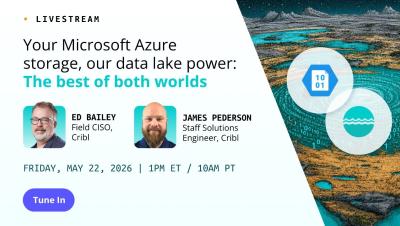
The wait is over for Azure-first organizations. Cribl just launched Cribl Lake Bring Your Own Storage (BYOS) for Microsoft Azure, giving you full data lake power without moving a single byte of telemetry out of your environment. Join us to see how you can finally get the flexibility of a modern data lake while keeping your data in Azure.
AI isn’t about replacing engineers. It’s about leverage. The teams that win will be the ones that: Triage incidents faster Correlate signals automatically Reduce manual investigation Automate repetitive operational work In observability, that means asking: AI won’t eliminate expertise, it amplifies it. The real risk isn’t AI taking your job. It’s competitors using AI to operate at a speed and efficiency you can’t match.
One of the most powerful capabilities in K8s is the ability to autoscale resources to meet demands, scaling resources up during peak periods to ensure performance, and down again during lower periods to save money. In this joint session, Lucidity and Kubex walk through what end-to-end K8s optimization looks like when you address both layers together. We cover: Expect real examples, not slides full of theory. You’ll leave with a clear picture of where waste is hiding in your environment and a prioritized approach to addressing it.
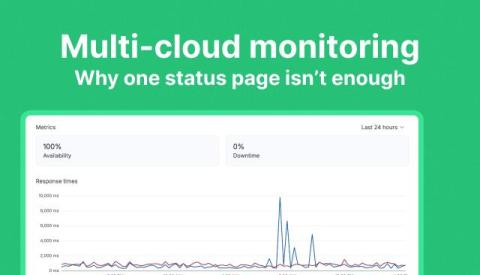
Multi-cloud environments make outage detection harder. Relying on individual status pages from Amazon Web Services, Google Cloud Platform, and Microsoft Azure often leads to delayed, incomplete, or conflicting signals during incidents. This article explains how fragmented visibility impacts incident response, and how aggregating status across cloud and SaaS dependencies helps DevOps teams detect outages faster and respond with confidence.
Cloud and SaaS spending continues to grow across teams, services, and providers, changing too quickly for retrospective cost management workflows to keep up. Finance and engineering leaders often rely on last month’s reports or manually maintained spreadsheets, which don’t reflect current usage. As a result, teams lack context on how spend is trending and often discover budget overruns only after they’ve occurred.
Runtime guardrails and control towers govern AI activity — but without a financial control plane connecting spend to outcomes, enterprises can't tell which AI bets are worth it. Most enterprises can answer exactly one question about their AI rollout: what did we spend?
NVIDIA H100 GPU cost in 2026: $25K–$40K new, $2–$8/hr cloud rental, used from $6K on eBay. Full buy vs. rent math, 9-provider cloud comparison, and H200/B200 context.
Mistral API pricing in 2026: Large 3 at $0.50/$1.50, Small 4 at $0.15/$0.60, Medium 3.5 at $1.50/$7.50 per MTok. Le Chat Pro $14.99/mo. Full comparison with GPT, Claude, and DeepSeek.
Manchester is one of the UK’s leading tech ecosystems – but how did it get there? In this episode, Pulsant’s Wendy Shearer speaks with Katie Gallagher from Manchester Digital about Manchester’s rise as a powerhouse for UK tech, data sovereignty, innovation, talent and inclusive growth. Discover how the region has evolved from its strong industrial heritage into a thriving digital economy now home to major FTSE 100 companies and six unicorn businesses.
IT leaders survey finds that despite rising hardware costs and sustainability goals, 1/3 of mobiles, laptops and drives destroyed to protect data still function.
Most engineering teams underestimate the time infrastructure demands from them. The hidden cost isn't in provisioning, it's in the accumulated friction of environment drift, manual handoffs, and repetitive infrastructure maintenance that quietly consumes hours your team should be spending on product.
Network Attached Storage (NAS) is a dedicated storage device connected to a network that allows multiple users and devices to store and access data from a central location. It is a popular method for extra data privacy, as everything is stored on the device you own and can’t be accessed by anyone, making it a popular alternative to Google Drive, OneDrive, and other big tech companies.
AI observability covers performance, quality, reliability, safety, and cost. Most tools handle the first four. Here's what each pillar means, which tools cover which, and why cost is the dimension enterprises keep missing.
Cloud hosting is not invisible. Every project deployed, every resource provisioned, every region selected carries a real energy cost, and that energy cost has a climate cost. At Upsun, we've known this for a while. What we're sharing today is where we stand, what we measured, and what we've committed to doing differently from 2026 onwards. Our ambition is calibrated to what we can credibly deliver, and we think being upfront about that matters more than overpromising.
Claude Code costs $20–$200+/month depending on plan and usage. Compare Pro vs. Max vs. API pricing, see real-world cost estimates, and learn how to track AI spend at scale.
True data sovereignty isn't about managing your own cloud accounts; it’s about where your data resides and how it is governed. By utilizing a unified configuration file to deploy on sovereign infrastructure like OVHcloud, Upsun provides standardized sovereignty without the complexity of “Bring Your Own Cloud”.
In today's fast digital market, the real question is not if your business needs tech, but which tech will help you move forward. A modern business tech stack is more than a pile of apps. It's a carefully chosen set of digital tools and systems (like programming languages, frameworks, databases, front-end and back-end tools, and APIs) that work together to run day-to-day operations, support new ideas, and help the business grow.
Streaming workloads impose different requirements than classic migration projects. A platform that can support a one-time move from one system to another is not always the right fit when data must flow continuously, stay current, recover cleanly, and serve downstream analytics, applications, or AI use cases without long delays. That is the real shift behind this category. The question is no longer only whether data can be replicated.
Having workloads on two clouds is not the same as being able to move workloads between them freely. Portability is about the friction of movement, not the number of providers in use. Most teams that call themselves multicloud are not portable. They have separate workloads siloed on separate providers, each with its own toolchain, deployment pipeline, and set of operational conventions. Moving anything between those environments means starting from scratch. That is not portability.
Anthropic just shipped an Enterprise Analytics API with user-level token and cost data. Today, we're shipping the CloudZero adapter that maps that data to teams, budgets, and cost centers — so Claude spend gets the same accountability as the rest of your stack. Anthropic released the first beta of its Enterprise Analytics API this week. Admins can pull token usage and dollar cost through a programmatic endpoint, broken down by user, model, context window, region, and product surface.
Cloud adoption has evolved from simple infrastructure outsourcing into a spectrum of deployment models designed to balance performance, resilience, compliance, and cost. Two of the most widely adopted approaches today are multi-cloud and hybrid cloud. While they are often discussed together, they solve different architectural problems.
In this teaser for an upcoming episode of Perspectives from the Edge, Wendy Shearer, Director of Partners & Ecosystems at Pulsant, speaks with Kate Gallagher, Managing Director at Manchester Digital, about how Manchester has become one of the UK’s leading technology ecosystems and a model for regional innovation and growth.
Honeycomb has shipped a production integration with Amazon Bedrock AgentCore, surfacing agent telemetry directly in Agent Timeline, Honeycomb's trace view for behavior. It's available now and built on.
Cloud migration projects stall for plenty of reasons, legacy dependencies, network latency, data residency rules. But one blocker that doesn't get enough attention is encryption key management. More specifically, the question of who controls the keys once data moves off-premises. For security teams, that question can hold up a migration for months.
Tech headlines are being dominated by the perfect storm that has led to a global shortage of Random Access Memory (RAM). As the short-term, temporary memory that handles data for processing and applications, RAM - and specifically Dynamic Random Access Memory (DRAM) - is a foundational business technology.
Cloud infrastructure has never been more reliable in theory. In practice, the last six years of cloud outage history have delivered some of the most disruptive incidents on record. Not because cloud providers got worse, but because the systems built on top of them got larger, more interconnected, and more brittle in ways that don't show up until everything breaks at once.
n this demo, we explore the AWS Database Migration and Modernization (D2M) framework, from Align and Assess, trough to Optimize, and show how Redgate Monitor helps you to establish performance baselines, right-size target environments and continuously optimize RDS and Aurora spend for full cloud cost visibility. Learn how Redgate Monitor can give you a single view of your entire AWS and on-premises, multi-database environment.
In this demo, we explore the AWS Database Migration and Modernization (D2M) framework, from Align and Assess through to Optimize, and show how Redgate TDM helps teams to safely work through compliance or data privacy concerns during cloud migrations. See how to safely mask sensitive data, create reusable datasets, and accelerate development with consistent, compliant test data across environments. Discover how test data management reduces risk, supports DevOps pipelines, and enables faster, more secure cloud migrations.
In this demo, we explore the AWS Database Migration and Modernization (D2M) framework, from Align and Assess through to Optimize, and show how Flyway helps simplify database versioning, automate deployments, and enable reliable CI/CD. See how to reduce risk, improve collaboration, and modernize your database workflows in the cloud with better visibility and control.
In 2024, Mark Boost, CEO at Civo, introduced the concept of ‘cloud parity’, a cloud computing approach that ensures a consistent, identical experience, feature set, and operational model across public, private, hybrid, and edge environments. “Cloud parity gives teams the freedom the cloud was supposed to deliver in the first place. It gives enterprises the sovereignty they need. It gives public sector bodies the clarity they require.
Claude API pricing per million tokens: Haiku 4.5 at $1/$5, Sonnet 4.6 at $3/$15, Opus 4.7 at $5/$25. Plus caching, batch discounts, and how to optimize API spend at scale.
While ephemeral sandboxes are effective for isolated code execution, enterprise AI agents require a more robust context to be reliable. Upsun provides production-like preview environments, complete with byte-level clones of apps and services, offering a higher standard of validation for agentic workflows.
Cloud data migration is an important topic for enterprises and businesses as it helps companies switch to a more affordable, scalable, and secure data storage method compared to on-premises storage. To help understand this topic, we will cover everything you need to know about cloud data migration, including.
NAS (Network Attached Storage) is becoming a popular storage method for people to take control over their data and move away from cloud storage companies that take advantage of their data for their own profits. Although cloud storage is the mainstream storage option for families, businesses, and personal use, NAS storage is an option many are choosing due to more control over where data resides.
Compare LLM API pricing across OpenAI, Anthropic, Google, DeepSeek, and Mistral in 2026. Full pricing tables, hidden cost breakdowns, and proven strategies to cut AI spend. Written for engineering leads, platform teams, and FinOps practitioners evaluating or optimizing production AI costs.
Grafana Cloud pricing starts free and scales by metrics, logs, and traces. Compare all tiers, real-world costs, managed options, and ways to optimize. Written for DevOps engineers, SREs, platform teams, and FinOps practitioners managing observability spend.
Together AI pricing ranges from $0.10 to $9.00 per million tokens. Compare all models, GPU rates, free tier details, and practical cost optimization strategies. Written for engineering leads, platform teams, and FinOps practitioners evaluating open-source inference providers.
How many hours did your team spend last quarter debugging issues that only appeared in one environment? What would change if every environment were guaranteed to be identical? In 2026, environment inconsistency remains one of the most expensive bottlenecks in software development. Developers frequently spend more time debugging differences between infrastructure setups than they do on their own code.
More organizations are moving workloads from Azure public cloud to Azure Local (formerly Azure Stack HCI) than most people realize. The reasons vary: data sovereignty requirements, latency-sensitive workloads that need to be closer to the edge, cost optimization for predictable workloads where reserved cloud capacity doesn’t make financial sense, or regulatory constraints that require data to stay on-premises.
It’s 2026 and it’s time to get up to speed. A Virtual Private Network (VPN) is an absolute necessity for anyone working remotely or anyone who travels often. That said, there are plenty of other people who would benefit from a solid VPN. VPNs work by providing an end-to-end encrypted tunnel between your device and the VPN operator’s server. All of your traffic is then encrypted and routed through this tunnel.
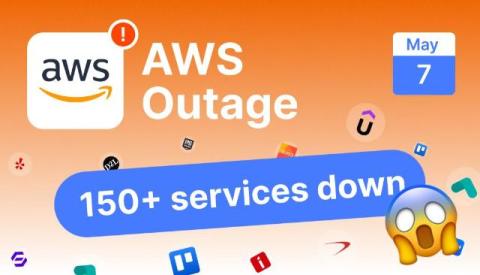
On May 7th and 8th, 2026, Amazon Web Services (AWS) experienced an outage affecting Amazon Elastic Compute Cloud (EC2) in the dreaded US East 1 region. The original region of AWS located in Northern Virginia, us-east-1 or just “US East” as it is known, has been the subject of some of the internet’s most high profile and destructive outages and remains Amazon’s least reliable region.
Key takeaway: Granting AI agents unrestricted access to cloud infrastructure is an unacceptable security risk. Upsun provides a "zero-trust" framework by utilizing isolated, production-perfect preview environments that allow AI to be productive without the risk of a hallucinated production outage.
Today, roughly 94% of enterprises are projected to use some form of cloud service, with 82% adopting hybrid models that combine cloud and on-premises infrastructure. By 2030, around 60% of all corporate data is expected to be stored in the cloud, highlighting a major shift away from traditional storage systems toward distributed, on-demand infrastructure. With such a huge amount of data, companies need a scalable, affordable, and secure method to store 1 PB.
If an AI agent in your development workflow needed to spin up a test environment tonight, how many manual steps would stand between the request and the environment being ready? By early 2026, AI agents have transitioned from simple code assistants to first-class platform citizens. They are running test suites, analyzing performance, and triggering deployments.
A few weeks ago, a group of engineering leaders I trade notes with got into it over a question none... A few weeks ago, a group of engineering leaders I trade notes with got into it over a question none of us has a clean answer to: How much should you let an engineer spend on AI? One SVP at a company of similar size and stage is in calibration mode and capping engineers at $200 per month. Hit the cap, you can self-bump by $100. Hit that, you need your manager. I told the thread our number. $5,000.
Feature pricing or per-feature pricing is a common SaaS pricing model for good reasons. Here’s how it works, including real examples and how to do it. The best pricing strategy for your SaaS business will depend on your specific business model, target market, and competition. You’ll also want to test different pricing strategies to see which one works best for you. That said, feature-based pricing can be a very profitable way to price SaaS products. Here’s how it works.
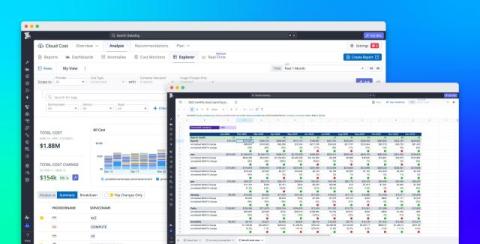
Cloud cost data is most useful when teams can adapt it to their own reporting and planning needs. In addition to viewing cost breakdowns, FinOps teams often need to calculate forecasts, reshape datasets, and present tailored views to finance and leadership teams. In many workflows, those steps happen outside the observability platform. Once the data is exported, it quickly becomes outdated and requires repeated manual updates.
Over the past decade, cloud computing has evolved from an emerging technology into the foundation of modern digital infrastructure. However, the latest industry research shows that the industry has now crossed a critical threshold. The conversation is no longer about whether to adopt cloud, cloud-native technologies, or AI. Instead, it has shifted toward operational efficiency, economic predictability, and infrastructure at scale.
When was the last time you asked a developer if they actually use the platform you built for them, or whether they’ve found a faster way around it? We talk with companies every day who deal with this exact scenario. They spend months or even years building their IDP. Then a new project requires a stack or workflow that the IDP doesn’t support. The developer is under pressure to deliver, so they spin up their own solution. This is why most IDPs fail quietly.
Most teams don’t have a data problem. They have a correlation problem. When visibility is fragmented:→ Marketing sees conversion drop→ Engineering sees API latency So the wrong call gets made. Example: Checkout drops → pricing gets blamed → discounts applied. Reality: a backend API timeout was killing transactions. That’s what happens when you can’t connect: user impact (what) to system behavior (why)
Hybrid infrastructure has stopped being a "strategy option" and become the default operating model for many engineering teams. Workloads are now routinely split across on-prem systems, private cloud environments, and public cloud platforms - not because it's elegant, but because it's necessary. The problem is that most private cloud providers weren't designed for this reality. They tend to optimise for either traditional virtualised infrastructure or public cloud abstraction layers, but not the messy middle ground where workloads need to move seamlessly across environments.
AI adoption costs are going parabolic. The companies that can see what they're spending will invest with confidence. Everyone else is flying blind. Every company adopting AI is facing the same problem: the cost of AI adoption in products, in operations, and especially in engineering is accelerating with no alignment between spend and value. The competitive pressure is real. Companies that don’t invest in AI will be displaced by those that do. But the investment itself is becoming inscrutable.
In this episode of FinOps on Azure, Michael Stephenson sits down with Frank Contrepois, independent FinOps voice and co-host of The FinOps Guys podcast — to explore what it really means to manage cloud costs from a business-first perspective. Frank has been in the FinOps space for nearly a decade and brings a genuinely different angle to the conversation. His background in commodity trading at Strategic Blue (a Morgan Stanley spinoff) shaped how he thinks about reserved instances, commitment strategies, and why most teams approach cost management the wrong way round.
With hyperscalers, growth comes with a hidden cost. The more your data moves, the more you pay, by design. Egress fees are that cost. A model built to discourage migration, limit flexibility, and keep you trapped in their ecosystem. At Civo, we've eliminated that barrier completely. No egress fees, no hidden charges. Every cost is transparent and predictable, so you always know exactly what you're paying for. You stay because you choose to. That's cloud freedom.
By standardizing the unified configuration file, Upsun enables true cloud optionality, moving provider migration from a re-architect project to a data move project.
Amazon EKS is AWS’s managed Kubernetes service for deploying and scaling containerized applications. Amazon Elastic Kubernetes Service (Amazon EKS) is a managed Kubernetes service that simplifies deploying, scaling, and running containerized applications on AWS and on-premises. EKS automates Kubernetes control plane management, ensuring high availability and seamless integration with AWS services like IAM, VPC, and ALB.
A customer asked me once, in the middle of a demo, "what is lorem ipsum?" That is the moment. The preview URL loaded. Every page rendered. The merge was clean, the build was green, the tests passed. And a customer I was trying to sell to was reading placeholder copy out loud on a shared screen. I've thought about that moment a lot. Not for the embarrassment, though I earned it. For what it told me about what a preview environment actually is, which is not what most of us think it is.
Whether you’re a small start-up or a large-scale enterprise, data storage and backups are a necessity for a business to run smoothly. While many businesses may need on-premises storage for maximum control, this can be expensive, so if you’re wondering about the cloud migration cost savings when using a company like Internxt S3, this article will cover everything you need to help migrate or store data in the cloud.
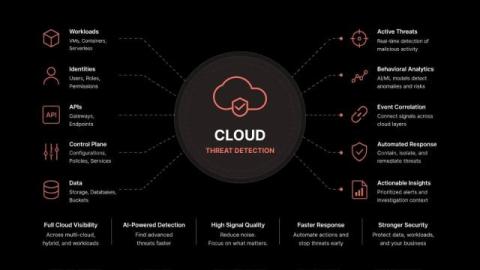
What if the next breach in your cloud is already in motion, and your team has no idea how to see it? Cloud workloads are growing fast. APIs, identities, and data are spread across AWS, Azure, GCP, and on-prem systems all at once. Every layer creates its own logs, its own alerts, and its own blind spots. Most security teams are short on visibility, context, and time. That is the gap cloud threat detection is built to close.
So far in this deployment series, you’ve: Now we arrive at the layer that quietly determines whether your app thrives… or throws mysterious 2am errors. Step 5 is cloud configuration. This is where your application gets its infrastructure, its environment, and its ability to scale without drama.
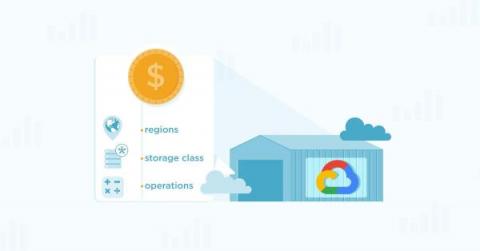
This straightforward guide will help you understand GCP storage pricing without the jargon. Understanding where your cloud spend goes enables you to pinpoint who, why, and what drives your cloud costs. This visibility supports informed decisions about reducing unnecessary spend or increasing investment in high-return areas.
Before I worked in tech, I worked in logistics. I saw a specific pattern repeat itself at office supply companies over and over, until I could see it coming before the customer did. The pattern went like this. A small office supply company would sell paper and pens to local businesses. One day a customer asked, "can you deliver a box of paper?" The salesperson said yes, drove the box over in their car after work, and thought nothing of it. The customer told their friend.