Operations | Monitoring | ITSM | DevOps | Cloud

The cloud optionality blueprint: standardizing the stack to end vendor lock-in

Key takeaway: Real cloud strategy isn't about running the same workload everywhere at once; it’s about the freedom to move when you need to. By standardizing the unified configuration file, Upsun enables true cloud optionality, moving provider migration from a re-architect project to a data move project.
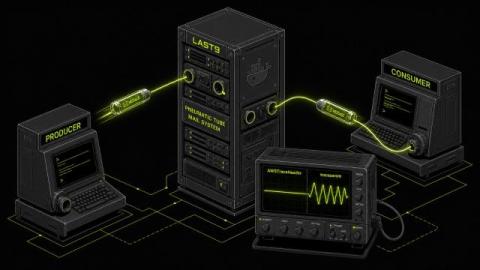

How to Test SQS Workflows Locally with LocalStack and OpenTelemetry

LocalStack lets you run SQS, Lambda, and S3 locally in Docker — but there's a hidden trap: OpenTelemetry's default AWS propagator doesn't work with free LocalStack. Here's how to set up end-to-end local testing with working trace propagation. Prathamesh works as an evangelist at Last9, runs SRE stories - where SRE and DevOps folks share their stories, and maintains o11y.wiki - a glossary of all terms related to observability.

What happens when you delete everything? Three minutes, or thirty hours.

Last year, at the annual conference for an open source framework you've definitely heard of, I walked up to the founder in a room outside the main stage. He was hunched over his laptop, frantic. We've known each other for a few years. "What's going on? Is everything okay?" He looked up with the specific shade of white people only get when they realize they've made a big mistake.

Rightsizing Nightmares: When Your Cloud Cost Tool Degrades Performance

This is what production teams see happening. A vertical pod autoscaler recommendation gets applied automatically. Resource requests come down a notch across a namespace. The cost dashboard registers a small cost savings win. A few minutes later, health checks start failing. Pods enter crash loops.

Five questions your platform evaluation is missing

Years back I sat in on a platform evaluation with a customer who spent forty-five minutes of the meeting focusing on one thing: their custom PHP content management system. They had opinions about the CMS. Strong opinions. They had benchmarks, a migration plan, a proof of concept. They had a diagram. They had questions about the deployment pipeline for this CMS that were, for a single application, more thoroughly considered than most organizations' entire infrastructure strategies.

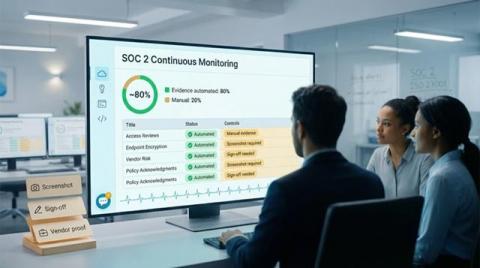
5 Best SOC 2 Continuous Monitoring Tools for SaaS: Closing the 20% Manual Evidence Gap

Landing a big-logo customer feels great-until their security questionnaire hits your inbox. For most B2B SaaS teams, SOC 2 compliance is the roadblock. You connect a tool, dashboards turn green, and then stall: about 20% of evidence still needs screenshots, sign-offs, or frantic Slack chases. That last-mile grind drags engineers back into spreadsheets just when the audit seems done.

ShipTalk Season 4 Finale: Engineering Excellence at AWS re:Invent

Welcome to the Season 4 finale of the Ship Talk podcast! Join special host Thomas Dockstader and several industry leaders at AWS re:Invent to discuss the intersection of AI and software delivery. The following is a series of interviews with partners, customers, and engineering leaders on the front lines of AI transformation. Don't miss the "Ship It or Skip It" segment, where our guests give their rapid-fire takes on everything from AI code reviews to the four-day work week.

Stop watching the looms: why the AI era belongs to infrastructure

I live in Manchester, England now. I moved here from Texas last summer (which is its own story), but the thing I wasn't prepared for is how the Industrial Revolution isn't history here. It's the city itself. And if you're American like me, you might need to hear this: the Industrial Revolution didn't start in the US. It started here. Manchester is where the modern world was born. You see it everywhere. The old cotton mills converted into apartments.

Your AWS Kiro Agent Can Now Query CloudZero. Here's What To Ask It

CloudZero's new AWS Kiro integration puts cost intelligence directly in your agentic IDE. Ask plain-language questions about spend, attribution, and cost-per-serve without leaving your development workflow. We see a similar pattern playing out across engineering teams running agentic development tools: code gets shipped fast, something moves in the cost data, and understanding why still requires leaving your environment entirely.

Your CEO Wants You To Ramp AI Usage Without Breaking Budgets. Here's How You Can Do It

Notes from a finance leader whose job this is. A few weeks ago, I traveled to Philadelphia for a conversation with a prospective CloudZero customer. We’d been working with the prospect’s engineering team for some weeks, demoing our platform in view of the RFP they’d drawn up. This stage had gone well, and so the next step was talking it over with the prospect’s CFO. We expected a conversation centered around the key criteria in the RFP.

The Best AI Chatbots of 2026

AI has since become an integral part of our lives, whether it’s for work or personal use; we all use AI in some form or another. However, deciding which is the best AI depends on how you want to use it. Whether it's for general questions, coding, deep research, or image creation, we’re lucky enough that there is an AI model available to help you out.

What Is The Best PC Cleaner to Increase Device Performance? [2026]

Sometimes, we need to do some spring cleaning when it comes to our devices, as over time, leftover files can be left on our devices, or junk files could be slowing down our computer and taking up our local storage. While you can clean up your device yourself, this can be time-consuming and risky, as you could delete an important file essential to keeping your device running.

15: Optimizing AI Workloads: Balancing Cost, Performance, and Scalability with Bijit Ghosh

In this episode, Andrew Hillier and Bijit Ghosh discuss the evolving landscape of AI, discussing the growing prominence of inference over training, hybrid cloud strategies, balancing cost with performance, and the orchestration of complex hardware environments. The conversation also touches on emerging concepts like AI factories, the challenges of sovereign cloud, and how enterprises are navigating data gravity and regulatory constraints. It's a deep dive into optimizing AI infrastructure, managing costs, and the disruptive changes that are transforming both technology and business outcomes.

Accelerating AI Agent Development on Google Cloud with JFrog MCP Registry

Developers building agentic AI on Google Cloud have powerful infrastructure at their fingertips: Gemini 3 for reasoning, Google’s Agent Development Kit (ADK) for orchestration, and a rapidly expanding ecosystem of Model Context Protocol (MCP) servers that connect agents to data and tools. So why are so many teams still waiting weeks to ship their first agent to production?

2026 Guide To Understanding Azure Storage Costs

This guide will help you understand Azure Storage costs – including tips and best practices to optimize your storage pricing. If you have trouble understanding Microsoft Azure Storage costs, you’re not alone. Azure Storage options can feel like a multi-layered maze of storage account types, tiers, pricing pages, specs — and then some. Yet, understanding your cloud cost drivers begins with looking at where your money goes. Only then can you tell if you are getting value for your money.

Customize preconfigured views for AWS, Azure, and Google Cloud with Cloud Provider Observability in Grafana Cloud

Part of what makes Cloud Provider Observability in Grafana Cloud really useful is that it gives you prebuilt dashboards and drill-downs for AWS, Azure, and Google Cloud. Out of the box you get service overviews, instance-level views, and quick links to explore your data. However, you might already have dashboards you trust, want a view tailored to your team’s workflow, or need to change which panels show up when you drill into a single instance.

What Are The Best Video Conferencing Tools in 2026?

Since COVID hit in 2020, video conferencing has become a booming industry, allowing individuals, businesxses, and enterprises to host video calls, webinars, classes, and more. In a similar manner to cloud storage and local storage options, there are many video calling platforms available with different features available depending on personal or business needs. For this reason, we will cover the best video conferencing tools and apps available by covering.

Azure Monitor Collector: Monitor Your Entire Azure Infrastructure From Netdata

If you’re running infrastructure on Azure, you’ve probably dealt with the split between your Azure-native monitoring and the rest of your stack. Your VMs, databases, and Kubernetes clusters generate platform metrics through Azure Monitor, but those metrics live in a separate world from the OS-level, application, and on-prem metrics you’re already watching in Netdata.

Cloud-Powered Content Creation for YouTube Success

In today's business environment, video has moved well beyond its role as a supplementary marketing asset. For a growing number of organizations, YouTube now functions as a primary channel for audience engagement, brand development, and lead generation. As the platform has matured, demands on production quality, output frequency, and cross-team coordination have grown in parallel, and traditional, hardware-intensive workflows are increasingly struggling to keep pace. The shift toward cloud-based Software-as-a-Service (SaaS) solutions reflects something deeper than a passing trend.

Cloud Security Best Practices Every Company Should Follow

Cloud adoption has accelerated dramatically over the past few years - and with it, so has the attack surface for cybercriminals. Whether you're a five-person startup or a 500-employee enterprise, moving your operations to the cloud without a solid security strategy is one of the most expensive mistakes you can make right now.

Fixing Broken Traces in GCP Cloud Run: A Custom OpenTelemetry Propagator

GCP's load balancer silently rewrites your traceparent header, orphaning spans in any OTLP backend. Here's the custom propagator that fixes it. Prathamesh works as an evangelist at Last9, runs SRE stories - where SRE and DevOps folks share their stories, and maintains o11y.wiki - a glossary of all terms related to observability.

Kubex Named a 2026 Leader by GigaOm

Industry analyst recognition means something different from an award. GigaOm does not hand out trophies. They evaluate products against a defined capability framework and tell the market where vendors actually stand. By that measure, Kubex has been named a Leader in two of GigaOm’s 2026 Radar Reports: Kubernetes Resource Management and Cloud Resource Optimization. In the Kubernetes report, we are positioned as an Outperformer. In Cloud Resource Optimization, a Fast Mover.

How is Agentic AI fundamentally different from earlier automation?

Autonomous operations has been the goal for years. But most “automation” never got us there—it just helped teams keep up. Now that’s changing. Agentic AI introduces a fundamentally different model:– Purpose-built agents, not static workflows– Real-time decisioning, not predefined rules– Collaboration across agents, not isolated tasks Instead of automating steps, agentic AI enables systems to **reason, adapt, and act**—at a speed and scale humans simply can’t match. That’s what turns autonomous operations from a long-standing ambition into something actually achievable.

The Hidden Cost of DIY DevOps: Why Growing Companies Bring in the Experts

Companies are scaling faster than ever, but infrastructure rarely keeps up with the product. When developers take on operational work on top of everything else, it feels like a smart way to cut costs. In practice, it's one of the most expensive mistakes a growing software team can make. This article breaks down what DIY DevOps actually costs and how a structured approach changes the equation.

AWS Outage History: What Engineering Teams Should Learn

If you've been running production workloads on AWS for more than a year, you've felt it: the 3 am PagerDuty alert, the scramble to check the AWS console, the frantic Slack thread asking, "Is this us or is this AWS?" And then, minutes or hours later, the AWS Service Health Dashboard finally acknowledges what your users have been experiencing all along. It happens because AWS is the backbone of modern infrastructure.

Beyond the Big Bang: De-risking Cloud Migrations with Progressive Delivery | Harness Blog

At 2 am, your migration goes live. By 2:07, error rates spike, and rollback isn’t an option. Cloud migrations, API rewrites, and architecture transformations rarely fail because of bad code. They fail because of how that code is released. Most teams still rely on a “big bang” cutover where infrastructure, services, and user-facing changes go live at once. This concentrates risk into a single moment.

Anything but that cloud

"Anything but that cloud." I asked why. "Our biggest customer is a giant retailer," he said. "That hyperscaler's parent company is the retailer's biggest competitor. So our customer refuses to do business with anyone who uses that cloud. We use that cloud, we lose our biggest customer. Full stop." That was the entire conversation about cloud choice. It wasn't a technical preference. It wasn't a pricing optimization. It wasn't a sovereignty concern.

What Is LLM Observability? For CFOs And Engineers, The Missing Layer Is Cost

You probably have Datadog. Maybe New Relic, maybe Dynatrace. Your observability stack has been solid for years — and you're still flying blind on AI cost. Here's why LLM observability needs a fourth pillar most tools skip, and how to build one that actually tells you what your models are costing you per request, per feature, per customer.

Blind Tokenmaxxing Is The New Cloud Waste. Focus on Outcome-Maxxing Instead

Meta's internal token leaderboard sparked a frenzy — and a reckoning. Tokenmaxxing without attribution is just cloud waste 2.0. Companies like Hudl and Duolingo use cost intelligence to connect every AI dollar to a business outcome.

How to Align CloudOps and FinOps for Better Azure Cost Management

The rapid migration to the cloud has brought unprecedented agility to modern enterprises, but it has also introduced a significant challenge in the form of cloud sprawl. As engineering teams provision resources at breakneck speed to support new applications and AI-driven workloads, financial departments often struggle to keep track of the escalating costs. This disconnect between operational execution and financial oversight is a primary driver of wasted cloud spend. To truly harness the power of scalable infrastructure without breaking the budget, organisations must bridge the gap between CloudOps and FinOps. Aligning these two disciplines ensures that technical performance and financial accountability work hand in hand to deliver sustainable business value. For companies heavily invested in Microsoft ecosystems, this alignment is even more crucial. Unchecked deployment can lead to massive end-of-month bill surprises, turning what should be a strategic advantage into a financial burden.

The Regional Data Centre Revolution Powered by AI Demand

London still hosts the biggest concentration of UK data centre capacity, but the centre of gravity is starting to move. AI workloads are changing the infrastructure maths, pushing power, space and planning considerations up the decision list. That is exactly where regional locations start to look like the sensible option. Government data shows how concentrated the market remains: as of autumn 2024, London is estimated at 1,048MW of colocation IT load. Compare that with 44MW in the East of England, 17MW in the North East and 30MW in Scotland. The gap is huge, yet it is not a permanent advantage.

How Any FinOps Practitioner Can Use AI Right Now To Save 3-4 Hours/Week Of Tedium

Make AI do the dirty work while you focus your energy on strategy. CloudZero's Ryland Bowles shows you how. Every FinOps engineer is worried that AI is going to steal their job. I’ve worried about it. But I’ve also experimented extensively with AI, and I’ve got a pretty clear sense of what it can and can’t do in a FinOps context.

Claude Opus 4.7 Pricing In 2026: What It Actually Costs (And Whether It's Worth It)

Claude Opus 4.7 holds at $5/$25 per million tokens — but a new tokenizer inflates costs up to 35% on identical text. Here's what Opus 4.7 actually costs at production scale, how it compares to Sonnet 4.6, and the six levers that determine where your bill lands.

Identify and fix code issues faster with Datadog's Azure DevOps Source Code integration

Developers and SREs who rely on Microsoft Azure DevOps often face fragmented workflows when investigating issues or reviewing code quality. Troubleshooting an error can require jumping between observability tools and source code repositories as you manually connect traces, stack frames, and commits. At the same time, security vulnerabilities, misconfigurations, and flaky tests may go undetected until later stages of the software delivery life cycle (SDLC), where they are more costly to fix.

Bringing observability data hosting to the UK on AWS

UK organizations are increasingly required to design systems that account for data residency requirements, ensuring that operational data remains within national boundaries. Many teams already run their applications on AWS infrastructure in the UK, but telemetry data can still be processed outside the region, creating gaps in visibility. Datadog’s upcoming UK availability zone solves this by keeping telemetry data in the same region as the workloads that generate it.

Beyond the frontend: choosing between Vercel and Upsun for full-stack applications in 2026

If you're building a modern web application in 2026, Vercel is almost certainly on your shortlist, and probably near the top of it. The developer experience Vercel pioneered for Next.js and the frontend ecosystem around it is a real achievement. Push a branch, get a preview URL, ship. It works, it's fast, and an entire generation of frontend teams have built their workflow around it. This article is not here to argue with any of that.

Managing Digital Display Infrastructure in Multi-Location Businesses

For businesses with many locations-like busy retail chains or large office campuses-managing digital display systems is more than a tech upgrade. It's a business need. You must coordinate hardware, software, content, and internet connections across different sites so every screen shows the right message at the right time. When it's done well, separate screens work together as one clear communication system for both employees and customers, no matter the location.

Why your ecommerce dev team ships slower than your competitors (and how to fix it)

Key takeaway: Development velocity in e-commerce is often throttled not by headcount, but by invisible infrastructure friction that forces developers to spend time on environment management and deployment pipelines instead of shipping revenue-generating features. Ecommerce teams rarely think they have an infrastructure problem.

Autonomous AI for Cloud-Native Cost Optimization: Balancing FinOps and Performance SLAs

Platform Engineering leaders are caught between two competing imperatives. You’re under pressure to flatten cloud spend but your team is still provisioning defensively because nobody wants to be the person who causes a production incident. You try to optimize, but six months later, when someone pulls a report, nothing has changed.

Choosing GPU cloud platforms for developers

For developers building AI applications, training models, or running inference pipelines, the GPU cloud market in 2026 has never offered more choice - or more complexity. Picking the wrong platform means overpaying, dealing with availability problems, or battling infrastructure that slows you down rather than accelerating your work.

10 best practices for optimizing Kubernetes on AWS

Optimizing Kubernetes on AWS is less about raw compute and more about surviving Day-2 operations. A standard failure mode occurs when teams scale the control plane while ignoring Amazon VPC IP exhaustion. When the cluster autoscaler triggers, nodes provision but pods fail to schedule due to IP depletion. Effective scaling requires network foresight before compute allocation.

Digital Sovereignty and Sovereign Cloud: Protecting EU Cloud Data for Operational Resilience

Traditional data protection followed a straightforward principle: Data stored in is protected by the laws of country A; data stored in country B is protected by the laws of country B. But in today’s global economy, where your data physically resides no longer determines which governments can demand access to it. Cloud infrastructure brought new jurisdictional complexity.

Preparing Web and Mobile Cloud Infrastructure for Massive Advertising Traffic Spikes

When a digital marketing team launches an aggressive display network campaign, they measure success in clicks, impressions, and conversions. However, for IT operations and DevOps teams, that same success manifests as a massive, often unpredictable surge in server requests. A sudden influx of users can be a triumph for brand visibility, but it quickly becomes a nightmare if the underlying web and mobile cloud infrastructure is not equipped to handle the heavy load. Bridging the gap between marketing ambition and technical reality requires robust planning, dynamic resource provisioning, and intelligent system monitoring. Without these elements, a successful ad campaign can accidentally execute a self-inflicted denial of service attack on a company's own platforms. Modern businesses cannot afford the disconnect that often exists between the departments generating traffic and the teams responsible for keeping the lights on. Aligning these two functions ensures that the digital infrastructure is primed and ready long before the first advertisement goes live.

Building a Strategic Roadmap for Cloud Security Maturity in IT Operations

Cloud security is now a core part of IT operations. As organizations rely more on cloud services, security practices need to keep pace without slowing delivery. A strategic roadmap helps teams move from reactive fixes to structured, measurable progress. It brings clarity to priorities, aligns teams, and supports consistent improvement over time.

A Prototype's Worth 1,000 Minutes: How Claude Prototypes Accelerate The Product Planning Process

The relationship between product managers (PMs) and engineers is due for an upgrade. The division between these personas is responsible for a healthy, if laborious, collaboration when envisioning and building new products. A PM generates the vision; engineers translate it into an architectural approach, raising the technical questions that sharpen it along the way. This back-and-forth eventually produces tight alignment, a solid PRD, and functional code.

Ecommerce replatforming without a revenue freeze: how preview environments reduce migration risk

Key takeaway: Upsun eliminates the need for code freezes during ecommerce migrations by using instant, data-complete preview environments to validate replatforming efforts against production-grade data without interrupting the live store. Ecommerce replatforming is one of the highest-stakes decisions an online retailer makes, and for most, the biggest risk is what happens to revenue during the migration.

Cloud Cost Visibility at Scale: Why It Fails & How to Fix It | Harness Blog

Why does your cloud cost visibility break down the moment someone spins up a Kubernetes cluster in a new region without telling anyone? You get the alert three weeks later when the bill arrives — and by then, nobody remembers which experiment justified the spend, or which team should own it. This scenario repeats constantly across platform teams managing multi-cloud environments at scale. Cloud cost visibility works fine when you have five services and one AWS account.

Virtual Dedicated Servers vs. Public Cloud: Cost Breakdown

Infrastructure costs can spiral fast when you pick the wrong hosting model. Many teams lock into public cloud contracts only to face unpredictable bills month after month. The choice between a virtual dedicated server and public cloud comes down to one thing: predictability. VDS gives you fixed costs. Public cloud gives you flexibility, but at a price that fluctuates with usage. Cloud infrastructure spending crossed $675 billion globally in 2025, with 27% of it wasted. Most of it traced back to idle resources and poor tier selection.

Cloud cost visibility for different teams: Getting it right with custom dashboards

Most cloud cost dashboards are built for one audience. The finance team wants to see totals by department. The engineering team wants to see costs by service. The DevOps team wants to see environment-level breakdowns. When everyone looks at the same dashboard, nobody gets what they actually need. This is where tailored cloud cost visibility starts to matter. When a team can see its own costs clearly, it moves faster, takes ownership, and starts treating cost data like it actually matters.

Beyond the pull request: why code review is not infrastructure validation

Code review and infrastructure validation are distinct problems. While AI can review syntax, only an active, data-complete environment can validate system-wide state. Upsun provides the unified configuration file needed to turn "looks good to me" into verified production-readiness.

When AWS us-east-1 Fails, Much of the Internet Fails With It

There are cloud outages, and then there are us-east-1 outages. That distinction matters because failures in AWS’s Northern Virginia region rarely feel like ordinary regional incidents. They tend instead to expose something larger and more uncomfortable: too much of the modern internet still behaves as though one place is an acceptable concentration point for infrastructure, control, recovery, and communication. When us-east-1 goes wrong, the problem is not only that workloads fail.

Introducing the CloudZero AI Prompt Catalog: 46 Ready-to-Use Prompts for Cost Intelligence

In early March, we launched the CloudZero AI Hub and the CloudZero Claude Code plugin, giving customers a direct line to their cloud and AI cost data through natural language. Early adopters and power users have already jumped in, using the plugin to investigate cost spikes, close commitment gaps, and get to cost-per unit metrics that used to take days to pull together. What we’ve noticed over the past few weeks is pretty consistent (and predictable).

Webinar recap: Cost Intelligence for the AI Era

CloudZero’s Umesh Rao and Larry Advey showed what it actually looks like to connect AI to real cloud cost data, and the results are hard to unsee. On April 9, 2026, CloudZero hosted a live webinar, Cost Intelligence for the AI Era, featuring Umesh Rao, Director of Enablement, and Larry “Fred FinOps” Advey, Director of Cloud Platform & FinOps.

Your Cloud Economics Pulse For April 2026

Welcome to April’s Cloud Economics Pulse, CloudZero’s monthly look at cloud spend as AI moves from cost problem to strategic commitment. March’s Pulse called 4.01% a record. It lasted all of 31 days. Why? February’s billing data came in at 4.84% aggregate AI/ML share. That’s another high, another acceleration. You’ve heard it before and it’s getting a bit boring now, but the story isn’t in the numbers; it’s now in the behavior.

What is Sovereign Cloud? What Engineers and IT Leaders Need to Know

A sovereign cloud is a cloud environment that keeps data, infrastructure, and access under the control of a specific country or region. It lets organizations meet strict data residency and privacy laws without giving up cloud speed, automation, or modern DevOps practices. As regulations tighten and AI adoption grows, sovereign cloud is becoming the go‑to model for governments, regulated industries, and global enterprises that need both compliance and agility.

Carbon emissions data at your fingertips

This post is also available in German and in French. Tracking environmental impact can be fragmented, time-consuming, and disconnected from operational data. Beyond simply checking ESG reporting boxes or making sure your company is CSRD compliant, actively monitoring environmental impact is the foundation for building an effective sustainability strategy. At Upsun, we know that measuring progress is the first step toward improvement.

AI Factories Will Be Won on Efficiency: Why the Kubex + Rafay Partnership Matters

The early era for AI was defined by experimentation, standing up isolated environments, and finding the first practical use cases. Today, the conversation is different. Enterprises are no longer asking whether AI matters. They are asking how to scale it sustainably, securely, and economically. That shift is giving rise to the AI factory: a repeatable, governed, production-ready environment where data scientists, platform teams, and application teams can build, train, deploy, and operate AI at scale.

Kubernetes GPU Resource Optimization: Top 10 Solutions in 2026

TL;DR: Most Kubernetes clusters waste GPU compute through over-provisioned pod requests and suboptimal node selection. This guide covers 10 tools that fix this across four layers: resource lifecycle (Kubex, ScaleOps, Cast.ai), hardware partitioning (GPU Operator, MIG, time-slicing), inference serving (Triton, KServe), and observability (DCGM Exporter, NFD). For most teams, the biggest gains are at the resource lifecycle layer: no model changes required.

The hidden cost of scaling ecommerce on hyperscalers

Key takeaway: Hyperscaler pricing models often penalize e-commerce growth due to unpredictable egress fees and unbounded auto-scaling, but moving to a resource-based allocation model allows teams to treat infrastructure costs as a deliberate business decision rather than a post-campaign surprise. Ecommerce traffic doesn't grow linearly. It spikes, and every spike rewrites your cloud bill.

UK sovereign cloud security standards to watch in 2026

The regulatory landscape governing UK sovereign cloud security has shifted more dramatically in the past 12 months than in the preceding decade. New legislation, tightened procurement frameworks, and an intensifying cyber threat environment are collectively raising the compliance floor for organizations running cloud workloads in the UK.

What Is Snowflake? A Beginner-Friendly Guide

Imagine if you had a magic box where you could keep all your business information — sales numbers, customer feedback, everything — safe and sound, but also easy to look at whenever you needed. That’s kind of what Snowflake does, but for big organizations and using the cloud. It’s a new way for companies to store and use their data without getting bogged down by the techy details.

From One Month to One Day: How CloudZero Builds Cloud Cost Connectors at the Speed of AI Adoption

Not long ago, adding a new cost connector to CloudZero was a serious undertaking. We’d task multiple engineers, build in extended review cycles, run a private preview period. But a single connector could take up to two months from kickoff to customer hands. For the major cloud providers, that timeline was acceptable. The size of the investment matched the scale of the integration. But the tools landscape has changed. Our customers’ teams don’t just run on AWS and Azure.

How Agentic AI Powers Hybrid and MultiCloud Operations

Hybrid and multi‑cloud environments didn’t break operations—they simply outpaced the human ability to manage them. Gartner predicts that 90% of organizations will adopt a hybrid cloud approach through 2027, confirming that multi-vendor estates are now the permanent operating model. Yet, as environments grow more distributed, a “Complexity Gap” has emerged.

Heroku vs AWS

Heroku vs AWS: these cloud platforms represent fundamentally different approaches to application cloud hosting. The decision between them often determines whether your team ships features in hours or spends days configuring infrastructure. Both platforms represent different philosophies in cloud computing, with Heroku prioritizing developer experience while AWS maximizes infrastructure control.

Peak traffic without the panic: auto-scaling infrastructure for ecommerce flash sales

Key takeaway: Upsun replaces manual, high-stress peak traffic prep with automatic scaling, keeping your e-commerce site fast and available during flash sales while you only pay for the resources you consume. For every e-commerce team, an outage means lost revenue, failed checkouts, and a flood of support tickets. For most stores, this gets worse during peak events like Black Friday and flash sales.

IT Cost Reduction Strategies: A CTO & CFO Guide (2026)

Quick answer: IT cost reduction strategies target waste across three categories — cloud infrastructure, SaaS applications, and software licensing — without cutting the investments that drive business value. The highest-impact tactics are auditing unused SaaS licenses, rightsizing overprovisioned cloud resources, automating non-production environment shutdowns, extending commitment coverage on stable workloads, and building cost accountability into engineering workflows.

Drastic RAMifications: how UK businesses can weather the global memory shortage

In recent days, the headlines of most technology titles have been dominated by the perfect storm that has led to a global shortage of Random Access Memory (RAM). As the short-term, temporary memory that handles data for processing and applications, RAM - and specifically Dynamic Random Access Memory (DRAM) - is a foundational business technology.

Overview of Cloud Status Check

In this video, we walk you through Uptime.com's Cloud Status check feature, designed to monitor the status of common cloud services within your technology stack. Learn how to configure a Cloud Status check, select third-party services, choose which components to monitor, and understand how the Down state works when multiple components are affected. We also cover how to opt out of maintenance notifications, view incident history, and organize checks with tags.

How Modern IT Solutions Secure Business Operations and Drive Scalability

In today's fast-paced digital economy, business growth is heavily dependent on technological capability. However, as organisations expand their digital footprint, they simultaneously widen their attack surface. Scaling operations without a robust security framework often leaves companies vulnerable to severe operational disruptions, regulatory fines, and reputational damage. For business leaders, the challenge lies in deploying infrastructure that supports rapid growth while maintaining airtight security across all digital assets.
Sponsored Post

How to Monitor AWS Status: Don't Wait for the Health Dashboard

The AWS Health Dashboard is slow, sometimes broken during major outages, and only tells you what AWS admits is broken. Real SREs layer three monitoring sources: AWS-native tools (CloudWatch, EventBridge), third-party aggregators (IsDown), and internal synthetic checks. Skip the vendor status page as your primary alert source.

How instant environment cloning reduces the "Triage Tax"

The most expensive hour in software engineering is the hour spent trying to figure out why a bug exists in production that doesn’t exist anywhere else. For many teams, the first 70% of a debugging cycle isn't spent fixing code; it is spent on "plumbing." This is the time lost to reproducing the issue, wrestling with environment drift, and sanitizing datasets just to get to a starting line.

How Will We Hold AI Accountable For Risky Investments?

The word “Trillion” never fails to set the tech world on fire. Foundation Capital’s Jaya Gupta and Ashu Garg are two of the most recent firestarters. Late in December, they co-wrote “AI’s trillion-dollar opportunity: Context graphs,” outlining how AI will transition from organizational knowledge to organizational comprehension.

Cloud Cost Optimization Framework: Build Your FinOps Practice (2026)

Quick answer: A cloud cost optimization framework is a structured, repeatable system for managing cloud spend across people, processes, and tools. It defines how teams gain cost visibility, allocate spend to the right owners, optimize resources and rates, and measure whether spend is generating business value. The FinOps Foundation organizes this around three phases: Inform, Optimize, and Operate — and the Crawl, Walk, Run maturity model maps directly to how organizations progress through them.

The reproduction problem: why you can't recreate the investigative gap

In the modern dev stack, we have mastered the art of the deploy. We have CI/CD pipelines that ship code in minutes and observability dashboards that track every millisecond of latency. Yet, when a P0 incident strikes, the most common phrase in Slack isn’t a solution; it’s "I can’t reproduce this locally." This is the Reproduction Gap. Most engineering teams are world-class at building and monitoring, but they are remarkably fragile at recreating runtime behaviour.

Why Cloud and DevOps Practices Matter to Prop Trading Firms

The financial industry has always been driven by speed, precision, and the ability to act on information faster than anyone else. In recent years, prop trading firms have found themselves at a crossroads where traditional infrastructure simply cannot keep up with the demands of modern markets. Cloud computing and DevOps practices have emerged as two of the most transformative forces reshaping how trading operations are built, managed, and scaled. Understanding why these technologies matter is not just useful for tech teams, it is essential knowledge for anyone involved in or curious about the future of high-performance trading.

That production incident cost more than downtime

Every developer knows the sudden, cold spike of adrenaline that comes with a P0 alert. The site is down, the Slack channel is overwhelmed with notifications, and the "war room" is officially open. In the immediate aftermath, leadership looks at one metric: downtime. They calculate the lost revenue per minute and the hit to brand reputation. But for the engineering team, the official resolution of the incident is only the beginning.

Debugging the black box: why LLM hallucinations require production-state branching

The most frustrating sentence in modern engineering is no longer "it works on my machine." It is: "It worked in the playground." When an LLM-powered feature, such as a RAG-based search, an autonomous agent, or a dynamic prompt engine, fails in production, it doesn’t throw a standard stack trace. It returns "slop," hallucinations, or silent retrieval failures. Standard debugging workflows fail during triage because LLM hallucinations cannot be reproduced using static mocks or clean seed data.

The single pane of glass approach to cloud monitoring

Dozens of SaaS services you depend on, starting from Google Workspace and Slack to Shopify, may experience downtime, partial outages, or degraded performance. And most have their own status pages, APIs, or RSS feeds. Juggling all these sources is exhausting, and many teams suffer from alert fatigue, missed early warnings, and fragmented visibility.

FinOps Roles And Responsibilities: Building Your Cloud FinOps Team (2026)

Quick answer: FinOps roles and responsibilities typically span four core functions: FinOps analyst (hands-on cost analysis and anomaly detection), FinOps engineer (resource tagging, automation, and rightsizing), FinOps architect (process design and optimization frameworks), and FinOps lead (program ownership, C-suite alignment, and cross-team accountability).

Architecture deep dive: What makes a bug reproducible?

The most difficult bugs to solve aren't those with the most complex code, but those with the most complex state. For a bug to be "reproducible," it must be deterministic, meaning the same set of inputs always yields the same failure. In a modern cloud environment, those "inputs" include more than just your code; they include the specific version of your database, the latency of your service mesh, and the exact configuration of your underlying infrastructure.

When we say "Observability AI Reckoning," what are we actually talking about?

We’ve spent the last decade collecting more telemetry. Now AI is analyzing it. Here’s the catch: AI needs the full dependency chain to reason correctly. If it sees spans but not storage contention… Services but not Kubernetes scheduling… Frontend metrics but not downstream providers… It will confidently optimize the wrong thing. AI doesn’t lower the need for observability. It raises the standard.

Your Most Expensive Kubernetes Costs Have Been Hiding In The Wrong Bucket

If your organization is running AI or machine learning workloads on Kubernetes, the bill is real. GPU instances are among the most expensive resources in cloud infrastructure, where a single high-end node can run $30 to $40 per hour, and a multi-day training job on a cluster can cost tens of thousands before anyone looks up from their terminal. What most engineering and FinOps teams haven’t been able to do (until now) is connect that spend to the workloads that caused it.

How Finance Leaders Can Use AI To Stay On Top Of Cloud Costs

There’s always been a bit of a communication breakdown between finance and engineering when it comes to cloud costs. Cloud costs are driven by technical factors expressed in esoteric terms, and so speaking the language of finance does not guarantee that you’ll speak the language of cloud cost. But AI is changing that. Fast. With the right AI tools, finance leaders can now ask natural-language questions about their cost data and get fast, accurate answers.

AWS Direct Connect Pricing: A Complete Guide

AWS Direct Connect pricing looks simple until you’re staring at an unexpected bill. Understanding how AWS Direct Connect costs work, such as port hours, data transfer, and the charges that don’t appear on the AWS pricing page, is the first step to managing them. The model has no setup charges and no minimums, but it has enough moving parts that costs can compound quickly if you’re not watching closely.

Data centre security checklist: executive oversight for compliance and continuity

Data centre security must meet strict compliance and risk standards, giving regulators, insurers, and clients confidence that critical data is protected. Without it, organisations risk audit failure, downtime, and reputational damage. For executives and auditors, data centre security is part of wider governance and risk management. Oversight means confirming that physical safeguards, environmental systems, and compliance frameworks are in place and can be trusted.

What fast debugging actually looks like on Upsun

Debugging a broken deployment can take hours, especially when the cause is unclear. Recently, a customer ran into this exact situation: their AI agent produced a Drupal site with broken composer scripts and mismatched database credentials, and nothing they tried got it running. This video shows how debugging works in practice on Upsun.

How Cloud Computing Is Transforming Secure Financial Infrastructure

Here's the thing about old-school IT infrastructure: it bleeds your budget dry and puts the brakes on growth when you need speed most. You can't keep throwing money at clunky on-site servers that demand endless upgrades and full-time babysitters. Cloud computing is a total game-changer. Companies are now tapping into enterprise-level tech without mortgaging their future on capital investments that used to feel unavoidable.

How To Reduce Cloud Costs in 2026: Proven Strategies That Actually Work

To reduce cloud costs, organizations need to address three root causes: over-provisioned resources, shared infrastructure without clear owners, and cloud bills that can’t be explained at the feature or customer level. The most effective programs combine rightsizing, commitment-based discounts, idle resource elimination, and unit economics — and deliver 20–30% reductions in monthly spend without impacting performance. CloudZero customers average 22% savings in year one.

Open Source Cloud Cost Management Tools: OpenCost, Kubecost, and More

Open source software is an essential component of business operations. According to Harvard Business School, 96% of commercial software includes open source code. If companies were to build these tools from scratch, it would cost an estimated $8.8 trillion — roughly 3.5 times what companies currently spend on software. That’s not great for the bottom line. Many open source solutions are also available as standalone tools. Consider Kubernetes.

2026 CMA investigation: What it means for the cloud industry

The UK’s Competition and Markets Authority (CMA) has now set out its latest actions under the Digital Markets Competition Regime (DMCR), following its multi-year Cloud Services Market Investigation. While the regulator has now expanded its focus into business software ecosystems, we must not lose sight of the core issue: the entrenched dominance within the UK's cloud infrastructure.

The reality check: why manual debugging setups are a hidden factory

The first 70% of a debugging cycle is usually spent on "plumbing", the undocumented toil of syncing databases, matching service versions, and aligning networking to mimic a production failure. This manual setup is a hidden factory that consumes senior engineering capacity and delays recovery. True velocity is found by eliminating the infrastructure variables that make bugs hard to reproduce.

Your Cloud Architecture Has a Personality - Mastering Cloud Cost Profiles & FinOps

Most teams treat cloud cost like something to clean up later. In reality, it is already baked into how your system behaves. Every workload has a personality. Some spike with concurrency. Some quietly run all day and never shut off. Some look efficient until scale hits and then costs accelerate. And some charge you every time they run, every query, every scan, every execution. This episode is about recognizing those patterns early. Once you understand how your architecture behaves under load and over time, you stop reacting to cost and start shaping it.

Cost Optimization vs. Value Optimization: Shifting the Mindset

In this session, we explore how organizations can move beyond basic cloud cost reporting to truly understand the business value of their IT investments. Using the T2Bv (Technology-to-Business Value) meta-framework alongside FinOps practices, we explain how to connect IT resources, including Azure environments, to measurable business outcomes.

Why True Operational Security Requires an Unmanaged Cloud VPS

When deploying infrastructure for sensitive communications, penetration testing, or privacy-centric applications, your threat model must account for the human element. Handing over the root access of your server to a "managed" hosting provider fundamentally breaks that model. In 2026, serious security practitioners know that true OPSEC cannot exist in an environment where support staff have administrative backdoors into your operating system.