Operations | Monitoring | ITSM | DevOps | Cloud

Shipped: Find your saved Explorer queries faster

Most people rebuild the same handful of Explorer queries: the monthly close view, spend by team for the staff meeting, the filter set that isolates a service you’ve been watching for two months. When we shipped query history and favorites earlier this year, it gave you a way to save up to 12 Explorer configurations.

n8n pricing in 2026: every plan, the execution math, and what AI agents change

n8n pricing runs €24 per month for 2,500 workflow executions (Starter), €60 for 10,000 (Pro), and €800 for 40,000 (Business), with 17 percent off on annual billing and custom Enterprise pricing above that. Every plan includes unlimited users and unlimited workflows. The self-hosted Community Edition is free with unlimited executions; you pay only for your server.

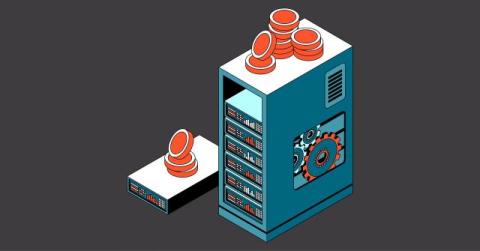
CoreWeave pricing in 2026: every GPU rate and what a node really costs

CoreWeave, a GPU cloud provider, prices start at $6.16 per GPU hour for an Nvidia H100 and reaches $8.60 for a B200, sold as fixed multi-GPU nodes: an 8x H100 node lists at $49.24 per hour on demand. Spot rates run up to 60 percent below on demand, reserved contracts discount up to 60 percent, and egress is free.

From idea to working software: what the full development lifecycle needs to look like

GitHub's research found that developers using Copilot completed tasks 55% faster than those who didn't. Tools like GitHub Copilot and Cursor, powered by large language models such as Claude or GPT, are designed to automate the tedious parts of programming so engineers can focus on harder, more creative problems. With this. new repos spin up every week. The promise is being kept. But where are the products?

Shipped: Turn on the ServiceNow integration yourself in Labs

The ServiceNow integration is in Labs now, which means any CloudZero admin can switch it on and start routing cost work into their incident queue the same day. What that gives you is a full loop between the money and the work. A monthly Optimize pass surfaces recommendations with a dollar figure on each one. Pick the ones worth acting on, open incidents for all of them at once, and each ticket shows up carrying the resource, the finding, and the context an engineer needs.

Your AI Economics Pulse for September 2026

Across a same-store panel of 430 CloudZero customer organizations, AI reached 2.66% of the median company's cloud bill in August 2026, up from 2.61% in July and roughly four times its level a year ago. The 75th percentile crossed 11%. The share of organizations with at least 10% of cloud spend attributed to AI jumped to 28.2% from 23.9%, the largest one-month move that tier has posted. Two-thirds of the panel now spends at least $1,000 a month on AI. The typical bill barely shifted.

Azure Virtual Desktop Monitoring: A Complete Guide

Azure Virtual Desktop (AVD) puts the user’s desktop at the end of a long delivery chain: the Azure control plane, host pools, session hosts, profile storage, the network, and the endpoint on the user’s desk. Any one of them can make a session feel slow, and none of them looks broken from inside the others. That is why performance work on AVD starts with continuous monitoring across the whole chain rather than at either end of it. Azure Virtual Desktop Monitoring is what closes that gap.

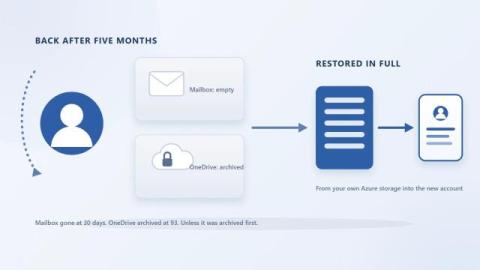
How to move photos to cloud storage easily, securely, and privately

If you have a large collection of photos you don’t know what to do with, and need a fast, efficient way to store and keep your memories protected, then cloud storage may be the option for you. Moving your photos to cloud storage is a simple way to store, back up, and manage your photo library without relying only on your phone, computer, or physical storage devices. But how do you move photos to the cloud, do your photos automatically get backed up, and how much cloud storage do you actually need?

How Azure Fundamentals Can Strengthen Your Cloud and Digital Technology Skills

Many people encounter AZ-900 (Microsoft Certified: Azure Fundamentals) as a checkbox and never ask what it teaches them beyond Microsoft Azure. The more useful question is whether a fundamentals-level credential can build digital skills that remain relevant after the exam or whether it amounts to little more than a badge.

Data residency in 2026: what regulators now expect from your cloud, and how to prove it

Ask a compliance team where their EU customer data lives, and most will point confidently at a dashboard showing a Frankfurt or Dublin region. Ask their legal counsel whether that data is beyond the reach of a foreign government demand, and the confidence usually drops. Those are two different questions. Since 12 September 2025 there has been a dated EU obligation that turns on the second one rather than the first.

Hybrid cloud management: 6 challenges IT teams need to solve in 2026

In 2026, a hybrid cloud is no longer something organizations are working toward; it's already where they are. According to Forrester's The State Of Cloud Series 2026, the vast majority of enterprises across major markets, including the United States, India, Australia and New Zealand, Canada, and the Asia-Pacific region, are running some form of a hybrid cloud, combining public cloud platforms with private infrastructure, colocation data centers, and sovereign cloud providers.

DHCP tells you what was leased. It does not tell you what is answering.

Your DHCP server knows which addresses it assigned. It does not know which of those addresses are answering on the wire right now. That gap shows up in every hybrid network where static devices, reservations, and stale leases sit beside active workloads. Leased and live are different questions. DHCP scopes answer the first. Subnet ping-sweep answers the second. Together they give IPAM fresher last-seen context without handing an NMS credentials across the network.

GPT-6 Astra pricing: What OpenAI's new flagship costs in 2026

GPT-6 Astra is OpenAI's flagship reasoning model, released September 3, 2026. It costs $10 per million input tokens and $50 per million output tokens on the standard API tier, with cached input at $1 and cache writes at $12.50. That is 2.5 times GPT-5.6 Sol's promotional rate and matches Anthropic's Fable 5.1 on both headline numbers. Batch and Flex halve those rates, Fast mode doubles them, and any prompt past 272K input tokens reprices the entire request.

AI cost calculator: estimate your total spend

An AI cost calculator for the whole wallet adds four lanes: seats and subscriptions, API and token usage, cloud AI services, and GPU infrastructure. Average 2026 totals run $25 per employee per month at light adoption, $100 to $150 at active adoption, and $300 or more at AI-heavy companies. Getting to your number takes four lane subtotals and three corrections.

How to verify your Azure Application Gateway is zone-redundant

Having a redundant failsafe is one of the best things you can do to ensure high availability in the cloud. It’s rare for cloud regions to go offline, but it can happen, even on major platforms like Azure. While you might not have control over your provider’s reliability, you do have control over your own, and redundancy is a key part of that. Here’s how you can check if your Application Gateways are availability zone (AZ) redundancy, and how to verify redundancy using active testing.

Making Shared GPUs Even Safer with Kubex and HAMi-core

Table of Contents A few months ago, we introduced Kubex support for the KAI Scheduler to improve GPU sharing for production inference workloads. The basic model is simple: The KAI Scheduler handles placement and GPU sharing. Kubex continuously observes usage and adjusts those allocations as demand changes. KAI provides the scheduling foundation. It lets multiple workloads share a GPU while accounting for the amount of GPU each workload requests. Kubex then closes the loop.

Shipped: Self-serve your MCP server credentials

Enterprise agent platforms need a client ID and client secret in hand before they will connect to anything. An admin with the Modify MCP Settings permission can now issue that pair directly in Settings, connect the platform, and manage the credential lifecycle on whatever schedule your security policy requires. No support request, no wait.

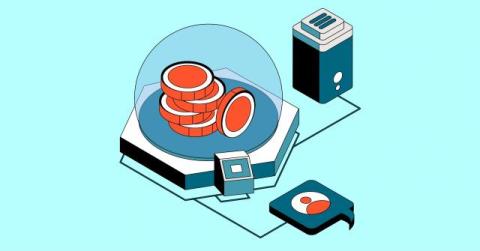
The case for preview environments with production data

Before he joined Upsun, Andrew Kester spoiled the biggest sale of a client's year. He was one of two or three web developers at a creative agency that did branding, logos, print, and websites. A design boutique was about to run its annual trunk show, and the discounts and featured brands were meant to stay secret until the reveal on Tuesday at noon. The client asked for a preview. The preview reached production.

If We're Not Up, The Checkout Breaks

Kintsugi puts sales tax compliance on autopilot for 7,300 companies selling into 110 countries, and its tax engine sits inside other companies' checkouts. The answer has to arrive before the shopper finishes paying. "Typically, a customer's expectation is that we are returning the sales tax estimate on the invoice within 100 milliseconds." The cost of missing is not abstract: "For every minute that our sales tax API, if it ever goes down, our customers are not able to collect roughly $4 million in sales tax that they should be collecting.".

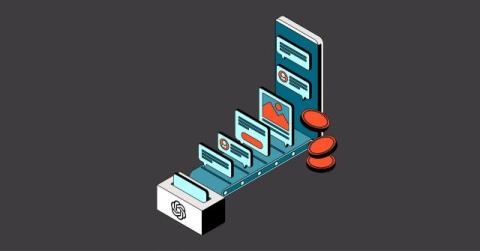
LLM token cost: pricing per token explained

LLM token cost is the price a provider charges per token a model reads or writes, quoted in dollars per million tokens. Input and output bill at separate rates, with output priced at roughly 5x input. As of September 2026, published rates range from under $0.10 to more than $180 per million tokens on top-end reasoning tiers. In late 2025, Hardik Sonetta of Thomson Reuters Labs published a warning about the most common prompt caching mistake in production.

Why compliance keeps slowing your releases (and what to change first)

A team ships at a steady pace for most of the year. Then an audit approaches, and delivery slows. Engineers get pulled off feature work to support the audit, producing the configuration exports, logs, and environment checks that the evidence depends on. The slowdown lasts as long as the audit does. It is tempting to read this as a team that needs to move faster or be bigger. It is usually neither.

Cloud Cost Management for Observability: A Practical Guide

Observability spend is outgrowing infrastructure budgets. What drives the cost up, how pricing models work, and a practical framework to manage it. Sejal Pandey works on content and growth at Last9, writing about observability, reliability, and SRE practices.

Moving Beyond OOM Kills: Introducing Memory QoS in Kubernetes 1.37

Table of Contents For most of Kubernetes’ history, memory management has been a blunt instrument. Cross your limit, and the kernel kills your container. There has been no equivalent to CPU throttling, no graceful backpressure, just a hard stop. With Kubernetes 1.37, that changes: Memory QoS, built on cgroups v2, graduates to Beta and is enabled by default.

For whoever has to explain the cloud bill to finance every month.

As infrastructure gets more complex, with workloads spread across clouds, regions, and providers, every hop your data takes between them adds up. Where do these costs actually come from? Has your team ever traced a surprise bill back to data movement? With Megaport, cloud egress costs are minimized by routing data privately between providers, avoiding the higher transfer rates associated with public internet routing.

Our Customer Success AI bill tripled. Here's why we're spending more.

Pop quiz: If you spend $40,000 per month on Anthropic, and you’ve got two customers, what’s your cost per customer? If you bypassed the easy answer of $20,000 and said, “Scott, you old trickster, that’s not enough information to answer that question,” you’ve won today’s prize: a lesson in the perils of average costs. Let’s flesh out the situation: You put an AI feature in your product, a document assistant powered by Claude.

Shipped: Rightsize Kubernetes workloads without leaving your MCP client

Changing a Kubernetes resource request takes two numbers: what the workload requests, and what it uses. The CloudZero MCP server now returns both, by cluster, namespace, or workload. This gives you a number you can defend. Usage comes back as P95 over the date range you query, 30 days by default. When an engineering lead asks whether a service runs on a smaller request, that is the figure that settles it. Over-provisioning and under-provisioning show up on the same query.

SaaS Sprawl Is Becoming an IT Problem: Here's How to Bring It Under Control

For most organizations, SaaS sprawl does not begin with a bad technology decision. It starts with a useful tool. Marketing needs a new analytics platform. Sales adopts prospecting software. HR adds an applicant tracking system. Engineering signs up for another monitoring service. Someone discovers an AI tool that saves several hours a week and puts it on a company card. Each purchase makes sense on its own.

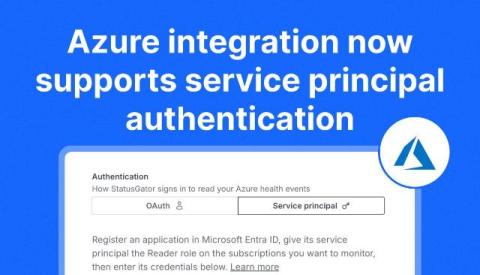
Azure integration now supports service principal authentication

We’ve released some improvements to our Azure status integration. StatusGator can now read your Azure Resource Health events via a service principal. Previously the only supported authentication mechanism was OAuth. Both pull the same data and produce the same alerts – the difference is who the connection belongs to, and what happens to it over time.

Shipped: Find the S3 buckets paying early delete fees

S3 lifecycle rules move data to Standard-IA or Glacier to cut storage cost. CloudZero now flags the buckets where that move backfires: an early delete fee is charged when an object leaves its tier before the tier’s minimum storage duration. The cause isn’t always a misconfigured lifecycle rule. A manual delete, an overwrite, or an object written straight into the tier by a replication or backup job produce the identical charge.

AI usage tracking: Monitor spend by team, feature & model

AI usage tracking means measuring who and what consumes AI across your company, by team, feature, and model, then converting the usage into spend and cost per unit of work. Provider consoles stop at totals per API key. Tracking puts names on those totals: which team, which product, which model, and whether any of it was worth the money. In May 2026, CNBC reported that “almost every Fortune 500 is tracking overall AI usage,” quoting ModelOp CTO Jim Olsen. The same reporting carried his warning.

Repo rightsizing: audit every model call in a repo you already shipped

Repo rightsizing is a single-pass audit of every real model call in a codebase you already shipped: SDK invocations, sub-agent dispatch sites, and agent frontmatter pins. Each call site is scored on the job it actually does, and the result commits as one blueprint file you can diff next quarter. It replaces one-skill-at-a-time reviews, which miss files where a single model key covers two different jobs.

The gap between individual AI productivity and team performance

As a product manager at Upsun with a computer engineering background, Kateryna Dvornichenko had spent months researching competing tools in the agentic development space, running tests, comparing features, and building a picture of where the market was heading. She realized the tools were impressive, but something kept standing out. "Collaboration was not the strong point of any of them," she says. "Everyone stays on their own machine with their own setup.".

Navigating Rising Ad Costs: An Honest Review of Google Ad Guy's Hybrid Search Model

Running digital ad campaigns in Australia has become increasingly tough for business owners. Google Search remains the most effective place to find high-intent customers. When someone needs an urgent electrician, a commercial lawyer, or a local service provider, Google is still their first port of call. However, rising cost-per-click (CPC) rates, automated algorithm updates, and widespread agency burnout have made running profitable ad campaigns trickier than ever.

Why More Technology Is Becoming a Service Instead of a Product

A growing number of technology purchases no longer end at checkout. A phone gains new AI features months after launch, a vehicle receives software updates from the cloud, and a security camera may lose important functions if its online service disappears. The physical product still matters, but increasingly it is only the visible edge of a much larger system.