Operations | Monitoring | ITSM | DevOps | Cloud

The latest News and Information on DevOps, CI/CD, Automation and related technologies.

Disaster Recovery Preparedness for Your Kubernetes Clusters

In the pre-Kubernetes, pre-container world, backup and recovery solutions were generally implemented at the virtual machine (VM) level. That works for traditional applications when an application runs on a single VM. But when applications are containerized and managed with an orchestrator like Kubernetes, this system falls apart. That means effective disaster recovery (DR) plans for Kubernetes must be designed for containerized architectures and natively understand the way Kubernetes functions.
Hands-on-lab - Manage Software Releases with JFrog Distribution

Manage Software Releases with JFrog Distribution Whether you are delivering web services using Kubernetes or updating the latest firmware to an IoT device, the ability to deliver the latest features of your software solution in shortened development cycles is becoming more prevalent. In this webinar, we will demonstrate how to easily increase your release velocity while ensuring security and reliability using JFrog Distribution. Learn how JFrog Distribution can help overcome limited bandwidth networks and network lag, allowing you to accomplish updates with speed and reliability.

The Pain of Debugging WebAssembly

If you know anything about WebAssembly (WASM), it’s probably that WASM lets you execute code compiled from languages such as C, C++, Rust, or others in the browser at almost native speeds. You might be less familiar with the fact that WASM is not only an interesting technology in the browser, but also in other environments that require fast sandboxing. As such, WASM has found some popularity with edge computing and as a lightweight docker replacement for certain situations.

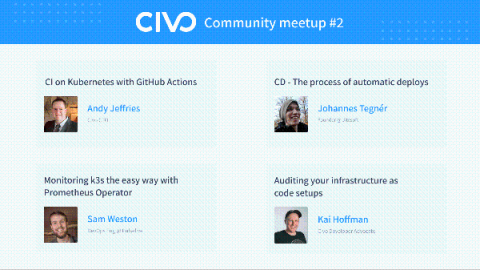
Civo Community Meetup #2: CI/CD focus w/ Sam Weston and Johannes Tegnér

For our second community meetup we focussed on using Civo for CI/CD through GitOps and Github actions for cloud native application development This installment featured talks from our CTO Andy, our Developer Advocate Kai, and guest talks from community members Sam Weston and Johannes Tegnér. The talks touched on a wide variety of topics within CI/CD, from automating builds to monitoring and observability. Here's what was on the agenda...

My first Kubernetes cluster: Amazon EKS review + tutorial

During my career, I’ve taken part in many on-call rotations and post-mortems. The longest on-call rotation I’ve ever had — no breaks, vacations, or holidays — lasted for a whopping 2.5 years at Lucid Software. I’m jaded. I strongly prefer stability to tinkering with shiny new toys. Very few software engineers start this way, but enough of them make the transition after having been bit enough times by a bad release.

9 Signs Your Cloud Readiness Isn't What It Needs to Be

Yes, everyone is talking about the cloud, but are they actually ‘doing it’? The short answer is yes, and in stunning numbers. According to a recent O’Reilly survey, 90+% of organizations expect to increase their usage of cloud-based infrastructure. Over the next 12 months, 67% expect to shift half or more of their applications to the cloud, and 45% are planning to move three-quarters or more of their apps.

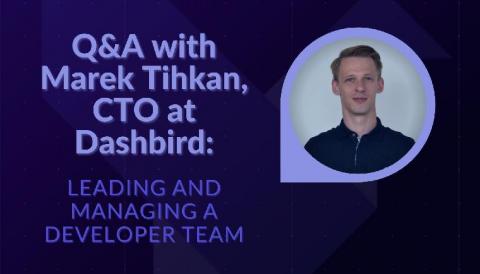
Q&A with Marek Tihkan, CTO at Dashbird: Leading and managing a Developer team

As we enter into our 4th year, we've decided to get up close and personal with our team to share with you their passion, drivers, lessons learned and significant moments of the past year. We're a young company dedicated to adding value in all corners that we reach, so we hope you find the upcoming series useful! Hey Marek, so can you tell us how long you’ve been at Dashbird and where you were before? M: I’ve been at Dashbird for two years now.

How We Use Quarkus With Kafka in Our Multi-Tenant SaaS Architecture

At LogicMonitor, we deal primarily with large quantities of time series data. Our backend infrastructure processes billions of metrics, events, and configurations daily. In previous blogs, we discussed our transition from monolith to microservice. We also explained why we chose Quarkus as our microservices framework for our Java-based microservices. In this blog we will cover.