Operations | Monitoring | ITSM | DevOps | Cloud

The latest News and Information on Monitoring for Websites, Applications, APIs, Infrastructure, and other technologies.

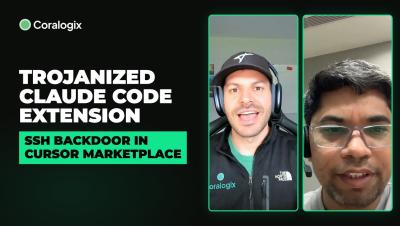
Malicious Claude Code extension in the Cursor marketplace: Coralogix Security Advisory

The Claude Code extension in the Cursor marketplace was compromised for a short period of time today. Watch this security advisory from Chris Cooney and Hetram Yadav, threat detection and response manager at Coralogix, to understand: How the malicious attack operates How to know if you're affected How Coralogix is supporting customers.
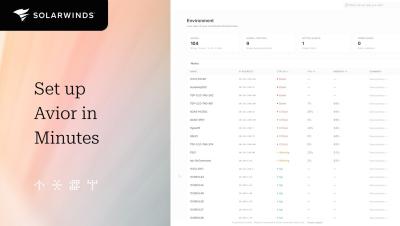
Get Started with SolarWinds Avior Agentic AI

Automate IT operations and resolve alert noise faster with Avior by SolarWinds. Managing mission-critical hybrid IT infrastructure requires rapid troubleshooting without sacrificing operational safety. In this video, we introduce SolarWinds Avior—a goal-oriented agentic AI designed to assist IT teams with autonomous root-cause analysis, alert optimization, and infrastructure triage under strict human oversight.

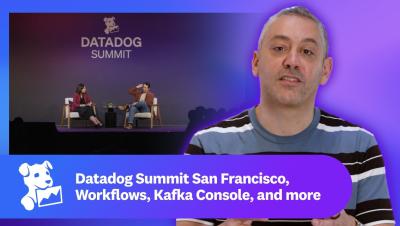
Datadog Summit San Francisco, Workflows, Kafka Console, and more | This Month in Datadog

October’s This Month in Datadog comes to you from the Datadog Summit in San Francisco, where Jeremy shares a look inside the event, with our latest product updates. Plus, we cover how to: Build and manage Datadog Workflows using natural language, turning descriptions of automation tasks into workflows that teams can review before publishing Detect and investigate Kafka issues with Kafka Console, bringing health and performance data into one place Turn raw logs into structured fields with Datadog Tap, making logs easier to search and analyze.

It's a Critical CVE, Now What?

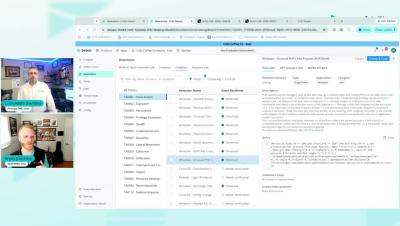
Bryan Peace Leon Adato break down what exactly security-minded IT folks - whether they work in SRE, dev, networking, or more esoteric disciplines - should do when a new, critical, apocalyptic vulnerability is announced. They walk you step by step through research, analysis, and how to protect your company if a patch isn't out yet. Along the way they muse about the nature of the industry, the sudden spike in CVEs, and where to find the best hard cidr to take the edge off.

AI SRE Agent Slack Integration: Ask AURA About Your Kubernetes Cluster | HQ

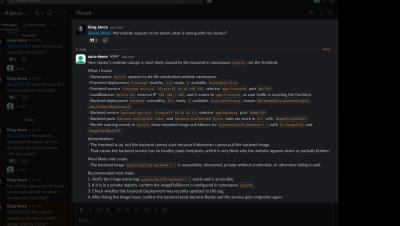
Running an agent in your cluster should not mean opening it to the internet. AURA reaches Slack over an outbound socket, so the cluster stays locked down. Jeff Vogt connects an AURA deployment running in Kubernetes to Slack using AURA's direct Slack integration. The setup is a Slack app with an app token and a bot token, plus a few lines added to the deployment's configuration. The Kubernetes MCP server is already deployed and connected to AURA before the video starts.

Find the Retry Loop Burning Your AI Agent Budget with Tracing | Splunk Agent Observability

One of the most expensive failure modes in AI agents is a silent retry loop. An agent hits a rate limit, blindly retries until it succeeds, the user gets a response, and no ticket ever gets filed. Under the hood, tokens are burning, latency is compounding, and a transient error today becomes a sustained outage tomorrow.

Agent Control Demo: Steer, Block, and Audit AI Agents | Splunk Agent Observability

Most teams keep an agent from regressing by hardcoding checks into its logic, an if-statement here, a regex there. Every new rule then becomes a code change, a review, and a deploy, and the person who spots the problem in production is rarely the person who can ship the fix. Agent Control moves those rules out of the code and into one hub. Steer, block, and validate agent behavior in real time, with rules any team member can update without touching the codebase.

Pre-Push Eval Gate: Block AI Agent Regressions Before They Ship | Splunk Agent Observability

Every engineering team has unit tests. They tell you the code still works. They tell you nothing about what the model started saying. This demo wires a single eval gate script into a git pre-push hook, so Splunk Agent Observability scores every agent's output before the push is allowed through. Luna, an on-premise small language model, runs as a synchronous judge against fixed thresholds. Fail one, and the push is blocked.