The latest News and Information on Remote Work and related technologies.
It is said that necessity is the mother of invention, but from necessity also comes innovation. If history has taught us anything, it’s that some of the biggest and best business transformations have arisen from tough times. Over the last year, unsurprisingly one area that has seen a tremendous upheaval is the idea of work and how businesses engage with their workforce.
Although IT teams are called upon to deliver a lot these days, I doubt many are being asked to solve the type of post-2020 (read: weird) hybrid work scenarios depicted below. IT support tends to stick to its ‘bread and butter,’ they focus on things like network connectivity, application performance, cybersecurity, or onboarding for new hires—to name just a few.
It’s been more than half a year since I joined Exoprise. When Covid-19 struck last year, it became clear that companies would expand their hiring requirements beyond local regions and find suitable candidates (just like me!). Remote work and the requirement for on-boarding remote workers no longer became a luxury. This is reflected in job portals and HR sites such as Indeed and Glassdoor where they began to insert a new tag “Remote WFH Option Available”.
Software development by distributed teams is nothing new. But since 2020, it’s no longer just teams that are globally dispersed, it is the individual team members themselves. Remote working is the new normal. So in this unpredictable, “modern” world we’re in, how do you put together a solution that delivers for every single team member, no matter their location?
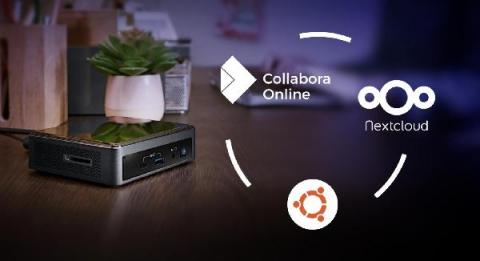
March 25th, 2021 – Canonical, Collabora and Nextcloud announce the immediate availability of a content collaboration platform for 64bit ARM for both consumers and enterprises. Building on the prior Nextcloud Ubuntu Appliance it adds with Collabora Online, the first viable self-hosted web office solution on the popular Raspberry Pi 4 platform.
Programming is often thought of purely as a problem-solving activity. This may be true for the lone coder in their garage, but in the multi-person environment of an Agile team, such problem solving must be collaborative. In this article, we’ll look at the role of communication in software development, particularly in an Agile framework. Covid-19 has forced an unprecedented shift to remote working so we’ll finish up with a discussion of how Agile can be implemented in a remote setting.
Fair warning, I tried to avoid using the obligatory good news, bad news opener for this article, but I couldn’t help myself. It’s just that we sort of are living in the age of good news, bad news. Especially when it comes to IT support and remote work. So here it goes. First, the good news: If you work in IT support, your colleagues need your expertise now more than ever before.
Let’s face it: when it comes to managing a work-from-home setup, IT has a lot of problems they don’t know how to solve. It’s not for lack of effort – there just don’t seem to be many practical solutions out there that can alleviate their new remote work-induced headaches. It was tough enough getting everyone up and running in home offices. Now, IT is all but drowning in tickets (a majority of tech leaders have reported ticketing increases up to 50%).
The shift to remote was an unprecedented challenge for most enterprises and businesses. IT operations had to ramp up quickly to maintain processes and workflows. Monitoring tools play a crucial role in enabling ITOps to do everything they need to analyze and resolve incidents quickly.