Operations | Monitoring | ITSM | DevOps | Cloud

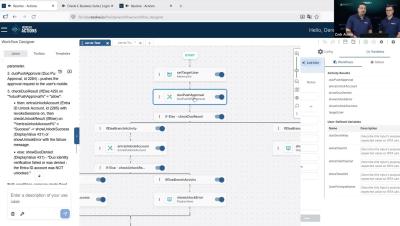
How to Build AI Agents That Take Action | Resolve Agent Lab Demo

How do you build enterprise AI agents that actually take action? In this live demo, Resolve shows how Agent Lab helps IT and operations teams build, test, and deploy AI agents using natural language. See how teams can turn business requirements into executable workflows, give agents specific skills, establish guardrails, and automate real IT resolutions across enterprise systems.

The Infrastructure Question Hiding Inside Every Government AI Conversation

Government AI strategies are ultimately constrained or enabled by the infrastructure beneath them. Agencies that can continuously validate controls, maintain visibility, and automate policy enforcement will be better positioned to deliver AI capabilities securely, responsibly, and at scale.

Accounts Payable Automation: Building Purchase-to-Pay Workflows That Don't Slow Teams Down

A $400 laptop request has been sitting in someone's inbox for nine days. Three people need to approve it. One is travelling. One approved it on their phone and it never synced. One doesn't know it exists. Meanwhile, a $40,000 supplier invoice went out last Tuesday. Paid in full. On time. Nobody checked whether the goods ever arrived.

How Implementing Produce ERP Software Transforms Inventory Management

Agencies operating within the Technology, Business, and Economy sectors face a myriad of challenges when it comes to managing inventory effectively. The complex nature of inventory management requires precision, timeliness, and the ability to adapt quickly to changing demands. Implementing Produce Erp Software offers a pivotal solution, transforming how agencies approach inventory management by providing real-time tracking, streamlining supply chains, optimizing demand forecasts, and boosting operational efficiency.

Incident Management Best Practices for Modern IT Teams

Incident management used to be easier to picture: an alert arrived, a ticket opened, a support team followed a process, and service returned. Today’s incidents move across cloud platforms, SaaS applications, networks, identity services, observability tools, ITSM queues, and engineering teams. The fundamentals still matter, though. Clear process, ownership, communication, and learning matter more when the environment becomes harder to understand. What has changed is how teams execute them.

From SOCI Compliance to Continuous Infrastructure: How Puppet Helps Protect Critical Infrastructure

Australia’s critical infrastructure landscape has changed significantly. The Security of Critical Infrastructure Act 2018 (SOCI Act) has evolved from a framework focused primarily on identifying critical assets and reporting incidents into a broader risk-management and operational-resilience regime. The 2024 reforms reinforced that direction, increasing the focus on the systems, data, and technology dependencies that underpin Australia’s essential services.

Incident Management System: What It Is and How to Choose One

An alert fires. A ticket opens. Someone gets paged. Then the real work begins: gathering context, finding the affected service, deciding who owns the issue, running diagnostics, applying a fix, validating recovery, and documenting the result. Many IT teams assume that an incident management system is simply the application that opens and tracks the ticket. That is part of the job, but it’s not the whole operating model.

SOC automation solution guide 2026 with examples

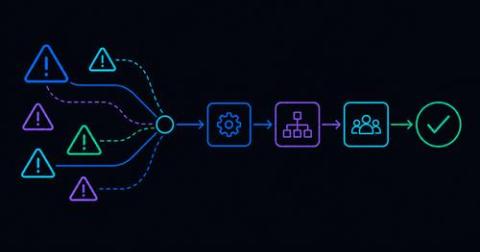
SOC automation can be a confusing category as there is no single type of SOC automation solution or tool, and most security teams use several different approaches at the same time. However, the need for SOC automation is much clearer with recent data on SOC automation showing that 93% of organizations are using or planning to use automation in their security workflows.