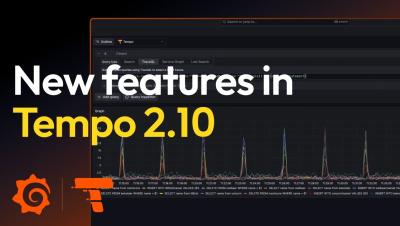
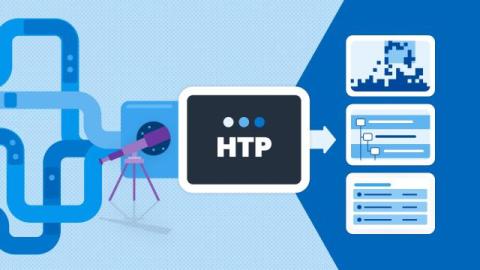
In this video, Tiffany Jernigan walks through new TraceQL features in Tempo 2.10 that can help you analyze trace structure, identify traces with attributes that don't exist, and more.
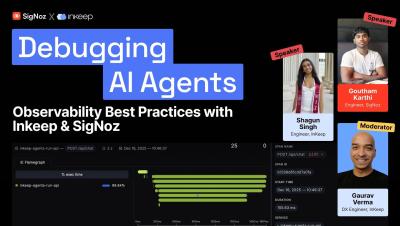
AI agents are powerful, but debugging them in production is hard. Non-deterministic behavior, LLM latency, and token costs create observability challenges that traditional monitoring tools don't address. In this webinar, engineers from Inkeep and SigNoz walk through how Inkeep monitors its AI agent framework in production using OpenTelemetry-native observability.
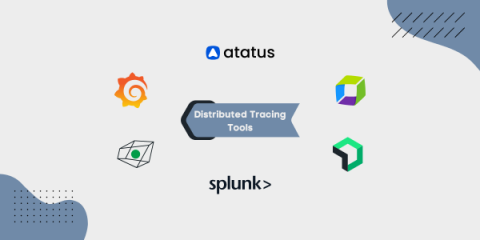
The distributed tracing landscape has evolved from “observability add-on” to core production infrastructure. In 2026, distributed tracing is no longer optional for engineering teams operating microservices, Kubernetes, or AI-driven workloads. It is now tightly coupled with incident response, cost optimization, and AI-assisted debugging.
For many teams, 2024 was the year of asking, “can OpenTelemetry do this?” In 2025, the community answered with a resounding “yes,” moving beyond experimentation to focus on what matters most in practice: stability, ease of use, and cross-project compatibility. That momentum now sets the stage for what’s to come for OpenTelemetry in 2026.
OpenTelemetry makes it easy to produce and transmit any type of telemetry. In production environments, this often means deploying the OpenTelemetry Collector as an intermediary to process, enrich, and route telemetry data. As systems scale, so does this infrastructure—sometimes to hundreds or thousands of Collectors spread across environments.
The IT landscape has evolved rapidly, transitioning from monolithic applications to complex, distributed system architectures comprising microservices that run on platforms like Kubernetes. With this added complexity, simply checking if a server is running is no longer sufficient. As IT professionals, we need insight into what’s really happening inside these systems. That’s where observability comes in.
Integrating feature flag context into OpenTelemetry traces enhances observability by recording flag states as span attributes, making it easier to analyze how specific flags influence application behavior. When you toggle a feature flag, you're changing the behavior of your application; sometimes, in subtle ways that are hard to detect through logs or metrics alone. By adding feature flag attributes directly to spans, you can make these changes observable at the trace level.
In modern observability practices, distributed tracing has become table stakes. Most application performance monitoring (APM) platforms encourage an “instrument everything” approach: Deploy an SDK or agent, hook into every service call and capture every user interaction at scale. On paper, this sounds like complete visibility. In practice, it can turn into a costly firehose of data with diminishing returns.
AI-powered coding assistants have transformed how developers write software. Tools like Claude Code, OpenAI Codex, Gemini CLI, Qwen Code, and OpenCode have introduced what many call “vibe coding” — a new paradigm where users describe their intent and AI agents handle the implementation details. But as these tools become integral to development workflows, a critical question emerges: how do we understand what’s happening under the hood?
It's 2026. Your New Year's resolution was to finally migrate to OpenTelemetry. But you're staring at dozens of dashboards that depend on your current data format, and that migration deadline is looming... Sound familiar? If you're an SRE or Platform Engineer facing a top-down OTel mandate, you're not alone. The challenge isn't just about adopting a new standard—it's about doing so without disrupting the observability systems your team depends on every day.
As application systems grow more complex, it becomes ever more important to understand how services interact across distributed systems. Observability sheds light on the behavior of instrumented applications and the infrastructure they run on. This enables engineering teams to gain better track system health and prevent critical failures. OpenTelemetry (OTel) has standardized how we generate and transmit telemetry, and the OpenTelemetry Collector is the engine that processes and export this data.