Operations | Monitoring | ITSM | DevOps | Cloud

The latest News and Information on Cloud monitoring, security and related technologies.

Grouping AWS Lambda functions with Dashbird Project View

One of the serverless best practices is one-purpose functions. You should keep your Lambda functions small and solve exactly one use-case. This way, you can optimize them better and keep potential security problems contained. But creating many small functions can get overwhelming quickly. Even small projects can end up with more than 20 Lambda functions.
Exploring the Value of your Google Cloud Logs and Metrics

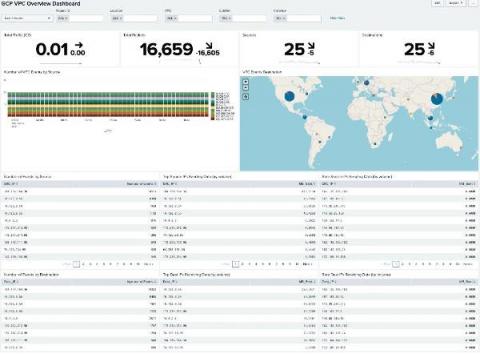
With our ability to ingest GCP logs and metrics into Splunk and Splunk Infrastructure Monitoring, there’s never been a better time to start driving value out of your GCP data. We’ve already started to explore this with the great blog from Matt here: Getting to Know Google Cloud Audit Logs. Expanding on this, there’s now a pre-built set of dashboards available in a Splunkbase App: GCP Application Template for Splunk!

Canonical completes Azure Arc Validation Program, helps increase user confidence in Arc enabled production Kubernetes

Microsoft Azure has just announced the details of its new Azure Arc Validation Program, aiming to further increase customer confidence in deploying Arc enabled Kubernetes in production workloads, and at scale.

AWS Fargate monitoring with Datadog

In Part 1 of this series, we looked at the important metrics to monitor when you’re running ECS or EKS on AWS Fargate. In Part 2 we showed you how to use Amazon CloudWatch and other tools to collect those metrics plus logs from your application containers. Fargate’s serverless container platform helps users deploy and manage ECS and EKS applications, but the dynamic nature of containers makes them challenging to monitor.

Key metrics for monitoring AWS Fargate

AWS Fargate provides a way to use AWS container orchestration services—Amazon Elastic Container Service (ECS) and Amazon Elastic Kubernetes Service (EKS)—without needing to provision and maintain the infrastructure that runs your containers. Fargate is similar to serverless container platforms from Google (Cloud Run) and Microsoft (AKS virtual nodes).

How to collect metrics and logs from AWS Fargate workloads

In Part 1 of this series, we showed you the key metrics you can monitor to understand the health of your Amazon ECS and Amazon EKS clusters running on AWS Fargate. In this post, we’ll show you how you can: You can use Amazon CloudWatch and related AWS services to gain visibility into your ECS clusters and the Fargate infrastructure that runs them.

How to see all your Azure VM Snapshots

Snapshots in Azure is a nice feature that allows you to take a read-only, “point in time” snapshot of a Virtual Machine’s disk. You can take a snapshot of a VM’s OS or data disk. You can use this snapshot to revert the VM to a point in time before an event occurred, or you installed something that didn’t go quite right.

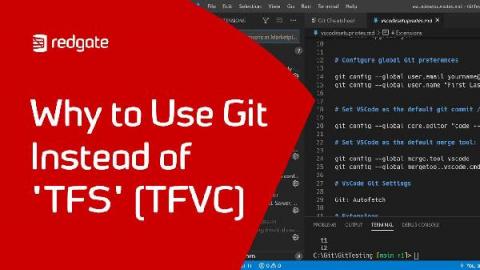
Why to Use Git Instead of "TFS" (TFVC)

One question we frequently hear from customers using the Microsoft stack is, “should I use Git or TFS?” The question requires a little decoding due to the way that Microsoft has shifted their brands over time. Here’s some background. Many people still refer to this as “TFS,” regardless of the version they are using. TFVC used to be the default type of repo for TFS projects.

Azure Management Talk: Application Observability in a Distributed world

In this session, Chris Reddington will provide an overview of Application Insights and how it slots into the wider Azure Monitoring ecosystem. We will explore Alerts, Metrics, Queries, Dashboards, Workbooks and more, and how Application Insights can bring clarity to a distributed cloud deployment.