Operations | Monitoring | ITSM | DevOps | Cloud

What is Bashtop? Setup, Commands, and Shortcuts

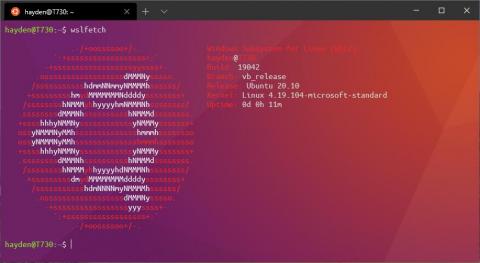
Usually, we have top and htop to monitor the Linux system and get to know the running processes along with CPU and Memory utilization. But these commands have certain limitations which refrain them from giving a detailed overview of the system performance. This limitation is overcome by the alternative called Bashtop. In this blog, we will learn about Bashtop, its advantages, and disadvantages along with its shortcuts and installation guide.

Omnichannel Enablement: 4 technology success factors

The days in which a business could thrive by serving customers through brick-and-mortar stores alone are long gone. Almost all retailers now offer a variety of online and offline channels, often with some degree of integration to ensure a smooth customer journey across different touchpoints. However, even these multichannel and cross-channel strategies are increasingly falling short of modern expectations.

Introduction to Confidential Computing

Public clouds are great! Yet, many users are still reluctant towards moving their security-sensitive workloads away from their private data centers and into the public cloud, due to a set of security concerns. To address these challenges, what we need is a way to perform a privacy-preserving computation that can protect the confidentiality and integrity of your workload. Confidential computing achieves this by running your workload in a hardware-encrypted execution environment, that is isolated from the cloud provider’s privileged system software (e.g. hypervisor, host OS, and firmware), as well as its employees.

Generating Secure Passwords for your Linux Server

Having a strong password is necessary to protect our information from being accessible by others. A strong password should be difficult to be identified, guess or decrypt by the attackers. Mostly, while entering passwords, we will be prompted to enter the upper case and lowercase letters along with numbers and special characters. But thinking of a new password every time is very difficult and most people end up repeating the same password for every website and application they use.

What is Linux? And Why It Should Be Your Favorite Operating System

Let’s get to it! Linux is a free, open-source operating system created in 1991 by Linus Torvalds. Unlike other operating systems, Linux is a community-developed project that is actively supported by programmers from all over the world. Developers can freely add or modify the source code and distribute it under either the original free software license or their own custom licenses. This makes Linux an extremely versatile and adaptable platform with a wide variety of uses.

UX Deep Dive: Classify interactions for a more intuitive user interface

We try hard to make our products as intuitive and familiar as possible, but there will always be “advanced” options and rarely-used features. Giving users choice and control over their experience will naturally lead to features that are used less frequently or settings that only a small percentage of users will change. So how do we decide what order and prominence to give to these lesser-used features?

New Active Directory Integration features in Ubuntu 22.04 (part 4) - Scripts execution

In this article we will focus on how you can use Active Directory to schedule startup, shutdown, login or logout scripts on your managed desktops through ADsys. In this area, as well as for all the other new features delivered by ADsys, we tried to offer a user experience as close as possible to the native one available in Microsoft Windows, with the aim of enabling IT admins to reuse the same knowledge and tools they acquired over the years to manage Ubuntu desktops.

What's new in Security for Ubuntu 22.04 LTS?

Canonical Ubuntu 22.04 LTS is the latest long term support release of Ubuntu, one of the world’s most popular Linux distributions. As a Long Term Support release, Ubuntu 22.04 LTS will be supported for 10 years, receiving both extended security updates and kernel livepatching via an Ubuntu Advantage subscription (which is free for personal use).