
Operations | Monitoring | ITSM | DevOps | Cloud

Top vulnerability assessment and management best practices

By implementing these vulnerability assessment and vulnerability management best practices you will reduce the attack surface of your infrastructure. We’re human, and many things we build aren’t perfect. That’s why we take our cars for a periodic inspection, or why we have organizations certifying that products are safe to use. Software is no different.

Vulnerability Management with Sysdig

Software is always changing and improving, and within this process, developers can unknowingly introduce vulnerabilities. Discover how Sysdig Secure provides a single vulnerability management solution for both containers and hosts. It allows you to validate compliance across your whole infrastructure. And it's so easy to deploy, that you will be scanning images and hosts in seconds.

Automate remediation of threats detected by Datadog Security Monitoring

When it comes to security threats, a few minutes additional response time can make the difference between a minor nuisance and a major problem. Datadog Security Monitoring enables you to easily triage and alert on threats as they occur. In this post, we’ll look at how you can use Datadog’s webhooks integration to automate responses to common threats Datadog might detect across your environments.

CVE-2021-31440: Kubernetes container escape using eBPF

In a recent post by ZDI, researchers found an out-of-bounds access flaw (CVE-2021-31440) in the Linux kernel’s (5.11.15) implementation of the eBPF code verifier: an incorrect register bounds calculation occurs while checking unsigned 32-bit instructions in an eBPF program. The flaw can be leveraged to escalate privileges and execute arbitrary code in the context of the kernel.

Detecting and Mitigating CVE-2021-25737: EndpointSlice validation enables host network hijack

The CVE-2021-25737 low-level vulnerability has been found in Kubernetes kube-apiserver where an authorized user could redirect pod traffic to private networks on a Node. The kube-apiserver affected are: By exploiting the vulnerability, adversaries could be able to redirect pod traffic even though Kubernetes already prevents creation of Endpoint IPs in the localhost or link-local range.

Exploiting and detecting CVE-2021-25735: Kubernetes validating admission webhook bypass

The CVE-2021-25735 medium-level vulnerability has been found in Kubernetes kube-apiserver that could bypass a Validating Admission Webhook and allow unauthorised node updates. The kube-apiserver affected are: You are only affected by this vulnerability if both of the following conditions are valid: By exploiting the vulnerability, adversaries could bypass the Validating Admission Webhook checks and allow update actions on Kubernetes nodes.

Streamlining Vulnerability Management with Splunk Phantom

Vulnerabilities are weaknesses in the security infrastructure that bad actors can exploit to gain unauthorized access to a private network. It is nearly impossible for security analysts to patch 100% of the vulnerabilities identified on any given day, but a vulnerability management plan can ensure that the highest risk vulnerabilities (those that are most likely to cause a data breach), will be addressed immediately.

Mitigating CVE-2021-20291: DoS affecting CRI-O and Podman

The CVE-2021-20291 medium-level vulnerability has been found in containers/storage Go library, leading to Denial of Service (DoS) when vulnerable container engines pull an injected image from a registry. The container engines affected are: Any containerized infrastructure that relies on these vulnerable container engines are affected as well, including Kubernetes and OpenShift.

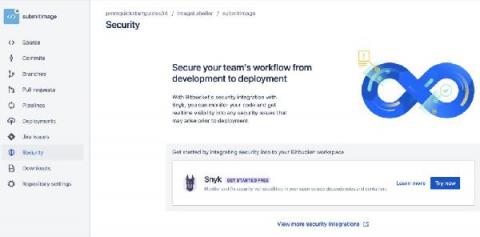
Bits of Security, Snyk.io: Stranger Danger: Finding Security Vulnerabilities Before They Find You!

Open source modules on the NPM ecosystem are undoubtedly awesome. However, they also represent an undeniable and massive risk, since you’re introducing someone else’s code into your system, often with little or no scrutiny. The wrong package can introduce critical vulnerabilities into your application, exposing your application and your user's data. This talk will use a sample application, Goof, which uses various vulnerable dependencies, which we will exploit as an attacker would. For each issue, we'll explain why it happened, show its impact, and—most importantly—learn how to avoid or fix it.