
Operations | Monitoring | ITSM | DevOps | Cloud

Unpatchable Vulnerabilities: Key Risk Mitigation Strategies

Wouldn’t it be great if every vulnerability had a fix waiting in the wings? If patching were always fast, easy, and complete? That’s not the world we live in. Some vulnerabilities can’t be patched at all. Others are buried in systems or services you don’t fully control. And the longer your focus stays limited to internal infrastructure, the more risk slips through the cracks.

Breaking Down the Exposure Management Maturity Model

Register for the next webinar. The Exposure Management Maturity Model is crucial for effective vulnerability management. Organizations face challenges like limited attack surface understanding and the need for better collaboration between security and IT teams. Defining a risk appetite helps prioritize vulnerabilities, while asset visibility and classification identify critical assets. The session emphasizes business-driven vulnerability prioritization and operational remediation strategies, concluding with self-assessment opportunities and the development of risk-based KPIs.

A Simple Explanation of How to Go from Vulnerability Management to CTEM Cybersecurity In 2026

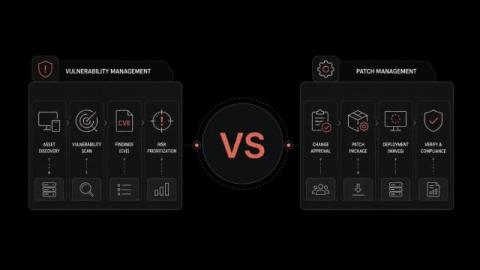
Continuous Threat Exposure Management (CTEM) is a structured framework for identifying, assessing, and reducing security exposures across an organization's entire attack surface. Unlike traditional vulnerability management, which focuses on known CVEs and periodic scans, CTEM provides ongoing visibility into real-world threats and enables security teams to prioritize risks based on actual exposure.

Cisco ASA and IOS Vulnerabilities Expose Critical Systems, Making Edge Automation Essential for Rapid Remediation

The launch of Puppet Edge this week could not have been more timely. Within a day of its general availability, Cisco disclosed a vulnerability in its IOS and IOS XE software, followed almost immediately by an Event Response detailing two additional critical-severity CVEs affecting its firewalls.

Understanding Linux Vulnerabilities and Their Impact

Understanding Linux Vulnerabilities and Their Impact Linux vulnerabilities pose significant risks, particularly CVE 20258067, which has active exploits in rebased distributions. CVE 202332256 enables remote attackers to access sensitive information without authentication. Additionally, CVE 202558367 presents a denial of service and remote code execution risk in the Delta class. Applications handling untrusted user input to Delta need careful scrutiny, and it is crucial to keep systems updated to mitigate these threats.

Schrödinger's Vulnerability: Why Continuous Vulnerability Management Isn't Optional

The classic thought experiment known as Schrödinger’s Cat imagines a cat that’s simultaneously alive and dead; that is, until someone opens the box. In other words, it’s both alive and dead until the point that we can confirm the truth. Now, swap the cat for software vulnerabilities, and you’ve got a fantastic analogy for what happens in today’s security environment.

Fighting Fire With Fire: Why Ethical Hackers Are Your Best Allies Against Cybercrime

Cybercriminals continue to become sophisticated and greedy as they always seem to find new ways to steal sensitive data for personal and financial gain. According to data compiled by the Anti-Phishing Working Group, it was found that there were 1,003,924 phishing attacks in the first quarter of 2025, which makes phishing one of the biggest security threats to individuals and organisations. What's more, financial and online payment sectors have become the most frequent target of hackers, making up 30 percent of all attacks worldwide.

Simulating Multi-Agent Workflows to Find Hidden API Vulnerabilities

API gateways are often viewed as the centralized entry point for client HTTP requests in a distributed system. They act as intermediaries between clients and backend services, managing API request routing, load balancing, rate limiting, access control, and traffic shaping across multiple backend services. This API management is vital for many services and products, but many organizations can put too much stock in it.

Understanding Pentesting Services and Their Role in Cybersecurity

In today's threat landscape, organizations face a constant barrage of cyberattacks targeting web applications, cloud environments, and internal networks. Security tools, monitoring systems, and compliance audits provide a first line of defense, but they often fail to capture the perspective of a determined attacker. That's where penetration testing comes in. By simulating real-world adversarial techniques, pentesting uncovers weaknesses that traditional security reviews may overlook.