Operations | Monitoring | ITSM | DevOps | Cloud

Protect Against Critical Unauthenticated RCE in React & Next.js (CVE-2025-55182) with Traceable WAF

A critical, unauthenticated Remote Code Execution (RCE) vulnerability, CVE-2025-55182, has been discovered in React Server Components and Next.js with the maximum severity rating of 10.0. The article highlights that Traceable by Harness WAF provided immediate, proactive protection against this vulnerability class through multi-layered defenses like Server Side Template Injection (SSTI) and Node.js Injection attack rules, even before the CVE was officially disclosed.

Beyond the Budget Cut: Strategically Investing in Business Continuity

When budgets tighten, it's easy to cut expenses across the board, but doing so can overlook the essential need for business continuity. Strategic investment in continuity isn't about spending more - it's about spending wisely to protect core operations and stay resilient against disruptions.

Why do companies buy Exposure Management Platforms?

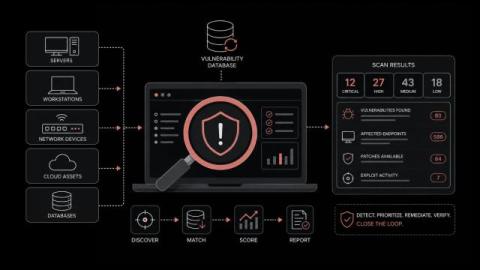
For the better part of two decades, the cybersecurity industry has been running on a treadmill. We call it "Vulnerability Management," but in practice, it's often little more than a never-ending game of "Whac-A-Mole." Security teams run a scan, generate a 500-page PDF of Critical vulnerabilities, hand it to IT, and pray that patching happens before an exploit does. Then, they repeat the cycle next week.

Critical Vulnerabilities in Linux and VMware Tools: What You Need to Know #patch

CVE 2025-11561 affects Red Hat Linux and other distributions, requiring configuration of the Kross local authentication plugin for mitigation. Linux updates differ by vendor, with some delays in addressing vulnerabilities. A VMware tools vulnerability is actively exploited, prompting a recommendation to upgrade to a supported Linux version. Additionally, CVE 2025-58438 presents a traversal vulnerability in Python libraries on both Windows and Linux, resolved by upgrading to version 5.5.0.1.

Understanding Microsoft's Latest Zero-Day Vulnerability #patch

Microsoft has identified a zero-day vulnerability in the Windows kernel, rated 7.0 on the CVSS scale. Organizations often misprioritize vulnerabilities, focusing on high-severity scores instead of those actively exploited. Many lower-severity vulnerabilities are chained by attackers. A risk-based approach to vulnerability management is crucial. Current Windows OS versions are affected, and organizations should consider Extended Security Updates to mitigate risks as more zero days are anticipated.

Urgent Security Alert: New Firewall Vulnerabilities Identified. #patch #shorts

Cisco has identified a new attack variant targeting firewalls, highlighting the need for user education on vulnerabilities. A vulnerability discovered on November 5th affects nearly 50,000 devices, with many still at risk as of September 30th. Organizations struggle to expedite updates due to complex configurations and implementation challenges. Recent research indicates that network edge devices are prime targets for zero-day vulnerabilities, emphasizing the need for improved security measures.

Beyond the Horizon: Vulnerability Management - Turning Cyber Hygiene into Business Confidence

Discover why vulnerability management is critical for cyber and business resilience — and how N-able is reinventing the process. In this episode of Head Nerd Table, Jason Murphy sits down with Jeff Green, Distinguished Product Leader for Vulnerability Management at N-able, to unpack why vulnerability management is no longer optional — it’s essential. Jeff shares insights from his experience as a CTO and MSP leader, explaining how vulnerability management underpins both cybersecurity and business continuity.

Addressing Critical Zero-Day Vulnerabilities in Microsoft Systems #shorts #patch

Recent findings reveal two major zero-day vulnerabilities, including a third-party CVE, with two Microsoft CVEs rated 7.8 on the CVSS scale being actively targeted. Microsoft has responded by removing a risky fax modem driver and urging users to update their operating systems to mitigate these threats. This marks the final security update for Windows 10, prompting users to consider upgrading to Windows 11 or applying further mitigations.

Vulnerability Prioritization: The Complete Guide

With thousands of vulnerabilities discovered every year, not all pose the same risk. Some can cripple critical systems, while others have little real-world impact. The key is knowing which threats to act on first. Vulnerability prioritization helps security teams cut through the noise, focus on what truly matters and build resilience against critical attacks.

Postmortems: What We Learned When Container Vulnerability Scanning Was Missing

In the world of cloud-native development, containers are the bedrock of agility and scale. They allow teams to package applications and their dependencies into a single, portable unit that runs consistently across any environment. But this convenience comes with a hidden risk. Every container image is built from layers, and each layer-from the base operating system to the application libraries-can harbor vulnerabilities. Forgetting to implement robust security measures for these containers is a lesson many companies learn the hard way.