Operations | Monitoring | ITSM | DevOps | Cloud

The latest News and Information on Databases and related technologies.

SQL Sentry Then and Now Part 2

In my first post, I talked about how SQL Sentry has taken shape over the years. Now we announced SQL Sentry 2023.3, and a lot is changing. In the past, customers could only work with SQL Sentry through an installed, Windows-based client. It’s a feature-rich interface with access to everything you need with no limit to how many users install it. But we heard our customers; they wanted a web-based interface with a simplified user experience.

Visualizing MongoDB with Grafana Cloud

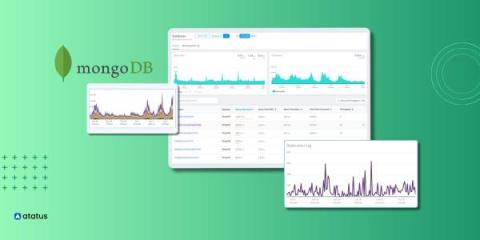
Learn to connect your MongoDB data and other data sources to a single dashboard to provide impactful insights into your business and improve visibility across teams. Vijay Tolani will demonstrate how to translate and transform your existing application and business metrics into flexible and versatile charts within dashboards using a wide array of visualizations, such as panels, bar gauges, geomaps, and more. Also query and alert on MongoDB and MongoDB Atlas data in real time without having to migrate or ingest it.

Five database DevOps practices for boosting team productivity

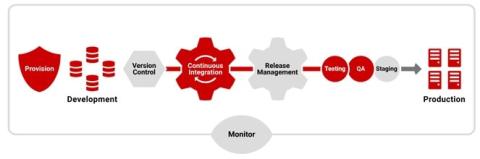
Developing and deploying database changes can be a complex task, made more challenging by the fact that development teams need to move fast, while also protecting an organization’s crown jewels: its data. Speed of delivery and protecting data can often feel incompatible, but there are industry-proven database DevOps practices that bring them together in harmony.

Monitoring Kubernetes costs with OpenCost and VictoriaMetrics

Control over operational costs is pivotal in Kubernetes' deployment and management. Although Kubernetes brings power and control over your deployments, it also necessitates thorough understanding and management of costs. OpenCost, specifically designed for Kubernetes cost monitoring, combined with VictoriaMetrics, an efficient time series database, offers a comprehensive solution for this challenge.

How to Monitor SQL Server with OpenTelemetry

At observIQ, we've seen growing interest in observing the health of Windows systems and applications using OpenTelemetry. Requests on the SQL Server receiver continue to garner the most interest, so let's start there. Below are steps to get up and running quickly with the contrib distribution of the OpenTelemetry collector. We'll be collecting and shipping SQL Server metrics to a popular backend, Google Cloud.

Tutorial: Monitoring MySQL Server Performance with Prometheus and sql_exporter

Databases in one form or another are almost an inseparable part of modern applications. A popular one among them is MySQL on which this article will focus. But how to monitor MySQL? This article will give an introduction to this topic.

Planning and Baselining a Migration to Azure SQL

A migration from on-premises SQL Server to Azure SQL offers many customers a number of advantages. It can enable scalability, reduce costs, enhance security, ensure high availability, and simplifies maintenance. Many organizations are looking to equivalent cloud services to move on-prem workloads such as SQL databases to the cloud, freeing themselves from the overheads of purchasing, configuring and maintaining physical hardware and infrastructure.

SSO is now available

We now support SSO (single-sign on), offering an improved login experience for our customers. SSO can be enabled on our website. We want our customers to have a great experience when using our products and part of that is an easy sign-in experience for users. Enabling SSO will remove the need for users to use their Redgate ID and password when signing into the customer portal and compatible products.

Create MySQL tasks easily

Databases are a critical component of our systems and their malfunction can affect business productivity. Therefore, we must make sure that they are working correctly. PandoraFMS has a plugin that allows the remote monitoring of MySQL databases through a Discovery task, by means of this task we can obtain information about the performance and status of the database, such as the number of connections, the availability of the database, the number of queries that are being made, buffer status and cache status, among other types of information.