Operations | Monitoring | ITSM | DevOps | Cloud

The latest News and Information on DevOps, CI/CD, Automation and related technologies.

What are AI tokens? The unit your AI bill is written in

AI tokens are the small chunks of text, roughly four characters or three quarters of a word each, that language models read and generate. Every prompt and every response is measured in tokens, and AI providers bill per million of them. That makes the token the base unit of AI spend: 1,000 tokens is about 750 words, and every AI feature you ship is a token meter running.
What is AI ROI? Definition and why it matters

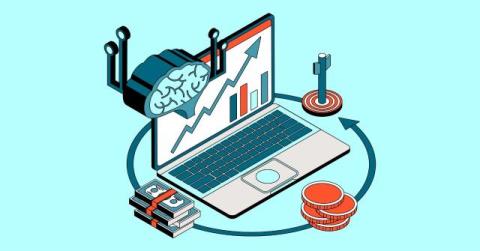
In 2025, 85% of organizations increased AI investment, and 91% plan to do the same this year, according to Deloitte. Despite continued spending, however, ROI lags behind, with just 6% seeing payback within one year. While AI use cases tend to have a longer payback period, often in the 2-4 year range, companies can’t afford to keep spending money without some measure of its practical impact both immediately and over time.

Shipped: Get anywhere in CloudZero with a keystroke

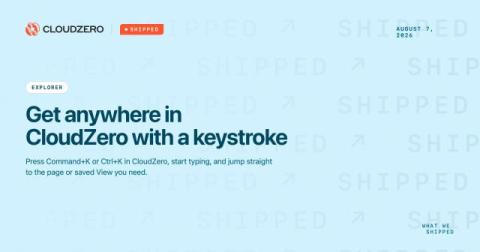
You know exactly where you want to go in CloudZero. Getting there sometimes takes a moment as you click into the nav, open a menu, scroll a dropdown, find the thing, click again. Every trip back to a familiar spot can take a few steps. Shortcuts remove that friction. Press command+K on Mac or ctrl-K on Windows anywhere in CloudZero, type where you want to go, and hit Enter. That means there’s no clicking through the nav and no scrolling to find what you already know the name of.

Introducing the Flyway MCP Server: governed database change, now available to your AI coding assistant

AI coding assistants have changed how fast application code gets written. Copilot, Cursor, Claude Code, and agentic tools built on top of them can generate a working feature in minutes. But none of them know your database's history. They don't know that a migration already renamed that column last sprint, that a policy forbids unqualified DELETE statements, or that the target environment has drifted from what your migrations say it should look like.

DORA in Practice: What Two Roundtables with Technical Leaders Revealed

The Digital Operational Resilience Act (DORA) has applied to financial organizations across the EU since January 2025 and is designed to strengthen their ability to withstand operational disruption. What the roundtables revealed was that although these financial organizations had completed extensive DORA planning exercises, this groundwork was not reliably translating into auditable operational control.

Kernel-Level Visibility Without Instrumentation: What eBPF Changes for Container Security

Containers have changed how applications are built and deployed, but they have also made security visibility more difficult. Workloads are short-lived, services communicate constantly, and application behavior is distributed across containers, nodes, APIs, processes, and open-source dependencies. This is why many security teams are pairing eBPF with application-level runtime security. eBPF observes activity from the Linux kernel without requiring teams to modify every application, while runtime application security explains which code caused that activity.

Open source for Europe's space missions

Every space mission begins long before launch day. Ideas become spacecraft. Thousands of decisions are made before a single engine ignites. The European Space Agency (ESA) knows what that journey looks like. As the agency prepares to increase the missions it supports by 2030, it is laying the groundwork for decades of future exploration. Working with Canonical, ESA is building a common platform for mission operations based on open source. Kubernetes, Ceph, PostgreSQL, and Kafka form ESA’s infrastructure foundation.