Whether you run an ecommerce site, a digital publication, or any other customer-facing service, delivering optimum user experiences is key to the success of your business. Customers can grow frustrated and abandon your site when they run into hurdles such as JavaScript errors or confusing page designs, and that frustration negatively impacts your company’s bottom line.
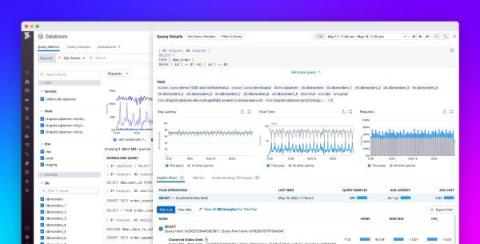
When you’re operating databases at scale, being able to get real-time insights across all your databases is essential for addressing issues and identifying areas for optimization. Datadog Database Monitoring’s Database List allows you to monitor your entire database fleet in one place, so you can quickly identify and troubleshoot overloaded hosts and gauge the impact of problematic queries throughout your infrastructure.
On-call schedules ensure that there's someone available day and night to fix or escalate any issues that arise. Using an on-call schedule helps keep things running smoothly. These on-call workers can be anyone from nurses and doctors required to respond to emergencies to IT and software engineering staff who need to fix service outages or significant bugs. Being on-call can be challenging and stressful. But with the proper practices in place, on-call schedules can fit well into an employee's work-life balance while still meeting the organization's needs.
There are a handful of providers that large parts of the internet rely on: Google, AWS, Fastly, Cloudflare. While these providers can boast five or even six nines of availability, they’re not perfect and - like everyone - they occasionally go down.
Ask most SREs how many incidents they’d have to respond to in a perfect world, and their answer would probably be “zero.” After all, making software and infrastructure so reliable that incidents never occur is the dream that SREs are theoretically chasing. Reducing actual incidents by as much as possible is a noble goal. However, it’s important to recognize that incidents aren’t an SRE’s number one enemy.
In this article we will focus on how you can use Active Directory to schedule startup, shutdown, login or logout scripts on your managed desktops through ADsys. In this area, as well as for all the other new features delivered by ADsys, we tried to offer a user experience as close as possible to the native one available in Microsoft Windows, with the aim of enabling IT admins to reuse the same knowledge and tools they acquired over the years to manage Ubuntu desktops.
We've made it our mission to reduce technical debt in the future of cloud computing, and our partners are helping us make that mission a reality. Today, we’re excited to announce that one of the world's leading Venture Studios, GSD Venture Studios, has chosen Cycle.io as the underlying platform for their new on-demand DevOps service, GSD.dev.
As shortages of consumer goods and rising prices caused by bottlenecks in international supply networks have become more common, the global supply chain and its vulnerabilities have been top of mind for many. For developers, several high-profile software security exploits have recently underscored the risks inherent in a similar type of supplier network: the software supply chain.
Security is a never-ending battle on the web. You can have a server up in just a few minutes, and the next minute, someone is already trying to hack into it. These attacks could be automated using malicious bots or launched manually. Websites can be targeted by a malicious user trying to compromise your web presence or data. Cross-site scripting (XSS) is just one type of attack your site may be vulnerable to.
The first few minutes of an incident are often the hardest. Tension and adrenaline levels are high, and if you don’t have a well-documented incident management plan in place, mistakes are inevitable. It was actually the years I spent managing incidents without the right tools in those high-tension moments that inspired me to build FireHydrant. I built the tool I wished I’d had when I was trying to move fast at the start of incidents.
Helm is a deployment tool for Kubernetes objects that supports package management, dependencies, and templating. In this article, we will explore how to optimize your Helm charts. To follow along, you’ll need a basic understanding of Helm and will have ideally written and deployed some basic Helm charts.
Summer is finally here in the Northern Hemisphere and as we work on getting our collective outdoors time in, we also have been busy at work making some great enhancements to Shipa. We kicked off June with a great webinar with PeladoNerd focusing on LATAM. We continued to focus on building and enhancing Shipa.
Get ready for the future of Mattermost mobile. Beta testers can now access Mobile v2.0, including multi-server support — our most requested mobile feature ever. We’re also bringing you a number of usability enhancements and performance improvements to make you productive on the go. If you want to be on the cutting-edge of Mattermost mobile development, we’d encourage you to join the mobile beta program today.
DevOps-oriented engineers live at the intersection of IT operations and software development: understanding much of what it takes to maintain IT infrastructure while also being able to write code and deploy new services. DevOps-minded teams not only create services — they also maintain them. A DevOps structure forces teams to take accountability for their applications and infrastructure instead of allowing developers to throw code over the proverbial wall to IT operations.
AWS’s new Graviton3 EC2 instances are built on its third generation of custom Arm-powered processors. These instances promise up to 25 percent better performance over Graviton2 for compute-intensive workloads. This means that, for applications like distributed data analytics, machine learning, video encoding, gaming, and more, migrating to Graviton3 instances can provide better performance, cost savings, and more energy efficiency.
This week we released v5.0 of StackState’s observability and AIOps platform, which introduces a rich set of new capabilities. Our latest release contains a little something for everyone responsible for reliably running business critical workloads in dynamic environments – SREs, DevOps, central platform teams, even business teams – and for new and existing users alike.
For the vast majority of organisations, some form of round-the-clock cover is critical to successful business operations. On-call is an essential part of an effective incident response process, yet there is no commonly accepted playbook on how to most effectively structure and compensate on-callers. We ran a survey to uncover the mysteries of how on-call works in organisations of different shapes and sizes around the world.
Morph is a new database migration tool designed to improve Mattermost schema migrations. It can be used programmatically with a library and from a CLI. Morph stores the schema version in a table, where all applied migrations are persisted. It’s a flexible open source library that can be used with a driver interface implementation and a source to read migration scripts from. The engine uses a dependency injection pattern so that any implementation can be used with the library.
Devops is tough, but the choice between faster development and improving reliability shouldn’t be. Consider shifting-left security, better observability, AIops platforms, and more.
It’s been a busy month at FireHydrant. We’ve had our heads down shipping loads of improvements across the platform, and I want to take you on a quick tour of the changes. At the core of all these updates is a common theme: things are now a heck of a lot more intuitive. There’s a lot to digest here; read the full roundup of June releases below or follow us on Twitter for a bite-size demo each day this week.
Site reliability engineering continues to gain traction in software development and IT. SRE is at the crossroads of software development and IT operations. In Ben Treynor’s words, SRE is “what happens when you ask a software engineer to design an operations function.” Site reliability engineering is a way for developers to actively build services and functions to improve the resilience of people, processes and technical systems.
For decades, system administrators have worked largely in the shadows to maintain the accessibility and uptime of your most important IT services. And, while the rise of DevOps and cloud computing has led to more people with a hybrid sysadmin/developer skillset, the primary duties of a system administrator will always be required.
Azure is the public cloud computing platform of Microsoft and it offers: Azure comprises more than 600 cloud services and supports varied operating systems, databases and developer tools. And the best part (in our opinion)? Splunk On-Call integrates with Microsoft Azure to help on-call teams improve incident response for Azure-based environments.
Kubewarden is a policy engine for Kubernetes that is part of the CNCF Sandbox. Its mission is to simplify the adoption of policy-as-code. Never heard of Kubewarden? Do you want to know what makes Kubewarden stand out among similar solutions? This is a high-level overview of Kubewarden’s unique points: Today, a year and a half since its conception, we’re thrilled to announce the release of Kubewarden v1.0.0!
Earlier this year we released our report on the cost of cloud. Through this white paper we discovered the complexities of cloud costs for businesses and alternatives beyond the hyperscalers. This white paper saw 1,000 cloud developers surveyed about the management of their cloud services, and the degree of costs associated with it. From this analysis, we were able to come up with 5 key takeaways outlining the degree to which hyperscalers are overpromising and under-delivering.
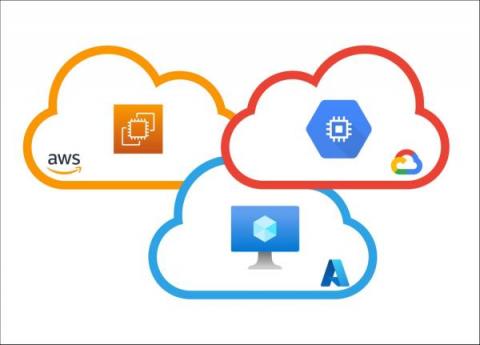
In this blog post series, we will be comparing different services in AWS, GCP and Azure. We'll go into detail in each of the resources and understand the differences between providers, something you need to be aware if you are looking into switching clouds. Some examples will be given using Terraform, the Infrastructure as Code (IaC) market leader. If you want to know more about different IaC tools and how they compare, check our other blog post - Terraform vs Pulumi vs CloudFormation.
Canonical Ubuntu 22.04 LTS is the latest long term support release of Ubuntu, one of the world’s most popular Linux distributions. As a Long Term Support release, Ubuntu 22.04 LTS will be supported for 10 years, receiving both extended security updates and kernel livepatching via an Ubuntu Advantage subscription (which is free for personal use).
Until I came to StackState seven years ago, I was selling for Splunk. Everyone that has big data knows Splunk – big data, big data lakes, observability data, data analysis. Anything to do with data, Splunk is there! While at Splunk, I had the good fortune to sign up a reseller by the name of UMBRiO. Together, with Erik Witte and his team, we sold a multi-million dollar deal to a large, multi-national bank in the Netherlands that put our partnership on the map.
Digital business is an imperative for 21st-century companies. Increasingly, organizations are directing investments toward technologies that deliver outcomes fast and enable more resilient digital business models. In this landscape, incidents such as software bugs, power outages, or downed networks have major consequences that affect both revenue and customer loyalty.
Database security includes a variety of measures used to secure database management systems from vicious cyber-attacks and illegitimate use. Database security programs are designed to protect not only the data within the database but also the data management system itself, and every application that accesses it, from destruction, mishandling, and unauthorized access.
I recently published a couple of blog posts about what happens when you invest in a thoughtful incident management strategy and three first steps to take to do so. What I’m getting at in these posts is that we need a shift toward proactivity in the software operators community. I’d wager most of the world is responding to incidents as they happen, and nothing more.
How important security is for your application and digital services? “Very important”, this is the answer we get the most often from Product Managers and Executives. Nobody wants the malware to take advantage of the vulnerabilities of their applications. However, any access point to the internet can be an entry point for hackers.
Organizations are continually increasing the number of devices and technologies used within their IT environments. To ensure these IT environments are functioning well and providing users a good experience, a company’s IT infrastructure must be tracked and maintained. This is accomplished through the use of infrastructure monitoring.
Epinio is a Platform as a Service (PaaS) that allows developers to go from the application source to a URL in one step. Try Epinio today or try it tomorrow — but make sure you try it. We just released our first stable version (Epinio v1.0.0) and we think you are going to love it. Let me tell you why.
Last week, I showed you how to build and deploy a Go Web application (or API backend for a frontend framework like React or Vue) to a cloud provider, using Docker as a process manager. In this post, which is part of two of this series, I will show you a second method of deploying a Go Web app or backend to any cloud, using Docker Swarm.
Imagine having the ability to instantly know when a Kubernetes compliance or security violation occurs. Now you can with Shipa Insights. Coupling Shipa Insights with the robust notification and alerting capabilities of PagerDuty makes this very possible. Shipa has the capability of sending fine-grained events externally e.g to PagerDuty. Now with the power of Shipa Insights, you have the capabilities to alert on policy violations. Let’s take a look at gettings started.
A month ago, we introduced unsupervised ML & Anomaly Detection in Netdata, the Anomaly Advisor. Today, we’re happy to announce that we’re bringing anomaly rates to every chart in Netdata Cloud. Anomaly information is no longer limited to the Anomalies tab and will be accessible to you from the Overview and Single Node View tabs as well. This will make your troubleshooting journey easier, as you will have the anomaly rates for any metric available with a single click.
When we came across Dotan’s article “Observability Is a Data Analytics Problem” on LinkedIn, he got our full attention. We totally agree with his views on observability and data analytics.
CI/CD systems follow a multi-tiered environments pattern: development, testing, staging, and production release are all part of this process. Each setting in this cycle could have a variety of set ups and configurations. As a result, having to set up separate configurations for different environments could be inconvenient and burdensome. In this tutorial, we will take a look at what Docker is and how it has freed developers from set-up problems and port clashes.
Power Usage Effectiveness (PUE) is the most commonly used metric for measuring data center energy efficiency. It was developed by The Green Grid in 2007 and has been widely popular ever since due to growing concerns of the sustainability of data centers and for being able to represent overall efficiency with one easy-to-understand number.
When you are the only dev building a software project, you can create and modify your code according to personal preference. When you contribute code to a team-run project, you need to follow a standardized set of guidelines and coordinate precisely with other team members. Standard guidelines and coordinated work effort are vital to the success of every team-based software development project.
Implementing change in an organization always has its challenges, and for it to be successful it requires support from executive management. For one of our large Managed Service Provider (MSP) clients, their new CIO was focused on making their customer’s cloud consumption more efficient, with the outcome being cost savings.
Audit Logs automatically record all user activities across all of your applications and team members. Audit Logs provide all the information you need to assess changes made to your account, such as IP address, date and time (displayed in your timezone), geo-location (accurate to the city), and the team members involved.
Datadog Database Monitoring (DBM) provides comprehensive visibility into SQL queries running on your databases. Using DBM, you can troubleshoot database performance issues by drilling into frequently used queries and analyzing historical trends in your queries’ metrics and execution plans. Whether you operate self-hosted SQL Server instances or leverage Azure’s fully managed services, DBM can provide deep visibility into the databases your application depends on.
There are a number of lessons I learned guiding weeks-long backcountry leadership courses for teens that I carried with me into my roles in incident management. In this blog post, I’ll share three that stand out.
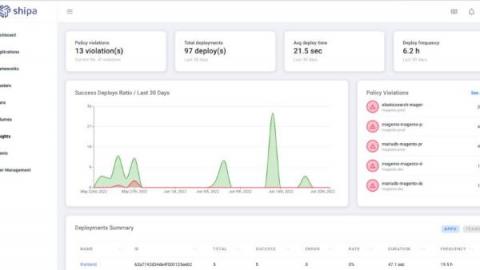
As we continue to build our vision around Shipa Insights, we are pleased to announce that we are now including engineering efficiency statistics along with the policy and security violations from our initial release. Getting started with Shipa Insights is very easy, Shipa Insights is there for you automatically. Navigate to the Insights Module and take a look at what Shipa has been keeping track of / discovering on your behalf.
Kubernetes shouldn’t be reserved for production. Using local Kubernetes in development means you can build and test your service using the same technologies as your live deployments. Some organizations provide a shared Kubernetes cluster for development activities. Others offer on-demand virtual clusters that serve staging environments for significant changes.
The software industry is moving toward teams that own the services they build. This concept encloses principles and possibilities from movements toward microservices, DevOps, Agile, and Project to Product. In these paradigms, a team of people delivers software that provides valued capabilities. These capabilities help customers get their work done, support business operations, or enable other software to do these.
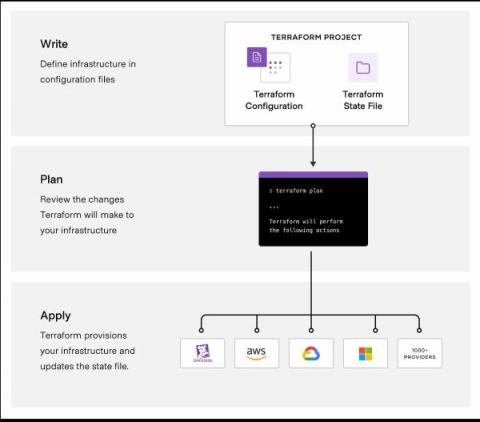
Infrastructure as Code (IaC) is the cloud-computing practice of putting the provisioning and configuring your cloud resources into machine-readable code.
When GreenRoad experienced a period of intense growth and expansion within a short time, the organization knew that it would need to upgrade its NOC support services to meet the standards of its new prominent and international clients. In addition, as their platforms rely on cloud support, finding a provider that could offer high availability and fast and efficient service was critical, and MoovingON seemed the perfect candidate.
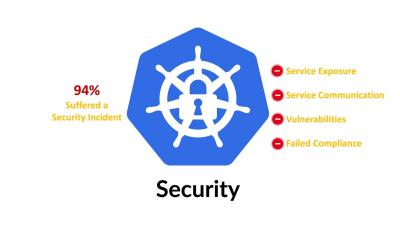
The modernization of infrastructure and applications is driving the rapid growth of containers, and as companies scale the adoption of Kubernetes, it’s critical to incorporate security and compliance. The challenge? Compliance and security is a journey, not a state in time, and application security in Kubernetes has a large surface area. This challenge increases exponentially as you run more applications, onboard more developers, add more environments, add new pipelines, and more.
Government agencies are facing a rising need for changes to their IT infrastructure. This need is becoming even more urgent as they continue to migrate operations to the cloud. Leveraging modern cloud applications and resources within an existing legacy agency environment requires IT agility to maintain the balance of security while keeping pace with an agency’s mission.
A network provides a way for many computers to all be connected and exchange data with each other simultaneously. It allows members of organizations to quickly complete tasks, share information, and carry out any computing responsibilities that rely on a working network. It’s important for each organization to ensure that their network design is suitable for their needs.

Digital transformation, no matter what form it takes within your organization, is a high-stakes initiative to deliver strategic impact to the business. The cloud is a pivotal enabler to that effort. But there’s a flip side—challenges related to migrating and managing workloads in the cloud can have a negative impact on the success of your transformation efforts.
The Cloud Native Computing Foundation published their Annual Report for 2021 which outlines the past year and what can be expected in the upcoming 6 months. Community leaders and 62,000 contributors on GitHub came together to report on initiatives and updates to create CNCF’s second annual report. So, here are the important updates from the Kubernetes Annual Report that we think you need to know.
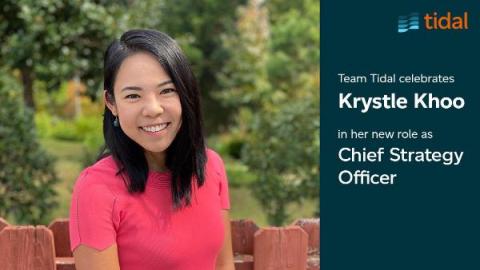
Google “CSO role description” and you will get 9 million results, none of which will sufficiently describe why it has been both challenging and enormously fulfilling for me at Tidal Migrations. Quite simply, a CSO role is uniquely tailored to the company it belongs to. So while Deloitte has this article about the six faces of a CSO, I wanted to share how my role came about and what it means to be a CSO at Tidal.
Even after the public cloud hype, private clouds remain to be a very essential part of many enterprises’ cloud strategy. Private clouds are simply giving CIOs more control over their budgets, enabling better security and allowing the flexibility to build best of breed IT solutions. So let’s stop here and take a step backwards, why are organisations even investing in their IT?
Linux Active Directory (AD) integration is historically one of the most requested functionalities by our corporate users, and with Ubuntu Desktop 22.04, we introduced ADsys, our new Active Directory client. This blog post is part 3 of a series where we will explore the new functionalities in more detail.
Go has emerged as a popular option to develop web applications, especially for API backends, used by a React or Vue frontend. This post is the first of a multi-post series on the deployment of a web application to a cloud provider, starting with the simplest form of deployment, all the way to using Kubernetes for your web apps.
Network configuration entails setting up your network to support local or remote network communication. This configuration allows for wired or wireless connection and entails the installation of network hardware, software, and devices. In this article, let’s take a look at network configuration, including the benefits, various types and tools, and how to monitor and manage the network.
Shifting to the cloud? Multi-cloud environments enable organizations to expand their computing and storage capacities easily, but that comes with tradeoffs — topping the list: cybersecurity. What makes cloud computing appealing is also a reason to worry. It is easy to access your cloud environment anywhere with internet access, but that also means it’s easy for cybercriminals and digital adversaries to access it.
We’re pleased to announce a new out-of-the-box dashboard for Azure Kubernetes Service (AKS) that allows you to immediately visualize the health and performance of your AKS clusters. This dashboard organizes and highlights the most critical information from the standard AKS metrics, while also incorporating log data to provide observability into the control plane.
At CircleCI, CI has a second meaning: Continuous Improvement. We continuously seek out feedback not only to improve our code but to improve our processes and get better at our jobs along the way. This Continuous Improvement starts with one important company value: a blameless culture. Our blameless culture extends into every part of how we operate.
Windows is the most popular operating system in the world. It powers not only personal computers and laptops at home but also enterprise servers and systems. Due to the vast use of the software, many solutions to monitor Windows have been developed. In this article, we will discuss an efficient way to monitor Windows and the reason why we want to track the metrics of the operating system. But before we start, check MetricFire.
15 June 2022: Canonical today announced that Ubuntu Core 22, the fully containerised Ubuntu 22.04 LTS variant optimised for IoT and edge devices, is now generally available for download from ubuntu.com/download/iot. Combined with Canonical’s technology offer, this release brings Ubuntu’s comprehensive and industry-leading operating system (OS) and services to a complete range of embedded and IoT devices.
The DevOps field is engaged in a great, collective migration into the cloud. Businesses are decentralizing their applications and databases, hosting them in the cloud to make them available regardless of geography or user device. Some organizations choose to host their applications on private servers, but in periods of high demand take advantage of the public cloud by directing overflow traffic to cloud servers. This approach is called cloud bursting.
As of v1.35.0 the Netdata Agent can now run Metric Correlations (MC) itself. This means that, for nodes with MC enabled, the Metric Correlations feature just got a whole lot faster! The Netdata Metric Correlations feature uses a Two Sample Kolmogorov-Smirnov test to look for which metrics have a significant distributional change around a highlighted window of interest.
Mattermost v7.0 is generally available today and includes three of our top five most requested features, based directly on your input in our feature idea forum. The following new features are all included (see changelog for more details).
Building software is hard. Building cloud software is even harder because things move much faster — and require mission-critical reliability and availability. To effectively build software in the cloud, engineering teams need observability, CI/CD, reporting, and lots of tooling. At every organization I’ve worked at, we’ve needed a system of tools that lets us: But all the tools available to engineering teams never quite fit together with our specific processes.
For teams that follow a structured build and release cycle, having a reliable, shared workflow makes the difference between chaos and consistency. With every new feature in development the team needs to know what the specs are, how it fits in the roadmap, what the customer feedback was, where to find the repository, who is responsible for each step, and so much more.
Ubuntu Core, the Ubuntu flavour optimised for IoT and edge devices, has a new version available. With a 2-year release cadence, every new release is both an exciting and challenging milestone. Ubuntu Core is based on Ubuntu. It is open source, long-term supported (LTS), binary compatible and offers a unified developer experience. It allows developers and makers to build composable and software-defined appliances built from immutable snap container images.
If you are packaging your IoT applications as snaps or containers, you are aware of the benefits of bundling an application with its dependencies. Publishing snaps across different operating system versions and even distributions is much easier than maintaining package dependencies. Automated IoT software updates make managing fleets of devices more efficient.
When I joined SUSE I heard about our Kubernetes distributions: Rancher Kubernetes Engine (RKE), RKE2 and K3s. However, the differences between RKE and RKE2 were not clear to me. I decided to spend time with them and blog about the differences.
Releasing software to users has become a sophisticated and intricate process that requires high levels of consistency and coordination. A release has to be built, brought together, documented, tested and deployed, which requires coordination of at least four separate teams and a generous handful of pipelines and other tools. Without a well-documented process things can get messy very quickly, causing stress for everyone involved.
Whether you’re part of a team managing SaaS products or a high-security digital workspace, sometimes Things Go Wrong and must be addressed with extreme care, professionalism, and predictability. For outages, data breaches, vulnerabilities and more, you and your team are juggling a variety of tools, processes, and rigid incident management systems. When the on-call pager goes off at 3 am almost no one has the ability to remember every step needed to kick off all the response workflows.
The Apps Framework is an important tool in the Mattermost developer toolbox for easily creating integrations and customized workflows—written in any language and deployed with serverless hosting. The Apps Framework complements the existing ecosystem of plugins, slash commands, bots, and webhooks. As of Mattermost version 6.6, the Apps Framework is now generally available for all cloud and self-hosted deployments.
Monitoring your on-premise or hybrid infrastructure means keeping track of potentially thousands of devices, any one of which could be a point of failure. Additionally, silos between application and network teams can create visibility gaps that complicate troubleshooting. For network engineers investigating bottlenecks, being able to view real-time infrastructure health and performance data alongside application metrics is essential for ensuring their organizations meet key SLOs.
In this episode, Jason chats with Aaron Clark, Director of Developer Advocacy at the Royal Bank of Canada. Aaron shares what it was like starting out as a developer at RBC and working in early cloud development, and then transitioning to his role as a developer advocate. Jason and Aaron talk about the value applying open source principles within organizations, or “innersource.” Their time ends with a discussion on continuing education and how to keep learning.
We know that everyone’s code story may be a little different, but speedier repos are something everyone can get behind. No matter where your developer adventures take you, it is important to keep all your code, configuration, and media assets together, and never leave a file behind. That is why we have been working on a lot of performance improvements for Git LFS users and have added Bitbucket Workspace support for Bitbucket Server users!
This blog is the third in a four-part series about how Puppet can help government agencies meet compliance and security requirements. Read the second post here. Government agency IT departments know that migrating applications to the cloud can improve efficiency, increase visibility, and reduce costs. They also recognize the value in keeping some operation resources on-premises.
HAProxy Kubernetes Ingress Controller provides custom resources named Backend, Defaults, and Global that let you manage ingress controller settings more efficiently. To start using them right away, check the documentation for steps and examples. In this blog post, you’ll learn why custom resources are such a powerful feature and see tips for getting the most out of them.
Ever since CircleCI introduced webhooks, I have been excited about the possibilities this new way of integration opens up to developers. I decided to try out one of the use cases described in the webhooks documentation. This use case involves transmitting information about build-pipeline workflows into an Airtable database. The data piped into Airtable forms a log for you to monitor your workflows and you can go as far as designing graphs and other visualizations to analyze the build data.
Gartner breaks down modernizing I&O into five key focus areas you won’t want to miss. Unsure of how to keep-up with infrastructure reliability in an ever-changing, hybrid world? With so many cloud infrastructure and platform services (CIPS) available, do you find yourself asking, ‘How can I make sure my data center infrastructure and its operations are maximized and successful?’ If you are feeling a little challenged in any of these areas, this report will be informative.
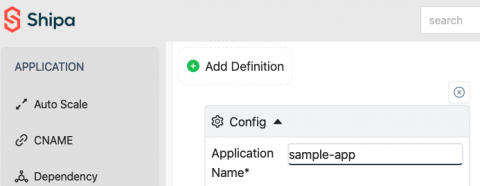
I love what we are building here at Shipa, and I couldn’t be more proud of all the great things the team is constantly delivering, but one thing I like is having personal projects. These help me keep up to date with technology and learn new things. I try to keep the investment in those projects at a minimum and under control. That goes across both the timing and the resources invested. My most recent project is related to the experience when defining cloud-native applications.
Cloud technology, and applications running in the cloud, are becoming more and more common. With this rise in cloud computing, application development has needed to change as well, resulting in what can be called the cloud-native approach to software development. In this article, you will learn all about cloud-native technology and how cloud-native companies approach building their applications.
Data center and cloud migrations often require changing IP addresses of your servers and application end points. These changes require careful planning and precise execution in order to minimize downtime. Typically, this is executed by manually searching your DNS server’s configuration for each server that is migrating.
Migrating your DNS to a cloud-based service like Amazon’s Route53 service can be a daunting task. With dns-tools, you can test your DNS records before and after the migration to ensure that everything made it across in one piece. If you are migrating from a BIND DNS server, see our blog post here. Follow these four steps to migrate from a Windows DNS Active-Directory integrated server to Route53.
It's impossible to learn about containerization without hearing about Docker and Kubernetes. These two tools together dominate the world of containers, both being the de-facto standard in what they each do. When you're first getting started learning about containers, it can be quite a challenge to figure out what the differences are between these two tools.
Gartner® has published the 2022 Magic Quadrant™ for APM and Observability, an annual report that evaluates vendors in this category. We’re honored that Datadog has been recognized as a “Leader” within this Magic Quadrant report for the second consecutive year, with the highest position for Ability to Execute.
In the previous blog, SQL vs NoSQL Database, we discussed the difference between two major database categories. In a nutshell, the main difference between NoSQL and SQL is that NoSQL adopts a ‘right tool for the job’ approach, whilst SQL adopts a ‘one tool for all the jobs’.
In addition to the usual updates to supporting utilities, Rancher Desktop 1.4 adds a couple of new useful features we think you’ll like.
Breaking changes in production are inconvenient and can be costly to fix. Using commands like git clone < some GitHub repository >, executed on your terminal is a common practice, known as using the command line. This practice can be faster and more efficient than using a GUI. For this tutorial, I will walk you through the process of testing command-line applications git, explain why you need command-line applications, and describe in detail how they work.
Given the strategic importance of the cloud and size of cloud expenditures, it’s critical for enterprises to have solid controls in place to manage it all. According to our latest research, however, while most organizations agree with that sentiment, very few have put it into practice. There are distinct but related disciplines that come into play: FinOps and cloud governance. In this two-part series, we explore current state of each.
Last May, KubeCon gathered multiple tech enthusiasts, students, professionals, and companies. The event highlighted various topics and insights on how to collaborate on pushing the boundaries of cloud-native computin One of our Engineering Directors, Mykola Marzhan, shared his knowledge about databases on Kubernetes at KubeCon, during a session organised by the DoK.Community. We’ve picked out some of the key highlights from the talk below.
IT leaders, engineers, and developers must consider multiple factors when using a database. There are scores of open source and proprietary databases available, and each offers distinct value to organisations. They can be divided into two primary categories: SQL (relational database) and NoSQL (non-relational database). This article will explore the difference between SQL and NoSQL and which option is best for your use case.
As rack densities rise and concern about the sustainability of data centers grows, data center managers need a way to not only cool their equipment but do so as efficiently as possible. To efficiently cool racks of 20 kW or more, organizations are seriously investigating liquid cooling and immersion cooling.
Too many of us are still playing whack-a-mole when it comes to incidents: an incident is declared, the on-call engineer is paged, the incident is resolved and then forgotten — until next time. It’s time to start thinking in terms of proactive incident management, not just reactive incident response.
Node.js is one of the best and most widely used Javascript runtimes used for building APIs. But, this popularity status has led to many hackers distributing insecure modules that exploit the Node.js application or provide a weak point for exploitation. In this tutorial, you will learn how to audit Node.js modules and also detect vulnerabilities in modules using npm audit.
Configuration files can take some time to set up, but after that initial push they are easy to forget about. “If it’s not broken, don’t fix it” is a common approach that many developers take with their configuration files. But when it comes to your continuous integration pipelines, small changes can have huge benefits.
We are happy to announce our latest StackPod episode featuring guest Andreas Prins! With over five years of experience in different product management and product strategy roles, Andreas is currently the VP of product here at StackState.
Cloud infrastructure has been on the rise for the last decade. As it's adoption grows, so has the complexity of managing infrastructure, becoming more complex and more prone to user mistakes. This led to a new wave of tools in the Infrastructure as Code (IaC) space that aim to tackle this issue by treating your infrastructure as you would any other piece of software.
Moving workloads to the cloud has many benefits, and one that is often overlooked is the opportunity to modernize your network. In a traditional “perimeter-based” architecture, users and devices are authenticated and authorized on a device-by-device basis when connecting remotely via VPN.
Cloudsmith joins the CD Foundation as a new member, in helping to strengthen the growth and evolution of continuous delivery models.
A real-time system responds to events within a specified deadline. If the timing constraints of the system are unmet, failure has occurred. In the kernel context, real-time denotes a deterministic response to an external event, aiming to minimize the response time guarantee.
For the past four years, Catchpoint and various partners have been running a yearly SRE Survey. This year, Blameless is excited to partner with Catchpoint for the fifth annual survey. We want to hear from you if you are in a DevOps or SRE role or even if you work on reliability with some other title or role. There are tremendous, valuable learnings when we listen closely to practitioners.
Lineage to the saying “canary in a coal mine”, the canary deployment/release methodology is an incremental release focused on safety. If the canary does not pass, the deployment does not continue or is rolled back. Taking a jog down memory lane, like Kubernetes the Hard Way, a few years ago a canary deployment in Kubernetes was quite the undertaking.
One of the most critical aspects of monitoring your digital assets is getting a timely alert when something goes wrong. Even when you finish building a monitoring stack and expose metrics on a beautifully designed dashboard if you cannot notice abnormal behaviors and fail to take pre-emptive or follow-up actions swiftly, this means your monitoring system does not serve the purpose.
This blog is the second in a four-part series about how Puppet can help government agencies meet compliance and security requirements. Read the first post here. Zero Trust is a strategy created to combat system intrusions through a “never trust, always verify” model. DevSecOps is a collaborative software development strategy that integrates development, security, and operations practices into a continuously evolving lifecycle.
Continuous integration has become a widely accepted practice for software projects. As more technologies are introduced in both continuous integration and software development, developers are looking for practical ways to benefit from them. Basic tutorials that cover toy examples are not always enough for real-life practitioners. As an actual user of Django, Docker, and CircleCI, this was certainly a pain point for me. That is why I wrote this tutorial.
Sometimes a hat is just a hat, the truth is just the truth, and the clearly most popular example of a category is plain to see. In this case, Ubuntu is the most popular Linux distribution currently available. With the operating system’s superior popularity also comes an amazing amount of community support.
Netdata’s new Anomaly Advisor feature lets you quickly identify potentially anomalous metrics during a particular timeline of interest. This results in considerably speeding up your troubleshooting workflow and saving valuable time when faced with an outage or issue you are trying to root cause.
It’s day one of PagerDuty Summit, and we are looking forward to a full day of expert presenters, actionable content, and educational sessions to boost your PagerDuty IQ and show you new ways to improve your team’s operational excellence.
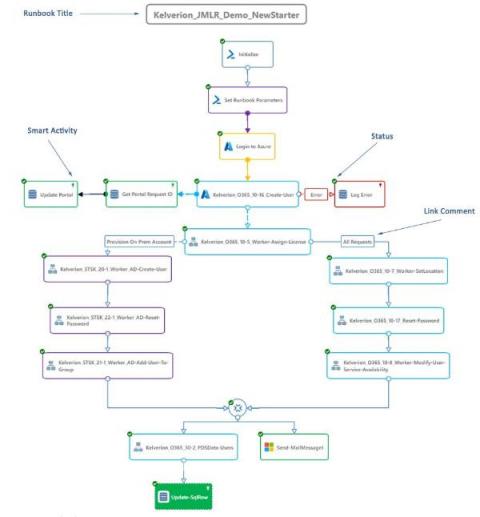
Kelverion Runbook Studio V5.0 makes it even easier for organizations to automate IT service desk requests and reduce IT burden. In its fifth iteration, The Runbook Studio has undergone a significant design overhaul. The Studio’s technical capabilities have always been exceptional and now it has a user interface to match. On top of that, this version takes Kelverion’s low code/no-code design environment to the next level.
Security can certainly be a broad brush topic. As a software engineer, you design and build to the best of your ability. In delivery methodologies of years gone by, sometimes security can be viewed as an afterthought e.g running security testing last before deploying. Today with the DevSecOps movement, one more set of concerns moves left towards the developer which is now security.
Managing a Kubernetes cluster is a complex endeavor. As demands on a cluster grow, increasing the number of deployed pods can help ease the load on the system. But what do you do when you run out of nodes to host those pods, or when the load decreases and some nodes are no longer needed? Manually adding or removing nodes is possible, but wouldn’t it be better if there was a way to automate that task? Fortunately, that’s exactly what the Kubernetes Autoscaler charm is for!
Given the strategic importance of the cloud and size of cloud expenditures, it’s critical for enterprises to have solid controls in place to manage it all. According to our latest research, however, while most organizations agree with that sentiment, very few have put it into practice. There are distinct but related disciplines that come into play: FinOps and cloud governance. In this two-part series, we explore current state of each.
Because computers rely on data to execute instructions, computing will always entail data interaction. The amount of data can be overwhelming in real world applications, so developers must consistently devise methods to access it quickly and efficiently in a programmatic way. A solid understanding of data structures is a great advantage for teams that specialize in developing tools and systems. Organizing data optimally maximizes efficiency and makes data processing easy and seamless.
When getting started, using an Infrastructure as Code (Iac) tool might seem overkill, and something that will slow down development. Building and deploying manually is often the way to go early stage - infrastructure changes constantly and having to re-write your configuration can be a pointless exercise until you have a better understanding of the fundamental pieces of your infrastructure.
My first incident.io-incident happened in my second week here, when I screwed up the process for requesting extra Slack permissions, which made it impossible to install our app for a few minutes. This was a bit embarrassing, but also simple to resolve for someone more familiar with the process, and declaring an incident meant we got there in just a few minutes. Declaring the first incident when you start a new job can be intimidating, but it really shouldn’t be.
In their report titled “IT Resilience — 7 Tips for Improving Reliability, Tolerability and Disaster Recovery”, Gartner presents seven strategies for improving the resilience posture of your critical systems. These recommendations range from how to get started, to identifying IT hazards and risks to reliability, to capturing metrics and translating them into business value. In this blog, we’ll take a high-level look at the report and summarize some of its key findings.
Modern video streaming workflows are composed of many different services, including encoders, origins, ad servers, content delivery networks (CDNs), and more. This wide range of options enables organizations to choose the tools that best fit their needs, but it also introduces considerable observability challenges. For instance, you may have limited access to the log data from each layer of your video workflow, and the data you can access likely isn’t standardized.
Updated June 2022. This research builds on the previous edition of this article, which was published in May 2021. Click here to download the graphs for each fact.
For businesses and organizations that offer any sort of digital experience, code quality and security is of cardinal importance. As such, the architecture of that code – how it is stored, accessed, and built upon – is critically important. In this age of digital transformation, if you’re standing still, you’re moving backward.
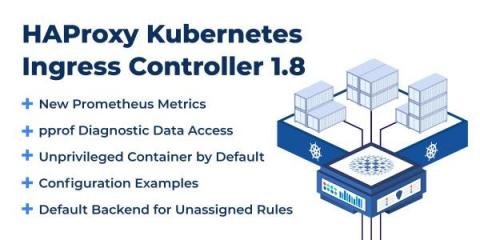
We’re proud to announce the release of version 1.8 of the HAProxy Kubernetes Ingress Controller! In this release, we added support for full rootless mode, Prometheus metrics for the controller itself, and examples that are synchronized with our Helm chart. In this blog post, you will learn more about the changes in this version. Register for our webinar to learn more about this release.
Relay’s inputFile capability is handy because it allows you to use familiar programming languages to get custom solutions working quickly. Using an inputFile with Relay is as easy as writing a script in bash, Python, or Powershell, and storing it in a remote Internet-accessible repository like GitHub. Let’s see how Relay enhances our daily driver skillset to solve problems quickly and reliably with minimal code.
Tracking and managing data center cabling is one of the most overlooked aspects of data center management. However, when it’s not done properly, it can cause all kinds of problems from costly downtime to inefficient use of capacity. Don’t settle for cable spaghetti. Keep reading to find out the basics about data center cabling, understand how to track and organize it, and learn how the best data center managers in the industry are dramatically simplifying cable management.
Welcome to the 9th edition of Open Source Matters: our regular publication about the latest happenings in open source! Let’s dive into the news.
Suppose you have to use your phone or other devices frequently, and you don’t want to type your password every time you wish to access an application. By implementing Trusted Device authentication, your system will recognize the device’s authentication and help you log in to the application quickly and safely. The whole process will not only save your time but will also allow you to witness an advanced authentication procedure.
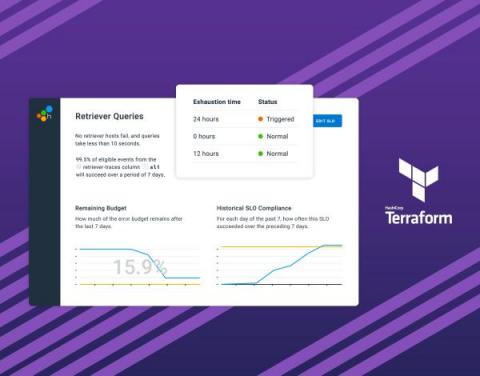
In March, we announced official support for a Honeycomb Terraform Provider. Today, we’re announcing additional support for managing Honeycomb Service Level Objectives (SLOs) with Terraform. This furthers Honeycomb’s support for configuration as code and it gives you programmatic control for an immensely popular Honeycomb feature.
Learn more - https://rbbn.com
0:00 Intro to Voice Threat Prevention
4:04 Agenda
4:54 Voice Threats to Enterprises
16:29 Ribbon Voice Threat Prevention
41:31 Voice Threat Prevention Packaging and Pricing
Technology plays a strategic role in the success of any organisation. Whether you’re part of an enterprise with thousands of employees across the globe or running a startup from the garage of your home, the success of the business comes down to how you consume technology. However, it’s not that straightforward, and IT decision makers usually have to make a lot of trade-offs when investing in technology.
In May, we hosted our first in-person community meetup speaking about all things Kubernetes. Community members came and engaged in cloud-native discussions with talks from Saiyam Pathak, Kunal Kushwaha, Josh Van Leeuwen, and Walid Shaari. We also featured in ZDNet’s article on the four-day work week which includes an interview with Mark Boost, CEO at Civo. This outlined how employees have attained a better work-life balance with the change as well as why the decision was made.