Operations | Monitoring | ITSM | DevOps | Cloud

The latest News and Information on DevOps, CI/CD, Automation and related technologies.

How Clover moved beyond blue-green deployments with HAProxy Fusion Control Plane

Clover’s platform handles more than just payments: inventory, employee management, online sales, and customer loyalty programs are all running on a single monolith called the Clover Operating System (COS). Releasing updates to that platform reliably and without disrupting merchants is one of the hardest operational problems a platform team can face. For a decade, Clover ran HAProxy at the center of its infrastructure.

Atlassian's HR team leads AI transformation

AI transformation doesn’t succeed without people at the center. At Atlassian, HR is leading the way. Our People team believes that the best AI culture isn’t mandated from the top. It’s built by meeting employees where they are, partnering with leaders across the business, and making AI part of how work gets done from day one. See how Atlassian’s HR team is building a culture of experimentation where everyone builds, and what that looks like in practice.

AI Made Infrastructure Weird Again | Ubuntu Summit 26.04

For years, we were told we were escaping hardware. Virtualization, containers, and Kubernetes made the underlying servers practically invisible to the average application developer. Then came the AI boom and infrastructure got incredibly weird again. In this fast-paced lightning talk, Billy Olson from Canonical breaks down why the modern AI server is no longer just a machine, but a volatile distributed system packed inside a single chassis.

Tokenmaxxing: The AI Productivity Lie

Your best engineer spent 500,000 tokens last week. Nothing shipped. There's a name for it now: tokenmaxxing. Failed prompts, dead PRs, code that never reaches production — it looks like productivity, but it isn't. Most engineering leaders can't tell you what percentage of AI-generated code actually ships, or where the budget went. You should be able to say "that bug cost me $2,700 in tokens to fix.".

How to run self-hosted AI on your own infrastructure with Konstruct

Civo Platform Engineer M R Rishi demonstrates how to go from zero to self-hosted AI in minutes using Konstruct. While most teams are stuck managing thousands of configuration values across multiple models and tools, Rishi shows how Konstruct eliminates that complexity with GPU cluster provisioning, GitOps catalog deployments, and production-ready infrastructure on day zero.

3 Platform Engineering Shifts From Devoxx France 2026

Three days, 20 talks at Devoxx France 2026. The through-line wasn't AI hype - it was discipline. Context engineering, code review under AI volume, and the local-vs-remote question now shaping security, cost, and sovereignty. Fabien is a senior software engineer at Qovery. He writes about platform engineering, AI tooling, context engineering, and the practical realities of running modern developer infrastructure.

Modernizing Communications For Mission-Critical Networks

Mission-critical networks are changing fast. Utilities, transport operators, and critical infrastructure providers are under pressure to deliver more data, more automation, and more resilience—without ever compromising reliability. The challenge is simple: legacy SDH/SONET networks were built for a different era. They still deliver reliability. But they can’t support what comes next.

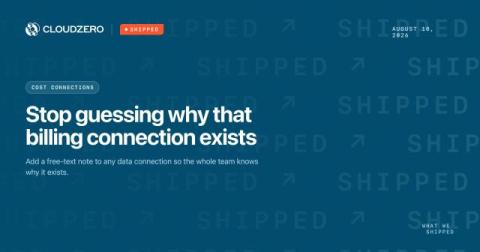
Shipped: What did the feature cost to ship? What does this customer cost to serve?

You can already split AI spend by team and by model. But that’s not what your CEO asks in the QBR. The question is what you got for it: what did it cost to ship that feature, to launch that campaign, to serve that customer. And is the AI bet behind it paying off? Now you can allocate AI spend to the outcomes you own: customer, product, feature, the strategic bet on the P&L. Not just the team that spent it.

The next era of telco clouds: get open infrastructure choice with Sylva and Canonical Kubernetes

The telco industry is undergoing a fundamental change. Over the past few years, the increasing maturity of cloud-native infrastructure has accelerated the movement from manually operated and hardware-centric systems to automated, software-defined platforms. Underpinning this change are open source initiatives such as the Sylva project. Sylva is hosted by Linux Foundation Europe and heavily backed by major telecom operators and vendors.